
“So often, a visit to the bookstore has cheered me, and reminded me that there are good things in the world.”
Vincent Van Gogh
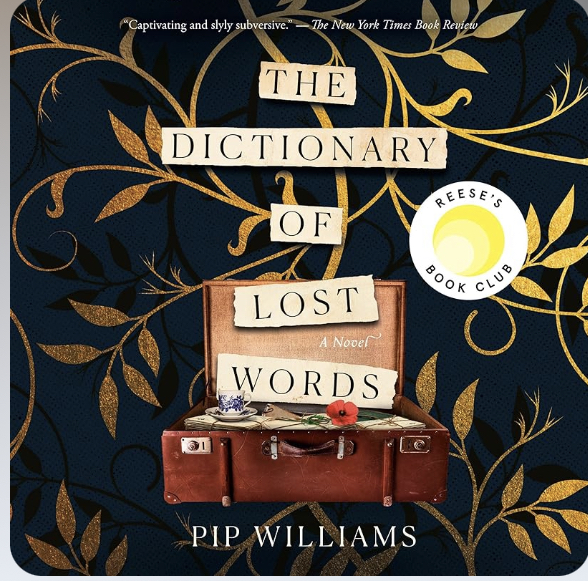
The Dictionary of Lost Words is the story of a young girl who grows up beneath the sorting table of a Scriptorium where words were collected and scrutinized and judged worthy or discarded by a small group of learned lexicographers who produced the first Oxford dictionary. Esme is indoctrinated into a culture that cares for and reveres the written word, that understands the import of language, and begins her own collection of discarded words, those deemed unworthy due to their pedestrian nature or obsolete status…words like bondmade and other words that coalesce around the language of women, words like suffragette and cunt. William’s work is an interesting exploration of the social history of the first half of the 20th Century, including women’s emancipation and the onset of the Great War. The novel is a love letter to anyone who loves language and saveurs words, and who understands the power of written script and the importance of preserving what may be so easily lost. I am a lover of words like my father before me, he collected them like they were something to treasure and hold dear. This book is a perfect read for a bookish woman who dreams of scholarly hours and endless days within the stacks of The Bodlean Library which has a starring role in the novel – 8/10

This book was recommended by a friend after discussing The Thursday Murder Club books. Killers of a Certain Age, as the title implies, is the story of a group of four post-menopausal assassins on the precipace of retirement. Meet Helen, Mary Alice, Nathalie and Billy our engaging, intelligent first person narrator. They are embarked on a cruise that goes very wrong very quickly and they are forced to fall back on their killer instincts. While the book offers an interesting premise and is no doubt headed for a big or small screen adaptation, it did not read as well as the Thursday Murder Club books. I found it hard to distinguish between the title characters, with the exception of the narrator, Billy…the others weren’t drawn distinctly enough, and the murky nazi-hunting “museum”, the assassins employer, which may have been a source of endless fascination, seemed almost farcial in its presentation. While the lead character, Billy, was well written and sympathetic, as was the dexter-like work ethic the assassins used as a code for killing, erasing only the morally disposable, the book reads like its arrived a little late to dinner. Flashbacks to training days and themes like the invisibility of the older woman are definate high-points in the book, but we’ve read the aged gang of adventurers story before and the writing was better. – 6/10
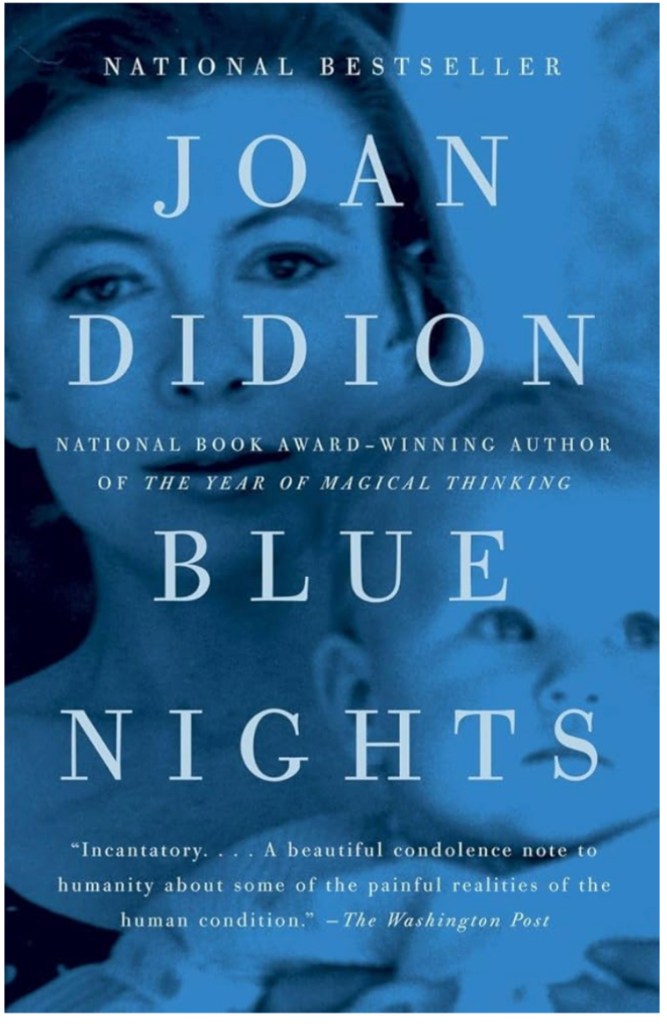
Blue Nights by Joan Didion is a heartbreaking remembrance of the life and death of her only daughter, Quintana Roo Dunne. Didion recounts blue nights, the gloaming moments, what the French call ‘l’heure blue, “the end of promise, the dwindling of days.” The book’s subject is very weighty – what greater grief can there be for mortals than to see their children dead. (Euripides). Didion’s narrative explores what it means to be without your child, what it means to let them go, and what it is to be tasked with “protecting the unprotectable.” It invokes the terrible pain of remembered parenting, “Brush your teeth, brush your hair, Shhhh, I’m working.” It is painful and poetic and hard to look away from. It is a meditation on the scourge of depression and anxiety, the imperfect art of medicine, and the horrifying realization that we can never deserve our darling children, that we may fail to keep them safe, and that in death we may begin to forget them. A haunting read. – 7/10

The Novice is a departure from Hahn’s usual meditative prose. It is a short work of fiction that will resonate with anyone who has lived a life and experienced injustice or unwarranted judgment. It is based on the true story of Quan Am Thi Kinh, a tale that every Vietnamese countryman is told from earliest childhood. Kinh was a woman who masqueraded as a man in order to join a monastery and is revered for manifesting infinite forgiveness. A character accused unfairly of misdoing, she endures many hardships while cultivating a spiritual life, and aquiring the qualities of loving kindness, compassion, joy and equanimity. The book is a parable for our times, a simple powerful fable that counsels us to “go home to the island within ourselves,” While the book is not my favourite of Hahn’s, I am perhaps not evolved enough to feel transformed by his simple beautiful message, at least on this occasion, I recognize The Novice is an important read, one that will stay with you awhile. – 6/10

Copeland’s Eleanor Rigby, as the book title suggests, is a swansong to the lonely. Liz Dunne is a frumpy , middle aged, over weight, friendless redhead and the story centers around her transformative relationship with her newly found son. Written in first person narrative, my favourite, Copeland’s story is sad and funny, sometimes both at once, and explores what it means to be lonely in the modern world. “Loneliness is my curse – our species’ curse – it’s the gun that shoots the bullets that makes us dance on a saloon floor and humiliate ourselves in front of strangers.” It is a salute to the invisible among us. At one point our narrator asks if she should finish up, “perhaps you might not wish me to go any further.” But as Copland wisely suggests a little later in the narrative, “nobody’s story is boring who is willing to tell the truth about himslf.” I liked Liz, a woman who knows she has lost many chances and opportunities for new experiences and is finally ready to embrace the gift of being alive. – 6/10
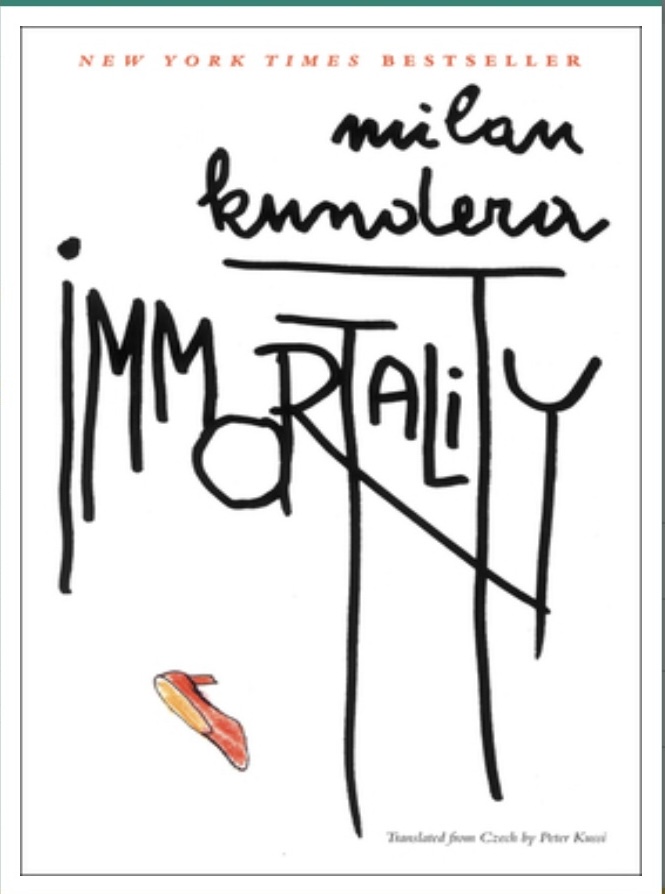
I picked this novel up on a recent trip to Prague with my daughter. I handed her The Unbearable Lightness of Being which I read when I was her age and then grabbed a copy of Immortality for my little old lady in waiting library. The story held great promise. Agnes a little old lady herself, living life in a tenured marriage on the mean streets of Paris, revisiting her childhood and coming of age including former love stories and complex family relationships…pour me cup of tea and lets get lost together I promised myself. Sadly the book did not deliver with its incessant back and forthing to a classic love affair between Goethe and Bettina. A running parallel story that I was, no doubt, not clever enough to enjoy. I wish Kundera could have contented himself with a simple contemplation of death in real time, less high theatre, metaphorical references, more…death is coming and do I want to spend eternity with the people I made a life with here, the interesting idea of the world as an ad agency, or how about “hypertrophy of the soul”, or maybe the changing nature of time, just a few of the loftier notions he introduces…aren’t those themes sufficient to build a novel on? Overly academic and ambitious Kundera…we know you’re smart, you dont have to reference every page…you told us so much and showed us so little, and left us with nothing to keep. Cardinal sin…you broke your contract with the reader. –2/10
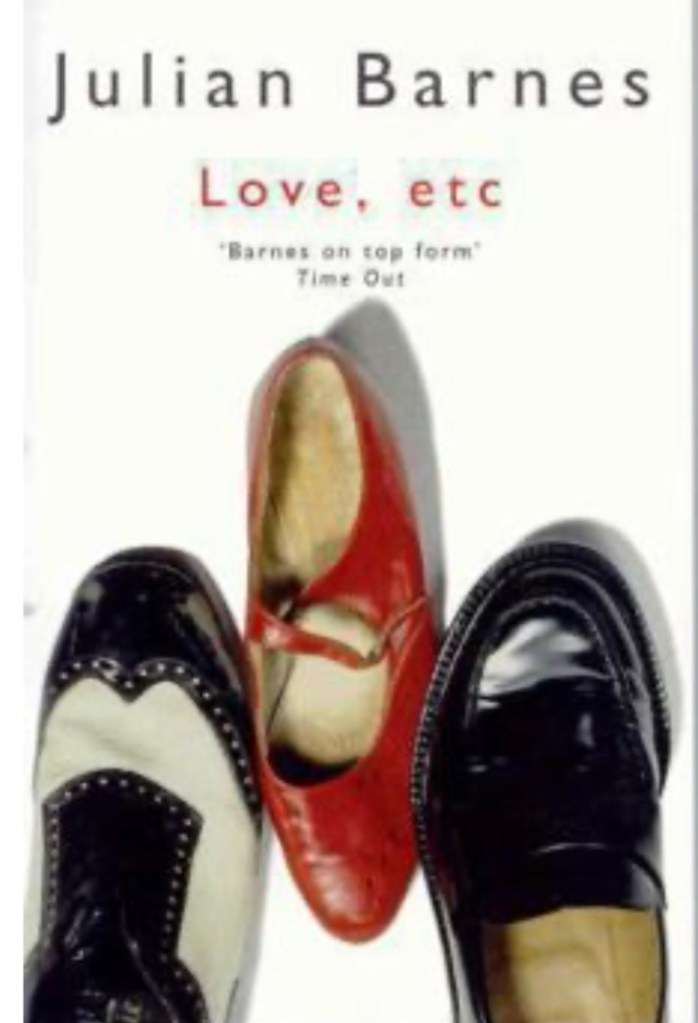
Love etc. is a dark ad twisty menage a trois between Gillian and husband number 1, steady, reliable Stuart, and husband number 2, witty, entertaining, out of work, Oliver. The story is told in the voices of the three principles, with a few fifth-business cameos inserted for respite care of the reader I imagine. The three stars of the novel tell their truth without interruption or the contamination of conversation. The book is a sequel to Barne’s eariier work, Talking it Over and reads a lot like a one man play, spoken in three distinct voices. Perhaps I might have enjoyed the work more if I had read its forerunner first, but I doubt it somehow. I found the characters very real and clever and charmless, and the narrative full of pithy one liners like “lets just fall into bed and not have sex.” Barnes talent is without doubt, he expertly conveys his weighty themes – the inexplicable sadness of things (“I want mommy to be more cheerful”), the advantage of age and the priviledge of not explaining everything (“you are very naive about us, the old people”), and the last gasps of a used up marriage (Do I still love Oliver? I think so, I suppose so. You could say I’m managing love”). I applaud Barnes mastery and his keen eyed take on the larger life questions and still I did not enjoy this work and cannot recommend it. – 5/10

Thurber’s book of essays and amusements is a collective look at the imperilled english language, disdained and disfigured in the mouths of users and abusers of the spoken word. The well known humorist invites readers to “urge up a footstool, loosen your stays, and saucer a scotch,” as he makes fun of our child centred culture, warning us to watch out for “the darlings at the top of the stairs.” Thurber’s work is a call to arms for phrases like “ya know” spreading like viruses, and his essays read like a fairwell speech to proper diction or the decline and fall of the King’s English. He accuses the nation of breeding a band of “tired teachers and apathetic students.” Other topics include the decline of comedy in our time, the poor standards of pronunciation (“mindless, meaningless mumbling”) and other verbal atrocities like the smokescreen of political jargon, and the overuse of idioms. You might have to be a bit of a language geek to get your money’s worth on this read, the comedy is niche, but pleasing if wordplay is your cup of tea. – 6/10


 Little Old Lady … in Waiting
Leave a reply to Nicola Carter Cancel reply