Tag: books

  • Reading Room – Issue 7

    “Fill your house with stacks of books, in all the crannies and all the nooks.” – Dr. Seuss

    “To acquire the habit of reading is to construct for yourself a refuge from from almost all the miseries of life.” – W. Somerset Maugham
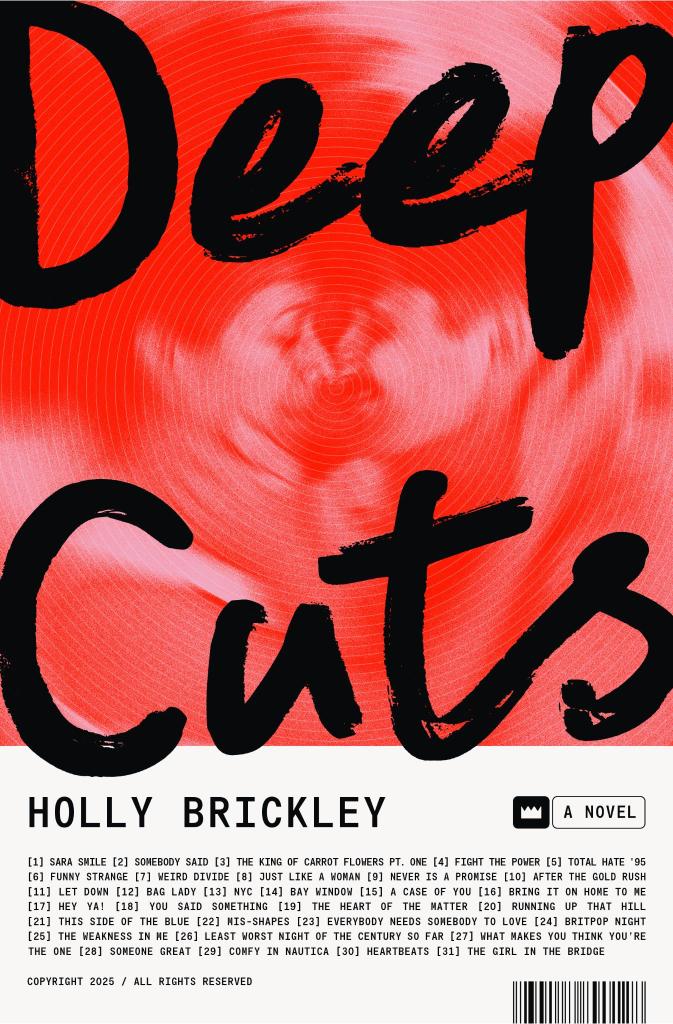
    Deep Cuts by Holly Brickley was a book club pick that garnered mixed reviews. Our hostess’ first question was ‘Is this book a coming-of-age novel, a love story, or a play list?’ I went with coming-of-age as I recall, but the truth is that the book could easily be read as satisfying the necessary components of each category. A Canadian best seller, this is Brickley’s first novel and it was a lot of fun hanging with her heroine, Percy Marks, a twenty-something writer and music critic, and a brilliant Berkley grad who falls for talented musician, Joe Morrow. The love story is pretty basic, the push and pull of ego and passion, but the writing is fresh and satisfying for the reader and the survey of indie music includes bands like The Smiths and The Pixies, Radiohead and artists like Joanna Newsom and Joni Mitchell. Brickley’s novel takes you on a sentimental journey back to the days when music was everything, the aural underpinning that allows you to carve out the infrastructure of becoming a person. Deep Cuts made me remember what it was like to be twenty-something and for that it gets a 7/10.
    Screenshot

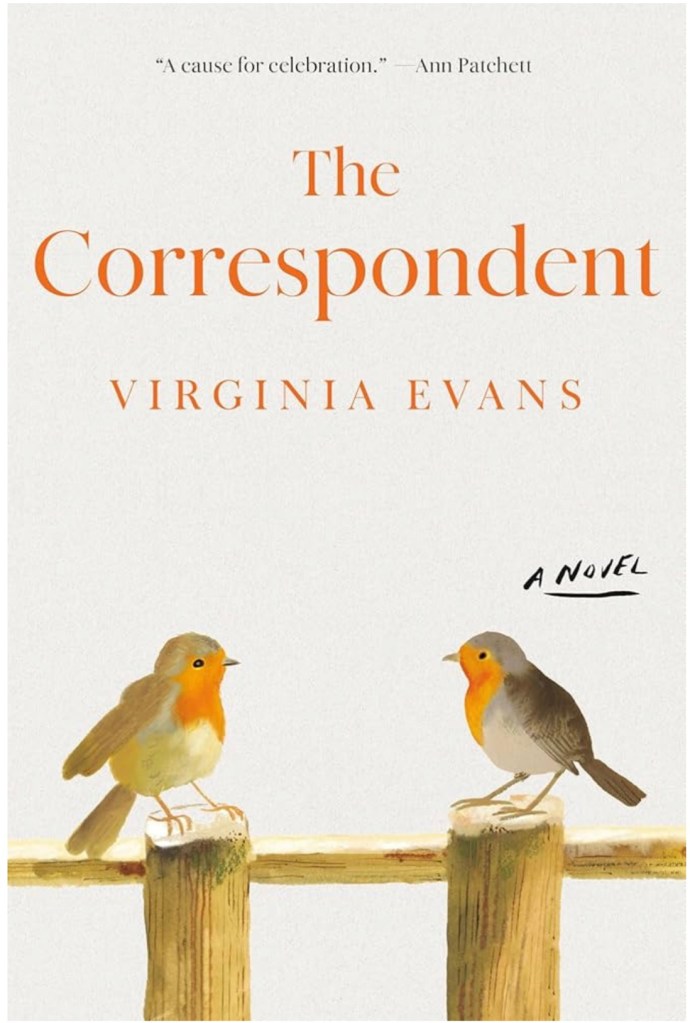
    Virginia Evan’s novel, The Correspondent is another debut novel and an absolute gem of a book – a perfect gift for a seasoned LOLIW reader. It’s the story of Sybil Van Antwerp, a very well read and witty, 73-year-old retired law clerk whose interface with the modern world is a rich and dedicated correspondence (snail mail). She writes a series of letters to friends and family and favourite authors that illuminate her first-rate mind, her failing eyesight, and a past that haunts her.  Evan’s book is a story about trauma and grief and it’s also a love letter to the written word. It’s not often that a mature and tenured mind is given center stage to carry a novel in this way and I found myself trying to move slowly through this exquisite epistolary novel because I knew I would miss turning its pages at the end of Sybil’s story. I particularly loved Sybil’s correspondence with author Joan Didion and with her best friend, Rosalie, as they explore themes of grief, aging and memory, unpacking a lifelong friendship. The Correspondent is the best book I’ve read so far this year. 9/10
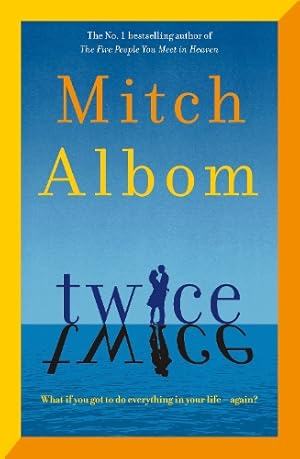
    Mitch Album’s, Twice was another book club pick. An interesting philosophical premise…what if you could snap your fingers and have a do-over whenever you wanted. Anytime things don’t go as planned simply say “twice” and go back to a time before the undesired event, to change your story to a more satisfactory outcome. The caveat being that you can only use your power once for any given scenario and if you abuse your power, particularly in matters of the heart, the do-over can have devastating consequences. Our would-be hero, Alfie, like his cinematic counterpart, is a bit of a narcissistic man-boy who never acquires the kind of consequential knowledge that develops character, or the ability to truly love until he loses the people who matter most to him. Mitch Album is not a favourite author but his book is a best seller and his story did lead to a rather moving discussion about mistakes and regrets and the power of those painful moments to transform us and make us more intentional with our ‘I love you’s.’ The book gets a 2/10, but the questions and conversation the book inspired rank considerably higher.
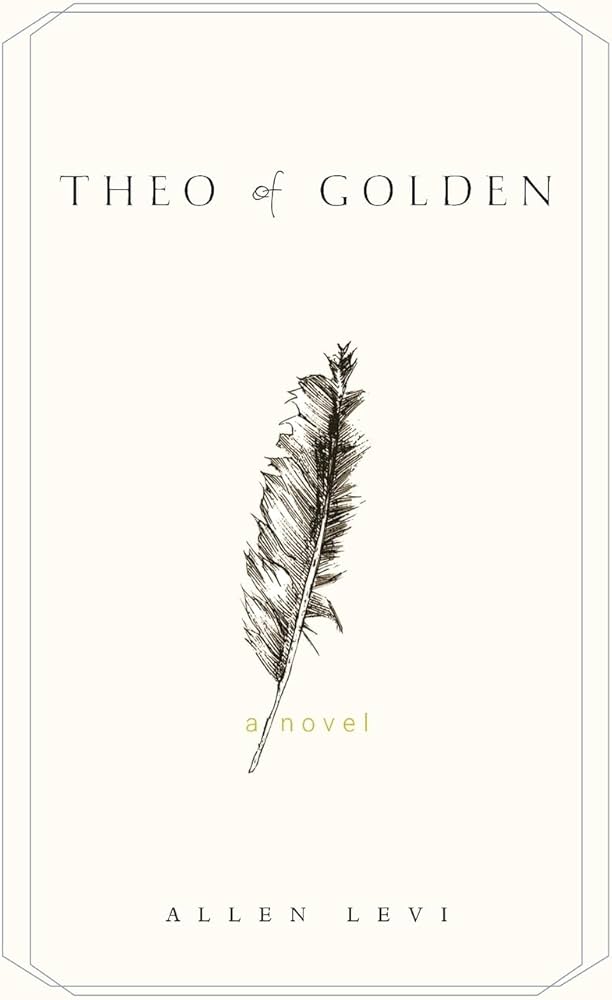
    Theo of Golden is the story of a mysterious, saintly gentleman who visits small town America, Golden, ostensibly on some undisclosed business that is not revealed until the end of the book. Theo begins a series of bestowals, purchasing portraits created by a local painter and gifting them to their subjects. Each gift is hand delivered to a cast of characters from all walks of life and in the gifting, Theo exercises old world charm and a seemingly beautific heart, that elevates the recipients helping them remember their intrinsic worth and their unique beauty, rekindling the light within them. A Christ-like angelic character, Theo will steal your heart and bring you to tears by the story’s end.  This timely book serves as a powerful reminder to readers of the capacity each of us has to positively effect those in our communities. Allen Levi’s book is a beautiful moral fable with the power to incite a culture of kindness. 7/10
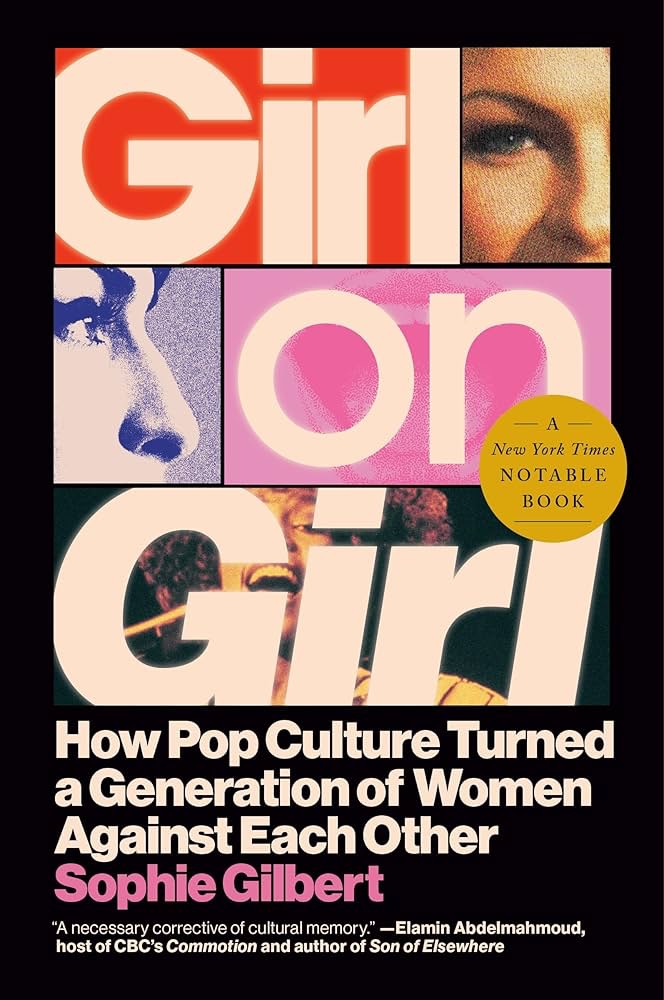
    Gilbert’s Girl on Girl is an unsettling chronicle of the last several decades of the women’s movement, hijacked by pop culture in the 1990’s and 2000’s, promoting rivalry, self-objectification and unconcealed misogyny. It is an anti-fairy-tale for all women weaned on Britney Spears and schooled on a steady diet of reality tv. Gilbert’s essays are academic in character, a thorough excavation and criticism of the collapse of feminism correlated to the rise of must-have beauty brands and the advent of body dysmorphia. It is an ugly lens on performative femininity, petty rivalries, the feminine experience as seen through television, branding and pop culture. Warning – this book will excite your cynicism with its focus on media and big business branding, training women to scrutinize, compare and compete with each other. Girl on Girl is a slap in the face for readers, an autopsy of the cultural wrecking ball dismantling feminism. Gilbert’s writing tries for levity to engage the reader but I found nothing to laugh at in this book, or its thesis. Girl on Girl is a horror story with the staying power to make you think twice before opening another fashion magazine or bingeing the next big reality tv series. Gilbert gets a 6/10.
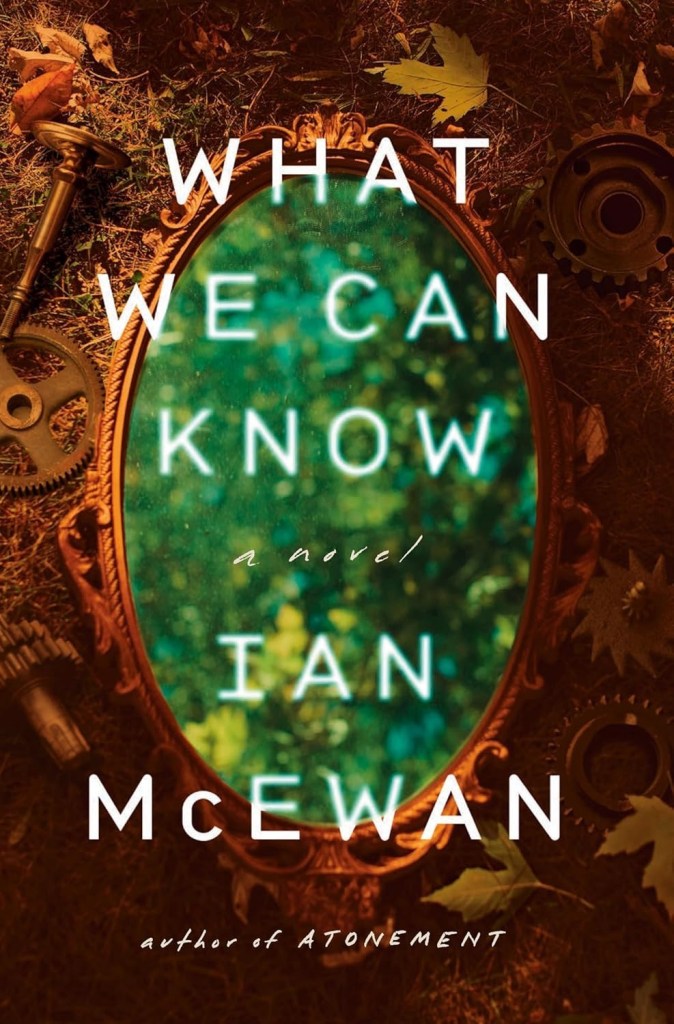
    What We Can Know is the latest offering from one of my favourite writers, Ian McEwan. It’s the story of a humanities professor, Thomas Metcalfe, living and working about 100 years in the future, dedicated to discovering a famous unpublished poem composed circa 2014, ‘A Corona for Vivian’, an undiscovered poem that Metcalfe argues has become “a talisman to survivors and the promise of a better future.” The story has the pace of a literary mystery and the smart dinner party parlance McEwan excels at. What We Can know is a dystopian look at what the world becomes after “the resource wars,” devastating climate change, and nuclear exchanges. It is a story about the redemptive power of art and the artefacts we leave behind, puzzle pieces of half furnished meaning, approximations of truth. McEwan is a masterclass in storytelling and as a reader it’s wonderful to think that poetry survives our apocalyptic tendencies. What We can Know was a perfect pairing for a quiet thoughtful weekend for this LOLIW. 8/10
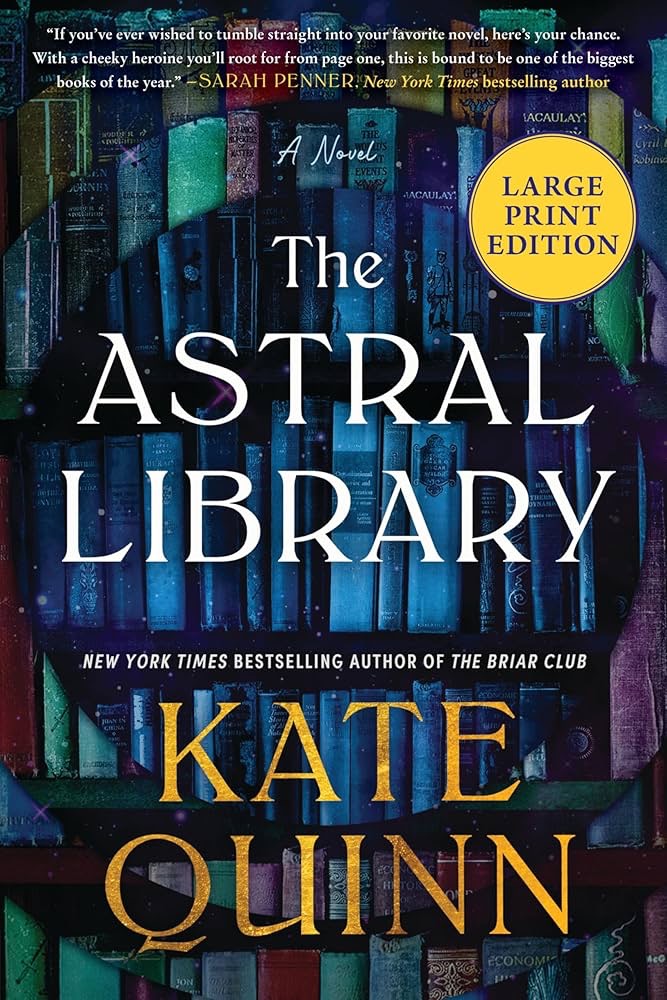
    If you could live in any book, which one would you choose? That’s the question the twenty-something, smart talking, library-loving heroine of Kate Quinn’s latest novel must ask herself. While the plot does take the reader into the narratives of Sherlock Holmes, the Jane Austen novels and a bevy of other well-loved classics, we don’t settle their long enough for any real reader satisfaction. Quinn’s book is really a meditation on the value of a library as sanctuary and the perils of repurposing them as for-profit business ventures. While it’s fun to romp through various classic book settings, The Astral Library reads like a bad after school special and has the whiff of young adult fiction. On the up side it did have me contemplating which book I might choose to live in. I couldn’t decide between The Elegance of the Hedgehog set in an elegant apartment building in modern Paris or The Guernsey Literary Potato Peel Pie Society, in the post-war chapters. 2/10
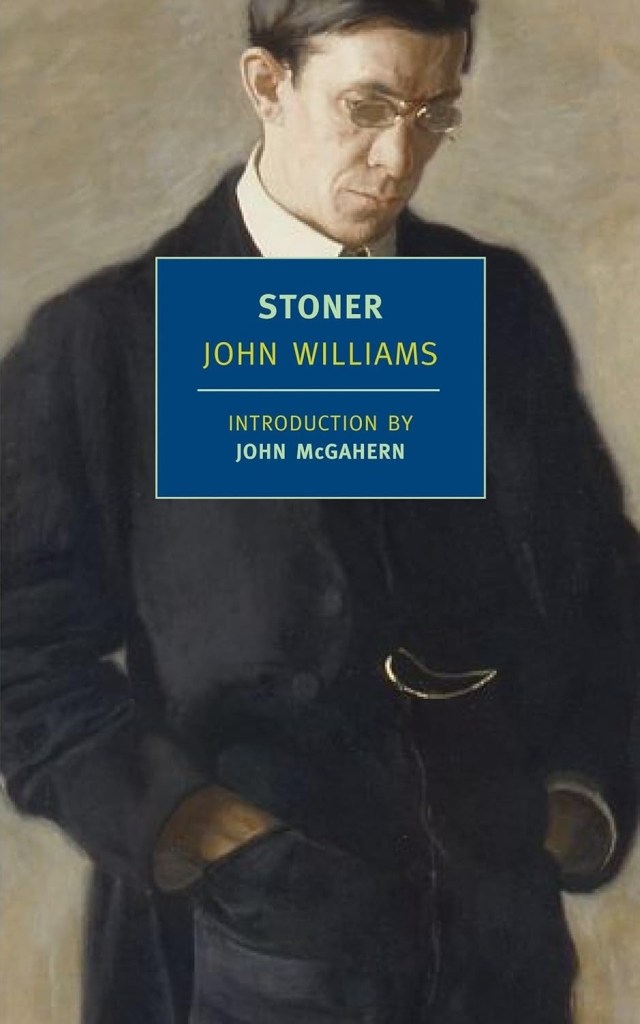
    Stoner by John Williams is the unadorned life story of a virtuous man (in the classical sense) from the American Midwest who is exposed to literature, poetry specifically, which changes the trajectory of his life. He becomes a teacher at a small Missouri college where he spends a 40-year career in the first half of the 20th Century, canvassing two world wars, a failed marriage, a tender love affair and deplorable departmental power politics where ego usurps the sanctity of the ideal of the university, an ivory tower meritocracy. Williams’ book is a meditation on the virtue of hard work, the import and joy of a teaching life, and the dangers of allowing the things of the world to corrupt the sanctuary of higher learning, where the search for truth and knowledge must reign supreme. Stoner is a powerful reminder that what little knowledge we manage to acquire in a lifetime leads ultimately to an ill-fated understanding that “in the long run of things, “even learning is diminished into a nothingness.” Williams delivers a dark and true ending. Spoiler alert, the death scene at the end is incredibly accurate and beautifully rendered…it stopped me for some time. 8/10
  • In Conversation with Nicola Carter

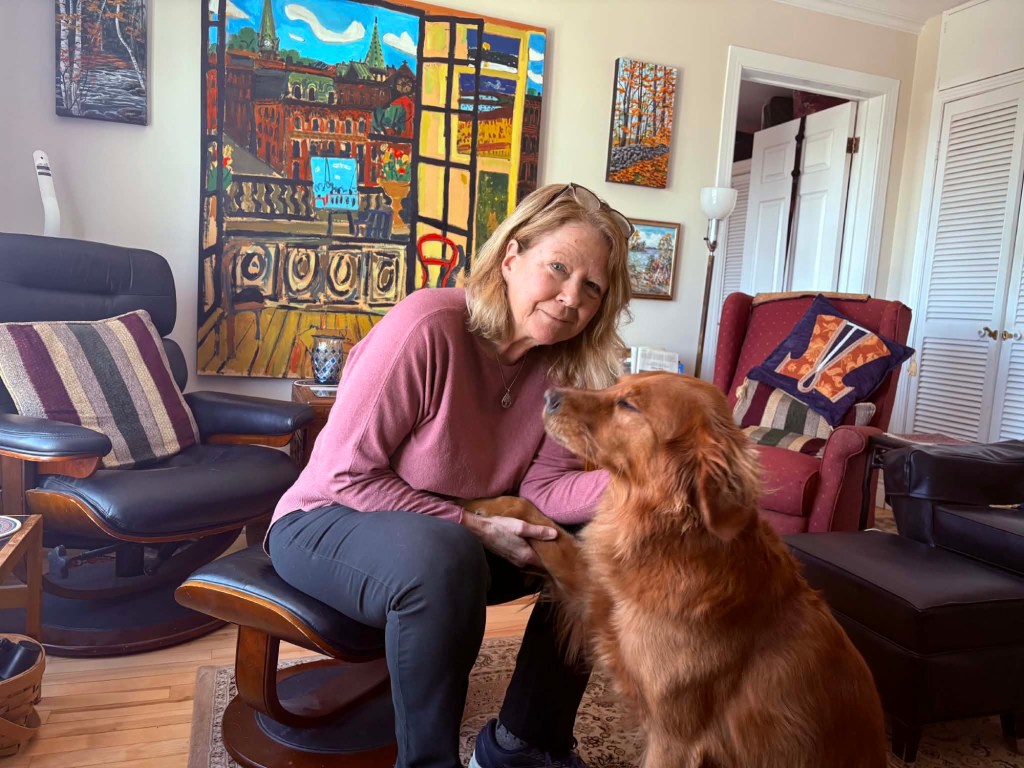
    If I ever write a novel, my heroine would look and speak and live a life a lot like Nicola Carter. Think Gwyneth Paltrow in Wes Anderson’s The Royal Tannenbaums, some undisclosed number of years later. Closing in on 70, Nicola remains an uncommon beauty, with a brilliant mind, and an elegance or manner that sets her apart from her peers. She has an air of mystery…she intrigues me.  It’s not that she doesn’t dive in to the deep end and discuss deeply meaningful, life altering experiences, it’s simply that you are left with the impression that she holds something in reserve, like a secret locked away, encrypted in her backstory. I must confess to a LOLIW girl crush.

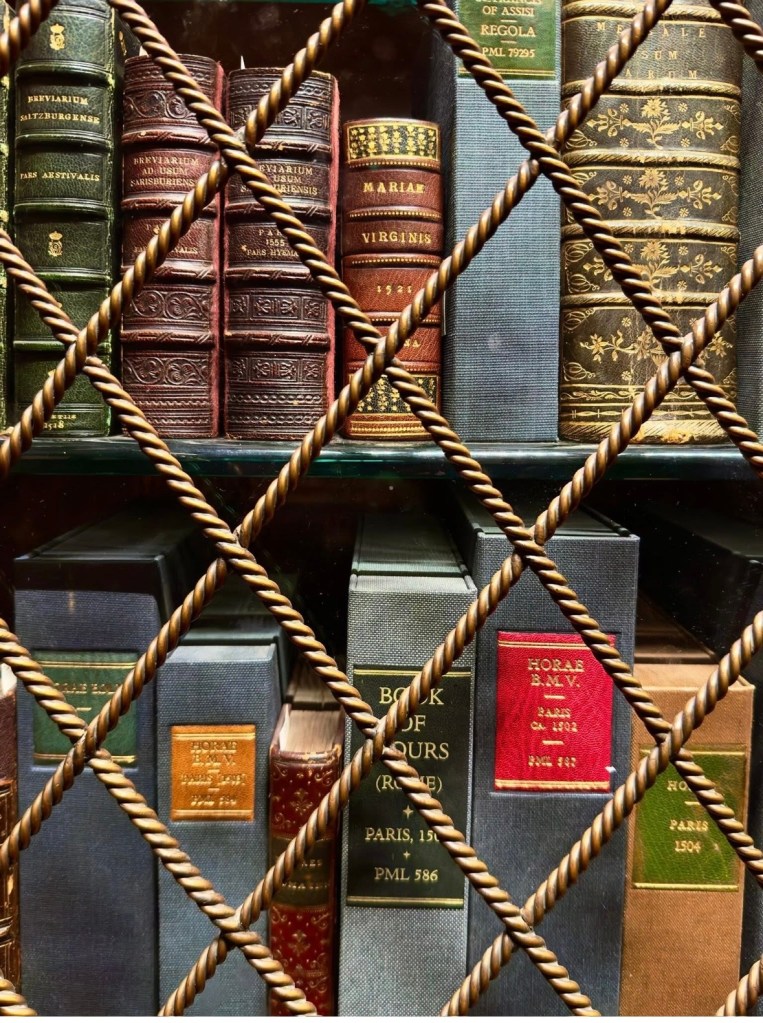
    During our interview Nicola serves me a cup of hibiscus tea, her current favourite, and a plate of halva, a dense, sweet middle eastern treat, both firsts for me.  A tea ball in the character of a mouse, hangs precariously from the side of my hand painted cup.  I am enchanted. In the home she shares with her husband, Jeff, the walls have been hollowed out to hold and frame hundreds of books, the remaining wall space is covered in an interesting, esoteric art collection gathered on her travels or inherited from ancestral homes. One small impressionist landscape in bright yellow draws my eye, a shock of sunshine from the back deck spills into the living room, and transfers my attention to a well-appointed outdoor space that transports you to a private, wooded, Narnia-like oasis, all within the city limits. Every part of her home has been utilized with intelligent design.  I feel at home immediately, welcomed by the princely Leo, a well-trained and well-loved retriever, easily the greatest treasure in Nicola’s collection.

    Born in Saint John, Nicola spent her early childhood in Fairvale (Rothesay).  Her mother was a concert pianist and her father a well-known corporate lawyer, described as “The Giant Slayer” after fighting and winning a case in the Supreme Court against a prominent NB family empire. Her father passed away when Nicola was just 15 and her family moved from Toronto to New York where she and her brother were both accepted into the prestigious Dalton School, where many prominent and powerful U.S. leaders are educated.

    While English Literature was her first love, Nicola completed an honours degree in Computer Science receiving the program medal, graduating at the top of her class in a male dominated field of study.  She started a family around the same time she started her IT career with the Newfoundland Telephone Company, later working for McGill University where she was involved in building the internet in the mid 1980s, when only research institutes and the military had access to the platform. She was instrumental in building the Quebec network (RISQ). and later ran the province’s operations network for them.  She describes the experience as “good fun…we we’re inventing things.”  She eventually returned to New Brunswick, where she soon began work at UNB, tasked with building the internet in NB. “NBTel very quickly saw a way that they could monetize it, by installing modem banks…where people would buy email addresses and then NBTel would manage it.  At this point the network was still dial up and they put me in operations where people were hands on with the Internet and where they needed the most support and experience.”

    “In time I made a lateral move into engineering where I was tasked with maintaining the infrastructure and eventually moved into management.  Every new technology came with problems and I enjoyed being part of the teams that solved those problems.  Engineering was also where I met my husband, Jeff.”  The information highway was a brave new world and Nicola was well placed with the credentials and the knowledge to take on the challenge of an exponentially accelerating and expanding field. “When it took off it took off,” she remembers.

    Today, retired for more than ten years, Nicola maintains an active lifestyle, as an avid outdoorswoman, a passionate chef, a cryptic crossword aficionado, an art lover, a grandmother and more recently a great grandmother. She is well travelled and well-read and enjoys what I would describe as an aristocratic lifestyle. Her days are her own, she maps her own course, and although she has known great loss in her life , she found her way out of the dark, a herculean task, her intellectual curiosity intact, and her joy of learning enhanced and thriving.

    Tell me your life story in seven sentences or less?

    I was born in Saint John, and went to school in N.B., Toronto and New York, always a bookish introvert with a passion for reading, animals, music and asking questions…annoying questions.

    After graduating, I had some false starts, bailing from a pre-med program at Western, bussing tables in Vancouver, driving across the U.S. in winter in a $200 ‘62 Ford Fairlane, later landing in Newfoundland with a revised study plan at Memorial: a degree in English Literature, then a sharp turn to an Honours degree in Computer Science, acquired to gain immediate employment (I was pregnant with my first child at that point).

    Over 37 years, I enjoyed a varied, challenging career in technology-based roles, beginning at Newfoundland Telephone, then McGill (early heady days of building the Internet), UNB (more technology builds as the Internet evolved including some teaching consulting and development in other areas such as multi-media), and finally at NBTel in Engineering and Operations technical and management roles until retirement in 2015.  My favourite roles? Solving complex technical problems.

    Since 1979, I have enjoyed parenting my sons Ben and David, born in Newfoundland, and since 1994, step-parenting Jennifer and Jessica, daughters of my husband, Jeff.  The challenges were many, and the rewards, great.

    What is the best thing about getting older?

    Self-knowledge of my physical and mental strengths and weaknesses. This helps me better understand what I need to do to thrive in my body and my mind.  I confess to not always acting on this knowledge but it keeps me from trying unnecessarily hard.  I can generally relax and accept more than I used to.

    What is the worst thing about getting older?

    Loosing people I love.

    What would you title this chapter of your life?

    I have a different one every day but I’ve settled on “Riding the Waves: Aging Gracefully and Gratefully”

    Describe Your Perfect Day

    A day which starts as a blank slate with no appointments holds the promise of a perfect day.

    The day would flow with a balance of exercise, reading, music, time with a friend, learning something new (probably from CBC, overnight radio, or a podcast), a long dog walk and, if it’s not winter, kayaking, swimming, dock-sitting, and ending with a really good meal.

    If you could retain or retrieve one quality from your youth, what would it be?

    I don’t think I have lost many qualities of my youth, except perhaps overwhelming anxiety which I’m glad to have tossed, mostly.  I am glad to have retained an abiding sense of wonder, hope, and optimism, a walking “Maggie Muggins” inside. I retain my childhood thirst for knowledge and ceaseless curiosity.  Lucky me.

    What’s the most important lesson you’ve learned so far?

    Hmmm…I have really experienced and learned a lot.  The most important lesson I have learned is that control is an illusion. I humbly accept how little control we mortals have over much on our lives. This is profoundly freeing.  The seeds of this knowledge were planted early, with the unexpected suicide of my father when I was 15. Untimely deaths have been a recurring tragedy in my life.  In 1994, my youngest brother, Erskine, succumbed to a long-term illness, aged 24.  In 2023, my oldest son, Ben, died unexpectedly in Egypt, where he had lived and taught for 10 years.  That same year, my dear younger brother/best friend, Cyrus, died, aged 65 in Istanbul, where he made his home as a teacher for over 30 years. I am still reeling from these last two losses but will say that the profound knowledge that I can control so little, and that I should not try, brings me some peace. Maybe we can only really start letting go when things have gone.

    The lesson is not all bound to negative outcomes. I have had some surprising experiences which have happened around me, circumstances not in my control, that have reinforced the lesson in a positive way. Back in 1984, my partner and our two sons were in Montreal during the Labour Day Central station bomb blast.  We were actually at the station when the bomb erupted with noise and smoke and screams.  It’s a crazy story …we made our way out of the carnage and by some strange circumstance ended up chatting with a man who reassured us that the bomb had not been on my brother’s departing train.  That evening the man’s photo appeared on the TV.  He was the perpetrator.  We then became involved in the subsequent inquest and trial. 

    Another time I was able to rescue two little boys from drowning at a local lake, just by sheer luck…I spotted something.  I was just in the right place at the right time.

    Finally, and perhaps most extraordinarily, I brought Jeff (husband) back from near death…also by sheer luck, when I found him unresponsive and not breathing in time to bring him back to life. How fortunate I was in time.

    In short, I placidly accept my relative insignificance, and do what I can do to deal with situations…good, bad, or frightening, and accept the surprise of unexpected adventures.

    Do you have a favourite quote?

    A quote that frequently comes to mind is “Would it help?” This came from the film, A Bridge of Spies, when a spy is about to be sent to his probable death in East Berlin.  His captor notes that he seem svery calm and asks if he is afraid, to which he responds, “Would it help?” I think of these words when faced with situations which could drive anxiety, or fear or anger. It gives me space to temper my reaction.

    Can I have another? In a recent interview, Bob Rae mentioned that he read aloud Shakespeare Sonnet # 25 as he migrated from one political role to another. The quote contrasts temporary “proud titles” with the enduring joy found in true love I think that sentiment brings a valuable humbling perspective to some of the trappings we might boast That resonates with me.

    The two quotes Rae highlighted from the Sonnet were:

    “The painful warrior famoused for fight, / After a thousand victories once foiled, is from the book of honour razed quite, / And all the rest forget for which he toiled;”

    “Then happy I, that love and am beloved, / Where I may not remove nor be removed.”

    Do you have a favourite word?

    My favourite word is an acronym, F.A.E. (fundamental attribution error) I use the word often at home as I did at work, to remind myself and others that we should not ascribe someone’s behavior to our ill- formed impression of their character, when the bad behavior could result instead from circumstances of which we are not aware. We should not immediately presume to know what’s going on in another’s head.  We should take a breath and seek to understand.  FAE has a been a good tool in de-escalating conflict.  I can cry out, ‘Hey, FAE!’ at home and we all pause to reset.

    If you could have tea with anyone, real or fictional, dead or alive, who would ir be and what would you talk about?

    My brother, Cyrus, whom I would call my longest, precious friend.  We never judged each other, shared so many interests, were both avid readers, and curious learners. I want to pick up where we left off in 2023, when he was still well, share some tears and many hearty laughs.  Sublime and the ridiculous.  My internal conversations with him still go on.

    Tell me three things that bring you joy.

    Witnessing the next generation evolving.  I have loved watching my sons and step-daughters making their way.  Now I enjoy seeing my grandchildren, who are all different and special in their own ways, growing.  Grandparenting is such a rich role.  A great grandchild was born into our clan last year. Another person to witness in their evolution.

    Walking in nature or just walking – especially with my dog.

    In summer sitting on the verandah at the camp looking out at the lake and listening, and often reading. Doing nothing is not really doing nothing.

    Name a guilty pleasure.

    So many pleasures and so little guilt.  Is that wrong? I assume that guilt might arise if one felt judged for these pursuits.  I happily admit to seeking solace in true crime podcasts, and doing word puzzles pretty much every day.

    Do you believe in life after death?

    If there were life after death, I don’t believe it involves a corporeal existence nor anything we currently understand.  Perhaps we live on in the memories kept by friends and family and our energy is drawn back into the universe.

    What would you like you r eulogy to say?

    I’ll come to this answer indirectly. At my son’s celebration of life ceremony, five of us spoke: myself, Ben’s father, Arthur; Ben’s brother, David; Ben’s lifelong friend, Matt; and Ben’s close friend in Cairo, Jim. We did not discuss in advance what we planned to say.  What emerged organically was a remarkable and moving tribute, with little overlap between the 5 speeches, each one recalling different aspects of Ben.  It was clear that we all had different relationships with Ben, largely dependent upon our roles.  In total, we together painted the complete picture of Ben and learned how he had touched each one of us.

    I would like to be remembered similarly, in eulogy or privately, by those I have loved or touched, for what we have shared and what they have valued about our relationship.  Actually, I’d like to know these things before I die.

  • Reading Room – Issue 6

    “The only thing that you absolutely have to know, is the location of the library” – Albert Einstein

    Atmosphere by Taylor Jenkins Reid was my book club’s January pick, chosen by a voracious reader who consistently delivers solid books. I’m happy to report she did not break with that tradition in 2026. Atmosphere is the story of Joan Goodwin, a self contained professor of physics and astronomy selected as one of the first female astronauts for the NASA space shuttle program in the 1980’s. Joan eventually finds her way to the stars, and at the same time, navigates a beautiful star-crossed love story here at home on planet Earth. Jenkins’ book is an insightful meditation on the nature of God and the observable universe, and also an intimate portrayal of forbidden love. The story is based on the ill fated 1984 NASA space mission that ends in tragedy, one every little old lady in waiting will remember watching on tv with our families. The book’s ending was a source of vigorous debate within our club, half our number admitting to sobbing uncontrollably, and others deeply disapointed and disdainful of Jenkin’s denouement… I’ll leave you to guess which category I fell into. 7/10

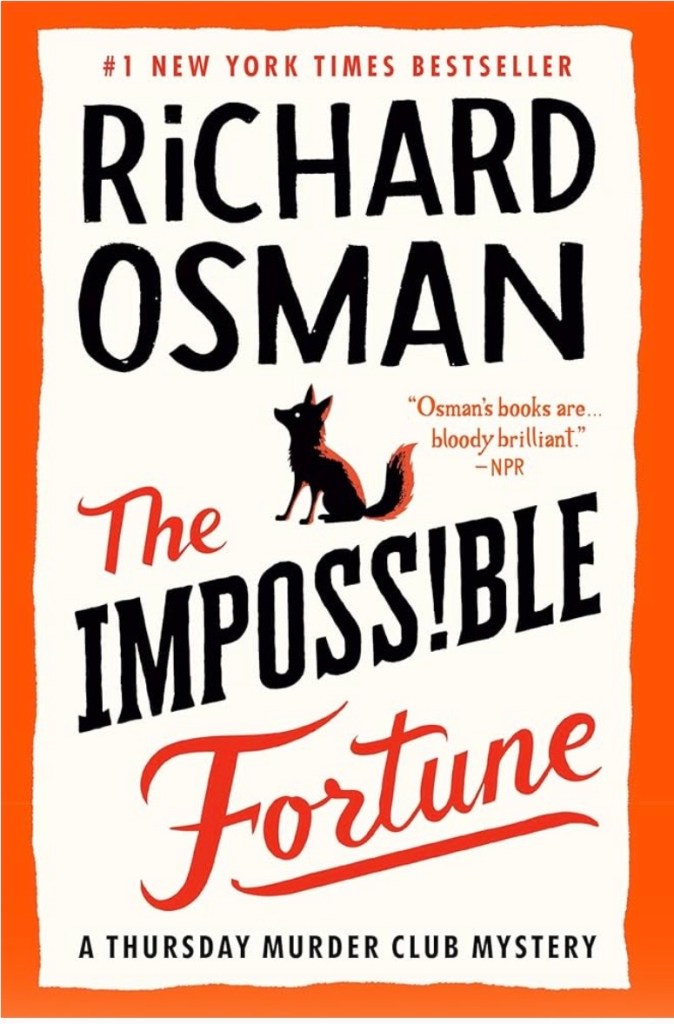
    Merry Christmas to me. Reading the Thursday Murder Club series is like carving away at a velvety cake, each slice more delightful than the last. I read this last instalment, Book 5 in the series, in one sitting. Osman’s characters are as dear to me as any friend and I cannot recommend these books highly enough. The small screen Netflix adaptation, despite its excellent cast, was, shockingly, a huge dissapointment in contrast, so I would caution readers to stick to the books. I’m not sure how Helen Mirren and Pierce Brosnan, Ben Kingsley and Celia Imrie, all favourites, could fall so far short of the charmingly crafted books but my guess is that the author was not involved in the screenplay adaptation, which stays close to the plot action and ruthlessly red-pens the incomparable interior narration of the four geriatic sleuths who solve murders like so many crosswords, all while portraying the ups and downs of ageing out. Elizabeth, a former spy was originally my favourite character but I must confess that Joyce, the Columboesque nurse and her dog Alan, captured center stage for me a few books back now. The therapist and the revolutionary who round out the quartet of central characters make excellent copy as well. Osman has a lot to say between the action sequences, and one can only hope that any further small screen cinema captures the depth of the books’ philosphical architecture and the charm of the characters often inarticulated interior narration. 9/10

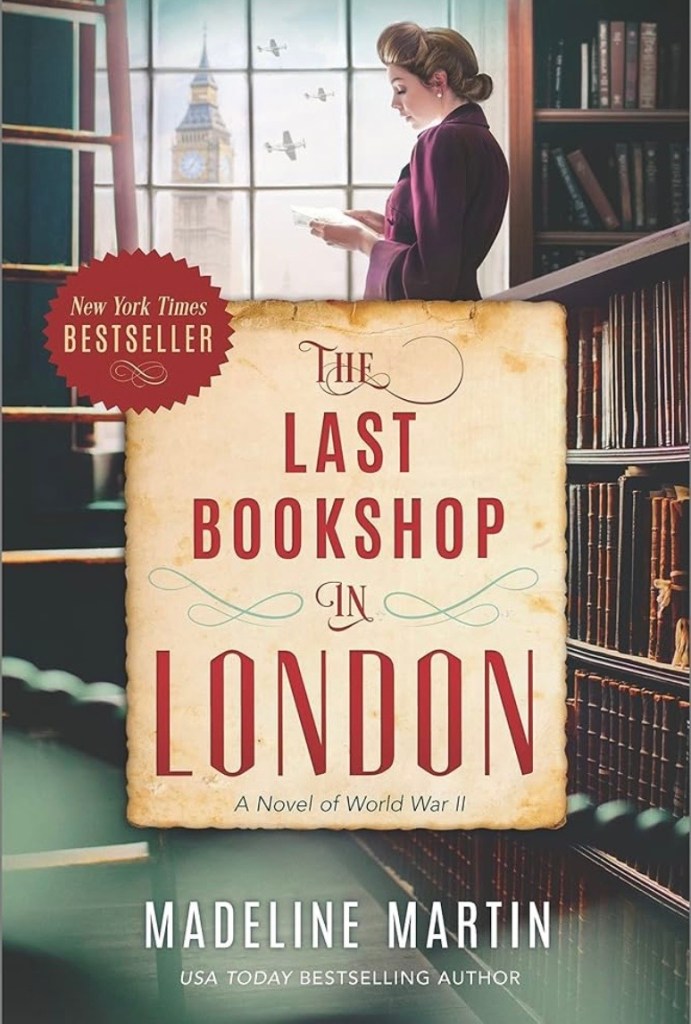
    Wartime Britain during the Blitz, a bookstore, and a young innovative woman discovering the joy of reading is yet another Christmas pudding of a book. Martin’s story is laced with historical anecdotes and details that lend her story authenticty, set in a romantic landscape the book is a beautiful portrait of love and loss, where bomb shelters are transformed into makeshift reading rooms, and where strangers find comfort in the classics and sanctuary from their chaotic and often tragic wartime lives. Grace Bennett begins with The Count of Monte Cristo before moving on to the Austens and Dickens as she comes of age and finds her voice in a dusty bookshop on Primrose Hill, in the heart of London during the Blitz. Martin’s book is a testament to the power of story, and the sanctuary of literature in the darkest days of war. Pretty much porn for a LOLIW who loves to read. 7/10

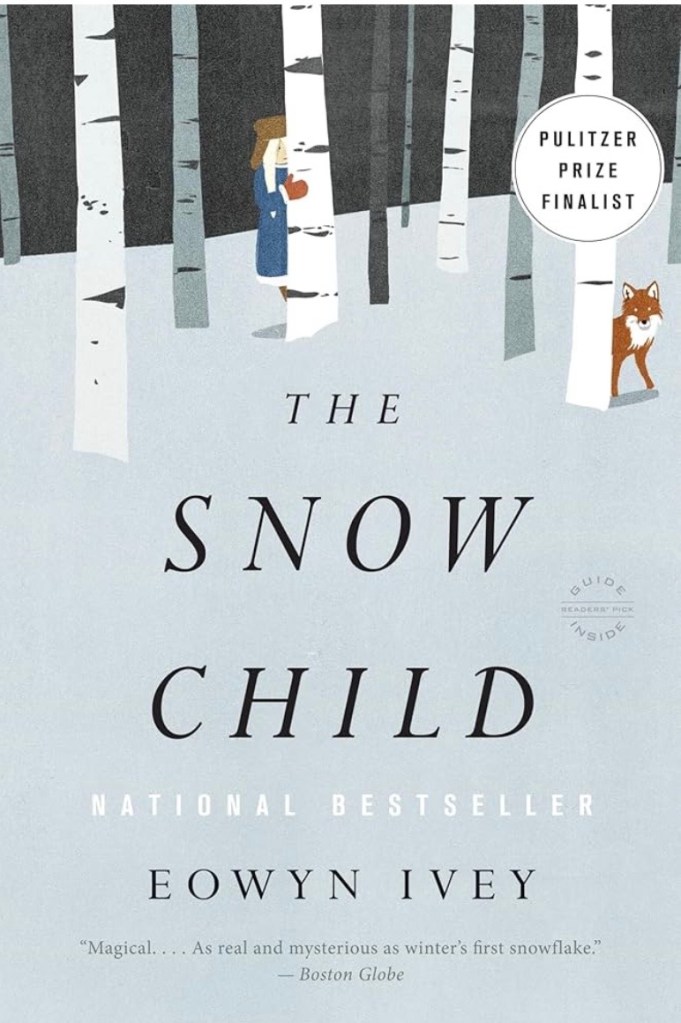
    The Snow Child has been in my TBR pile for an over a year, a gift from a friend at work. It is not my usual fare, magical realism. But when the book title showed up on a Winter’s fare reading list, I decided to pull it from my library and sample this lauded fable/fairy tale. Set in inhospitable Alaska in 1920, two aging, childless homesteaders build a snow girl who seemingly comes to life the next day… a miracle, a mirage, an answer to their prayers, a comfort to assuage all their troubles. Reminiscent of a Russian fairy tale read to her in her youth, Mabel, the would be mother, convinces herself that the girl is their child, conceived in snow. While Jack, the father fugure, is convinced the Faina, their snow daughter has a more orthodox lineage, the daughter of a dead trapper. Ivey’s book was a finalist for the Pulitzer prize in 2013 but I found it slow moving and lacking in the kind of magic I hoped it would hold. While the setting was beautiful and harsh and a near perfect place for some wisdom born of isolation and yearning, for me the book failed to crystalize the promise of the fairy tale and reveals real life as a story more unbelivable and fantastical than any tale told to children. 6/10

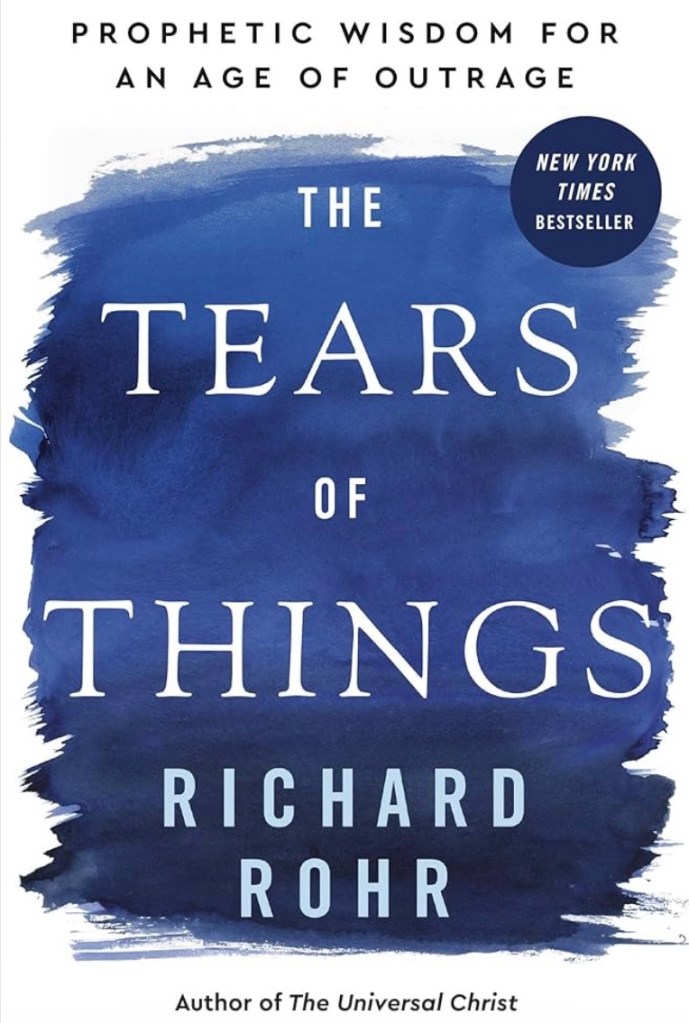
    Richard Rohr’s The Tears of Things aims at cultivating global empathy, “the opposite of judgment”, calling for an end to the polarization of opinion that divides us, and the collective greed currently fueling suffering around the world. Rohr asks us to embrace a deep clarifying sadness as a kind of salvation or doorway to true understanding. He advises us to consider our cultural contradictions: that killing is morally wrong but necessary in war, that greed is evil, but capitalism is lauded. He calls on us to adopt a “view from the bottom” where societies most vulnerable survive, and to act accordingly.

    The Tears of Things is an academic work with extensive biblical references detailing the Prophetic way to pass through disorder to a new and evolved consciousness. Rohr’s thesis is intended as a cultural change agent. The Prophets, he tells us, are realists and truth tellers, alchemists taking on contrary agents and conjuring a spiritual transformation towards wholeness, individually and collectively. Rohr is calling us to adopt a state of forgiveness and grace.”You must listen and listen again, and not understand, see and see again, but not perceive….until you understand with your heart.”(Isaiah)

    Rohr’s book is a timely and powerful reminder to examine and ultimately abandon our “us verses them” assumptions, and relinquish our cult of innocence to become “the light of the world.” 7/10

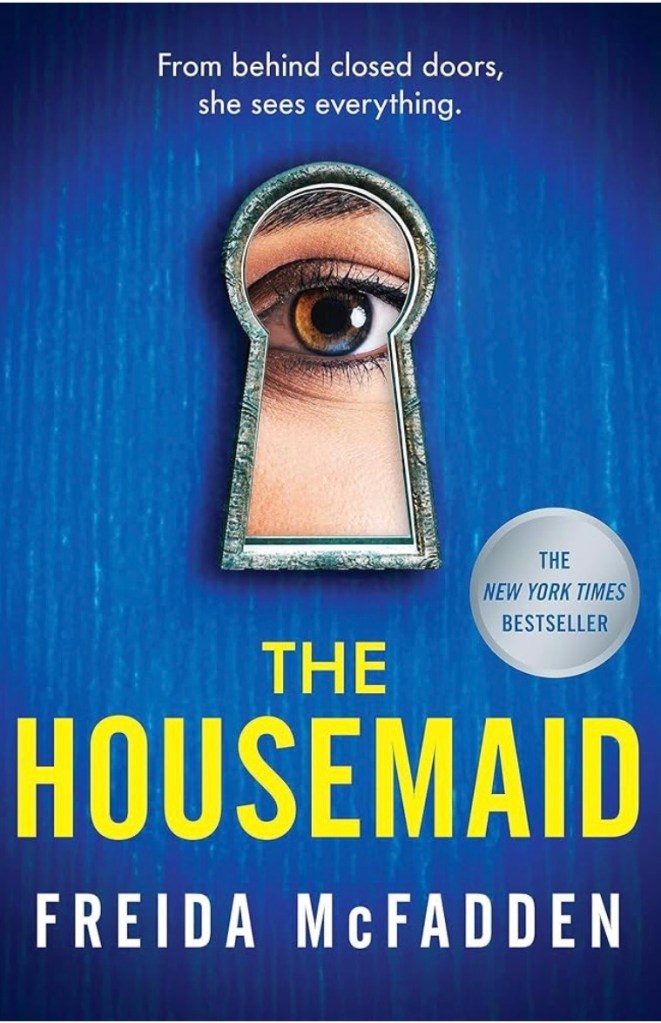
    This hugely popular page turner is a bullet train that delivers. The plot is unique enough to capture your interest immediately and McFadden keeps you on a hotseat of nervous tension chapter after chapter. No small feet in a genre that has exploded and saturated the market in the last decade. McFadden maintains pace throughout and more importantly she creates characters you want to explore, to discover more of their back story and ultimately, to understand their motivation. The story has already been made into a blockbuster film and though I havent seen it on the big screen, I am tempted to sample the cinema version if only to see how the story is cast, particularly the devastatingly handsome husband. While the reader is well aware of where the real danger lies in the story, we are unable to look away as the protagonist finds her way through the subtefuge and reveals her own dark history. The book sets the reader up for a sequel and I understand that there are, in fact, three books in the series now available in print. I will no doubt throw them in my TBR pile and pull the next one out when I’m in the mood for a tight rope narrative very late and very alone at home with a character who intrigues and shocks and has you enraptured in the darker side of the fairer sex. 7/10

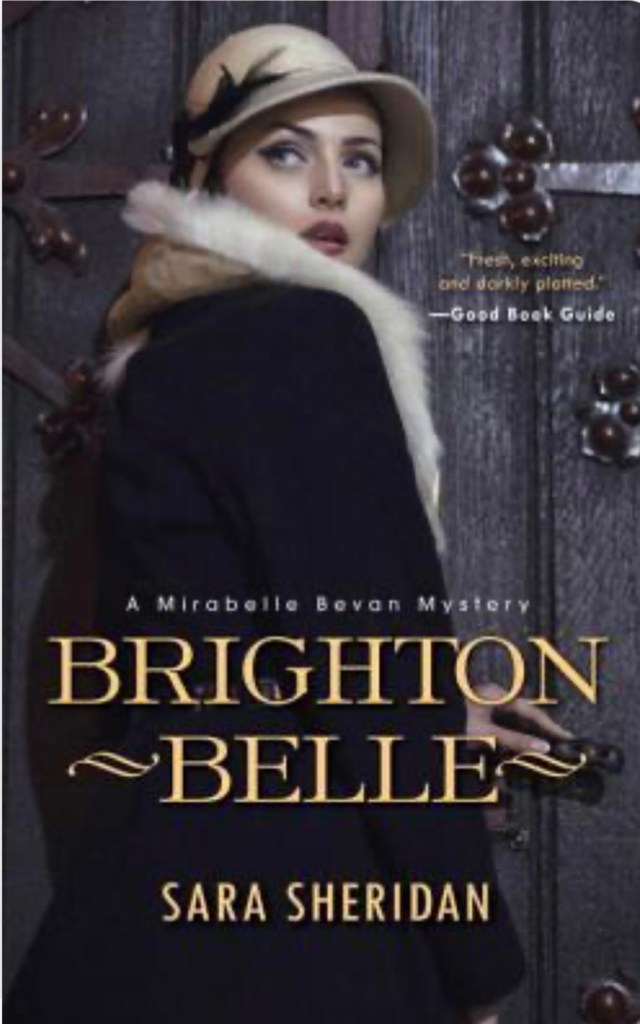
    I picked this mystery up at a book sale last summer having no idea it was part of a larger series. I grabbed the first in the series thank goodness. Sheridan has created a delectable detective in Mirabelle Bevin, ex British intelligence in post WW2 England, a time of Nazi hunting, before the full horror or extent of war crimes are revealed at the Nuremberg trials. Bevin is everything a good detective need be, bright, with a half revealed history that lends her an air of mystery, and of course an essential flaw of some kind, in this case a broken heart and a dead, married, war-hero lover. Set in Brighton, Sheridan’s characters eat fish paste sandwiches and stare out to sea, and put the kettle on and break out tinned biscuits mid afternoon. Sheridan’s book captures an underlooked time in history just after the war’s end when women who were involved in Intelligence work for the war effort were dispursed and forced to find new ways to cultivate a life of the mind in a patriarchal age. The story is peopled with interesting 5th business characters, a patronizing police detective who I suspect wiill develop into a romantic interest and a novice sleuth gal-pal, a black woman in 1950’s Brighton who I hope to see more of in subsequent books. This series promises to deliver a succession of perfect Sunday afternoons. 8/10

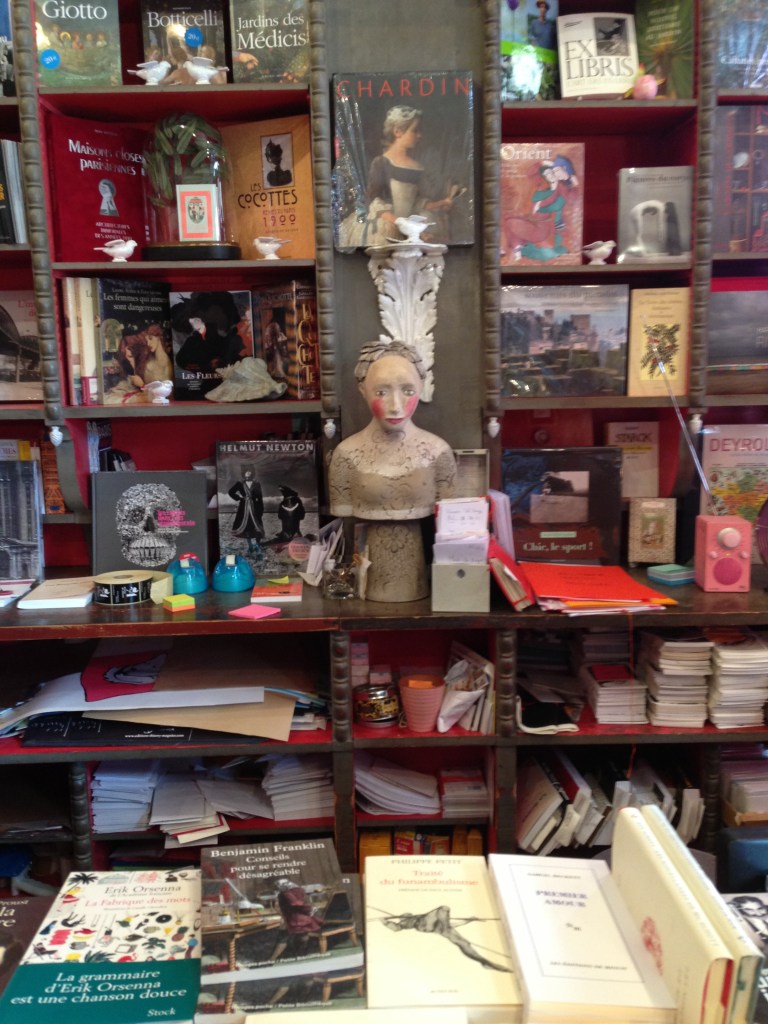
    This book is an absolute gem I picked up in New York last week at a charming book store called Three Lives and Company, rumored to be the bookstore that inspired The Shop Around the Corner from the film,You’ve Got Mail starring Meg Ryan and Tom Hanks and written by Nora Ephron. It was the loveliest little book store I have ever been inside. It felt like each book housed there was hand picked after serious vetting as space was at a premium. I could have stood there all day and listened to the lively conversation and book talk within those walls … a short story all its own.

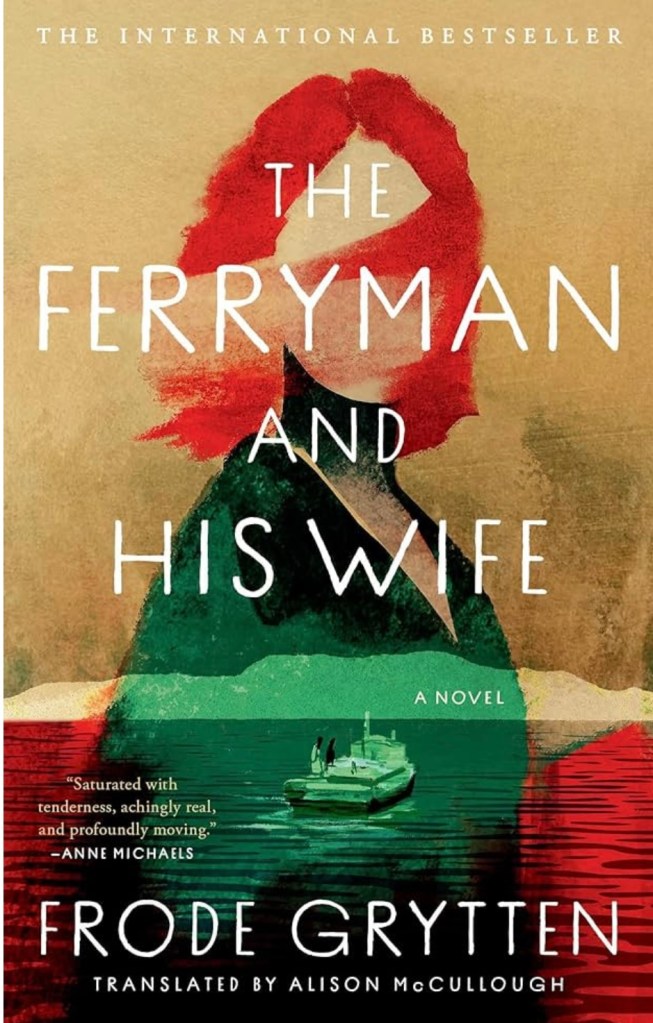
    Grytten’s book is the narrative of Nils Vik, an aged ferryman on a Nordic fjord who wakes one morning aware that it’s the last day of his life and sets off on his boat, a day like so many others, to travel his ferry route where he meets people from his past, the dead, including his beloved long dead companionable dog. The book is a tender and beautiful tribite to all the little ways we help our neighbours and friends and how intimately we touch each other’s lives, often unknowingly. The Ferryman and his Wife is a charming tale written in the liminal space that separates this world and the next, a time when our dead will be revealed and we, each of us, have an assignment, an assignment to remember. 8/10

  • A Curated Life

    “If you want a golden rule that will fit everything, this is it: Have nothing in your house that you do not know to be useful or believe to be beautiful.” – William Morris

    “Those who commit to nothing are distracted by everything.” – Bhagavad Gita

    I’m twelve weeks into a “down to the studs” reno of my basement. We are getting there…almost ready for paint and wallpaper …yes…that’s right…I said wallpaper. I happen to like wallpaper…just not the 50 year old striped job that lined the stairwell leading from my kitchen to the lower level of our home. I’ve hated that patterned stairwell since we moved into the house almost fifteen years ago. That’s a long time to abide an abhorent passage in your home. So…ankle deep into quasi-retirement, and my baby moving out to a beautiful space of her own; it’s got me thinking about embracing a less lackadaisical, more curated life. I refer here not only to my immediate setting, and decor choices in my home, but also to a more bespoke aproach to everything I allow entry into my mental and physical space. How we spend our time and who we choose to spend it with are weighty considerations indeed, particularly as the sands of time accelerate through the LOLIW hourglass.

    I am a woman who has always known what she loves. I’m never at a loss for how to spend my time. My baseline is reading in bed, followed closely by reading upright in well lit rooms, rooms with doors to discourage the detritus of day to day discourse. Toss in a daily walk, a few writing hours, and few games of pickleball (a smattering …mind), and maybe a sprinkling of meaningful communication with friends and family and you have the basic components of my perfectly appointed life.

    It won’t surprise you to learn that with respect to decor I like to sit in spaces that smell and feel like 19th century reading rooms. Jane Austen meets functional, animal-friendly, old-world elegance and comfort, with Rembrandt lighting in the shade of expensive cognac and furniture made to last let us say, longer than me. I like plain lines…nothing busy…smalls piles of books in every conceivable nook, and walls overfilled with art that makes me think and feel.

    Approaching 60 it seems long past time to take charge of my decor and embrace a more curated lifestyle. With more time at home to play and ponder and be, its important to invest in our space and make it conform to our notion of how to live well. Out with the acquired furniture that found its way into every corner of the basement (granny’s telephone table, the uni trunks, the side tables the dogs used as chew toys, the wedding art, the chairs I reupholstered one time too many…gone). What would your space look like if you started from scratch… what gets to stay, what gets dumpstered in the night?

    To curate is to carefully gather sift, choose and organize so that everything is handpicked, assembled, and edited by you. This might mean the dedication of an old bedroom to a fly tying workshop or a yoga studio or a writing room. The downstairs grand room might be reworked as a cozy british bar, or a working library, or a music or pottery studio. Adult spaces like day nap chaise-lounges in light colours might be positioned near full window walls for stargazing with telescopes or simply to watch the dancing autumnal leaves or the spring rains pelting your garden seedlings to life, or the magical snow that falls on Christmas eve.

    Of course lighting is everything… my mother taught me that. She liked rose tinted bulbs for evening ambiance, strong enough to read by in the after dinner hours but not so bright you can see the skin wrinkles on your LOL hands as you turn the pages…its a delicate balance ladies. A comfortable seat by the fire built for you and yours is essential for the long Canadian winters, perhaps a dartboard, a drinks cabinet… you get the idea. It’s time to focus less on containment of mess and sticky fingered childrearing chaos, and more on zones of comfort and joy for the soft bellied adults who remain. Don’t forget a posh pillow for the geriatric dog.

    Take your time visioning how to create yout LOL space.. explore your options…think about what you want your home to provide now, and build it from the inside out. There are no design rules that can’t be broken except one, namely, abandoning your own ideas on beauty and functionality. This is your home we’re speaking of, you have only yourself to please so if you want to string eddison lights from the rafters, share space with too many plants or cats or books, create an industial feel by painting the piping black or steel coloured… do it. If you want to showcase some macabre collection of antique surgical instuments or early century pharmaceutical elixirs (weirdo), now is the time to make your space into a reflecting pool for all your darlings. An invitation to your home should always feel like an invitation to you.

    Outside your home it’s equally important to curate the spaces you decide to inhabit. In rertirement if you don’t decide how you’ll spend your time, others, well meaning friends and colleagues, will ensnare you in their version of a life well lived. The siren call of casual work, the escalating addictive properties of pickleball, best resticted to promote injury preention, the silent scream of the sour dough starter and its incessant demand to be fed. That little white bread baby isnt the boss of me.

    A few years ago I read a little book called “The Subtle Art of Not Giving a Fuck” which espoused a pretty basic but essential philosophy with respect to time management and boundaries. Summarily, the author suggests that in an age where we are inundated with information and competing demands on our attention, and very often incompacitated by overstimulation and endless options, its important to decide to live deliberately and in accordance with a few key individual values and interests and spend our time and ultimately, our lives, accordingly. The book advises adopting a maximum of 5 things to give a fuck about. Thats not a lot if family and healthy living are 1 and 2. If reading, writing and pickle ball are my 3,4,5 then maybe maybe pottery and painting, knitting and felting, are curated out of my daily living line up…at least this year. Every LOLIW must choose how best to spend their time. Maybe you’ll make your garden and greenhouse your second home from May to September, perhaps you’ll join a rug hooking guild or a choir or an arts collective during the long winter months. Let your interests drive your pursuits and don’t be cajoled, or convinced to spend your time in settings that don’t meet your individual criteria for comfort and joy.

    A quick comment on mental space. I live so much of my life in my mind it’s important for me to dine on a steady diet of images and words that resonate with meaning. I hold space for vetted novels and films and converations with new and old friends who know secret things. Stories and stimuli that bring comfort and joy and occasionally cast out to higher things. While I have just as much of an unseemly fascination with Ed Gein and his skin suit pursuits and niche decorating vibe, I’m not sure I need to absorb the 8 episode narritive of the man who was the inspiration for Psycho, The Chain Saw Massacre and Buffal Bill. I mean I guess he didnt eat anyone …so thats good…right? My point is that curating that series out of my mental space and protecting my inner sanctum and sleep hygiene is probably for the best. I don’t need a visit from Gein in my dreams at night. But if real crime horror is your LOL jam, maybe Ed Gein gets a pass.

    You are the gatekeeper of your mental and physical space. Guard your boundaries, with knitting needles if need be. Allow entry only to what you decide to give a fuck about. Design a space and a life dedicated to your passions… an art room…a dream kitchen…a library…a pocast studio… a music room. It’s waiting for you beneath the debris of a lifetime of collecting the residue of other people’s idea of how to live well. So if you’ve been neglecting your mental and physical space like I have, begin an inventory of everything that you find beauty and comfort in, then drag the rest to the curb and begin again, consulting no one but your own inner curator. I believe you’ll find her taste is unerring.

  • Reading Room – Series 4

    “So often, a visit to the bookstore has cheered me, and reminded me that there are good things in the world.”

    Vincent Van Gogh

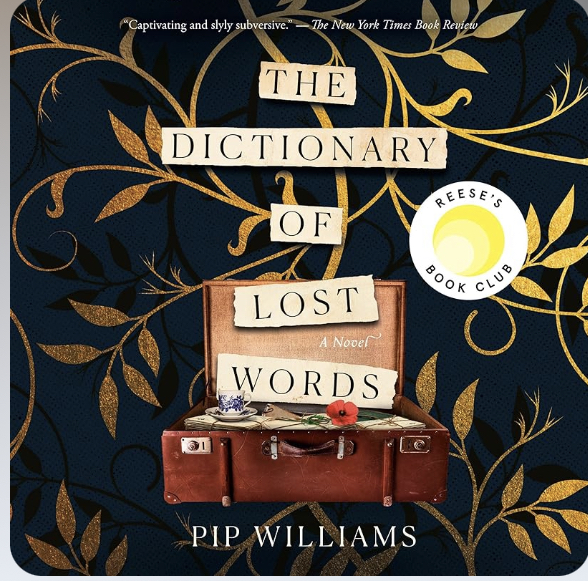
    The Dictionary of Lost Words is the story of a young girl who grows up beneath the sorting table of a Scriptorium where words were collected and scrutinized and judged worthy or discarded by a small group of learned lexicographers who produced the first Oxford dictionary. Esme is indoctrinated into a culture that cares for and reveres the written word, that understands the import of language, and begins her own collection of discarded words, those deemed unworthy due to their pedestrian nature or obsolete status…words like bondmade and other words that coalesce around the language of women, words like suffragette and cunt. William’s work is an interesting exploration of the social history of the first half of the 20th Century, including women’s emancipation and the onset of the Great War. The novel is a love letter to anyone who loves language and saveurs words, and who understands the power of written script and the importance of preserving what may be so easily lost. I am a lover of words like my father before me, he collected them like they were something to treasure and hold dear. This book is a perfect read for a bookish woman who dreams of scholarly hours and endless days within the stacks of The Bodlean Library which has a starring role in the novel – 8/10

    This book was recommended by a friend after discussing The Thursday Murder Club books. Killers of a Certain Age, as the title implies, is the story of a group of four post-menopausal assassins on the precipace of retirement. Meet Helen, Mary Alice, Nathalie and Billy our engaging, intelligent first person narrator. They are embarked on a cruise that goes very wrong very quickly and they are forced to fall back on their killer instincts. While the book offers an interesting premise and is no doubt headed for a big or small screen adaptation, it did not read as well as the Thursday Murder Club books. I found it hard to distinguish between the title characters, with the exception of the narrator, Billy…the others weren’t drawn distinctly enough, and the murky nazi-hunting “museum”, the assassins employer, which may have been a source of endless fascination, seemed almost farcial in its presentation. While the lead character, Billy, was well written and sympathetic, as was the dexter-like work ethic the assassins used as a code for killing, erasing only the morally disposable, the book reads like its arrived a little late to dinner. Flashbacks to training days and themes like the invisibility of the older woman are definate high-points in the book, but we’ve read the aged gang of adventurers story before and the writing was better. – 6/10

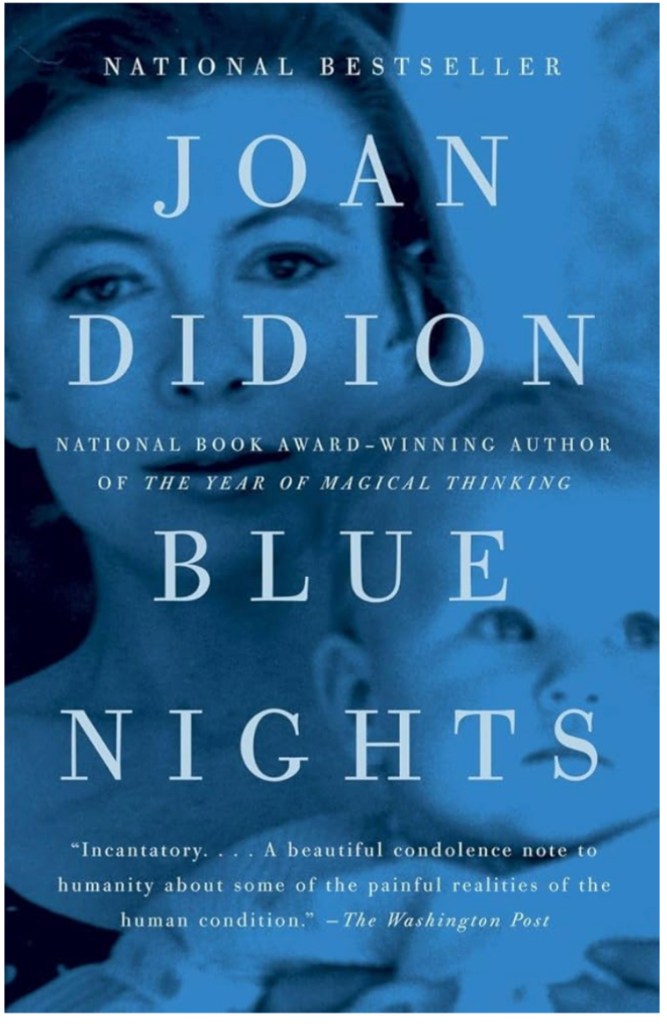
    Blue Nights by Joan Didion is a heartbreaking remembrance of the life and death of her only daughter, Quintana Roo Dunne. Didion recounts blue nights, the gloaming moments, what the French call ‘l’heure blue, “the end of promise, the dwindling of days.” The book’s subject is very weighty – what greater grief can there be for mortals than to see their children dead. (Euripides). Didion’s narrative explores what it means to be without your child, what it means to let them go, and what it is to be tasked with “protecting the unprotectable.” It invokes the terrible pain of remembered parenting, “Brush your teeth, brush your hair, Shhhh, I’m working.” It is painful and poetic and hard to look away from. It is a meditation on the scourge of depression and anxiety, the imperfect art of medicine, and the horrifying realization that we can never deserve our darling children, that we may fail to keep them safe, and that in death we may begin to forget them. A haunting read. – 7/10

    The Novice is a departure from Hahn’s usual meditative prose. It is a short work of fiction that will resonate with anyone who has lived a life and experienced injustice or unwarranted judgment. It is based on the true story of Quan Am Thi Kinh, a tale that every Vietnamese countryman is told from earliest childhood. Kinh was a woman who masqueraded as a man in order to join a monastery and is revered for manifesting infinite forgiveness. A character accused unfairly of misdoing, she endures many hardships while cultivating a spiritual life, and aquiring the qualities of loving kindness, compassion, joy and equanimity. The book is a parable for our times, a simple powerful fable that counsels us to “go home to the island within ourselves,” While the book is not my favourite of Hahn’s, I am perhaps not evolved enough to feel transformed by his simple beautiful message, at least on this occasion, I recognize The Novice is an important read, one that will stay with you awhile. – 6/10

    Copeland’s Eleanor Rigby, as the book title suggests, is a swansong to the lonely. Liz Dunne is a frumpy , middle aged, over weight, friendless redhead and the story centers around her transformative relationship with her newly found son. Written in first person narrative, my favourite, Copeland’s story is sad and funny, sometimes both at once, and explores what it means to be lonely in the modern world. “Loneliness is my curse – our species’ curse – it’s the gun that shoots the bullets that makes us dance on a saloon floor and humiliate ourselves in front of strangers.” It is a salute to the invisible among us. At one point our narrator asks if she should finish up, “perhaps you might not wish me to go any further.” But as Copland wisely suggests a little later in the narrative, “nobody’s story is boring who is willing to tell the truth about himslf.” I liked Liz, a woman who knows she has lost many chances and opportunities for new experiences and is finally ready to embrace the gift of being alive. – 6/10

    Screenshot

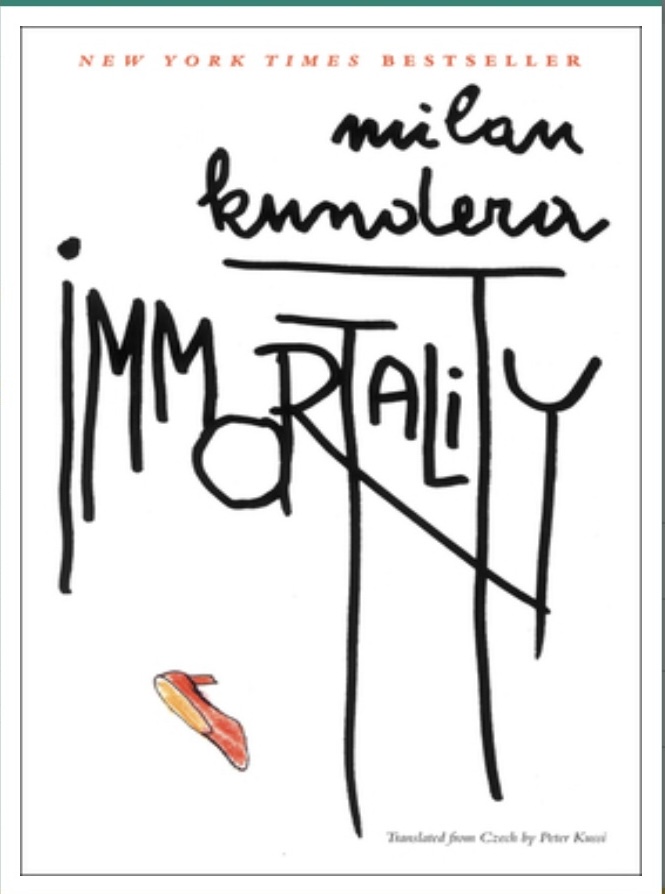
    I picked this novel up on a recent trip to Prague with my daughter. I handed her The Unbearable Lightness of Being which I read when I was her age and then grabbed a copy of Immortality for my little old lady in waiting library. The story held great promise. Agnes a little old lady herself, living life in a tenured marriage on the mean streets of Paris, revisiting her childhood and coming of age including former love stories and complex family relationships…pour me cup of tea and lets get lost together I promised myself. Sadly the book did not deliver with its incessant back and forthing to a classic love affair between Goethe and Bettina. A running parallel story that I was, no doubt, not clever enough to enjoy. I wish Kundera could have contented himself with a simple contemplation of death in real time, less high theatre, metaphorical references, more…death is coming and do I want to spend eternity with the people I made a life with here, the interesting idea of the world as an ad agency, or how about “hypertrophy of the soul”, or maybe the changing nature of time, just a few of the loftier notions he introduces…aren’t those themes sufficient to build a novel on? Overly academic and ambitious Kundera…we know you’re smart, you dont have to reference every page…you told us so much and showed us so little, and left us with nothing to keep. Cardinal sin…you broke your contract with the reader. –2/10

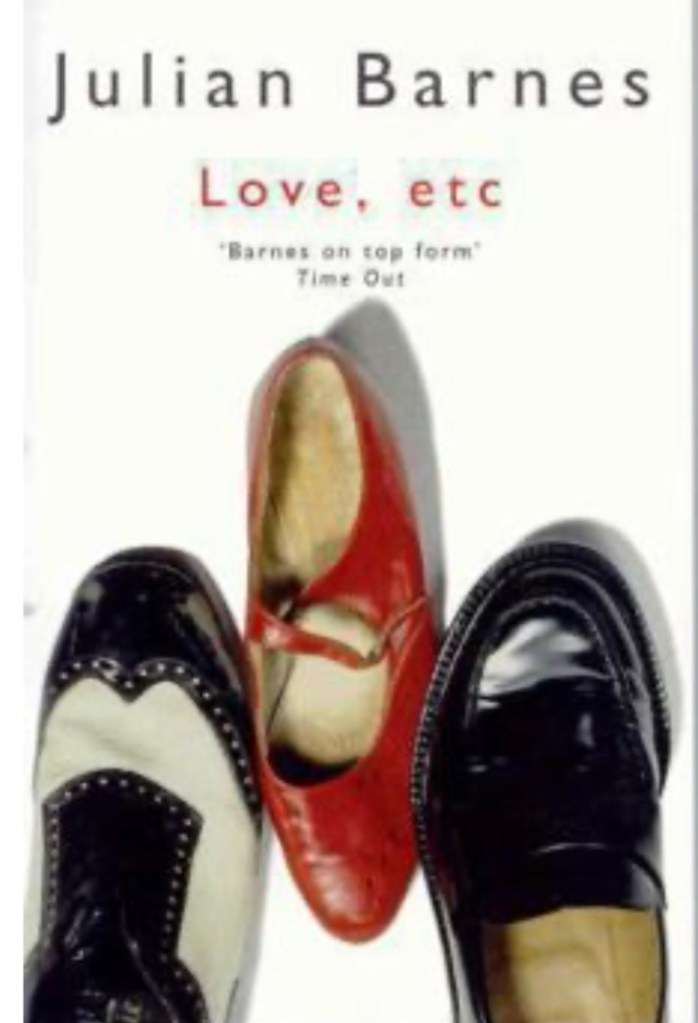
    Love etc. is a dark ad twisty menage a trois between Gillian and husband number 1, steady, reliable Stuart, and husband number 2, witty, entertaining, out of work, Oliver. The story is told in the voices of the three principles, with a few fifth-business cameos inserted for respite care of the reader I imagine. The three stars of the novel tell their truth without interruption or the contamination of conversation. The book is a sequel to Barne’s eariier work, Talking it Over and reads a lot like a one man play, spoken in three distinct voices. Perhaps I might have enjoyed the work more if I had read its forerunner first, but I doubt it somehow. I found the characters very real and clever and charmless, and the narrative full of pithy one liners like “lets just fall into bed and not have sex.” Barnes talent is without doubt, he expertly conveys his weighty themes – the inexplicable sadness of things (“I want mommy to be more cheerful”), the advantage of age and the priviledge of not explaining everything (“you are very naive about us, the old people”), and the last gasps of a used up marriage (Do I still love Oliver? I think so, I suppose so. You could say I’m managing love”). I applaud Barnes mastery and his keen eyed take on the larger life questions and still I did not enjoy this work and cannot recommend it. – 5/10

    Screenshot

    Thurber’s book of essays and amusements is a collective look at the imperilled english language, disdained and disfigured in the mouths of users and abusers of the spoken word. The well known humorist invites readers to “urge up a footstool, loosen your stays, and saucer a scotch,” as he makes fun of our child centred culture, warning us to watch out for “the darlings at the top of the stairs.” Thurber’s work is a call to arms for phrases like “ya know” spreading like viruses, and his essays read like a fairwell speech to proper diction or the decline and fall of the King’s English. He accuses the nation of breeding a band of “tired teachers and apathetic students.” Other topics include the decline of comedy in our time, the poor standards of pronunciation (“mindless, meaningless mumbling”) and other verbal atrocities like the smokescreen of political jargon, and the overuse of idioms. You might have to be a bit of a language geek to get your money’s worth on this read, the comedy is niche, but pleasing if wordplay is your cup of tea. – 6/10