


Sally Rooney is a favourite writer, maybe more than a little old lady in waiting should admit. Her characters are brilliant, ruined twenty somethings who overthink their way into clinical depressions trying to outrun their Irish childhood trauma. Rooney’s writing is fresh and smart and made from the modern gestalt. The Observer in their review of her latest novel, suggests there is no better author at work today.
Beautiful World, Where Are You is essentially a correspondence between Alice, a novelist, nestled in the Irish countryside, freshly arrived from a psych ward, and her best friend Alice, an underpaid intellectual living in Dublin. They write about their relationships, and their work, and the state of the world they live in, “standing in the last lighted room before the darkness, bearing witness to something.” The book earns a high rating from me for the sex scenes alone (I’m imagining you making note of the title now). I’d rate the story even higher, I believe, if Rooney was my contemporary, perfectly capturing the age my children are living in now in which “the easiest way to live is to do nothing, say nothing, and love no one.” Her characters are “untouched by vulgarity and ugliness” and looking for moments of “something concealed …the presence at all times, in all places, of a beautiful world.” 8/10
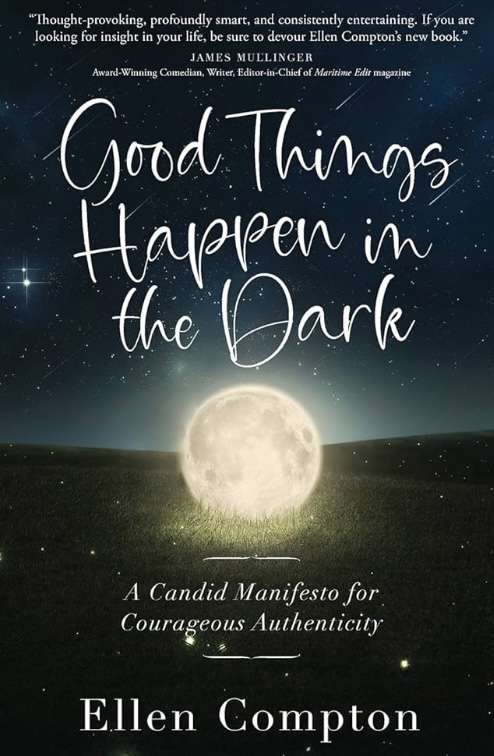
I picked this book up at a favourite design shop uptown last winter. I liked the title and her chapter headings had quotes from writers I admire like C.S. Lewis, Anne Lamott, Carl Jung and Pema Chodren. I believe the author is local, a Maritimer, which makes my less than glowing review a bit more uncomfortable. While I appreciated the author’s true to life anecdotes and the general premise of her book, that bad things lead to growth and a more evolved self, I hated her God-squad vernacular and her overly familiar tone. I liked the road she is taking, I just didn’t love her running commentary as she journals about her boundaries and her conversations with her God. I applaud her vulnerability, I abhor her candor. 2/10

I’ve read enough Kate Quinn to understand that she is a no fail formula story writer. She creates strong period pieces, in this case 1950’s Washington in the heart of the McCarthy trials, when the rights of women were predicated on their status as wives and mothers, where reputations were guarded, and romances were discreet, and every woman held a secret in her wasted heart.
The Briar Club is the story of a supper club in a women’s boarding house that brings together and bonds a motley crew of women ranging from widows and war brides, to single moms, and civil servants, a mobster’s moll, an immigrant artist, and an injured baseball star, to name a few. Quinn captures unique, compelling narratives, drawn and crosshatched by a master story teller who showcases our social history, as seen through the eyes of women, our stories, lesser known and more delectable for their subtleties. 7/10

Stella Maris by Cormac McCarthy is a unique story, intellectually challenging and structurally unorthodox, it is essentially the documented therapy sessions between a brillaint twenty year old mathmatician and her psychiatrist in 1972 when she voluntarily commits herself to a psych hospital as she processes the death of her brother, Bobby. With a history of paranoid schizophrenia and suicidal ideation, this is not her first visit to Stella Maris hospital, but her first conversations with a new therapist who engages her in a game of cat and mouse that makes a voyeur of the reader and keeps our attention despite the challenging sections that review the magic inherent in advanced math. The rewards are exponential as we meet her chimeras, the highly constructed hallucinations only she can see, and follow the “My Dinner With Andre” conversation that swings back and forth in the space between philosophy and quantum mechanics with cameos from Wittgenstein and Topos Theory that transport you to the edge of another universe. Stella Maris is a master work of intricate ideas and an absorbing examination of the “billion synaptic events clicking away in the dark like blind ladies at their knitting.” Warning – this is no beach book. Have wine at the ready for the deep thoughts aftershock . 8/10
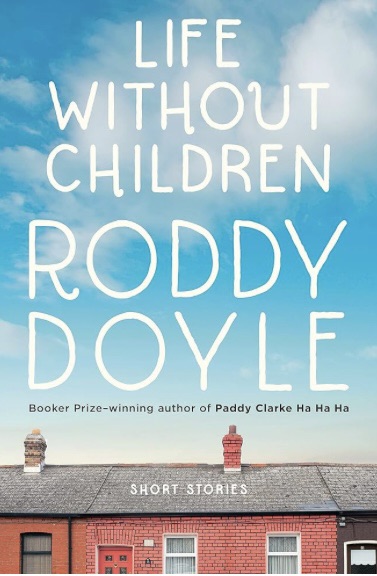
Doyle is a delight to read on any occasion but Life Without Children, a collection of Corona stories, is truly superb. His eye for the everyday detail distills something true and generalizable for every reader who anxiously sang the Happy Birthday song while washing their hands like surgeons, and danced the supermarket side step, or binged their way through the Netflix scandi-noir series, and social distanced themselves out of work and relationships.
Doyle’s brilliant story collection looks at the masks we wore, discarded, like “underwear on the footpath“, and examines lives under lockdown, “that ripped away the padding“, with “no schedule, or job, no commute, nothing to save us.” His characters explore their smartphone addiction, and earworms, and engage in real conversations, “the tricky ones that stray from the usual.”
Doyle’s book beautifully frames the silent, deadly days of our very recent past when Covid hemmed us in, he shows us our fragility, our interdependence and our essentialness, and will make you laugh until you cry. 8/10

Pema Chodren is a Buddhist nun and meditation teacher who I have read for many years, including her meditation series which I highly recommend. Taking the Leap is a series of teachings designed to help you stay open to the many vexations of human life and build a space or pause within highly charged situations before reacting with our smaller selves, and further contributing to the deepening and seemingly entrenched polarization that governs so much discourse in today’s world that labels the ‘other’ as ‘bad’ or ‘wrong’. What she offers is a Buddhist prescription with the potential to reduce suffering.
It starts with staying open and present and awake to whatever is going on no matter how uncomfortable or seemingly intolerable, no easy task when we are, most of us, pleasure seeking, or putting our heads in the sand.
Pema is big on the pause and embracing impermanence and the underlying uneasiness that is an integral part of the human condition. Her book is a guide that coaches us to stay with the “tightening” when it comes, to break the habital chains and reactions that rule us unconsciously. Taking the Leap offers a formal teaching, a map to a more peaceful approach to living, but it is no easy journey. There is an undertow, a dopamine hangover that will distract and discourage your efforts…still its worth a read even if all you get is that there is a spiritual toolbox waiting for you when you’re ready to open it. 8/10

Alexander McCall Smith, a professor of medical law at Edinburgh University, turned highly successful detective story writer, is a very popular and commercially successful storyteller. He understands that great detective fiction has more to do with setting and the personal charisma of the detective than any murder or plot device. Career mystery readers are rarely surprised by the denoument of the books they devour. We read mysteries because we love to be in the company of the detective, or immersed in the world that the writer places their heroes and the villains they sort out. The No. 1 Ladies Detective Agency is McCall Smith’s first run at a winning detective series and it does not disappoint. Mma (Precious) Ramotswe is a keen and unusual gumshoe, “the only lady detective in Botswana,” with an unerring understanding of human nature and a love for her native Africa. “A good woman in a good country, one might say.”
McCalls stories document unrecorded lives, the narratives of ordinary people who see beauty in simple things and find happiness with very little material wealth. Detective Ramotswe deals in absentee husbands, African gangsters, and witchdoctors, and a disinterested police presence, outsmarting her fellow characters, armed with nothing more than a detective manual and a small inheritance from her father. She is a unique sleuth with a Columbo like innocence, an interesting backstory, and a determination to succeed that will have you routing for her. Best ecapist read this summer. 7/10
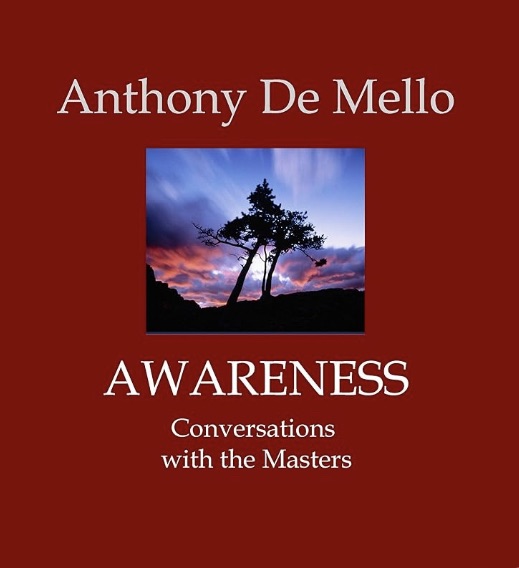
This book came to me via an interview I did for the blog that will be dropping later this month. It’s a life changer… the kind of book you buy in bulk and try to force on everyone you love. Published posthumously, it is a compilation of wisdom teachings presented by Anthony de Mello, a Jesuit priest and psychoanalyst, who describes a paradise on earth, waiting inside each of us, just beyond the reach of our conceptualized world and the limitations of language, out beyond the boundaries of our egos and all our charitable good works (a more refined ego construct).
Awareness shows a way to wake up from the modern day miasma, an all consuming mass illusion that keeps us trapped in a hamster wheel of self absorption and unhappiness, derived from a short term self soothing dopamine cycle that breeds a disquiet we’ve acclimated to through a lifetime of conditioning.
De Mello asks us to kill our expectations, to remain open, and to detach from our desires.
Awareness leaves readers with a series of excellent prompts but the real work comes after the close of the book. De Mello’s message is a little like “trying to capture the feel of the ocean in a bucket of water.” Its a beginning. It starts in awareness. You cannot strive for the world he describes or, he cautions, it will elude you. It begins with a willingness to sit in the present and observe the majesty that is the reality hidden beneath the ego and its self serving thought stream, it glimmers only in the present, turning to dust in a mind that travels to the past or the future.
He coaches the reader to watch everything within you and around you as if it were happening to someone else. He counsels that real happiness resides in you and no where else, in no thing, in no other person.
De Mello’s book is a call to awaken from a world in which we are dying of spirtual thirst surrounded by a sea of fresh water, living in a world filled with joy and happiness and love, but brainwashed, hynotized and sirened to sleep, trained not to see what is all around us.
Awareness is by far the most important, insightful and funny rendering of the truth of the universe that I have found in a decade of searching. I cannot recommend this book highly enough not only for how powerfully it could impact our lives individually but also what it might mean for an awakening world. 15/10


Leave a Reply