
‘The best moments in reading are when you come across something – a thought, a feeling, a way of looking at things – which you had thought special and particular to you. Now here it is, set down by someone else, a person you have never met, someone even who is long dead. And it is as if a hand has come out and taken yours.’ – Alan Bennett
‘The first thing that reading teaches us is how to be alone.’ – Jonathon Franzen
Author’s Note
I have an insatiable appetite for story. Books – their bindings, the cover art, their texture, and deckled edge… even their smell and, most especially, the marks and notes left by other readers – everything about them appeals to me. I maintain a small library at home, I get uneasy when my TBR pile runs low, and have even planned trips around famous bookstores and libraries. I felt teary the first time I entered the iconic Strand Books in NYC; I needed a moment to myself in the reading room of the Boston Public Library, and I could probably write a short story about my visit to The Bodleian in Oxford or Shakespeare and Company Bookstore in Paris. There is a small town in Wales, Hay-on Why, known as the ‘town of books’ due to its many bookstores, and I hope to visit it next summer with an oversized empty suitcase to celebrate my 60th birthday.
Perhaps my love of reading stems from a lonely adolescence, or maybe it has more to do with what I consider to be my best and worst quality…curiosity; but I’m never happier than when I’m settling into someone else’s narrative. For me, every book I open feels like a clue to the secret of ‘Life, the Universe, and Everything.’ Books find their way to me or I to them, often by happenstance, and seemingly at the exact time I am most ready to receive them. Others sit in small dusty piles in every conceivable corner of my home, waiting for the right moment to renew our acquaintance. I plan to spend an unhealthy percentage of the life hours I have left, turning pages, devouring stories and exploring answers to questions that greater minds than mine have plumbed. To that end I present to you The Reading Room, a new blog series showcasing a smattering of books, earnestly read, and scantily reviewed by a Little Old Lady in waiting.
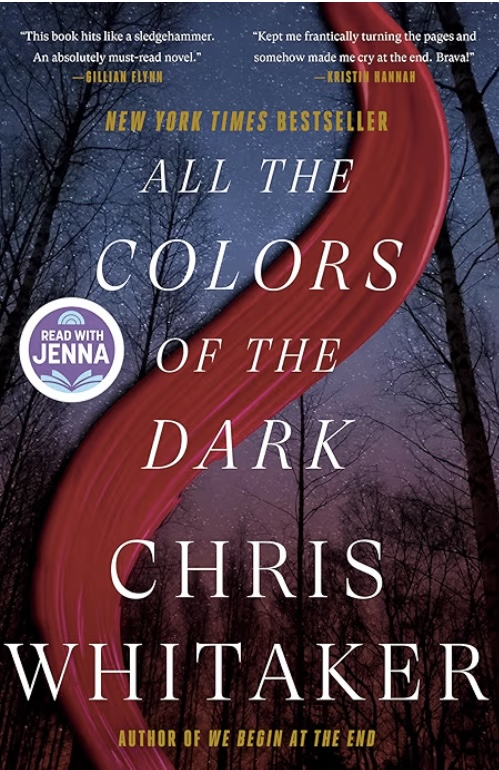
All The Colours of the Dark is marketed as a thriller, a prosaic airport page-turner, but it did not hold me in suspense. Set in the 1970’s, it’s the story of a traumatic childhood event and a lifelong hunt for a serial killer. Although the book disappoints as a would-be whodunit, it is far more interesting as a study of the enduring bonds of childhood friendship, and the dialectic between good and evil inside each one of us, setting the reader up for an interesting examination of what exactly goes into the making of a hero/villain. The book meanders down paths it need not have taken and does not satisfactorily resolve, but it includes characters that I will remember long after the close of the story including a career alcoholic and art dealer who had me hanging on his every word. For him alone I give Whitaker – 7/10

Easily one of the most enjoyable reads for me so far this year, Strout is a favourite author, and her story, set in a small town in Maine, is peopled with well-developed characters from previous books including Olive Kitteridge, Lucy Barton and Bob Burgess. Ostensibly the plot revolves around a murder investigation, but the book is really about the ordinary everyday events that make up a life and the stories we tell each other in quiet asides, on walks or with cups of tea in conversation with the company of people we call our own. Strout can tell me everything and anything she chooses. Her novels are packed with the kind of true to life details that strike at the heart of all good narrative and readers can’t help but pull up close to her stories and sit a spell. – 9/10
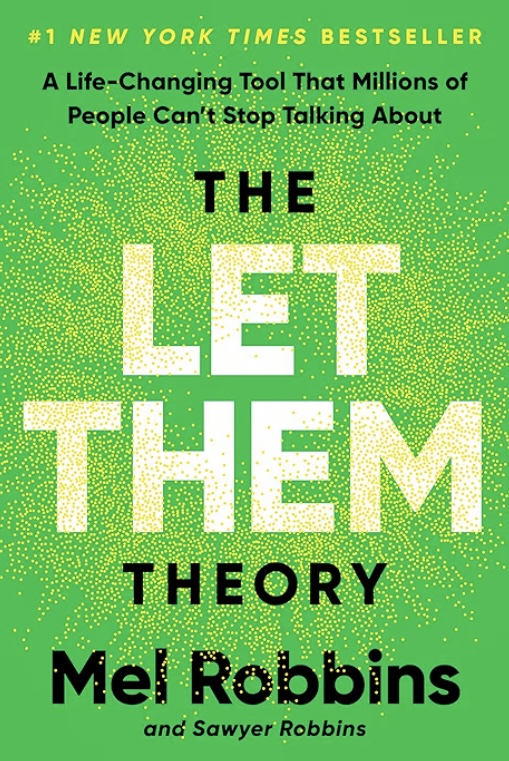
My daughter passed me this book and while it is not my preferred genre the buzz on my socials piqued my curiosity. In summary, the book is a highly accessible, basic retelling of some ancient wisdom remarketed for the modern-day attention span. A reworking of Stoicism 101 or the Buddhist practice of detachment, the book’s easily digestible maxims, ‘Let them’ and ‘let me’ stuck with me and made their way into my everyday life, at work, and at home with my adult children. Every time my inner control freak was tempted to interfere in matters outside my sphere of influence, I recited her magic words and presto my life became a lot let stressful. ‘Let Them’ gives you permission to stop trying to steer anyone else’s course but your own…marvellously freeing.
Robins also plies her tools to romantic relationships and reading those chapters I couldn’t help but wish I’d had access to this wisdom in my early to mid-twenties before I learned how to believe people when their actions showed me who they were. Acceptance of what ‘is’ is a liberating experience, and Robbin’s book is a powerful tool for reclaiming your own power, directing your energy to the only thing any of us can control, our own words and actions. – 7/10
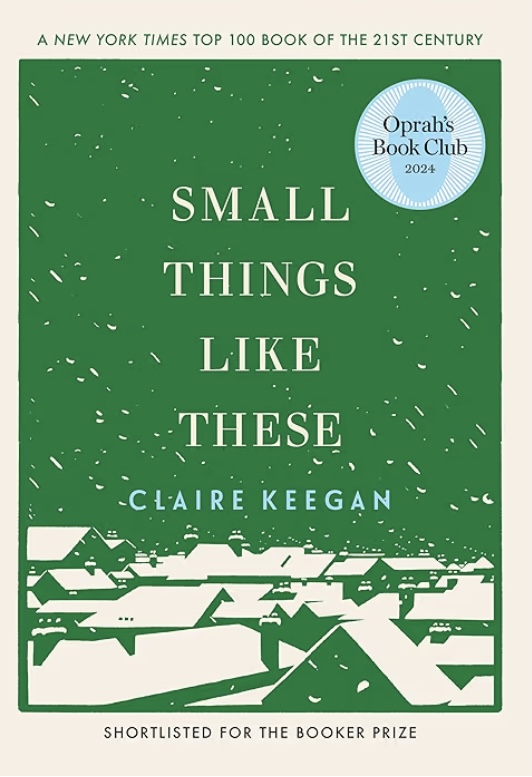
Small Things Like These is the first book I have read by Claire Keegan, but it will not be my last. The slender novella has been made into a film starring my current cinematic crush, Cillian Murphy. Set in 1980s Ireland, Keegan looks at her country’s relatively recent history of housing unwed mothers in laundry workhouses, run by the Catholic Church, where young women were physically and emotionally abused and forced to live in squalor. The protagonist, Bill Furlong (Cillian), is a compassionate and virtuous man who must decide between doing the right thing and risking almost certain formidable consequences for his family. The story line is compelling, but the party piece of the book is Keegans’ evocative, lyrical language that grounds the reader in a kind of cultural cellar transporting us to a dark, cold, shameful place where ‘so many things had a way of looking finer, when they were not so close’ – 9/10
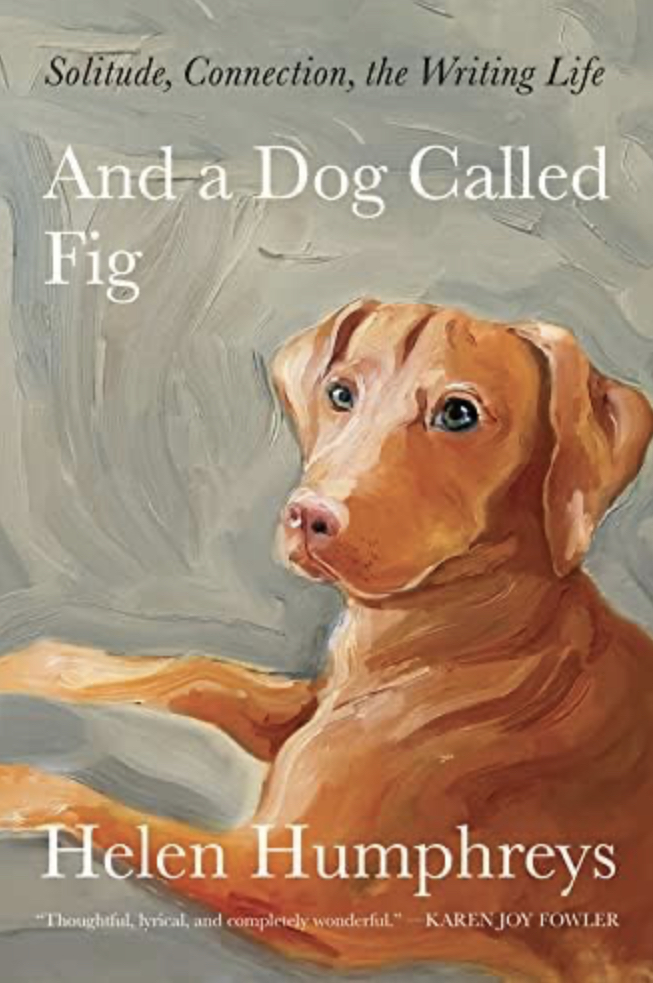
Helen Humphries is another favourite writer. She could probably write about the head of a pencil and make it compelling for me. So, when I pick up one of her books and read that it’s about dogs and writing, it’s kind of a perfect day in the making. The book chronicles the first several months of life with a new puppy as experienced by Humphries, herself a little old lady in waiting, and the story chapters are configured around the writing process with a few nods to other famous writers and their canine companions. Somehow the story falls short and, for me, I’m pretty sure it has more to do with the author’s nonfiction competence as compared with her narrative voice which never fails to hit the high notes. I was a little bored inside her dog-eared story. – 6/10

Bletchley code breakers, Prince Philip as a young lover – The Rose Code is set in WWII Britain in a time when women were liberated from their homes and allowed to be active members of society, and brilliant women were needed for the war effort. The whole book was like a large piece of decadent cake with a nice cup of tea. Throw in an asylum, a betrayal, and a story told in reverse and Quinn delivers another delicious read where smart girls showcase their grit, and live happily ever after, even without their prince. A lovely few hours leisure – 7/10
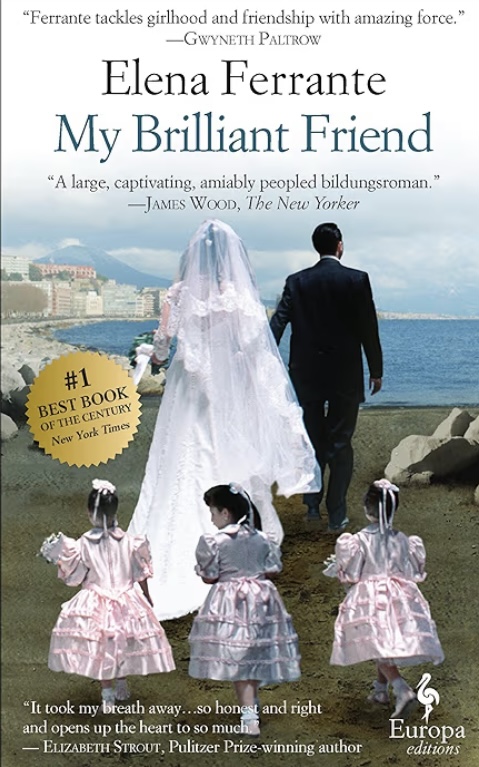
This title is the first in a series of 4 books that chronicles a lifelong friendship between two brilliant women who grow up in Naples between the wars in an Italian ghetto where access to education is a rare privilege that only one of them is afforded. Their lives cross back and forth across socio-economic lines and class distinctions in a gripping tale of survival and emancipation as each woman finds her strength and eventual escape from a world they have each outgrown. The book begins and ends in mystery. The story is atmospheric and dynamic and beautifully written with a special focus on the hard-won independence of Italian women in the 60’s and 70’s. I don’t know which of the two friends I admired most in Ferrante’s story, but I highly recommend the books to anyone who understands the joy of forgetting you are reading, so fully immersed in the lives of the characters that you are virtually transported to their world. – 9/10
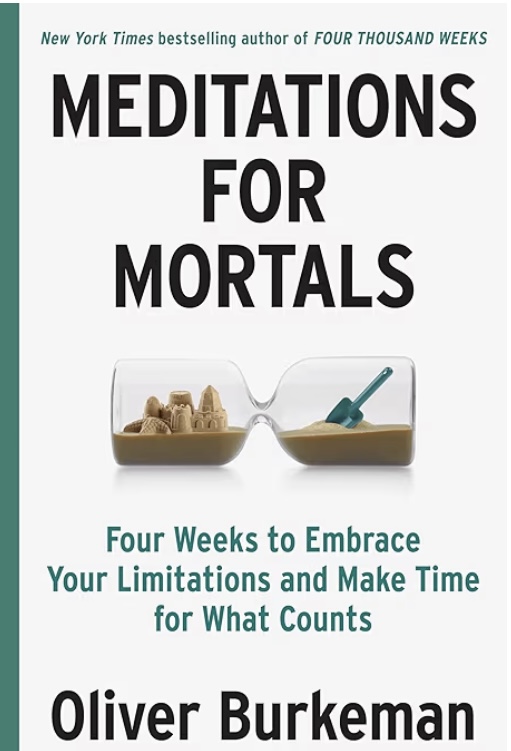
This book is a sequel or companion book, to Burkeman’s previous bestseller, Four Thousand Weeks. Both books, I strongly suggest, are worth your finite time. Comparable to The Subtle Art of Not Giving a F*ck, Burkeman, previously a popular Guardian columnist, reads a bit more existential and cerebral and aims less for efficiency and more for enchantment. His book helped me enormously in coming to terms with the fact that life is unfolding right now…not later when I’m more prepared or when I’ve completed X,Y and Z on my must do list. Immersing yourself in Meditations for Mortals is a bit like going on retreat. It’s a reawakening, and a memento mori that none of us are getting out of here alive, especially we little old ladies in waiting whose book might more aptly be titled, One Thousand Weeks. Thumbs way up on this one – 9/10
Note bene
If you have any book suggestions please leave a comment. I would be thrilled to know what you are reading 📚.


 Little Old Lady … in Waiting
Leave a reply to shadowy4e010edcd9 Cancel reply