
https://meanderings-with-trudy.simplecast.com/episodes/meander-with-sylvie-fitzgerald
Tag: writing
-
A Curated Life
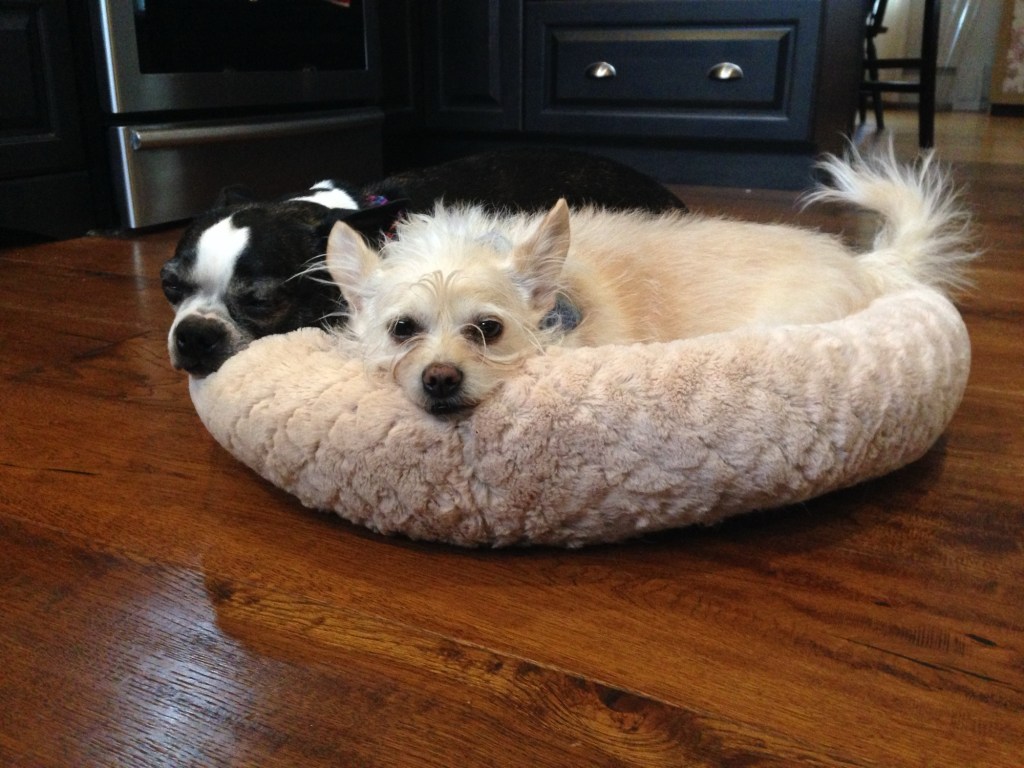
“If you want a golden rule that will fit everything, this is it: Have nothing in your house that you do not know to be useful or believe to be beautiful.” – William Morris
“Those who commit to nothing are distracted by everything.” – Bhagavad Gita
I’m twelve weeks into a “down to the studs” reno of my basement. We are getting there…almost ready for paint and wallpaper …yes…that’s right…I said wallpaper. I happen to like wallpaper…just not the 50 year old striped job that lined the stairwell leading from my kitchen to the lower level of our home. I’ve hated that patterned stairwell since we moved into the house almost fifteen years ago. That’s a long time to abide an abhorent passage in your home. So…ankle deep into quasi-retirement, and my baby moving out to a beautiful space of her own; it’s got me thinking about embracing a less lackadaisical, more curated life. I refer here not only to my immediate setting, and decor choices in my home, but also to a more bespoke aproach to everything I allow entry into my mental and physical space. How we spend our time and who we choose to spend it with are weighty considerations indeed, particularly as the sands of time accelerate through the LOLIW hourglass.
I am a woman who has always known what she loves. I’m never at a loss for how to spend my time. My baseline is reading in bed, followed closely by reading upright in well lit rooms, rooms with doors to discourage the detritus of day to day discourse. Toss in a daily walk, a few writing hours, and few games of pickleball (a smattering …mind), and maybe a sprinkling of meaningful communication with friends and family and you have the basic components of my perfectly appointed life.
It won’t surprise you to learn that with respect to decor I like to sit in spaces that smell and feel like 19th century reading rooms. Jane Austen meets functional, animal-friendly, old-world elegance and comfort, with Rembrandt lighting in the shade of expensive cognac and furniture made to last let us say, longer than me. I like plain lines…nothing busy…smalls piles of books in every conceivable nook, and walls overfilled with art that makes me think and feel.
Approaching 60 it seems long past time to take charge of my decor and embrace a more curated lifestyle. With more time at home to play and ponder and be, its important to invest in our space and make it conform to our notion of how to live well. Out with the acquired furniture that found its way into every corner of the basement (granny’s telephone table, the uni trunks, the side tables the dogs used as chew toys, the wedding art, the chairs I reupholstered one time too many…gone). What would your space look like if you started from scratch… what gets to stay, what gets dumpstered in the night?
To curate is to carefully gather sift, choose and organize so that everything is handpicked, assembled, and edited by you. This might mean the dedication of an old bedroom to a fly tying workshop or a yoga studio or a writing room. The downstairs grand room might be reworked as a cozy british bar, or a working library, or a music or pottery studio. Adult spaces like day nap chaise-lounges in light colours might be positioned near full window walls for stargazing with telescopes or simply to watch the dancing autumnal leaves or the spring rains pelting your garden seedlings to life, or the magical snow that falls on Christmas eve.
Of course lighting is everything… my mother taught me that. She liked rose tinted bulbs for evening ambiance, strong enough to read by in the after dinner hours but not so bright you can see the skin wrinkles on your LOL hands as you turn the pages…its a delicate balance ladies. A comfortable seat by the fire built for you and yours is essential for the long Canadian winters, perhaps a dartboard, a drinks cabinet… you get the idea. It’s time to focus less on containment of mess and sticky fingered childrearing chaos, and more on zones of comfort and joy for the soft bellied adults who remain. Don’t forget a posh pillow for the geriatric dog.
Take your time visioning how to create yout LOL space.. explore your options…think about what you want your home to provide now, and build it from the inside out. There are no design rules that can’t be broken except one, namely, abandoning your own ideas on beauty and functionality. This is your home we’re speaking of, you have only yourself to please so if you want to string eddison lights from the rafters, share space with too many plants or cats or books, create an industial feel by painting the piping black or steel coloured… do it. If you want to showcase some macabre collection of antique surgical instuments or early century pharmaceutical elixirs (weirdo), now is the time to make your space into a reflecting pool for all your darlings. An invitation to your home should always feel like an invitation to you.
Outside your home it’s equally important to curate the spaces you decide to inhabit. In rertirement if you don’t decide how you’ll spend your time, others, well meaning friends and colleagues, will ensnare you in their version of a life well lived. The siren call of casual work, the escalating addictive properties of pickleball, best resticted to promote injury preention, the silent scream of the sour dough starter and its incessant demand to be fed. That little white bread baby isnt the boss of me.
A few years ago I read a little book called “The Subtle Art of Not Giving a Fuck” which espoused a pretty basic but essential philosophy with respect to time management and boundaries. Summarily, the author suggests that in an age where we are inundated with information and competing demands on our attention, and very often incompacitated by overstimulation and endless options, its important to decide to live deliberately and in accordance with a few key individual values and interests and spend our time and ultimately, our lives, accordingly. The book advises adopting a maximum of 5 things to give a fuck about. Thats not a lot if family and healthy living are 1 and 2. If reading, writing and pickle ball are my 3,4,5 then maybe maybe pottery and painting, knitting and felting, are curated out of my daily living line up…at least this year. Every LOLIW must choose how best to spend their time. Maybe you’ll make your garden and greenhouse your second home from May to September, perhaps you’ll join a rug hooking guild or a choir or an arts collective during the long winter months. Let your interests drive your pursuits and don’t be cajoled, or convinced to spend your time in settings that don’t meet your individual criteria for comfort and joy.
A quick comment on mental space. I live so much of my life in my mind it’s important for me to dine on a steady diet of images and words that resonate with meaning. I hold space for vetted novels and films and converations with new and old friends who know secret things. Stories and stimuli that bring comfort and joy and occasionally cast out to higher things. While I have just as much of an unseemly fascination with Ed Gein and his skin suit pursuits and niche decorating vibe, I’m not sure I need to absorb the 8 episode narritive of the man who was the inspiration for Psycho, The Chain Saw Massacre and Buffal Bill. I mean I guess he didnt eat anyone …so thats good…right? My point is that curating that series out of my mental space and protecting my inner sanctum and sleep hygiene is probably for the best. I don’t need a visit from Gein in my dreams at night. But if real crime horror is your LOL jam, maybe Ed Gein gets a pass.
You are the gatekeeper of your mental and physical space. Guard your boundaries, with knitting needles if need be. Allow entry only to what you decide to give a fuck about. Design a space and a life dedicated to your passions… an art room…a dream kitchen…a library…a pocast studio… a music room. It’s waiting for you beneath the debris of a lifetime of collecting the residue of other people’s idea of how to live well. So if you’ve been neglecting your mental and physical space like I have, begin an inventory of everything that you find beauty and comfort in, then drag the rest to the curb and begin again, consulting no one but your own inner curator. I believe you’ll find her taste is unerring.
-
In Conversation with Shova Rani Dhar

Shova Dhar is my oldest friend. We met in third grade. She was the smartest kid in my class, and in most rooms she enters I suspect. Becoming her friend changed the trajectory of my life, motivating me to push myself academically in a way I might never have done had we never met. I can still remember our Grade 3 Health project, a beautifully drawn portrait of a boy skeleton, with breakout close-up drawings for the more intricate bones. Shova was the artist, I, the lucky bone labeller. We wrote a play together some years later, titled, ‘How do you like your murder, steamed or boiled?’ earning a solid A for our efforts in advanced English.
Shova describes herself as a ‘gregarious introvert.’ She is, in fact, a peerless, exceptionally gifted human, a scientist and a seer, an artist and a stargazer…there is no one else in all the world like her. She is an ageless, exotic beauty, and ‘my brilliant friend.’ A biologist by trade, an accomplished artist by nature, and an animal lover (all species), Shova exhibits the kind of charisma that only storybook heroines possess. Fiercely loyal, generous in spirit, she is a boundless treasure to anyone lucky enough to call her friend.
Shova earned a BSc in Biology and a Bachelor of Education from UNB. She has published research in marine biology, worked as a lab instructor at UNB, and as a Laboratory manager at the NB Department of Fisheries and Aquaculture. She has studied salmon anemia, virus tested potatoes, and worked in animal health and rabies. She has been responsible for fish, meat and dairy inspection, food recalls and risk assessment. For the last twenty-five years she has worked for the Canadian Food Inspection Agency, and for the last 17 years as a food safety specialist, currently residing in Halifax, N.S.
Of course, I asked her what she eats, and while she wasn’t comfortable discussing her food choices on the record, she did share that listeria is real, and that as we get older, we can’t fight it off as well, or if we’re too young, or don’t have enough stomach acid, or are pregnant. ‘I’ll be eating a lot of mush that’s hot or frozen as I get older,’ she laughs, ‘and I don’t eat out much as I am too leery of food handling practices that I can’t control.’
Tell me your life story in seven sentences or less?
I was born with mixed heritage in the heat of the summer, the younger sister to one older brother but grew up with my Canadian extended family on my maternal side, as my father was killed in a car accident when I was only 8 months old. I grew up outside of Saint John and was formally educated at the University of New Brunswick. I am a biologist, an educator, a Food Safety Specialist, a Reiki Master, and a Theta Healer™, with a love of artistic expression, especially the performing arts. As a strong unionist, I have always focused on championing the rights of others who cannot fight for themselves. I have married my best friend, travelled to many countries, enjoyed the company of many beings (human and other species), and have learned to work in light and energy. That’s my other side…the ‘woo-woo side’ as people would say.
What is the best thing about getting older?
Ahh…perspective. You can see the bigger picture and therefore there’s less drama about every little hiccup that happens. Even though there are times I don’t do that, as we age our edges get rounded off a little and you have a better perspective of what life is … you see the span of your own life, and things you used to think were the end of the world are no longer the end of the world for you. That’s the best thing.
What is the worst thing about getting older?
Coping with loss. That’s the thing that gives me anxiety. Can I do it? Losing the ones you love, the pets you love, your cohorts, your generation. The feeling of gradual obsolescence.
If you could retain or retrieve one quality from your youth, what would it be?
I found this a very difficult question because there are so many things I would want to retrieve and some I wouldn’t want to, however, the sense of endless possibility, and the feeling of immortality, or ignorance of the finality of this temporary corporeal existence that we’re in right now, is something I would love to experience again. As younger women we were more present in our lives, we lived more in the moment, we weren’t worried so much about what’s gonna happen when our time was limitless, we weren’t concerned if we could squeeze it all in… we never even thought about all that, we were just living, and I miss that, that spontaneity, being in the moment, a time when we were less reflective and less conscious.
Now with perspective we’re always weighing one thing against another, whereas younger people are more present in their lives…even if you were full of angst as a young person, you were still anchored in the moment…not worrying about the quality of the experience. People say youth is wasted on the young. It’s not. They’re not wasting it…they’re really in it. They don’t even realize how precious it is. That is the sad part. They don’t yet own their magic…they’re magical but they don’t know it yet. The magic of being fully immersed in living. If we were able to go back in time, we would be super powerful, and we could use that power for good or ill. I would hope we would use all that energy and power of youth for good, but it depends on the trappings of the soul. People are still flawed even armed with perspective. Maybe that’s why we can’t go back. God is pretty smart.
What’s the most important lesson you’ve learned so far?
I don’t know, I haven’t learned too many easy ones. I have so many lessons to learn. For me, so far, forgiveness is the big one …forgiveness and gratitude. Forgiveness of yourself and others. It’s hard to do that. But gratitude is huge as well…to learn how to maintain gratitude…because you cannot be unhappy and feel gratitude at the same time. Those two emotions cannot exist at the same time. That has changed my life knowing that. So, whenever I’m terribly unhappy, I imagine a scenario, even if I have to invent one, a scenario where I feel grateful. I’ll share my go to scenario with you. I imagine I’m carrying a big armful of priceless china in boxes, not very well packaged, and I have to get through a door, and I can’t manage it without maybe dropping a parcel. There is a guy on the other side of a busy street, he sees me struggling…he crosses the busy street, arrives at my side, and opens the door for me and I can enter in and I think ‘Thank you,’ and I feel gratitude washing over me…gratitude for him being so kind, and then I go through the door. And at that moment if I’m unhappy I allow the gratitude from the scenario to wash over me and it helps…small acts of kindness, real or imagined, help a lot. I use it all the time. The shift is immediate when you feel that gratitude wash over you and the sadness may come back but its less when you can feel gratitude. It brings instant perspective.
Other lessons I’m still trying to learn are trust, to trust in God, and to accept the things that I cannot change. Those are hard lessons that I’m still trying to learn. Forgiveness…I’ve worked hard on forgiveness… and I’m getting better at it. I used to be full of resentful thoughts. I’m a very protective person of the people I love. I’m a grudge holder from way back.
Do you have a favourite quote?
I have four quotes on two themes. I couldn’t pick. First, ‘Whatever you can do, or dream you can, begin it; boldness has genius, power and magic in it.’ And I put in brackets…this is not part of the quote, Begin it now,’ because I’m a procrastinator. I had it in my university dorm room, its Goethe, and it has served me for many, many years. A second quote on the same theme is from the Ghost of Christmas Present (Dickens), ‘There is never enough time to do or say all the things that we would wish. The thing is to try to do as much as you can in the time that you have. Remember Scrooge, time is short and suddenly, you’re not here anymore.’ I always think, let’s not procrastinate with the important things.
The second theme is again from Scrooge, the 1970’s soundtrack from Leslie Bricusse on happiness. ‘Happiness is whatever you want it to be.’ I had that at my wedding as one of my songs. And finally, a quote by Kurt Vonnegut, ‘If this isn’t nice, then I don’t know what is.” It’s a quote I learned from my husband, and when I hear his voice in my mind saying it, it calms me down and gives me perspective and makes me feel gratitude.
Do you have a favourite word?
‘Justice’ and ‘perseverance’. I have two, but I love justice, just the sound of it, it’s a sweet sound to my ear. It’s a real part of who I am, and it always has been. I’ve always been a bully fighter in school, a fierce advocate for others…and courage is there because of it. It takes courage to fight for justice. In tarot, the symbol for strength is a lion and, being a Leo, I’ve always felt it was just part of who I am. It takes strength to fight for justice. And ‘perseverance’, it’s a very important word for me as well. You have to persevere…things aren’t instant, and you have to keep fighting for the things that really count. You have to persevere against your own weakest nature. If you want to obtain things you have to work hard and again that comes back to my quote, ‘begin it now.’ When things aren’t easy you have to persevere and if you don’t, you’re giving up on yourself.
Describe your perfect day.
This was harder than I thought it would be, but I experienced the perfect day not that long ago with my family…this summer actually, and I reflected on that day when I formulated my answer. The day starts with me waking up from a restful sleep and with good energy. There are some planned activities but nothing stressful. A nice morning stretch…I move my joints…I have a good breakfast. I spend time with the ones I love, and unexpected events lead to unanticipated fun. There is the sense of surprise, camaraderie and sharing laughter. The unexpected events put you in the present. I don’t always want to be planning and then judging whether or not things went well…it harkens back to the youthful joy of just being alive. And after camaraderie and laughter, then you come back to your place of peace and revisit the day’s events together with your family. You retell the story of the day, sharing your impressions, enjoying it all a second time in the telling…and then you go to bed feeling grateful knowing you’re loved and that you’ve loved others. That’s a perfect day.
If you could have tea with anyone, real or fictional, dead, or alive, who would it be and what would you talk about?
I would want to see my father. I would want to talk to him about his decision to agree to leave this life when he was only 38. He died in a car accident. But I believe that people talk to their creator before beginning a new life, we choose our soul family and choose the lessons that we want to learn. Maybe my lesson this time around was learning to be a woman who grows up without a father. His absence in my life has been so huge and yet I never really got to know him. At some point he decided he would come here and be my father and leave, allowing me the space to learn the lesson I had chosen. I’d like to speak with him about his decision and ask why he left me…because I know he loved me.
Just recently I looked at my father’s passport picture and I feel like I saw him for the first time, and I’ve looked at that picture a thousand times, and I realized that he is in many ways still here with me.
The other person I’d like to have tea with would be Carl Sagan. I’d like to talk to him about intelligent design. I’d like to explore his thoughts on that. I had the hugest crush on him, I was in love with him for so long.
Tell me three things that bring you joy.
Creating things… creating things for others to enjoy, and myself. Anything from food, a good meal, making baklava, or creating a more fair, stable, and safe workplace. I do a lot of Occupational Health and Safety (OSH)…that’s near and dear to me. I also like making music…learning a new piano piece or improving my vocal range while I’m singing in the car. Nobody needs to hear it, but I get great joy when I manage to expand my range and enjoy little successes. Artwork of course, I like creating art, that gives me a lot of joy. I don’t do it a lot anymore, but I will again… soon. I’ve been doing some needle felting and making some 3d figures and those are fun little projects and after making art I always think that was so much fun, why don’t I do this more often. And maybe writing too because this project and thinking about my mother’s story…I think I’d like to delve a little deeper into that. I’d like to work more in watercolour, I have to persevere there, watercolour is unpredictable, and trust is not there, so learning to trust the process and persevering… and then revel in the outcome, whether it’s what you planned or not.
A second source of joy for me is being the presence of or caring for animals, especially baby critters of any sort. To have a kitten in your hand, and care for it is the most joyful thing. Looking after the young of any species I find very joyful. We have an unofficial office cat named Spooky and I enjoy looking after her right now. She is my therapy cat. We do a daily session before I enter the office.
My third joy is stargazing. I look forward every year to watching the Perseids meteor showers that peak on my birthday in August. I usually go out to the cottage and lie on the beach or in a field near Freeman Patterson’s place at Shamper’s Bluff to watch them. I watch as well for lunar and solar eclipses, and, of course, the aurora borealis.
Name a guilty pleasure.
Again, I found this question difficult because I don’t feel guilty about too many things except for maybe online shopping and surfing the internet… scrolling, that’s a guilty pleasure that I’d like to get rid of… it’s a bad habit. It’s wasting your life. It’s instant pleasure, but it’s a distraction from the real work that we’re here to do. I could be in a studio, where I can make messes. That’s real pleasure. ‘Boldness is genius.’ We need to stop procrastinating.
Do you believe in life after death? What does it look like?
Absolutely. The basis of my belief in God and in an afterlife is from my grandmother. She…as a child had blood poisoning and died and went to another place, a beautiful garden with a man who she described as very much like Jesus, lovely white robes, a gentle man…holding her hand, walking along a path and she was so happy, she had never felt such joy and contentment in her whole life. They walked for a long time and then he said, ‘Fern, we’ll soon be near the end of this path and when we get there I’ll have a question for you, and I want you to answer honestly. He said, ‘You can stay in the garden with me or if you want you can go and see your mother.’ At that point she looked down from a height and she could see her lifeless body and her mother bending over her, weeping. And then she said, ‘I think I want to go see my mother,’ and she was returned to her body, and she lived a very long life. Every day, twice a day, she was on her knees on the hard floor kneeling beside her bed, in the morning and the evening, and she would pray to God and say how grateful she was for being allowed to live. She lived a life that showed me that what she experienced as a young girl was the truth. The rest of her life was a testament to her decision to return here. She would feed homeless people. She never knew if that was the man in the garden coming to test her or see if she was still happy to be here. That’s how she lived her life.
My father grew up in the Hindu tradition and although he never shared that with me, I think it worked its way into my understanding that God is there all the time. We drove across the site where he was killed every day, twice a day my whole childhood life, and we could feel him there. My brother, a year older, as a child saw his “Daddy” standing at the accident site there once.
Finally, through Theta Healing …Theta uses the theta brainwave state, a very relaxed state, where you can access your subconscious beliefs. Part of my training to become a Theta healer involved accessing spirit and listening to what they have to say. We worked in teams to access spirits we did not know, rooted in our training partner’s life, not our own. And in your mind’s eye, images reveal themselves with qualities recognizable to the person you’re working with, and you could ask the spirits questions. Spirit is there. Our souls continue and come back in other forms…I think all those things are possible. Obviously, there is continuance of our souls. Theta experiences have helped me know that. Sometimes you might worry, ‘am I making this up,’ but sometimes being open, things come to you that you don’t understand but when you share it with the person asking questions, they understand it. They know what I’m talking about…I don’t…I’m just a vessel, I’m just a process. The other person is the authenticator. So yes, I know there is something more, and I don’t fear death. And when we do die, I don’t think we’ll be very far away.
What does it look like…the afterlife? A hyper reality where we are totally supported all the time…where we know we are taken care of always. We are complete there.
What would you like your eulogy to say?
How I would like to be remembered…I’d hope someone would say that I was kind, and also that I was fierce, a protector, a good friend, and that I knew how to have fun, that I was fun loving… I’m self-described as a perpetual adolescent…that I was confidant, and had lots of personality.
-
Reading Room 3


Sally Rooney is a favourite writer, maybe more than a little old lady in waiting should admit. Her characters are brilliant, ruined twenty somethings who overthink their way into clinical depressions trying to outrun their Irish childhood trauma. Rooney’s writing is fresh and smart and made from the modern gestalt. The Observer in their review of her latest novel, suggests there is no better author at work today.
Beautiful World, Where Are You is essentially a correspondence between Alice, a novelist, nestled in the Irish countryside, freshly arrived from a psych ward, and her best friend Alice, an underpaid intellectual living in Dublin. They write about their relationships, and their work, and the state of the world they live in, “standing in the last lighted room before the darkness, bearing witness to something.” The book earns a high rating from me for the sex scenes alone (I’m imagining you making note of the title now). I’d rate the story even higher, I believe, if Rooney was my contemporary, perfectly capturing the age my children are living in now in which “the easiest way to live is to do nothing, say nothing, and love no one.” Her characters are “untouched by vulgarity and ugliness” and looking for moments of “something concealed …the presence at all times, in all places, of a beautiful world.” 8/10
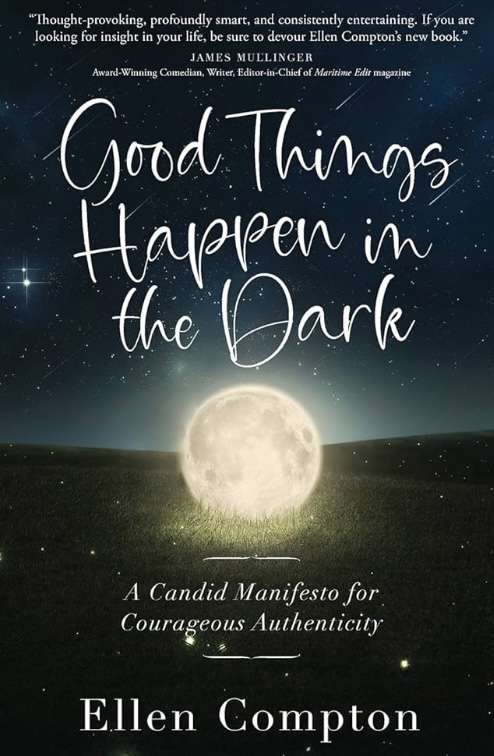
Screenshot I picked this book up at a favourite design shop uptown last winter. I liked the title and her chapter headings had quotes from writers I admire like C.S. Lewis, Anne Lamott, Carl Jung and Pema Chodren. I believe the author is local, a Maritimer, which makes my less than glowing review a bit more uncomfortable. While I appreciated the author’s true to life anecdotes and the general premise of her book, that bad things lead to growth and a more evolved self, I hated her God-squad vernacular and her overly familiar tone. I liked the road she is taking, I just didn’t love her running commentary as she journals about her boundaries and her conversations with her God. I applaud her vulnerability, I abhor her candor. 2/10

Screenshot I’ve read enough Kate Quinn to understand that she is a no fail formula story writer. She creates strong period pieces, in this case 1950’s Washington in the heart of the McCarthy trials, when the rights of women were predicated on their status as wives and mothers, where reputations were guarded, and romances were discreet, and every woman held a secret in her wasted heart.
The Briar Club is the story of a supper club in a women’s boarding house that brings together and bonds a motley crew of women ranging from widows and war brides, to single moms, and civil servants, a mobster’s moll, an immigrant artist, and an injured baseball star, to name a few. Quinn captures unique, compelling narratives, drawn and crosshatched by a master story teller who showcases our social history, as seen through the eyes of women, our stories, lesser known and more delectable for their subtleties. 7/10

Stella Maris by Cormac McCarthy is a unique story, intellectually challenging and structurally unorthodox, it is essentially the documented therapy sessions between a brillaint twenty year old mathmatician and her psychiatrist in 1972 when she voluntarily commits herself to a psych hospital as she processes the death of her brother, Bobby. With a history of paranoid schizophrenia and suicidal ideation, this is not her first visit to Stella Maris hospital, but her first conversations with a new therapist who engages her in a game of cat and mouse that makes a voyeur of the reader and keeps our attention despite the challenging sections that review the magic inherent in advanced math. The rewards are exponential as we meet her chimeras, the highly constructed hallucinations only she can see, and follow the “My Dinner With Andre” conversation that swings back and forth in the space between philosophy and quantum mechanics with cameos from Wittgenstein and Topos Theory that transport you to the edge of another universe. Stella Maris is a master work of intricate ideas and an absorbing examination of the “billion synaptic events clicking away in the dark like blind ladies at their knitting.” Warning – this is no beach book. Have wine at the ready for the deep thoughts aftershock . 8/10
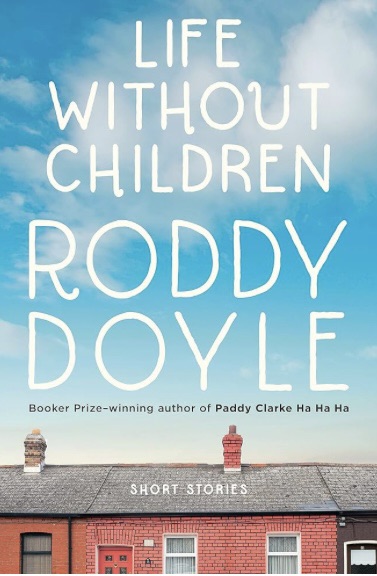
Doyle is a delight to read on any occasion but Life Without Children, a collection of Corona stories, is truly superb. His eye for the everyday detail distills something true and generalizable for every reader who anxiously sang the Happy Birthday song while washing their hands like surgeons, and danced the supermarket side step, or binged their way through the Netflix scandi-noir series, and social distanced themselves out of work and relationships.
Doyle’s brilliant story collection looks at the masks we wore, discarded, like “underwear on the footpath“, and examines lives under lockdown, “that ripped away the padding“, with “no schedule, or job, no commute, nothing to save us.” His characters explore their smartphone addiction, and earworms, and engage in real conversations, “the tricky ones that stray from the usual.”
Doyle’s book beautifully frames the silent, deadly days of our very recent past when Covid hemmed us in, he shows us our fragility, our interdependence and our essentialness, and will make you laugh until you cry. 8/10

Pema Chodren is a Buddhist nun and meditation teacher who I have read for many years, including her meditation series which I highly recommend. Taking the Leap is a series of teachings designed to help you stay open to the many vexations of human life and build a space or pause within highly charged situations before reacting with our smaller selves, and further contributing to the deepening and seemingly entrenched polarization that governs so much discourse in today’s world that labels the ‘other’ as ‘bad’ or ‘wrong’. What she offers is a Buddhist prescription with the potential to reduce suffering.
It starts with staying open and present and awake to whatever is going on no matter how uncomfortable or seemingly intolerable, no easy task when we are, most of us, pleasure seeking, or putting our heads in the sand.
Pema is big on the pause and embracing impermanence and the underlying uneasiness that is an integral part of the human condition. Her book is a guide that coaches us to stay with the “tightening” when it comes, to break the habital chains and reactions that rule us unconsciously. Taking the Leap offers a formal teaching, a map to a more peaceful approach to living, but it is no easy journey. There is an undertow, a dopamine hangover that will distract and discourage your efforts…still its worth a read even if all you get is that there is a spiritual toolbox waiting for you when you’re ready to open it. 8/10

Alexander McCall Smith, a professor of medical law at Edinburgh University, turned highly successful detective story writer, is a very popular and commercially successful storyteller. He understands that great detective fiction has more to do with setting and the personal charisma of the detective than any murder or plot device. Career mystery readers are rarely surprised by the denoument of the books they devour. We read mysteries because we love to be in the company of the detective, or immersed in the world that the writer places their heroes and the villains they sort out. The No. 1 Ladies Detective Agency is McCall Smith’s first run at a winning detective series and it does not disappoint. Mma (Precious) Ramotswe is a keen and unusual gumshoe, “the only lady detective in Botswana,” with an unerring understanding of human nature and a love for her native Africa. “A good woman in a good country, one might say.”
McCalls stories document unrecorded lives, the narratives of ordinary people who see beauty in simple things and find happiness with very little material wealth. Detective Ramotswe deals in absentee husbands, African gangsters, and witchdoctors, and a disinterested police presence, outsmarting her fellow characters, armed with nothing more than a detective manual and a small inheritance from her father. She is a unique sleuth with a Columbo like innocence, an interesting backstory, and a determination to succeed that will have you routing for her. Best ecapist read this summer. 7/10
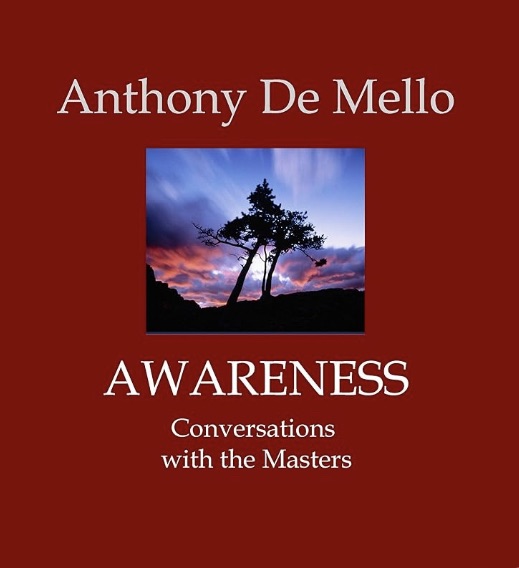
This book came to me via an interview I did for the blog that will be dropping later this month. It’s a life changer… the kind of book you buy in bulk and try to force on everyone you love. Published posthumously, it is a compilation of wisdom teachings presented by Anthony de Mello, a Jesuit priest and psychoanalyst, who describes a paradise on earth, waiting inside each of us, just beyond the reach of our conceptualized world and the limitations of language, out beyond the boundaries of our egos and all our charitable good works (a more refined ego construct).
Awareness shows a way to wake up from the modern day miasma, an all consuming mass illusion that keeps us trapped in a hamster wheel of self absorption and unhappiness, derived from a short term self soothing dopamine cycle that breeds a disquiet we’ve acclimated to through a lifetime of conditioning.
De Mello asks us to kill our expectations, to remain open, and to detach from our desires.
Awareness leaves readers with a series of excellent prompts but the real work comes after the close of the book. De Mello’s message is a little like “trying to capture the feel of the ocean in a bucket of water.” Its a beginning. It starts in awareness. You cannot strive for the world he describes or, he cautions, it will elude you. It begins with a willingness to sit in the present and observe the majesty that is the reality hidden beneath the ego and its self serving thought stream, it glimmers only in the present, turning to dust in a mind that travels to the past or the future.
He coaches the reader to watch everything within you and around you as if it were happening to someone else. He counsels that real happiness resides in you and no where else, in no thing, in no other person.
De Mello’s book is a call to awaken from a world in which we are dying of spirtual thirst surrounded by a sea of fresh water, living in a world filled with joy and happiness and love, but brainwashed, hynotized and sirened to sleep, trained not to see what is all around us.
Awareness is by far the most important, insightful and funny rendering of the truth of the universe that I have found in a decade of searching. I cannot recommend this book highly enough not only for how powerfully it could impact our lives individually but also what it might mean for an awakening world. 15/10
-
In Conversation with (Iwona) Maria Kubacki
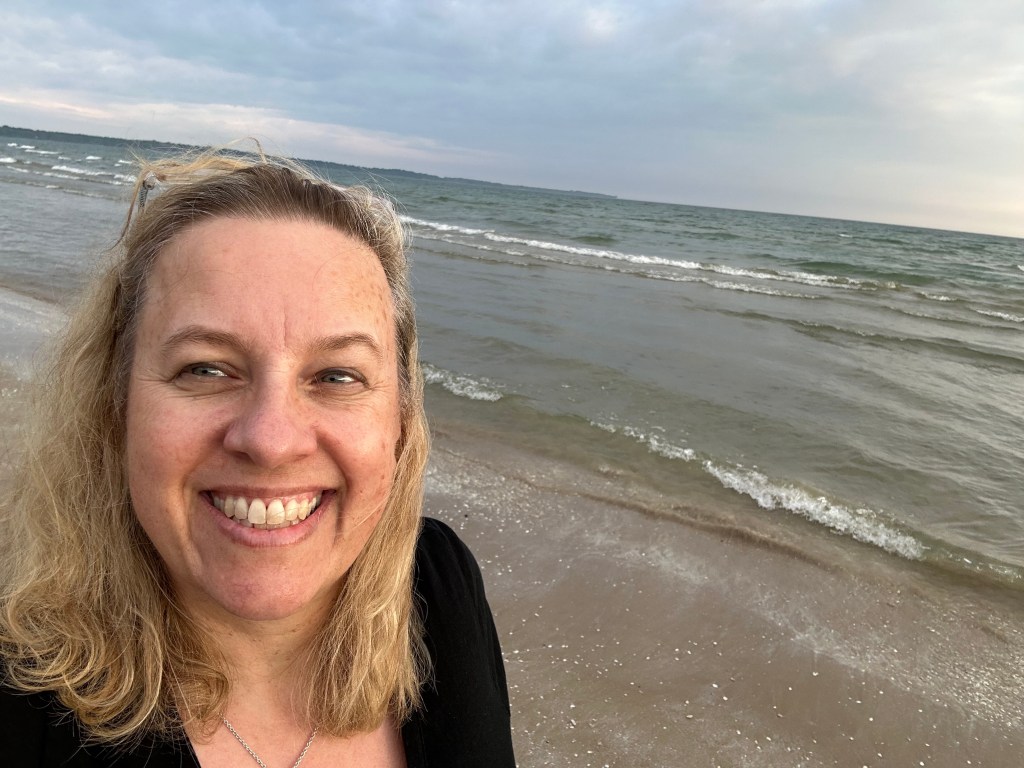
I first met Maria Kubacki when we were still teenagers. She was a friend of my brother’s… think artsy, intellectual, an outsider, by choice or design. Recently arrived home to Saint John from a Toronto private school, she was the iconic, underground campus ‘it’ girl, a ‘Lit chick’- all cat’s eye eyeliner, black tights, and arthouse lipstick. She was clever and cool, straight out of a Sally Rooney novel, this quixotic mix of edge and vulnerability that was foreign and familiar all at once. Her style acumen was just the pretty wing man for her real talent, an unpretentious academic mind, a well-spoken confidence, and a reverence for the written word.
Fast forward 40 years, Maria, a fellow little old lady in waiting (possibly in denial) forwarded her initial remarks with a disclaimer: “I’m a little embarrassed and intimidated by this. I don’t want people to think, ‘who does she think she is?’ I have no particular accomplishments. I’m just answering these questions as a fellow little old lady in waiting who is in the thick of middle age and thinking about how to make the most of the last third of life.” This same little old lady in waiting, earned a Master of Arts degree in English Literature and has worked as a book reviewer and freelance writer as well as an associate editor, and editor. Currently she lives and works in Ottawa as a communications manager for the federal government. She took up writing fiction a few years ago and has published her short stories. She is married to a lovely man named Ken and has two twenty-something children, Jane, and Mike. She sidesteps the 7-sentence limit of the first interview question so adeptly, using a series of semi-colons, dashes, and ellipses, that I had to allow it. Maria Kubacki is still very clever…and cool, maybe even more so as a little old lady…in waiting.
Tell me your life story in seven sentences or less?
I was born in Warsaw, came to Canada when I was 4 ½, lived in Quebec City briefly and grew up in Bathurst in the 70s, where we were one of the few immigrant families, but it was pretty idyllic …double-dutch in the street with my friends, summers at Youghall Beach. I went to high school at a girls’ boarding school in Toronto where I was more focused on smoking, drinking and New Wave music and fashion than on my education, and where I started going by my middle name, Maria, instead of Iwona (my actual first name, pronounced Ee-vohn-ah and mangled by nearly everyone because of the “w”), or Yvonne (what everyone called me in Bathurst because it’s the French version of Iwona) – it was fairly common back then for immigrants to change their names to something easier for Canadians to pronounce, but it was weird and embarrassing to me to have all these names, and sometimes still is, as my parents, Polish family and friends still call me Iwona (or Iwcia, the diminutive, pronounced Eef-cha)…Bathurst friends and some cousins call me Yvonne, and everyone else calls me Maria.
I never knew what I wanted to be when I grew up, but I loved reading – my parents were and still are big readers so we always had lots of books in the house, and also I learned English the summer I turned 9 from a British family from the Isle of Man who had all kinds of children’s classics all over their house, the Narnia series and that sort of thing – so I ended up getting a BA and then MA in English at UNB.
I was quite lost in my twenties and dragged my MA on for many more years than I care to admit, but during that time I started doing freelance writing as a way to earn a bit of money and avoid my thesis – art reviews for a magazine called Arts Atlantic, and book reviews for the Telegraph Journal, which eventually led to a job as associate editor and then editor of the New Brunswick Reader, the Telegraph’s weekend magazine.
I got married and had my two kids in Saint John before moving to Ottawa where we have lived for 22 years and where I wrote for the Ottawa Citizen and worked as a writer/editor at what was then Canwest News service (now Postmedia).
For the last 16 years I have been working as a communications manager for the federal government and recently I started writing and publishing fiction, which I had never even thought about doing until I turned 50.
What is the best thing about getting older?
People always say things like not caring what others think anymore, or not sweating the small stuff. Sadly, I still sweat the small, medium, and large stuff – I sweat all of it. I haven’t yet reached the part of getting older where you’re relaxed and just flowing and enjoying life. I’m still in the thick of it – middle age, work, responsibilities. I think the “best thing about getting older” hasn’t come yet, or maybe I’m just doing it all wrong.
What is the worst thing about getting older?
Becoming set in your ways and more reluctant to try new things, acting and thinking like you are even older than you are. You’re drunk and high a lot more when you’re young, maybe that’s why you’re more open to new experiences then. Children are like that naturally…they’ll be friends with anyone, they’ll try new things, and as we age, we tend to stick to what’s familiar, what we know we will like, people like us etc. Our world can get smaller and smaller.
If you could retain or retrieve one quality from your youth, what would it be?
Being open to life, people, and experiences.
What’s the most important lesson you’ve learned so far?
Children and dogs have it all figured out – be in the moment, and enjoy every little thing, every day. Our beloved golden doodle, Tippy, who we had to put down a few years ago, was still chasing rabbits, making new friends, and wagging her tail the night she died.
Do you have a favourite quote?
Does anyone actually have a favourite quote or do they just Google “famous quotes” when asked? I don’t have one off the top of my head, but whenever I see one from the Stoics, it resonates – like the Marcus Aurelius one at the top of your blog, which I love and need to meditate on every day, because I don’t think I am living my life this way now: “Think of yourself as dead. You have lived your life. Now, take what’s left and live it properly.” I have lived a pretty cautious, small life. My anxiety, a lifelong affliction, has always held me back in life, even when I was younger. I would like to become a more fearless or at least less fearful person. Do more, see more, travel more. One of the reasons that it’s fun to read and write is that we all only have one life to live, and we have to make choices, and for some of us fear holds us back, but through writing and reading we can vicariously live many lives.
Do you have a favourite word?
‘Actually‘ – with index finger held up, because I’m a bit of a know-it-all, as my family and friends will tell you. One anecdote: on a family trip to Florida we took a drive through a ritzy area in St. Petersburg where there were big mansions…so we’re driving around and all having a nice time, and we drive by this house that has these ornate pillars and my sister-in-law says ‘oh look, there are statues of dolphins on them’ and I was trying to fight the reflex and telling myself, ‘don’t do it’ and then it just came out, ‘Actually, I think they’re manatees.’ Everyone just rolled their eyes at me but they actually were manatees! It’s become part of the family narrative.
Describe your perfect day.
Any day when I’m on a beach anywhere, in almost any weather, or just somewhere near the ocean or near water. It could be Venice, or Seven Mile Beach in Grand Cayman, or Bar Harbor, Maine. Or Brackley Beach in PEI, Sandbanks Provincial Park, Saints Rest in Saint John. I think it connects back to happy memories of growing up in the Maritimes, spending a lot of time at Youghall Beach in Bathurst every summer throughout childhood and my teen years, and then living in Saint John for many years going to places like Cape Spencer, the Irving Nature Park, St. Martin’s. I guess to me water also feels very open to possibility. I think I like imagining what’s on the other side of the ocean. I also love the feeling of being on the water, I love kayaking… it’s just very freeing.
If you could have tea with anyone, real or fictional, dead or alive, who would it be and what would you talk about?
I know people often say Jane Austen, Shakespeare, or Churchill but I can read them, no need to have tea with them. I love Jane Austen, but I think she would be really catty and judgmental in real life – I would be afraid of her. Maybe hanging out with Churchill while he sat around in his pink satin undies and robe while drinking and trying to figure out how to defeat Hitler might have been cool. But I think what I would really like is to have tea with both my grandmothers, although separately. I would ask them about their lives in Poland. My mother’s mother had a farm outside Warsaw and raised 5 children during the Second World War. She was not educated but was very smart, wise, funny, kind, and resourceful. She was milking the cows at like 4 am, made all the kids’ clothes by hand…during the war, German soldiers took over their farm and the kids all had scarlet fever as well …and somehow, she managed to keep everyone alive. And found time to make beautiful hand-embroidered tablecloths.
My father’s mother was very ahead of her time. She went to medical school in the 1920s when there was a “numerus clausus” – a quota that only allowed 10 % of the students to be women, and she was smart and tough enough to be one of the 10%. She did a PhD and was a specialist in internal medicine. She also loved to travel and trying new foods and was sporty and adventurous – she would rent scooters for her, my dad and his brother and they would all go adventuring together.
Tell me three things that bring you joy.
My family and friends. Walking/hiking/kayaking. Travelling almost anywhere, whether it’s a day trip near Ottawa, a road trip to New York or New England, or Europe. I’m going to cheat and list way more things because many things bring me joy. Going to museums, big or small, almost anywhere. Cappuccinos and spritzes. Chocolate. Music. Going to movies at the Bytowne, our local rep cinema. Conversations about life with my kids, Jane, and Mike. Family dinners with the kids and my parents. Rewatching favourite movies and TV shows with my husband, Ken – Remains of the Day being the movie we rewatch most often, because it’s perfect in almost every way – from the writing and the acting to the period costumes and interiors and the incredibly sad but beautiful score. Ken and I also like making up our own words to songs and making ourselves laugh. Sometimes we also meow songs – we don’t remember why we started doing that, but I think it was when our kids were little, but anyway it makes us laugh. It’s not possible to list just 3 things.
Name a guilty pleasure.
Taking a day off just for myself to do whatever I want. Or years ago, when my kids were little, Ken and I would sometimes take an afternoon off work to go to a movie just the two of us.
Do you believe in life after death? What does it look like?
I don’t really think about it. It’s probably just oblivion – we probably just get reabsorbed into whatever the universe is made of…ashes to ashes, dust to dust. But if there was some kind of life after death, it would be nice if it were an eternal sleep where we dream forever and get to be with everyone we loved and experience everything we ever wanted to but did not get to experience in life. In this eternal dreamworld I hope I get to fly, and look down over the earth, like Google Street view, but better.
What would you like your eulogy to say?
I guess my kids would be writing my eulogy. I hope they say I was a decent human being who taught them to be decent people. I think they might say that I gave unsolicited advice very freely, but I hope they feel that sometimes it was good advice. I hope they also remember our Amazing Race-style family trips where I made them see and do everything, even if we were exhausted and our feet were sore from walking 20,000 steps a day.
-
The Reading Room – Issue 2
“If a book is well written I always find it too short.”
Jane Austen
A book review is a highly subjective exercise and so, in the interest of full disclosure, as a Little Old Lady in Waiting, I know you won’t be surprised when I tell you that I like little old lady subjects and settings. I like my people past their prime and living by the sea or someplace equally sublime. I like subtle, nuanced, tender narratives with a philosophical bent and characters who feel like friends I’d like to know. People who have lost important relationships and parts of themselves, and know its possible to keep on existing…people who understand that ghosts are real…people who have paid a price for their place in the story. Layer in fresh, visceral language that routinely makes you stop to reread or recalibrate your breathing and I’ll stay with you untill the very end, and when it’s over, I’ll take a little piece of you with me.
The rating system I assign is roughly as follows:
10/10 – The illusive unicorn. “Your heart understood mine”
9/10 – I loved this book, it changed me in some way
8/10 – Great read. I’m still thinking about it
7/10 – A good read. I’d pass it to a friend
6/10 – Adequate I suppose
5/10 – Flawed in some subtle but no less dissapointing way
4/10 – Major story flaw (cardboard characters, poor pace, sledghammer story-craft)
3/10 – The author has failed the reader, the editor should be escorted from the building
2/10 – No… just no
1/10 – I will never get those hours back

I have long admired the personal and professional life of Agatha Christie. I’m a fan. I’ll read anything about her work and career and so when I discovered The Christie Affair in a used book store it was a little like finding a thrift-store cashmere cardi in a colour that suits. The Christie Affair is Nina de Gramont’s first novel and takes as its subject the eleven days that Christie went missing and the marital discord that immediately proceeds it. In the novel, Chistie’s husband, Archie, is conducting an affair with a younger, Irish woman named Nan O’Dea who reads like Saoirse Ronan from the film Brooklyn , a clever compassionate character that carries the story in many ways, and has a compelling back story of her own. The book becomes a multi layered mystery to be solved, complete with a war weary police detective, a tragic love story, and a satisfying tale of revenge. I loved the characters, the post war UK setting and the glimpse into Christie’s private world. 7/10

There was a lot of buzz about this book on social media and a sequel already in print, so I picked up a copy of this novella for a vacation read. It’s marketed as a transformation story of a young woman who drops out of her life and spends a year reading in the cramped upstairs quarters of a family run second-hand bookstore. A perfect story premise for a bookish woman of any age. Set in Tokyo, the heroine of the book is a love spurned 25 year old named Takako, a non-reader, immersed in a hip deep depression post a humiliating break up, when she accepts the invitation of her eccentric uncle to live and work at the Morisaki bookstore. This is Yagisawa’s debut novel and it did not deliver on any level. The characters are unsympathetic, the story line is non existent, even the theme, ostensibly the joy of reading as a transformative experience is poorly executed. The most generous thing I could write is that any merit or charm Yagisawa may have conjured in his original work is wholly lost in translation. 1/10

Peggy is the fictionalized portrait of Peggy Guggenheim, American heiress, art collector and feminist icon who begins life as a New York debutant and becames embroiled in the bohemian Paris of the 1920s, dallying with the likes of James Joyce, Emma Goldman and Samual Beckett. Peggy, begun by Rebecca Godfrey who passed away in 2022, was finished by the author’s good friend, Leslie Jamison and in some ways the story does feel like two separate books. The heiress is portrayed as a poor little rich girl who suffers the loss of a beloved father who goes down with the Titanic, a dear sister who dies in childbirth, and a son lost via a dissolved marriage with an abusive, parasitic poet. She is snubbed by an anti-semetic society as a Jewess, and ridiculed in the boheniam art world as little more than “a wallet.’ Despite her millions she has the reader’s sympathy as an intelligent, philanthropic outsider with a keen understanding and appreciation of the post war modern art movement. This fictional biography is an interesting look into the elite world of early 20th Century New York aristocracy as well as post WWI Paris and the intellectuals who mingled there and became known as the lost generation. 6/10

Depressed mid 40’s academic, Phoebe Stone, distraught after her husband leaves her for another woman, her career stalling, her geriatric cat found dead at home, decides to treat herself to an expensive evening gown and a posh holdiay at a decadent hotel, all with the intention of killing herself. A dark tale indeed, except Espach’s voice is so intelligent and noir comic that the reader tags along despite the downer of our heroine’s final destination. Enter the wedding people who descend on the hotel as the only other guests and, despite their annoying, narcissistic and waspish ways, they ineveitable disarm, distract, and detour our hero’s journey. The setting, Newport, Rhode Island, is a charming backdrop to Espach’s first novel, but the real winner is her smart heroine whose thoughts, suicidal and otherwise are always authentic and relatable and rife with literary references that appeal to readers who are fans of the Brontes and Virginia Woolff. A great book to pass to a friend with a Litt degree and an appetite for a dark night of the soul. 7/10
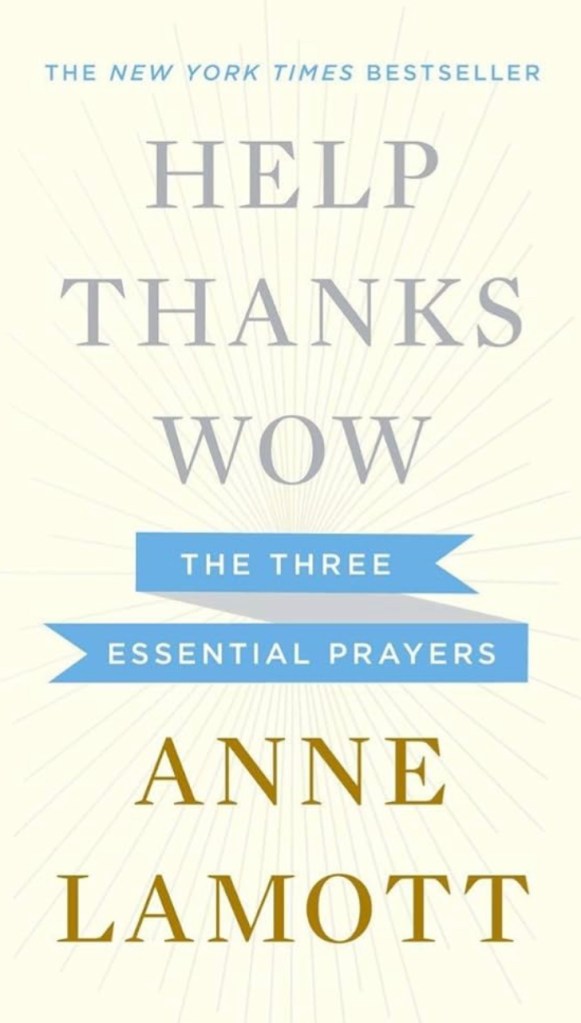
Anne Lamott’s book, Help Thanks Wow is a call to prayer as well as a prayer tutorial for the uninitiated and the out of touch. It is a book about gratitude and finding perspective and it is an invitation to cultivate a state of wonderment. Lamott’s simple, comical and self deprecating style could charm even the most determinined non-believer. She keeps it simple, three one word prayers to recite, to hold fast through the tough times, and to stay mindful and intentional through the mundane everyday; to look for the good, and experience all the beauty that lies in wait for us if only we have the eyes to see it. I found Lamott’s style and non-denominational approach inviting and pragmatic. She didnt alienate her readers with old fashioned God talk, “asking an invisible old man to intervene.” She understands there are no words for the ‘broken hearts of people losing people’; there is no fixing the unfixable. But prayer as a spiritual experience, a one word incantation that helps you become more generous, more patient, more kind to yourself and others, there surely can be no harm in such a practice. I loved Lamott’s comical, tender, and real life prayer book, made for misfit souls of all ages. 7/10
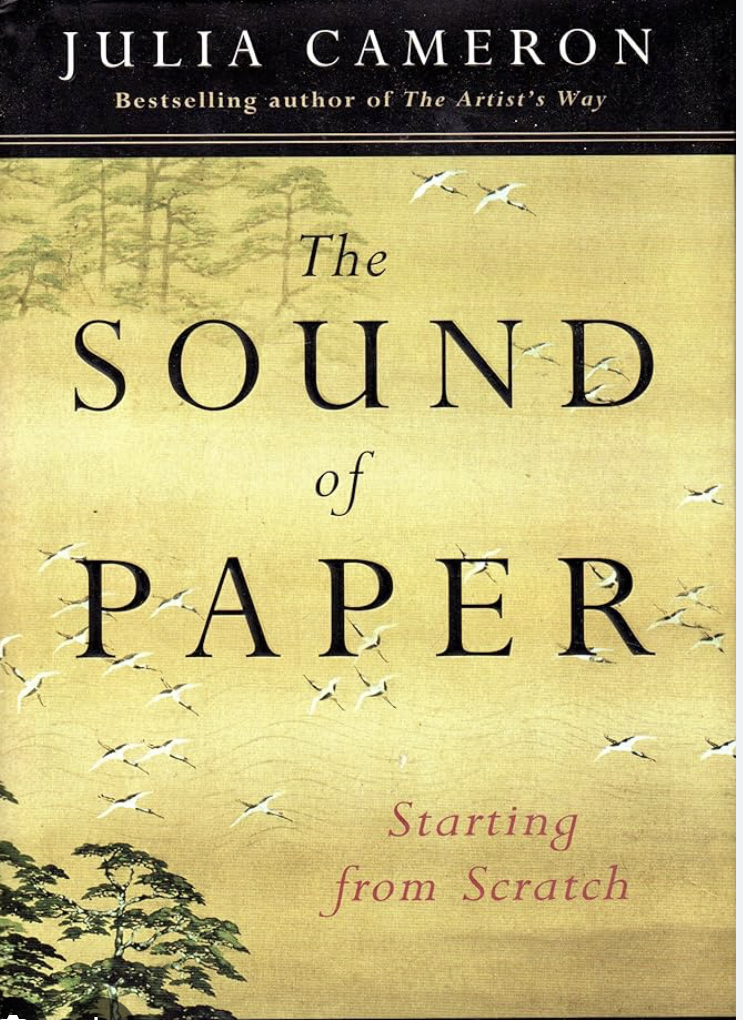
Julia Cameron, best known for her book , The Artist’s Way, delivers a comparable artistic toolbox for writers who work with story craft, routinely tackling the often intimidating blank page to create meaning and art. The Sound of Paper is essentially a workbook with a series of exercises and disciplines designed to open the creative narrative approach, so often stymied by a writers own critical voice, that values product over process and atacks fledgling writing projects before they’ve had a chance to mature. Cameron’s writing drills are designed to explore and develop your authentic voice, to place emphasis away from a perfect script, with a series of self care indulgences that cultivate a safe space for creative work, and structured play projects designed to reignite a love of writing. Daily rituals include walking, and morning pages, and being open to the idea of working poorly, breaking free of the ego’s need to be brilliant, and instead contenting ourselves to being functioning wordsmiths, with the freedom to embrace new forms. This is a perfect gift for any writer looking to learn or advance her craft. 8/10

Emilia Hart’s Weyward, chronicles the lives of three Weyward witches, separated by generations but related by blood; the three principle characters include , Altha, on trial for witchcraft in the 16th Century, Violet, at the mercy of an opportunistic father and an unscrupulous suiter in the 1940s, and Kate, the victim of present day domestic violence. Their stories highlight a history of patriarchy and misogeny that targets powerful women and condemns or attempts to harness that power. I’ve always enjoyed a good witch story, ever since I watched Bell Book and Candle with Kim Novak and Jimmy Stewart. The Weyward witches are more like botanists with animal familiars, less broomsticks and incantations. The book is at its best drawing attention to the understated, undocumented power that exists between women, “the most feared…and the most potentially transforming force on the planet.” The story’s pace is a little slow moving in the first half, and the book reads a bit like three separate novellas with tie-ins too carelessly woven, and coming too near the book’s close. I have read better witcherature and while Hart’s story gets a passing grade, it didnt put a spell on me. 6/10

I read this book several years ago but as it is always on my night stand and as I am continuously rereading passages, a review seems in order. I have recommended this book to many, many friends, particularly those who have experienced their first ‘shot across the bow’, a personal health scare, and have come face to face with their own mortality. If I still have the capacity to read and understand this book’s ancient teachings as I lay dying, this will be the last book I hold . I take great comfort in its thesis that what we are has no beginning and no end…what was never born may never truly die. I can hear the critique of my scientific rationalist friends prpeparing their remarks as I write, but the little old lady that waits in me, made peace with Pascal’s wager decades ago.
I Am That was first published in 1973 and is a collection of teachings from the great Hindu spirtitual teacher and seer, Nisargadatta Maharaj. This book takes its title from the Upanishads and delves into who we reallly are, “nothing perceivable, or imaginable,” and is a guidebook to cultivate an awareness of our natural state. Topics include acceptance, the way through pain, a ‘do no harm’ discipline and is a call to “wake up” from the daydream that enchants us. Reading this book is like donning a cloak of grace or a cape that insulates us from fear of death. I cannot recommend it highly enough, particularly for readers who have received a disappointing diagnosis and believe their time is finite. 9/10
-
In Conversation with Dr. Margaret Anne Smith

I sat down with Margaret Anne Smith at a local coffee house with a reputation for good lattes and a spectrum of social justice projects that support many marginalized members of our community. It seemed a fitting setting for a conversation with a woman who is, among other things, an advocate for the disenfranchised, sitting on the board of a harm reduction enterprise that supports people living with addiction. Margaret Anne Smith holds a PhD in English Literature, specializing in 20th Century poetry, and has taught her entire career in the post-secondary setting. She is an academic, a teacher, a poet, and a fiber artist. She is married, a mother of two, and has the sort of old-world integrity and essential goodness that makes you believe that we are not without hope, no matter what unbelievable chicanery we witness daily on the evening news. As I listened to her speak, I couldn’t help thinking of the power of a single individual to effect great change in the world around her, especially one armed with a sharp analytical mind trained to notice what others do not see, and gifted with a clear, insightful voice to ask the right questions. She is currently at work on a book of poetry that celebrates local coastal beauty and lure. It is a collection I very much look forward to reading someday.
Tell me your life story in seven sentences or less?
I grew up in Saint John and…same sentence… moved back here on purpose, after spending a dozen years away. I love my extended family and friends. I have been married to David for 36 very good years. We have two great kids. I live near the Bay of Fundy. I am a teacher. I am a reader and a writer.
What is the best thing about getting older?
Learning…I was going to say discovering, but it’s not like a momentary discovery, there is no switch that flips, there’s no ‘aha moment’… it’s a gradual process of learning what I care about. And the other side of it, is learning what I don’t give a fuck about, and that list has changed with time.
What is the worst thing about getting older?
Joint pain and not being able to see as well as I want to in my 50s. That’s the part that surprised me, the pain came so much earlier than I anticipated. I’m on the cataract waiting list which depresses me, but I look forward to losing the heavy progressive lenses.
If you could retain or retrieve one quality from your youth, what would it be?
My knees and my feet to be honest. It’s not my optimism…it’s not my hope, it’s not my energy level I’m worried about losing …it’s my joints. I had envisioned at this age, those walking trips in Europe, but there’s no chance. I couldn’t physically do it… it’s my knees. I want to be able to hike for ten kilometers and I just can’t.
What’s the most important lesson you’ve learned so far?
I think it’s probably learning the difference between spending your energy on things you cannot change and spending your energy on things you can. And that exists on several levels So there are things that maybe I cannot change about myself,… my feet hurt, I can’t take a walking trip across Ireland. Ok…goodbye to that idea, and now what can I do instead? Because I think spending your energy on things you can’t change makes you bitter, and we don’t want to be bitter little old ladies in waiting… because it would be easy, wouldn’t it?
So that’s personal, so now let’s take it to the next level to the people in my circle. There are certain things I can’t change, and you can invest in those relationships but there are some things you just absolutely cannot change. I like Glennon Doyle’s Podcast? It’s called “We Can Do Hard Things”. It’s American and its funny as hell, and they interview a lot of interesting people and one of the great episodes is about how to fortify yourself for the holiday season in terms of dealing with your family and expectations. A great piece of advice he gives is ‘Be not surprised’ because you know Uncle Bob is going to go down the same road he took last year, so don’t be outraged and horrified by it, just adopt an attitude of ‘yeah, whatever, I still love you,’ when people behave in ways they have always behaved, ‘be not surprised.’
Jewel has a song I really like from 1998, I’m dating myself here, it’s called Life Uncommon. She says ‘no longer lend your strength to that which you wish to be free from.” It’s about using your voice and that speaks to me now…where do you use your energy… where do you use your voice.
The other part of that question is what you do about the global piece and that is much more difficult right now. I try to be selective and pick the bite-sized things that I can do. I joined the Board of Avenue B that operates on a harm reduction model. I have no lived experience with addiction myself, or in my circle, but I thought I can be on the board. I’m good at policy and procedure…and I try to make choices with some integrity. I don’t live in a tent, I’m not a drug user, but l am devastated by the inhumanity that’s everywhere in our cities and small towns now and how people are being treated so badly and left out. We talked about water fountains at the meeting last night. If you were thirsty and unhoused…where do you go?
Do you have a favourite quote?
Yes, it’s a quote by Vaclav Havel. I like it because he distinguishes between hope and optimism. It’s a quote from his time in prison. His language is beautiful of course, but for me the beauty is that he isn’t saying, it will all be fine…because so often it is not fine. He takes hope from being a big cartoony rainbow thing and makes it real.
“The kind of hope I often think about (especially in situations that are particularly hopeless, such as prison) I understand above all as a state of mind, not a state of the world. Either we have hope within us, or we don’t; it is a dimension of the soul; it’s not essentially dependent on some observation of the world or estimate of the situation. Hope is not prognostication. It is an orientation of the spirit, an orientation of the heart; it transcends the world that is immediately experienced, and is anchored somewhere beyond its horizons.
Hope, in this deep and powerful sense, is not the same as joy that things are going well, or willingness to invest in enterprises that are obviously headed for early success, but, rather, an ability to work for something because it is good, not just because it stands a chance to succeed. The more unpropitious the situation in which we demonstrate hope, the deeper that hope is. Hope is not the same thing as optimism. It is not the conviction that something will turn out well, but the certainty that something makes sense, regardless of how it turns out. In short, I think that the deepest and most important form of hope, the only one that can keep us above water and urge us to good works, and the only true source of the breathtaking dimension of the human spirit and its efforts, is something we get, as it were, from “elsewhere.” It is also this hope, above all, which gives us the strength to live and continually to try new things, even in conditions that seem as hopeless as ours do, here and now.”
Do you have a favourite word?
Sea…as in the ocean. The word sea represents all kinds of things metaphorically but for me it is both a personal, and local place of refuge…it always has been …since I was old enough to ride my bike off the cliff, which I did by the way…I was a free-range kid in West Saint john. I might edit that out for my mother.
There is something timeless about the sea… I love the rhythm, I love the sound. It’s also a metaphor for connection, wrapping around the globe, and it’s a measuring stick for what we are doing to the planet which is a big concern for me. I think because we can see the trees being cut down and we can see the trees on fire on tv, it’s a little harder to ignore, but we could go to Bayshore this morning and think all is well…and it’s not. We need to pay a bit more attention… we need to pay a lot more attention.
Describe your perfect day.
Sunshine. Great coffee. The ocean. My husband and my kids and their partners and nothing planned.
If you could have tea with anyone, real or fictional, dead, or alive, who would it be and what would you talk about?
Given the state of the world, I want to sit down with Greta Thunberg. Three reasons. She is young and we need to listen to the younger voices, about everything. I mean look at where the power is…still in the hands of old rich white guys and that has to change. Secondly, she is willing to make incredible sacrifices for the future. I’m interested in asking her, why, what do you see, what do you envision, what are you giving up and what are you giving it up for? Three would be the climate crisis, it’s going to cook us and were pretending it’s not. I want to talk about that.
Tell me three things that bring you joy.
Real conversations. Real, not honest, because even honest conversations have a few lies in them.
David, Kevin, and Maureen …from the beginning all the way to this morning. So much joy in that little family of mine.
Time outdoors. Some of it goes back to the free-range childhood. Total freedom. It might have been an illusion, or it might have been quite real, that no one was paying any attention to us kids. We were free, and time outdoors reminds me of my freedom. Also, as an artist I appreciate the changing light and the shadows cast by the sun and the changing colours of the season. My shoulders lower when I step out the door.
Name a guilty pleasure.
Ice cream. Too much fat, too much sugar but it hasn’t made me give it up. It’s a favourite treat.
Do you believe in life after death? What does it look like?
I do believe in life after death, but I don’t know what it looks like. And I don’t even have an assumed visual. I think when I was young, I did have an idea that was based on a religious tradition…heavenly gates…clouds. So now I think there is so much beauty and goodness, despite the horrors, and I don’t think those things can just come to an end. There has to be something else. My sense of what that is has changed, because I think there is something else for the right whale as well, and for the pigeon on the roof… that we’re all part of this interconnectedness that we can’t really, fully appreciate now and maybe our great joy in the afterlife is coming to understand what that interconnectedness means.
What would you like your eulogy to say?
I boiled it down to two things. First, I want my children to write it, and I trust them. Second, and how’s this for a mothers’ control, I hope they would say that they saw that I remained engaged until the end of my days. I don’t like the word engaged… maybe passionate, passionate is better, engaged is so psycho-ed, or maybe that I cared, but that’s too Hallmark. Passionate works, and passionate about what doesn’t really matter…maybe when I’m 80 I’ll be passionate about my pansy collection.
-
The Revenue of Rest and Experiments in Daytime Napping
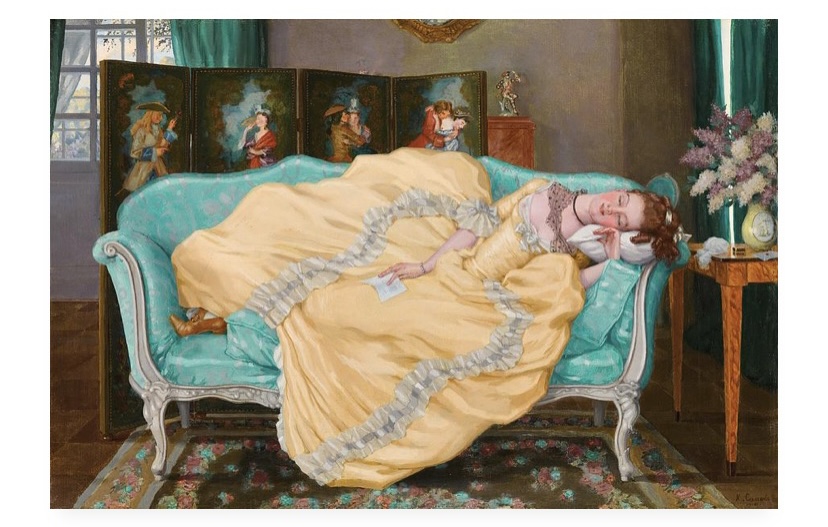
“How beautiful it is to do nothing, and then to rest afterward.” – Spanish Proverb
“Shut your eyes and see.” – James Joyce
I have always resisted the arguable allure of rest, and the notion of daytime napping triggers a little anxiety somewhere deep in my little old lady amygdala. I’m not sure we need to investigate exactly why that is …well …ok, since you asked, it could be fear of lost finite time, or years of positive reinforcement for multi-tasking and maximizing efficiencies… go to work, work out, work at home, homework. For most women, rest is the thing you do 15 minutes before you pass out at the end of the day, while you’re making a to do list for tomorrow, right? Well, those days are done. The truth is, and I’m going to whisper this bit in italics, as a little old lady in waiting, there is not all that much on my to do list anymore. I have more free time than ever before. Shhhh … experiments in daytime napping in progress.
After a few weeks of unstructured bliss in your retirement infancy, you may, like me, find yourself contemplating the most optimal use of your time, and exploring the scientifically proven compensations of good sleep hygiene and the merits of ritualized rest seems a suitable starting point. Leading sleep experts advise 8 plus hours of sleep a night. That’s a big piece of life pie that we’re never getting back, so just how essential is rest, if our goal is to savour as much pie as possible.
The world hangs, quite literally on a good night’s sleep. Mathew Walker, a leading neuroscientist, in his book, “Why We Sleep”, points out that we conduct a worldwide experiment on the significance of sleep twice a year during daylight savings time. Walker’s research indicates that when we Spring ahead, effectively losing an hour of sleep, bad things happen. After only one hour of lost sleep, there are more reported traffic accidents, heart attacks, and suicides, and judges even hand down harsher sentences. Conversely, when we gain an hour of sleep in the Fall, the opposite is true, with statistically less incidences in all categories. Message received… sleep is good and, according to Walker, more sleep is better, indicating that most of us aren’t getting enough.
My husband is like a Zen master when it comes to the impromptu snooze. I find myself studying his napping habits, squinty eyed, coveting his capacity to drift off into restful slumber without a moment’s hesitation, and wonder why it is that the idea of a little mid-afternoon siesta seems so anathema to me. Despite my inherent discomfort with the practice of daylight dozing, my little old lady in waiting body and mind is telling me, even now, that it’s time to embrace the nap habit and all of health benefits associated: enhanced relaxation, mood, alertness and improved performance, reaction time and memory. Staving off cognitive decline is something I have a keen interest in and so, properly incentivized, I have begun experimenting with taking rest when tired, no matter what time of day.
Right now, I’m setting my timer for 30 minutes, and skulking back to bed for a midday nap. I feel a little self-conscious, but two coffees in, I am still sleepy. It’s a sunny day, my deck is calling, the dog needs to be walked, the breakfast dishes are still strewn across the counter, I could be reading right now, but I’m choosing to prioritize my neuroplasticity, I’ll see you in 30. (Half hour time lapse) Initial clinical trials are not promising. When the alarm sounds, I can report only a half hour of horizontal ineptitude, eyes closed, mind wide awake and running, nary a wink of sleep. But I have had some thoughts…a million of them in fact, a chaotic, slip stream of consciousness that feels like the opposite of rest. What I feel now, after a botched nap, is the sensation of lost time. Time I could have been, writing, reading, walking, even cleaning, or maybe just figuring out how to con someone else into making dinner tonight. Also, there is the added aggravation of renewed sleep fatigue, the brain fog that accompanies your first several hundred vertical steps, not to mention the bed head.
Alas, maybe napping is not for me. I know what you’re thinking… give it another go, the Land of Nod wasn’t built in a day, I mean even babies know how to nap. How hard could it be? But the truth is I have always found focused mental or physical activity, engagement for lack of a better word, far more restful that actual sleep. Maybe that’s just how people like me…the tired, the cranky, rest, or maybe I just don’t excel at rest, at least not yet. I’m willing to continue my daytime sleep trials but between you and me, I’ve lowered my expectations considerably.
Perhaps before I attempt a master class like daytime napping, I need to do some preliminary work in getting comfortable with doing nothing…not so easy as you might imagine. Simply to sit, without occupation, no task, no agenda, seems a little like walking into the men’s room by mistake, the crib of some slack teenage manboy in the middle of a growth spurt, or maybe the diary of a little old man in waiting. I’m not sure I have enough testosterone for this.
What I do know is that there is kind of gold to be mined in each of us, and rest is how we frack it. Not only does it allow our brains to reset to the so-called default network that lights up like a Christmas tree when we are at rest, it also opens a conduit to connect disparate ideas and potentially solve problems in new and imaginative ways. This is the value of going quiet, being still and resting. Stopping the assembly line of constant activity for a short time each day, turns out can be pretty productive. Quiet can be very loud, and some of our best ideas are born in stillness. Rest is being re-branded as the radical new prescription for many of the ills of modern life. Anne Lamott writes, “almost everything will work again if you unplug it for a few minutes…including you.” So, while practicing doing nothing might make me feel uncomfortable, and even incompetent, at least initially, the contemplative, creative, and therapeutic inducements of doing nothing are too persuasive to ignore.
Little old lady to little old lady, I highly recommend a daily discipline of doing nothing. Being still, learning to simply be a “silent witness” watching the world unfold, a world oblivious to all our attempts to contain or control it, maybe that’s enough of challenge for a nap novice like me. You’ll think of a million things you could be doing. It’s hard to resist the seductive lure of a checked off to do list, the ever-present temptation of a clean house, the silent scream from the heights of a towering TBR pile, but tomorrow instead of a nap, I’m shooting for 30 minutes of sitting and doing nothing, I’m scheduling nowhere to be.
Join me. Just steal away somewhere, alone, maybe near a window where you can hear the birds sing and smell the morning air. Practice doing nothing before your morning workout, before breakfast, before you think about the demands of the day. Don’t open a book, or a journal, or your phone, don’t even begin a conversation with your cat; don’t allow anything to come before you and nothingness. After a while the art of doing nothing, resting in stillness, starts to feel like a holy thing, a mystery to be illuminated. Just go quiet for a time and see what you can hear. I listen to the breeze in the trees, the flap of a bird’s wing in flight, the dog’s yawn, the tread of morning walkers, my own heart beating, and always the ticking of a clock. Sometimes the silence is deafening. Thoughts will come and go like clouds floating in the sky, I watch them like they belong outside myself, and then I Iet them float on by. This is how I know for certain that “I am not my thoughts, I am the one who hears them.” And that is an immeasurable treasure, mined after only a single day of doing nothing.
Author’s post script
A successful daytime nap experiment was conducted within one week of commencing clinical trials. It is my working hypothesis that a daily discipline of doing nothing is a statistically significant independent variable.
-
Little Old Lady to Little Old Lady Wisdom
Sister Rhona Gulliver

Author’s Note: The following profile is the first in a series of interviews based on a standardized set of questions designed to illicit insights and wisdom from Little Old Ladies in waiting. For me the exercise might be likened to what London black-cab apprentices refer to as ‘The Knowledge’; a mapping or learning the grid…the Grand Dame essentials, all the best bits and bobs to be discovered on the road to little old ladydom. The guiding spirit behind the profiles is best captured in a line by Rilke; “I want to be with those who know secret things, or else alone.” I hope to interview women with considered and varied life experience, interesting and unusual career paths, a sprinkling of accolades, and maybe a smidgen more than their just share of “je ne sais quoi.”
The very first person that came to mind, satisfying all qualifiers, was Sister Rhona Gulliver. I consider Rhona one of the most learned and wise women of my acquaintance. She has a sharp intellect, a rich interior world, and a well-established and dearly appreciated wit. She is a writer and an artist, with the singing voice of a sweet young girl, and the conversational acumen of a late-night radio host. She has a genuine love of people, asking questions that open up all those who enter her realm, and paying us the ultimate compliment of her complete attention. She may be the most skilled listener I have ever met with an unparalleled capacity for friendship.
Tell me your life story in seven sentences or less?
What I have done… I attended 7 universities including Dalhousie, McMaster, Ottawa, as well as Dublin City University searching for a career and life values.
Where have I been… I’ve been engaged three times to be married, looking for romance and companionship. I entered the Congregation de Notre Dame in Montreal in 1970 to become a religious sister and after three years they told me to go home. I had come to know and love the foundress, Marguerite Bourgeoys, of Notre Dame. Ten years later I entered the Sisters of Charity in Saint John and it felt more in keeping with the career I had chosen, leading to a deeper spirituality and giving of my gifts to others. I worked many years in the community as a nurse, social worker, family councillor, and teaching at Queens University specializing in forensic psychiatry. My desire through life was to encourage others to learn and experience the best they could and give back to others.
What is the best thing about getting older?
The best thing is that you have less responsibility, and you can speak your mind without worrying too much about whether someone is getting upset… you also take things with a grain of salt.
What is the worst thing about getting older?
Always worrying that something else will go wrong with your health… some little thing that hurts. Your health starts to deteriorate and there is nothing you can do about it… you’re at the back of the line.
If you could retain or retrieve one quality from your youth, what would it be?
Dancing… I love to dance. I took lessons until I was 14 or 15 and then it wasn’t cool anymore. I’d like to dance again.
Do you have a favourite quote?
Yes, it’s a quote my great grandmother told me.
“When you educate a man, you educate a man. When you educate a woman, you educate a generation.”
Do you have a favourite word?
“Kretzimah” (Unfamiliar with this word, I requested a definition)
I made it up. It means you’re soft or enjoyable, a gentle person… it describes everything delightful.
Describe your perfect day.
One that I would be free of all responsibilities – the telephone, visitors… with time to paint and write poetry, to read and have some spiritual time for rejoining my connection with God… maybe pieces of chocolate here and there.
If you could have tea with anyone, real or fictional, dead or alive, who would it be and what would you talk about?
Pierre Elliott Trudeau. I find him very fascinating. He broke the rules of etiquette and of government. He did what he liked to do. We would have a swinging good time. We could talk about everything: great books, philosophy, theology, politics. There aren’t that many you can talk to about such things.
Do you believe in life after death? What does it look like?
Yes, I believe in life after death. Most of life is getting ready for death. Life isn’t always pleasant but after this life all will be revealed, and the feeling of love will be so powerful you won’t have time to think of anything other than the love of God. Sometimes in this life after traumatic things have happened, I have contemplated suicide, but in the end, I thought I might be cheating myself of a higher form of love. I don’t mean to say that suicide is sinful, I mean that the more you can accept and survive the hard times, the greater your capacity for love… for other people, for yourself, and for God.
Tell me three things that bring you joy.
Chocolate. People. The Arts – painting, singing, music.
Name a guilty pleasure.
I like flirting with men. My brothers always told me if I kept my mouth closed, I could find a better boyfriend.
What would you like your eulogy to say?
I came… I was… I went.
-
To Retire or Not to Retire…that is the question
A Blessing for One Who is Exhausted
“…There is nothing else to do now but rest and patiently learn to receive the self you have forsaken for the race of days…
You have travelled too fast over false ground; and now your soul has come to take you back.
Take refuge in your senses, open up to all the small miracles you rushed through…
Be excessively gentle with yourself. Stay clear of those vexed in spirit.
Learn to linger around someone of ease who feels they have all the time in the world.
Gradually you will return to yourself, having learned a new respect for your heart and the joy that dwells far within slow time.” – John O’Donohue
There comes a moment in the life of every little old lady in waiting to consider the merits and limitations of retirement, il dolce far niente (the sweetness of doing nothing – English translation…taking time to smell the roses). Perhaps it’s just a whisper inside yourself for now, that smiles a knowing smile on sunny days that seem too precious to trade for mere money; or maybe, like me, that whisper has mutated into a belligerent bitch who wins every argument and laughs openly at your attempts to ignore her. The truth is that the voice within always knows best. Once you entertain the notion of retirement, it establishes a little foothold somewhere between your world-weary gut and your hard-working heart. It grows strong on a steady diet of IDGAF workplace disenchantment and a flirtation with a trending new prescription known as self-care. The decision, once taken, is definitive. For this little old lady in waiting, it is time to retire.
Two months shy of 59, I have traded life hours for money for almost 45 years now. I have had a long and varied work history and worn many different hats in my career. I’ve worked in libraries and restaurants, offices and classrooms, hotels and bars, hospitals, bookstores, and teashops, and even from the comfort of my own home while freelancing and raising my kids. I have, overall, enjoyed my working life and all its compensatory gifts. My mind is most at peace when engaged, and so work has been my ally all these many years, my morning coffee, my daily talk, and at times my evening companion as well. If I factor in all the extraordinary humans I have met along the way – the work wives, the confidants and confessors, the friends who carried you on the hard days, and allowed you to carry them in return; it’s clear that work, for most of us, is a lot more than what we produce with our hands and minds, it’s also a journey into each other’s lives in a very real and lasting way.
Work has far more value than whatever dollar amount that magically appears in our bank accounts every two weeks, so whatever it is that starts you down the path to reclaiming your freedom, it’s important to consider the metrics and logistics very carefully. Are you absolutely sure that you’re ready to embrace your freedom, because I think we all know why the caged bird sings. Agendaless days and a wide-open appointment book can be a bit overwhelming for the uninitiated. I mean, when is the last time you asked yourself what it is you would like to do today?
Let me be frank, a practiced readiness and a thorough accounting of your life goals is an essential prerequisite to any serious retirement discussion. What price freedom? How grand a lifestyle does your current salary maintain? Does your retirement require the maintenance of a cottage, a boat, travel, seasonal wardrobe revitalizing, adult children, aging parents? Maybe your only essentials are a good pair of walking shoes, a library card, and the company of someone who can still make you laugh. I fall somewhere in between. My non-negotiables include a towering TBR pile of books, a pickleball squad on speed dial, and the occasional stimulating conversation. I can make do with two out of three in a pinch.
The decision to retire is hugely dependent on how much your work adds or detracts from your life. I have friends working well into their 60’s whose work transforms and inspires them: artists, chefs, academics, writers and makers whose work is so intrinsically a part of their lives that retirement would seem a sort of death, at least of the spirit. They are the lucky few. I have other friends, smart and autonomous, who make their living comfortably ensconced in their own homes, using only their brilliant minds, and lifting no more than a finger or three to upload their work. At the top of their monetary game, “why on earth would I ever consider retirement,” they cluck. Huge monetary earnings … minimal effort… bit of a no-brainer really.
For everyone who feels fully engaged in their work, who love the role they play in their workplace, and who might even feel lost without their work, I say play on. But for those other friends, no less successful in their chosen fields, who count the days and the dollars needed to free themselves from the alienating chains of industry, or those who spend even one of our apportioned days contemplating a life more fully lived, I say retire and God’s speed.
My own decision to pull the retirement rip cord was ignited by a few seminal life events including a devastating personal loss, and an injury that necessitated a protracted period away from work. The first put me in touch with my own mortality and taught me that time, specifically time with loved ones, is the only real wealth. The second provided a safe space to test drive what a life free of the shackles of gainful employment might be like. It did not disappoint.
Earlier this week I retired from a position I have held for over a decade as a Palliative Care nurse. In that time, I have watched hundreds of people die and, of late, anecdotally at least, it seems I have nursed a great many little old ladies…in waiting. None of the patients that roll down the hall onto the Palliative Care unit are ever truly ready for what comes next, even those with significant disease burdens and those who have been unwell for a long time. It always takes these brave souls a bit by surprise when they come to fully understand, that they are living their last days and hours, that they are lying on their deathbed, where they will take their last breath.
It has been a great privilege to attend the dying in their last days of life, to understand the absolute value of time through their eyes, and bear witness to their unspeakably beautiful, quiet acts of courage and grace. Despite every small aortic tear my work has cost me, to stay present and care for my patients and their families, they have paid me back a thousand-fold in what they have taught me about life and about death. Nothing is promised. There is only now.
If you’re a little old lady… in waiting, like me, then maybe it’s time to explore a life unfettered by labour, or, at the very least, time to ask yourself how it is you’d like to spend your days in the last quarter of your life. If you’ve grown weary “running up that hill”, it might be wise to have a listen inside yourself, a little away from the madding crowd, with time and space to hear what you’re thinking in there. Steal away with me awhile. I’ll be sat low to the ground somewhere near the sea, with my dog and a flask of tea, looking out on the water’s unknowable depths and meditating on a fine line by T.S. Elliot, “to make an end is to make a beginning. The end is where we start from.”
 Little Old Lady … in Waiting