Tag: transformation

  • The Richness of Retreat

    .

    “Silence is also a conversation” – Ramana Maharshi

    “Be a loner. That gives you time to wonder, to search for the truth.” – Albert Einstein

    I have never lived alone, and at 59 and a half, I can count on one hand the number of nights I’ve spent alone in my home.  So, when my daughter announced that she was off to Australia for a fortnight, and asked if I might cat sit, I decided to embark on a private retreat of my own, a silent, mind-spa staycation, an experiment in the single life, an escape to a ‘room of one’s own’. The setting was LOLIW perfect… posh, urban, ceilings to God, a spiral staircased brownstone apartment in the heritage quarter, the dream home of a much younger version of myself.  The street was Orange, the mood, indigo, and the first song I danced to, with abandon, in far too many years, was Yellow.

    I have always shared living space with close friends or loved ones.  I have never experienced the kind of solitude and silence that singletons exalt in daily, the bliss of soundless mornings, the peace of uninterrupted afternoons, the effortless, evening meal for one, or the coveted hours spent in one’s own sweet company, time whiled away without reference to the wishes or inclinations of another living soul. To keep one’s own good counsel and consult no one else (save an agreeable cat with excellent manners and clear boundaries) on how best to spend the day…what a gift to give yourself, perhaps most especially as a little old lady in waiting. There is a magic to be mined, an enchantment, a real richness of experience to be savoured in retreat. 

    As with any adventure, I overthought and planned every minute detail down to the quick. I packed separate bags for the gym, for work, and for pickleball. I made sure to include enough loungewear and smalls to avoid even the notion of laundry, and a series of comfy sweaters and toasty wool socks, as you do, unfamiliar with the heating in my new abode, a Canadian girl down to  my bones. One can’t be too careful when it comes to creature comforts.  I prepared and packaged enough food to last me about ten days, individually portioned, so I wouldn’t be troubled with cooking or cleaning dishes during my retreat.  I planned to supplement my defrostables with a few evenings of restaurant meals, I was on vacation after all…there were friends to be met, and those naan nachos from Thandi’s are a siren call that cannot be ignored.

    My car was already packed the morning I set off to drive my daughter to the airport. I kissed my husband and hugged my son and small geriatric dog goodbye.  A little old lady herself, I had a quick word and cuddle with my last true dependent.  I let her know it was alright if she had an accident or two in my absence, as the menfolk aren’t as attuned to her bathrooming pecadillos, an easy concession as I wouldn’t be there to look after any mess.  I wished her well and promised to make it up to her.  We settled on half my breakfast bacon for a period no shorter than one year, and a promise that she could come away with me next time.  Oh yes, spoiler alert, there will be a next time.

    After imparting a steady stream of last-minute motherly advice to my savvy, world travelling daughter, advice she did not need, but tolerated as best she could, I watched my baby pass through security, before discarding whatever illusion of control I still harboured, and then, mentally slipping off my mother cape, a favourite cloak, I turned with a little tear in my eye, before going dark, the start of a full-blown smile forming on my lips. I was a stranger in a strange land, alive to the endless opportunities that waited for me. I decided on a quick stop to Costco (I mean …I was in the neighbourhood) for a few emergency supplies…ready made bacon, the Christmas fruitcake (singletons host friends too) and then it was straight back to the little uptown palace I would call home for the next two weeks, party of one.

    I made my escape in mid-November, an excellent time of year for retreat, just at the onset of the introspective months of the Canadian winter, but before the circus of Christmas pageantry that engulfs most matriarchs in December and doesn’t let go until after New Year’s day. For the first few days I sat in a kind of meditative slumber, wonderstruck by the tidied rooms, the luxurious silence, the fragrance of aloneness, the cadence of a single set of steps. I floated from room to room, I listened to the voice of a girl set free from a set of inherited instructions for living, a voice that spoke softly at first, but eventually commanded my entire attention. 

    Most of what she told me is private of course, you understand, what happens on Orange stays on Orange, and anyway it would probably be lost in translation.  I can share that I never once felt lonely during my retreat, that it took several days to miss the loved ones I live with, and if there were any monsters under the bed I slept in alone at night, they kept to their dark recesses and didn’t intrude on my peace. Suffice to say, I was away long enough to remember that there is no better counsel than your own, there is no truer friend than yourself, and if you’ve been neglecting that friendship, then it is time to take yourself away for a long overdue conversation, the kind where you listen more than you speak. Our words can physically influence the world around us, most especially the words we recite incessantly to ourselves silently, in a closed circuit.  The truth is that every cell in our body is listening to us, which makes the quality of the interior dialogue so critical. Do we settle for questions like, “what’s for dinner?” or even “where to travel next year?”  or do we ask ourselves how we might best build joy today? Or “what exactly Elliot meant when he wrote, “I grow old…I grow old…I shall wear the bottoms of my trousers rolled. Shall I part my hair behind?  Do I dare eat a peach?’

    If you, like me, prefer Elliot’s poetry to a cookbook, these are the essential rules of retreat. There must be quiet. Your mind must be calm and unleashed from the concerns and demands of those closest to you.  So much of our action in life is economically or socially determined. Even love can feel like a Chinese finger trap some days. As we get older the claims of our immediate environment, our preferred living arrangement, can be so pervasive that we can actually lose sight of ourself in the family photograph, beneath the Wifee sweatshirt, behind the sacred veil of motherhood, to the woman who waits within like a nested Russian doll  We can become so consumed with what we perceive as the requirements of daily living; nutritious meals, a tidy home, daily exercise, the social scene, that we forget ourselves and our real work, discovering and exploring the beauty and mystery that lies within.

    Finding a quiet place to stoke your inner fire is an essential and sacred ritual, an absolute necessity for every little old lady in waiting. If you can’t get away for a dedicated retreat, then lay claim to a certain hour every day, a space of time inviolate to family or friends, where the news of the world cannot reach you, and where you do not recognize or acknowledge what is owed to others.  A space where you are free to simply experience who you are, and what you might be, a place of creative incubation, a venue to challenge your everyday assumptions, to grow, to follow the winds of your own inclinations, to feel your courage, and to care for yourself, like the treasure you are.

    At first it may feel like you’re wasting time.  If that is your experience, at least initially, I would encourage you to hold fast, it is, after all, your time to waste. We have a limited lease of time apportioned to each of us, and whether you spend that time truly awake or asleep in the detritus of daily living is entirely up to you.  Life has no pause button or rewind setting.  If you read this blog post all the way to then end, each of us is 5 minutes closer to our demise than when you started.  If you can stay present to this moment, if you can be here now, and genuinely engaged in pursuits that bring you joy, then you know the secret to a beautiful life. So often we become embroiled in activities we do not relish and have not chosen for ourselves but believe are required of us.   Fresh from my retreat I have begun to question everything I habitually tell myself needs doing. I engage in small acts of rebellion as often as possible.  I eat cereal for dinner some nights, my bed often goes unmade, sometimes I skip the gym to write or read …there is a feathery owl atop my Christmas tree this year, slightly askew, and it has never looked more beautiful to me.  I hold space for myself to wonder and to consider questions outside the realm of my daily routine. “Do I dare eat a peach?”

    It’s true that to create a pleasant and harmonious environment in our lives together with loved ones we need the cooperation of all those we choose to hold close in our immediate circle, but pleasure carried within ourselves, within our own body and mind, and within that part of ourselves that has no name, that is our business alone. This dark season of early nights and twinkling lights, I wish for you a happy retreat…I invite you to cast your eyes to the wintry sky, to stand alone sometimes, to “look at the stars and see how they shine for you.”

  • Solvitur Ambulando…It Is Solved by Walking

    “Walking, I am listening to a deeper way. Suddenly all my ancestors are behind me. Be still, they say. Watch and listen. You are the result of the love of thousands.” – Linda Hogan (Native American writer )

    “‘But it isn’t easy ‘ said Pooh. ‘Poetry and hums arent things which you get, they’re things that get you. And all you can do is go where they can find you.’”- A.A. Milne

    If I’ve ever invited you on a walk then there is a fair chance you’re someone I love very much…family, and a handful of friends I keep close, like “a cloak, to mind (my) life.”(O’Donahue) I don’t walk, as our ancestors once did, to arrive at a particular destination, nor can I honestly say that I walk to safeguard my health, although, as a nurse, I know it to be powerful medicine, and an essential practice in the Little old lady in waiting’s handbook on how best to live a long and healthy life.  For me, walking is a sacred sojourn, like writing in a journal, or sitting down for a cup of tea on a busy day to savour a last bit of cake; it is a solitary ritual, a reflective exercise, a rich, sensual, fortifying experience, that grounds me in the present moment, and reveals a deeper way of looking, illuminating a world just beyond what our sedentary eyes can capture. Walking is a portal to the natural world where time may stand still, where we may even disappear for a while, as our unconscious unfurls, and insights and creative leaps lay waiting on well-trod paths like so many flowers to be gathered, an endless bouquet of ideas and dreams waiting to be revealed and rehomed.

    I have always believed a regular walking regime to be a salve for most of life’s ailments.  All those feel-good neurotransmitters dormant and eager for activation. I won’t bore you with the overly marketed health benefits…well, maybe just a quick review. Just as the doctors have always preached, walking, even a little, can significantly increase your lifespan, and reduce your biological age (marginally more appealing to the chronologically disadvantaged).  Walking also lowers your risk of cardiovascular disease, diabetes, and depression.  If that’s not enough to persuade you, there is also statistically significant evidence that walking lowers your stress level and reduces rumination and negative thinking.  Wait… I mean I’m down with the stress management, but I’m kind of trauma bonded with the rumination and negative thinking, that’s half my material.  Whatever…you get the idea…the health zealots are spot on, walking is good for you, body, and mind…but when has that ever been sufficient incentive to lace up, or drop the fork, if you see what I mean…again with the negative thinking and rumination. Let’s try again. Little old lady in waiting to little old lady in waiting, post-menopausal women who walk 4 hours a week have a 41% lower risk of hip fracture.  I like that. That’s positive…right?  I’m not sure where they get these exact numbers but I found it on my socials so it must be true. 

    Health considerations aside, here is what I know about walking from my own clinical trials, population of one.  No matter the setting for my walk: be it the sleepy, maturely tree’d, largely childless suburb that I call home, or any of the woodland parks scattered liberally in our beautiful picture province, or possibly the sea paths that wind along the miles of coastland in our stunning port city, nestled on the Bay of Fundy, or even a streetscape in the heritage block of Canada’s oldest incorporated city; a walk out of doors is a way through the wardrobe to a bountiful sensual world, where a steady stream of eye candy and auditory enchantments remind us to embrace the wild animal within, an invitation to howl for all the little old ladies in waiting, sat at home disguised  in grandma’s clothes, both figuratively, and literally some days.  We are meant to move our bodies, we our built to explore on foot, our ancestors walking ten times the distances we typically cover today. 

    Outside, in the natural world I am routinely transported by the startling beauty of the Disneyesque birds that sing in choirs on my quiet street, their sweet sad tunes in perfect pitch; or the spiral dance of autumnal leaves twirling upward as though commanded by the invisible hand of some ancient sorceress, reciting a spell to safeguard the woodland wildlife from winter on its way.  I hope she remembers to include me and mine in her magic. The animals nearby have a narrative all their own as they go about their daily errands and I nod to them when we meet: the black-sheep squirrel who lives in the tree at the front of my house, alone and happy to be so, or the family of deer who eat from my neighbours unpicked apple tree, heavy with fruit. I met, by chance, a beautiful fox not long ago, but neither of us had time to stop.

    Near the sea, I always envision I am walking with my dead relatives and even imagine I can hear their whispers in the wind and on the waves.  Walking in the woods, the air is perfumed with spruce and pine and something more elusive that smells like childhood and brings me back to a more innocent age, when the scariest monster I could imagine lived under my bed, not some beast who throws Gatsby themed balls, an evil, self-proclaimed king whose every soundbite is some variation of “let them eat cake.”  In the woods, while I’m walking at least, the king is dead…long live all the wild beings who walk this beautiful planet in peace.

    Saunter, stroll, scuttle, scale or stride,  I walk faithfully, alone, into the halcyon summer breeze of fresh cut grass and full strength sunny days, or the warm spring rain that bursts gardens into bloom, or my favourite, the crisp autumnal harvest days scented with chimney smoke and alight with golden interior tapestries of life, the window frames of  our neighbours homes in the gloaming, or out into the first snowfall of winter, a crampon crawl up and down frozen streets,  footfalls in virgin snow where I spy the tracks of smaller species, freshly awoken from a winter’s sleep.  Garlanded in cap and scarf, mittened, earmuffed, and balaclava’d, I’m adrift, a snowman flying through the air…la la la la la laaaaa.

    Outside, enveloped by ancient all-knowing trees, or surrounded by heritage architecture older than three little old ladies in waiting counted together, or stood at the thin space adjacent to the sea, there is a clarity of mind to be discovered that cannot be found in a book, or sat safely by the fireside, nor even under the tutelage of a wise seer.  There is a reverie known to the solitary walker (Rousseau), an enlightenment, an illumination, a flow of insights around every corner we turn. One foot in front of the other, there is space to think and puzzle and solve all the vexations visited upon us. Walking costs us nothing but time, no special gear required, only the capacity to listen to the resounding truth of our own intuition, a voice inside that speaks louder in silence, in the quiet found out of doors.

    A walkers’ trail is alive with imagery that invokes tangential lines of poetry and philosophical enquiry.  There is a hum when we walk…a higher frequency, a quiver of ideas and creative sparks. “What will you do with your one wild and precious life?” (Oliver) “I have measured out my life in coffee spoons.” (Elliot) And if while walking we by chance fall awake for a moment, to know this life is only a dream, how do we stay awake long enough to remember we are dreaming? (Wittgenstein). Walking is a whirlwind dance of ideas, a flow, an unconscious current in a deep primordial sea. And the story we rehearse inside ourselves, making up the parts we can’t quite recall, is a conversation I am happy to host most every day.

    I like to walk at a slower pace now, not quite the crawl my geriatric dog prefers, stopping to sniff every few feet, but I’m more interested in exercise for my mind and the quieting or distilling of my thoughts, than I am in exercising my body or protecting my cardiovascular health or even promoting longevity…still, perhaps aging backwards is something to aspire to.

    For me walking is a meditation, “with every step, I arrive.” (Thich Nhat Hahn) I practice slowing down, I come awake and allow time to stretch out before me, like clotheslines where birds gossip with their friends and freshly laundered linens flap their wings.  I see winter bared branches with captured notes and receipts, escaped from recycled bins, adrift in the wind like so many clues. I listen to the sound of my own footsteps and then deeper still to my breath, and my own heartbeat, and the hum that hangs over everything, the sound of the universe, I suspect, like an hourglass set close to a microphone recording the ever-escaping sands of time.

    I have found many treasures on my walks: old coins and worry stones, sea glass and driftwood art, lost letters and grocery lists, emblems of lives lived next to our own, and reminders that we are, none of us, alone.   I have heard the voices of lost loved ones and remembered the thoughts and images of versions of myself long since lost with them.  Walking I have found the answers to problems, big and small, I’ve found perspective, and gratitude, an abiding peace, and a strong feeling of connection with something greater than myself, something capable of conjuring the unspeakable beauty that is all around us, best viewed by foot, moving at your own pace, walking alone, in the natural world.

  • In Conversation with Margo Beckwith-Byrne

    At the grand dame age of 65, Margo Beckwith-Byrne self-identifies as a ‘little old lady’ proper, although her trim, athletic figure and sporty lifestyle are characteristic of a much younger woman. An avid tennis and pickleball player, Margo is a spitfire that punches well above her fighting weight in any given scenario. She is confidant and decisive, and a natural born manager of men. On the personality tests that assign an animal archetype I’d guess Margo is more at home in the shark tank than the petting zoo. She is spirited, and salty, and strong…she’s had to be strong. Widowed at 42 when her husband went out for a swim on a family vacation and never came back in, she became a single working mom overnight, her kids were then 2,5 and 7.

    Equipped with a B.Ed. in Home Economics, Margo taught for two years in Labrador City before transferring her skills to work more in keeping with her natural aptitudes and temperament. She became a boss.  With the mind of an engineer, and an innate understanding of process and efficiency, Margo started her career in business, first at the Saint John General Hospital, where she very quickly assumed a supervisor role, and later in HR, first at Fundy Cable and later at Labatt Breweries, as an HR Manager.  Her last job was as Senior Vice President at Wyndham.  She was downsized at 54, which today she describes as a gift, one she did not recognize at the time.  An astute businesswoman and investor, Margo never worked another day, and is a poster girl for how to retire well.

    About a year ago, Margo visited the ER with what she describes as stomach discomfort and was eventually diagnosed with stage 4 colorectal cancer. Since then, she has undergone surgery, and chemotherapy which she says is “the most miserable thing you could ever do.’ Margo tells me she is lucky because the cancer she has, MSI-H, is rare and responsive to her current immunotherapy. Her cancer-versary is July 31st.  She shares that the hashtag for colorectal cancer is ‘KFG…Keep fucking going.’  

    Margo speaks with the clear-cut, resolute voice of a woman who has found her truth, and in the process of documenting her wisdom, I caught myself re-evaluating a little of my own inner engineering. I am grateful for what she shared with me on a sunny afternoon, at her beautiful home that overlooks the sea.

    Tell me your life story in seven sentences or less? 

    I was born a Saint Johner and I grew up wanting to leave.  I had children, and then I wanted to come back.  I went to school first at St. FX and then finished at UNB Fredericton … I really liked sewing, I liked making clothes, I didn’t like cooking so much, but I ended up with a B.Ed. in Home Economics and after that I knew very quickly that I didn’t want to teach.  What was important to me at a young age was financial stability and so I spent the rest of my life trying to achieve that. There were lots of twists and turns but ultimately, I spent my whole life believing that happiness and contentment lay in things outside of me, and now I realize I was wrong.  Not everybody is afforded the knowledge that it’s not the external circumstances but rather the internal…because maybe they don’t achieve as many of their material goals, and I was very lucky to acquire mine, only to find out it doesn’t work. Some people still think it’s that car they’re saving for that will bring you happiness… I know it’s not that. 

    What is the best thing about getting older?

    I know it’s cliché, but it’s not giving a fuck about the good opinion of others. Hands down… the best.  Fuck you all!

    What is the worst thing about getting older?

    Your body breaking down. Not being able to physically do the things that you used to be able to do.

    If you could retain or retrieve one quality from your youth, what would it be?

    Let me flesh it out this way. I wish when I was young, I had had a better sense for how good I really looked.  I spent a lot of time in my youth wrecking vacations, get-togethers, events, thinking about my weight. I resent that time now. The focus growing up in my house and with friends was often about, ‘Are you fat or are you skinny.’  And the thing is, when I look back at my life, I was never fat, but it’s all relative.  Your appearance was more important than any kind of achievement.  I still have high school friends who’ll ask, ‘is she fat or skinny’. I was like 125 poinds and I would be obsessed with my weight.   Recently when I had to weigh in for chemo, the nurse said, ‘that’s great you haven’t lost any weight,’ and my natural thought is well fuck, and I’ve been exercising my ass off.  I guess I’m answering the question in reverse, but I’d like to go back and tell my younger self that no matter what you weigh or how you look, you’re still beautiful. They say youth is wasted on the young.

    But what do I wish I could retain, to answer your original question, my memory… I wish I didn’t have to write everything down to remember it.  But I guess the flip side of that is I can be humbled now because fuck…I can’t remember anything. Some days even with the ball in my hand, I can’t remember who’s serving.

    What’s the most important lesson you’ve learned so far?

    Oh my god… again it’s going to sound so cliché but, happiness is an inside job. It has nothing to do with your external circumstances. I’ll give you an example, someone came to my house and looked out at my view and said, ‘oh my god you must be the happiest person in the world to be able to look at this every day,’ and I looked at them and went, ‘are you out of your fucking mind?’ because ‘wherever you go, there you are.’  I don’t strive for happiness…happiness is relative and the word is overused.  I strive for peace and contentment, and I recognize that it’s a moment-to-moment thing, and the minute I move past where I’m at, to the future or to the past, I lose the present, and that does me no service, nor is it of service to the people around me.

    The other interesting thing that I’ve learned, and I’m going to try and not come off all Christian when I say this, but so many things in my life I have orchestrated, worked hard towards, and wanted so badly, that achieving the result was all I cared about, with the belief that if I achieved that result I would be happy. Things would be good…I’ll finally have what I wanted.  But the things that have brought me the most joy in my life, were unexpected things that I did not orchestrate.  So, I’m gonna say it two different ways… now, I don’t try to determine how the day will unfold… I let the Holy Spirit do it, or to be more universal, I let the universe decide because to quote the Desiderata, “No doubt the universe is unfolding as it should.”

    Do you have a favourite quote?

    “The great way (life) is not difficult for those who have no preferences.” (Seng-ts’an, the 3rd Chinese patriarch of Zen)

    Or Michael Singer, who I love, his take on it is “Life is not difficult for those who prefer everything.”

    Let things come and let them pass through. It’s resistance, our free will to resist, to hold onto all that stuff, that’s what affects us and causes pain.

    Do you have a favourite word?

    Oh, you know I have a favourite word, ‘Fuck.’  It’s so versatile, it is the most versatile word on the planet, and I like it even more that it’s harsh and it’s disapproved of. 

    Describe your perfect day.

    You know I thought about this, I thought about this long and hard, and I don’t have one, and I’ll tell you why. My mother said something to me years ago and I never really understood, but I do now. She said, ‘I am only as happy as my unhappiest child’ and I thought about that and thought, oh my god, she’s right, and no matter how I try to separate myself from the lives of my children in a ‘they’re on their own journey…it’s not my journey…they need to experience whatever they experience and the universe is there to teach them,’ it’s a lifelong lesson for me.  But if you want to know what I love doing everyday- it’s playing a racquet sport and knitting.  I think for me it’s like working a Rubix cube or something…it’s a puzzle. When I’m playing tennis, every game is fresh and different and challenging. When I’m knitting, I can’t knit the same thing over and over again because I’d be bored out of my mind. I like a challenge, and I like to keep my hands busy. Also, I guess I better say this in case my kids read this, I love spending time with my grandchildren…preferably without their parents around.

    If you could have tea with anyone, real or fictional, dead, or alive, who would it be and what would you talk about?

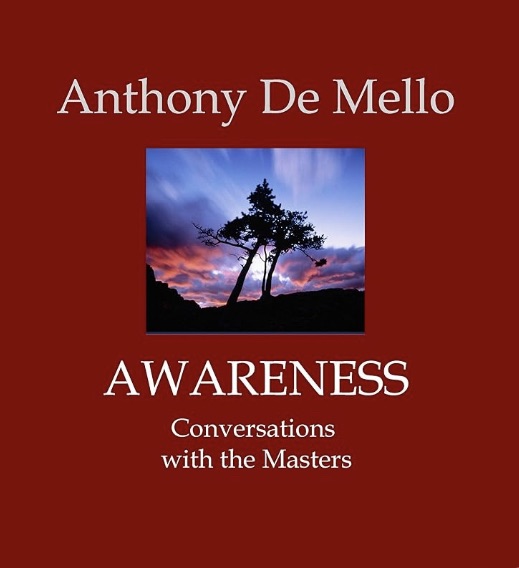
    That would be Anthony De Mello.  I discovered him in 1992, after he died, in 1987. He wrote a book called Awareness. I had been reading Wayne Dyer, but De Mello took me up to a whole different level.  He was a Jesuit priest who woke up one day and thought, the Catholics don’t have all the answers so he incorporated Hinduism and Buddhism and every other ‘ism’ that you could possibly imagine and was basically the first person who helped me understand that it’s all the same.  All religions, at their core, they’re all the same.  And I read his book a million times and gave it to as many people as I could find.  When my husband, George died, De Mello was instrumental in getting me through it all.  It helped me understand the cosmos on a different level.

    We would talk about how he got to where he is, his whole philosophy of life, death, and everything in between.  Now that he’s dead, I’d ask ‘How’s it going on the other side?’  The book, Awareness was released posthumously, it’s  just snippets from talks that he had, and it gave me a whole new lease on life, a whole new way to experience joy in ways I didn’t understand before and it started me on a journey of self-awareness.  I would love to know how he got there.  Here is an example of a story that he told.  He was a Jesuit and a professor, and he travelled extensively, and he was in a rickshaw somewhere and the guy pulling him had TB and had just pre-sold his soon to be corpse for science, for the sum of 10 dollars American. De Mello wrote that the driver was a happy man, and thought he himself, was miserable, always complaining, and so he asked the man why he was happy, and he said, ‘well, why wouldn’t I be, what’s not to be happy about?’ And for De Mello that was a beginning of understanding.

    Tell me three things that bring you joy.

    My grandbabies, my sports, and my kids. 

    Name a guilty pleasure.

    Guilty…I don’t feel guilty about stuff… ever,  so I can’t really think of one.  Maybe lame TV, I mean I’m watching Agatha Raison right now which is really poorly done but set in the Cotswolds… so I don’t care. I like lame tv and lamer murder mysteries and I mean really lame, like Midsomer Murders lame…because I can knit and not pay attention.

    Do you believe in life after death? What does it look like?

    I certainly do, but not in the way we experience it.   Do I think that the avatar Margo goes on? No.  Do I think the consciousness that is watching Margo as she goes through life, the consciousness that neither lives nor dies, continues…yes I do. When I wake up from a dream sometimes, I really have a hard time trying to figure out whether it was a dream or reality.  Sometimes it feels like real life, starring the Margo avatar, the life that we think of as reality, is actually just another kind of dream.  I believe that when we die, we just wake up and go ‘God, that was a rush, what was that about?’

    I remember watching some three-year old’s get into a fight and I remember them being upset and thinking…that’s just kids.   Well, that’s how a higher consciousness is likely looking at us and thinking oh, that will be over soon, don’t worry about it.  I mean how can you possibly believe and take seriously anything happening on this planet when you know that there are billions of other galaxies and multi verses… and you’re gonna take this seriously, I mean, come on. I always thought if Merle Haggard’s mother died when he was 21 and in prison she would have died thinking she was a failure as a Mom.  Ultimately, he ended up a rich, country western singer. Why worry about kids…you don’t know what their journey is gonna be.

    What does life after death look like…It’s impossible to imagine. When I look up at the stars on a really clear night, I say I’m not even gonna try to figure it out. I have no frame of reference. The Buddhists have a saying, something like ‘when the Sage points to the moon, all the idiot sees is the finger, or something like that.

    What would you like your eulogy to say?

    I don’t want a eulogy at all.  I’m not interested in the traditional experience of death. I am not arrogant enough to think that anything I say or do will matter anymore than it did when my great great great great great grandmother said whatever she said. I mean the framework that humans have established, the goalposts for life… buy a house… go to school… all that stuff is just a concept that we all agreed on.  It’s like money, money is only worth something because we’ve agreed that it does, and assigned it a value, but if money means nothing to me now, then you saying it has value is meaningless to me. 

    I never understood Jesus in the desert, when the devil comes to him and says you can have castles and all the money you want and Jesus goes, ‘yeah, no thanks, I’m good’.  I never understood that.  Now I get it.  Because no matter what you get…a big house…a fancy car…then you’ve gotta work your ass off to keep it and worry that its gonna go away. So instead of it being something to aspire to, it’s a thing that loses its joy.

    One of my favourite quotes from when I was in leadership is, “Of a great leader they will say, we did it ourselves.”  So, if I shaped anybody, or if I influenced anybody, it wasn’t because that was my intention.  If they got something out of anything I ever did, power to them, but that was not my intention.  I’m just doing my dance and if other people benefit by my dance, good for them, even if all they’re saying is ‘I hate that dance.”  I never ever wanted to be a leader, but I certainly was someone who wanted to control things, and those are two very different things. It’s funny, every now and then my kids will say, ‘you were a good mom,’ but ten years ago when they were teenagers, they were saying something else entirely…it’s all relative, and it’s all irrelevant.

  • Reading Room 3

    Sally Rooney is a favourite writer, maybe more than a little old lady in waiting should admit. Her characters are brilliant, ruined twenty somethings who overthink their way into clinical depressions trying to outrun their Irish childhood trauma. Rooney’s writing is fresh and smart and made from the modern gestalt. The Observer in their review of her latest novel, suggests there is no better author at work today.

    Beautiful World, Where Are You is essentially a correspondence between Alice, a novelist, nestled in the Irish countryside, freshly arrived from a psych ward, and her best friend Alice, an underpaid intellectual living in Dublin. They write about their relationships, and their work, and the state of the world they live in, “standing in the last lighted room before the darkness, bearing witness to something.” The book earns a high rating from me for the sex scenes alone (I’m imagining you making note of the title now). I’d rate the story even higher, I believe, if Rooney was my contemporary, perfectly capturing the age my children are living in now in which “the easiest way to live is to do nothing, say nothing, and love no one.” Her characters are “untouched by vulgarity and ugliness” and looking for moments of “something concealed …the presence at all times, in all places, of a beautiful world.” 8/10

    Screenshot

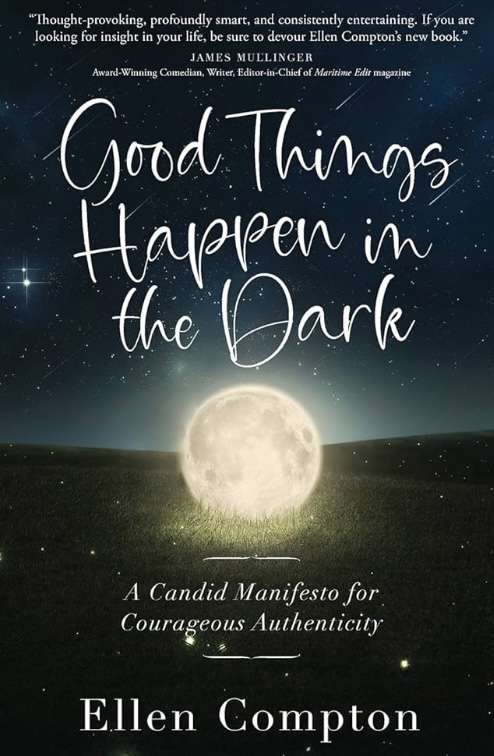
    I picked this book up at a favourite design shop uptown last winter. I liked the title and her chapter headings had quotes from writers I admire like C.S. Lewis, Anne Lamott, Carl Jung and Pema Chodren. I believe the author is local, a Maritimer, which makes my less than glowing review a bit more uncomfortable. While I appreciated the author’s true to life anecdotes and the general premise of her book, that bad things lead to growth and a more evolved self, I hated her God-squad vernacular and her overly familiar tone. I liked the road she is taking, I just didn’t love her running commentary as she journals about her boundaries and her conversations with her God. I applaud her vulnerability, I abhor her candor. 2/10

    Screenshot

    I’ve read enough Kate Quinn to understand that she is a no fail formula story writer. She creates strong period pieces, in this case 1950’s Washington in the heart of the McCarthy trials, when the rights of women were predicated on their status as wives and mothers, where reputations were guarded, and romances were discreet, and every woman held a secret in her wasted heart.

    The Briar Club is the story of a supper club in a women’s boarding house that brings together and bonds a motley crew of women ranging from widows and war brides, to single moms, and civil servants, a mobster’s moll, an immigrant artist, and an injured baseball star, to name a few. Quinn captures unique, compelling narratives, drawn and crosshatched by a master story teller who showcases our social history, as seen through the eyes of women, our stories, lesser known and more delectable for their subtleties. 7/10

    Stella Maris by Cormac McCarthy is a unique story, intellectually challenging and structurally unorthodox, it is essentially the documented therapy sessions between a brillaint twenty year old mathmatician and her psychiatrist in 1972 when she voluntarily commits herself to a psych hospital as she processes the death of her brother, Bobby. With a history of paranoid schizophrenia and suicidal ideation, this is not her first visit to Stella Maris hospital, but her first conversations with a new therapist who engages her in a game of cat and mouse that makes a voyeur of the reader and keeps our attention despite the challenging sections that review the magic inherent in advanced math. The rewards are exponential as we meet her chimeras, the highly constructed hallucinations only she can see, and follow the “My Dinner With Andre” conversation that swings back and forth in the space between philosophy and quantum mechanics with cameos from Wittgenstein and Topos Theory that transport you to the edge of another universe. Stella Maris is a master work of intricate ideas and an absorbing examination of the “billion synaptic events clicking away in the dark like blind ladies at their knitting.” Warning – this is no beach book. Have wine at the ready for the deep thoughts aftershock . 8/10

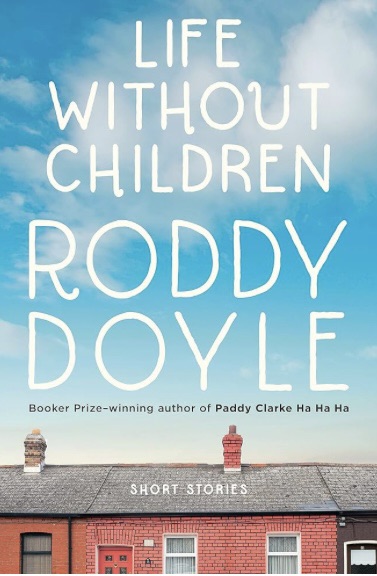
    Doyle is a delight to read on any occasion but Life Without Children, a collection of Corona stories, is truly superb. His eye for the everyday detail distills something true and generalizable for every reader who anxiously sang the Happy Birthday song while washing their hands like surgeons, and danced the supermarket side step, or binged their way through the Netflix scandi-noir series, and social distanced themselves out of work and relationships.

    Doyle’s brilliant story collection looks at the masks we wore, discarded, like “underwear on the footpath“, and examines lives under lockdown, “that ripped away the padding“, with “no schedule, or job, no commute, nothing to save us.” His characters explore their smartphone addiction, and earworms, and engage in real conversations, “the tricky ones that stray from the usual.”

    Doyle’s book beautifully frames the silent, deadly days of our very recent past when Covid hemmed us in, he shows us our fragility, our interdependence and our essentialness, and will make you laugh until you cry. 8/10

    Pema Chodren is a Buddhist nun and meditation teacher who I have read for many years, including her meditation series which I highly recommend. Taking the Leap is a series of teachings designed to help you stay open to the many vexations of human life and build a space or pause within highly charged situations before reacting with our smaller selves, and further contributing to the deepening and seemingly entrenched polarization that governs so much discourse in today’s world that labels the ‘other’ as ‘bad’ or ‘wrong’. What she offers is a Buddhist prescription with the potential to reduce suffering.

    It starts with staying open and present and awake to whatever is going on no matter how uncomfortable or seemingly intolerable, no easy task when we are, most of us, pleasure seeking, or putting our heads in the sand.

    Pema is big on the pause and embracing impermanence and the underlying uneasiness that is an integral part of the human condition. Her book is a guide that coaches us to stay with the “tightening” when it comes, to break the habital chains and reactions that rule us unconsciously. Taking the Leap offers a formal teaching, a map to a more peaceful approach to living, but it is no easy journey. There is an undertow, a dopamine hangover that will distract and discourage your efforts…still its worth a read even if all you get is that there is a spiritual toolbox waiting for you when you’re ready to open it. 8/10

    Alexander McCall Smith, a professor of medical law at Edinburgh University, turned highly successful detective story writer, is a very popular and commercially successful storyteller. He understands that great detective fiction has more to do with setting and the personal charisma of the detective than any murder or plot device. Career mystery readers are rarely surprised by the denoument of the books they devour. We read mysteries because we love to be in the company of the detective, or immersed in the world that the writer places their heroes and the villains they sort out. The No. 1 Ladies Detective Agency is McCall Smith’s first run at a winning detective series and it does not disappoint. Mma (Precious) Ramotswe is a keen and unusual gumshoe, “the only lady detective in Botswana,” with an unerring understanding of human nature and a love for her native Africa. “A good woman in a good country, one might say.”

    McCalls stories document unrecorded lives, the narratives of ordinary people who see beauty in simple things and find happiness with very little material wealth. Detective Ramotswe deals in absentee husbands, African gangsters, and witchdoctors, and a disinterested police presence, outsmarting her fellow characters, armed with nothing more than a detective manual and a small inheritance from her father. She is a unique sleuth with a Columbo like innocence, an interesting backstory, and a determination to succeed that will have you routing for her. Best ecapist read this summer. 7/10

    This book came to me via an interview I did for the blog that will be dropping later this month. It’s a life changer… the kind of book you buy in bulk and try to force on everyone you love. Published posthumously, it is a compilation of wisdom teachings presented by Anthony de Mello, a Jesuit priest and psychoanalyst, who describes a paradise on earth, waiting inside each of us, just beyond the reach of our conceptualized world and the limitations of language, out beyond the boundaries of our egos and all our charitable good works (a more refined ego construct).

    Awareness shows a way to wake up from the modern day miasma, an all consuming mass illusion that keeps us trapped in a hamster wheel of self absorption and unhappiness, derived from a short term self soothing dopamine cycle that breeds a disquiet we’ve acclimated to through a lifetime of conditioning.

    De Mello asks us to kill our expectations, to remain open, and to detach from our desires.

    Awareness leaves readers with a series of excellent prompts but the real work comes after the close of the book. De Mello’s message is a little like “trying to capture the feel of the ocean in a bucket of water.” Its a beginning. It starts in awareness. You cannot strive for the world he describes or, he cautions, it will elude you. It begins with a willingness to sit in the present and observe the majesty that is the reality hidden beneath the ego and its self serving thought stream, it glimmers only in the present, turning to dust in a mind that travels to the past or the future.

    He coaches the reader to watch everything within you and around you as if it were happening to someone else. He counsels that real happiness resides in you and no where else, in no thing, in no other person.

    De Mello’s book is a call to awaken from a world in which we are dying of spirtual thirst surrounded by a sea of fresh water, living in a world filled with joy and happiness and love, but brainwashed, hynotized and sirened to sleep, trained not to see what is all around us.

    Awareness is by far the most important, insightful and funny rendering of the truth of the universe that I have found in a decade of searching. I cannot recommend this book highly enough not only for how powerfully it could impact our lives individually but also what it might mean for an awakening world. 15/10

  • On Travel and the Importance of Periodically Upending your Setting

    “A journey is a person in itself; no two are alike.  And all plans, safeguards, policing, and coercion are fruitless.  We find after years of struggle that we do not take a trip; a trip takes us.”  – John Steinbeck

    We shall not cease from exploration, and the end of all our exploring will be to arrive where we started and know the place for the first time.”  – T.S. Elliot

    Hemingway in his novel, A Moveable Feast, wrote, “Never go on trips with anyone you do not love.”  Perhaps that’s because you might be tempted to leave them en-route if you cared for them any less.  Travelling despite all the anticipated splendour and excitement, the unforgettable moments, and the memory making, can be hard graft. Navigating in unknown streets, deciphering foreign languages, walking 20000 steps a day, and surviving only on world class pastries and untested wines…these are mighty challenges indeed and not for the faint of heart, or poorly heeled as it turns out.  Little old lady in waiting to little old lady in waiting, sandals that feel like sneakers, at least pre travel, are still sandals … but honestly can you really be expected to pair Reeboks with a slip skirt after 50?

    The demands of travel and its accompanying tribulations, can test even the most tenured and enduring relationships.  I am recently arrived back on the continent from a tri city European tour with a much-loved Gen Z daughter.  As you may expect, she outwalked, out navigated, and generally out travelled me at every turn.  She slept better, she knew when to stop and insta the roses, and, maybe most importantly, she knew how to work a travel boundary, to carve out space for herself within the confines and constancy of the vacation vortex.

    The donning of air pods was my cue to retreat behind the veil of a novel where we both exhaled deeply into much needed solitide.  Alone, together, we enjoyed daily retreats from the uncensored, stress-born commentary characteristic of unconditional love. That is to say, we, at times, annoyed the “fodors” out of each other.  Still, after a few days at home, each immersed in our own self soothing rituals (Cortados, yoga, pickleball, Netflix), I can, after less than a week in-country, regard our time away as a perfectly sublime excursion with my favourite girl in the world. I have the pictures to prove it. But this trip has got me thinking about the true value of travel and in particular, the part that comes home with us… the part we get to keep.

    Jon Kabot Zinn in his much lauded book, “Wherever you go, there you are,” suggests that no matter how many miles from home you travel, you can’t escape yourself.  Kabot Zinn goes on to say some very powerful things about mindfulness and I can’t recommend his work highly enough, but as to his initial premise … I have some notes. I think travel changes you in significant and lasting ways.  Free from the hamster wheel of our daily lives and the safety of our usual routines, we are forced to navigate differently, to tolerate the stress of unknowing in a foreign landscape, and, if we’re lucky, we may begin a process of unbecoming.  Without the mirror of our usual relationships and roles, who are we…without the reflecting pool of our everyday lives?   Answer…whoever we want to be.

     As a little old lady in waiting, travel is a tremendously liberating experience, far more intoxicating than the constant stream of eye candy and the sugar coating of clean rooms and meals made by another’s hands.  There was wine on occasion, of course, but that wasn’t the real elixir.  Free of the demands of everyday life, walking and watching our principle occupation, my mind was let loose to travel too, with a renewed intellectual energy reminiscent of years long past,when I had only my own path to consider. In Budapest I stood near “the shoes” on the Danube and felt a little disoriented by my freedom.  I was  steeping tea in a strange teapot, brewing a history of ideas that belonged to a much younger, more politicized version of myself. In Vienna, I was bedazzled by beauty at every platz and struck by the metaphorical significance of the German aphorism, “Auch die pause gehort zur musik” (the rest, or silence also belongs to the music). In Prague, the city of Kafka and Kundera, I felt immersed in a dark story book setting and began narrating a conversation inside myself that is still ongoing.

    I think it was David Mitchell in Cloud Atlas, who wrote, “travel far enough, you meet yourself.”  I couldn’t agree more.  Travel never goes completely as expected.  I’m referring here to the missed flights (never… ever book impossible to get concert tickets  within 48 hours of touch down); the too packed itinerary (trying to do everything ensures you’ll enjoy nothing); the high season, overcrowded attractions ( Mona Lisa mosh pit in June); and the disasterous over-hyped venues( read the reviews my friends – the Szechyny  spa in Budapest looks like a refreshing break from the castles and cafes, but in truth it’s a 3rd rate, dirty aquatic center whose thermal pools are tepid at best). The point is the seasoned traveller knows how to wash off the detritus of a disappointing day  with a good pinot grigio and the promise to buy yourself a small objet d’art to remember the day ironically. 

    The planning and negotiation of a journey is a labour of love, an entity all it’s own, but once you land at your destination, all plans are fluid and so must your approach and acceptance of “what is” be,  because fretting, bemoaning and catastrophizing about what a journey “is not”, is  a waste of your travel budget, literally and figuratively.  Maybe if you’re say…a highly structured, control-loving mom, a trip hiccup is an invitation to float (2025 aspirational word of the year) to be frivolous or dare I say, even selfish.  Maybe a daughter takes the helm and suddenly you’re transported to a very pink Viennese café that sells an ice cream called Kardinalschnitten, that apparently corresponds to the colours of the Catholic Church and tastes like God herself is inside.  Before you know it you’re having a serious conversation about God’s existence and what a poor chalice language is when it comes to discussing she who has no name.  Or maybe a highly anticipated classical concert enjoyed on tortuous church pews gives way to a meaningful discussion of uncomfortable life choices, the importance of maintaining a relationship with yourself, and the longing for a space of one’s own; a beautiful setting for your baby to announce her decision to leave home. 

    The point is that without the usual trappings of life, the social cues, the roles and masks we all wear, we are free to reinvent or re-imagine ourselves.  We meet ourselves on distant shores and it’s the best kind of homecoming.  Travel changes you, if you let it.  You are not the same person as when you left, maybe only in small ways but it’s there, this tiny voice inside; the woman who tasted God in an ice cream and decided to cherish herself like someone she loves, or the girl who bought a new watch in Vienna, and knew it was time to leave home.

    The Dalai Lama suggests “Once a year, go someplace you’ve never been before.”  He doesn’t say why but I believe he is prompting us to open our minds and experience all things with new eyes. St Augustine wrote that “the world is a book, and that those who do not travel read only one page.” I think he’s right.  I have been an armchair traveller all my life but have only found opportunity to travel in the real world in the last decade.  It is a different kind of education, a remembrance of who we are, an understanding of our own acquired lens on the world.  Anais Nin knew a secret thing.  She said “we do not see things as they are, we see them as we are.”  I read this truth in a book long ago, but I understand it best because of my travels.  I have had many occasions to remove my glasses in transit, en-route, in unfamiliar terrain, to see things with different eyes.  It’s knowing that our glasses are there at all that has the power to transform, to make all that we left at home, new again, and that, I guess, is the real enchantment of travel…a reawakening. It’s the part we get to keep, long after the unpacking.