“Fill your house with stacks of books, in all the crannies and all the nooks.” – Dr. Seuss
“To acquire the habit of reading is to construct for yourself a refuge from from almost all the miseries of life.” – W. Somerset Maugham
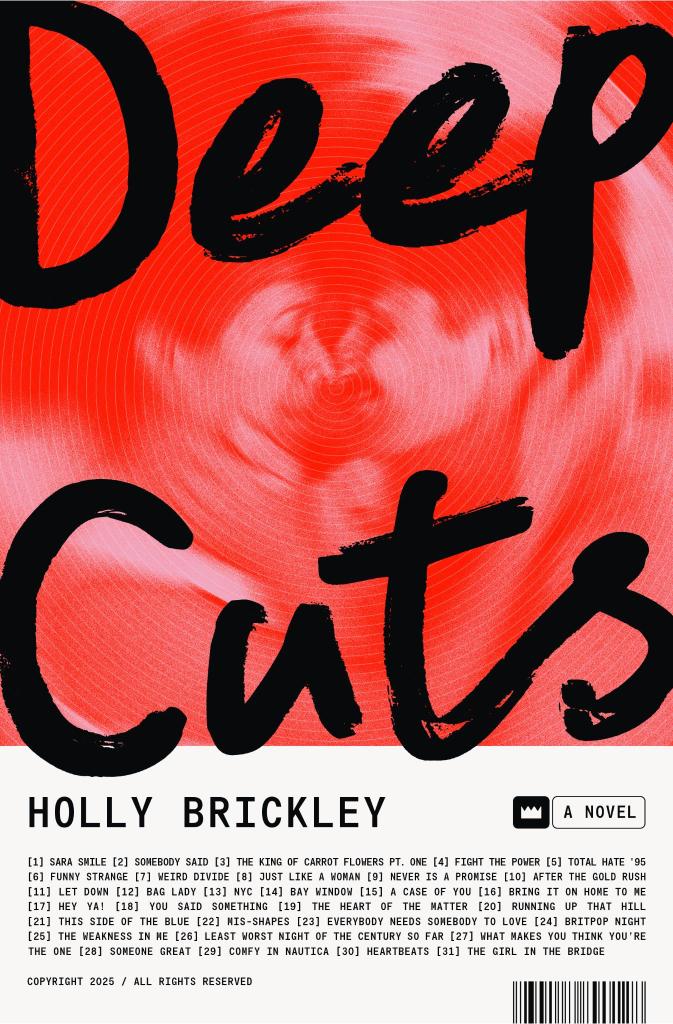
Deep Cuts by Holly Brickley was a book club pick that garnered mixed reviews. Our hostess’ first question was ‘Is this book a coming-of-age novel, a love story, or a play list?’ I went with coming-of-age as I recall, but the truth is that the book could easily be read as satisfying the necessary components of each category. A Canadian best seller, this is Brickley’s first novel and it was a lot of fun hanging with her heroine, Percy Marks, a twenty-something writer and music critic, and a brilliant Berkley grad who falls for talented musician, Joe Morrow. The love story is pretty basic, the push and pull of ego and passion, but the writing is fresh and satisfying for the reader and the survey of indie music includes bands like The Smiths and The Pixies, Radiohead and artists like Joanna Newsom and Joni Mitchell. Brickley’s novel takes you on a sentimental journey back to the days when music was everything, the aural underpinning that allows you to carve out the infrastructure of becoming a person. Deep Cuts made me remember what it was like to be twenty-something and for that it gets a 7/10.
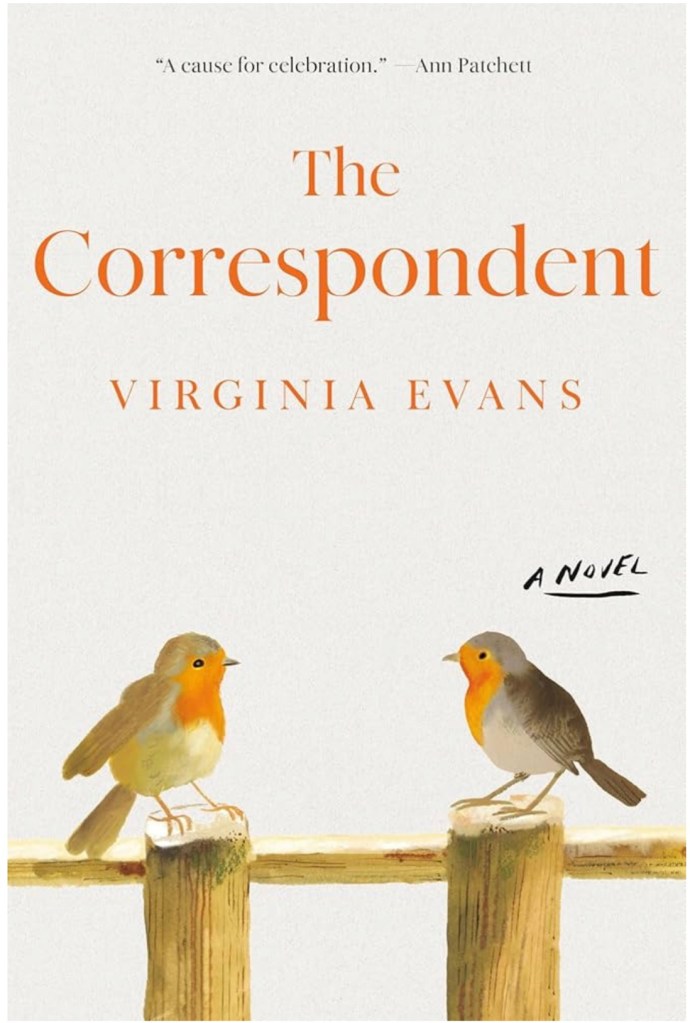
Virginia Evan’s novel, The Correspondent is another debut novel and an absolute gem of a book – a perfect gift for a seasoned LOLIW reader. It’s the story of Sybil Van Antwerp, a very well read and witty, 73-year-old retired law clerk whose interface with the modern world is a rich and dedicated correspondence (snail mail). She writes a series of letters to friends and family and favourite authors that illuminate her first-rate mind, her failing eyesight, and a past that haunts her. Evan’s book is a story about trauma and grief and it’s also a love letter to the written word. It’s not often that a mature and tenured mind is given center stage to carry a novel in this way and I found myself trying to move slowly through this exquisite epistolary novel because I knew I would miss turning its pages at the end of Sybil’s story. I particularly loved Sybil’s correspondence with author Joan Didion and with her best friend, Rosalie, as they explore themes of grief, aging and memory, unpacking a lifelong friendship. The Correspondent is the best book I’ve read so far this year. 9/10
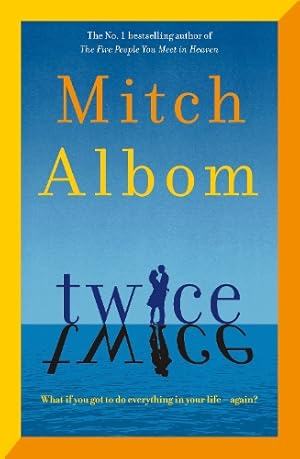
Mitch Album’s, Twice was another book club pick. An interesting philosophical premise…what if you could snap your fingers and have a do-over whenever you wanted. Anytime things don’t go as planned simply say “twice” and go back to a time before the undesired event, to change your story to a more satisfactory outcome. The caveat being that you can only use your power once for any given scenario and if you abuse your power, particularly in matters of the heart, the do-over can have devastating consequences. Our would-be hero, Alfie, like his cinematic counterpart, is a bit of a narcissistic man-boy who never acquires the kind of consequential knowledge that develops character, or the ability to truly love until he loses the people who matter most to him. Mitch Album is not a favourite author but his book is a best seller and his story did lead to a rather moving discussion about mistakes and regrets and the power of those painful moments to transform us and make us more intentional with our ‘I love you’s.’ The book gets a 2/10, but the questions and conversation the book inspired rank considerably higher.
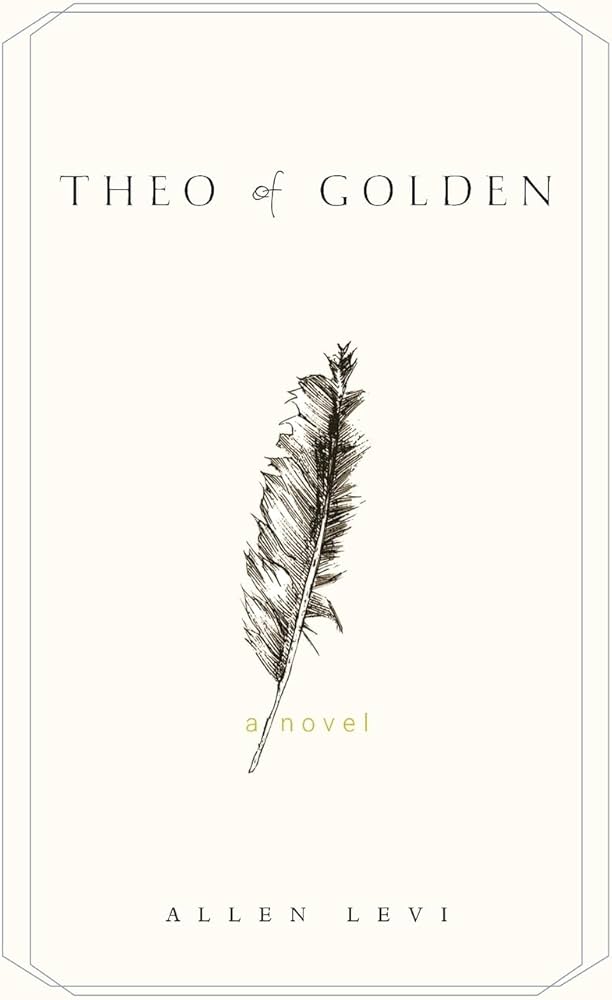
Theo of Golden is the story of a mysterious, saintly gentleman who visits small town America, Golden, ostensibly on some undisclosed business that is not revealed until the end of the book. Theo begins a series of bestowals, purchasing portraits created by a local painter and gifting them to their subjects. Each gift is hand delivered to a cast of characters from all walks of life and in the gifting, Theo exercises old world charm and a seemingly beautific heart, that elevates the recipients helping them remember their intrinsic worth and their unique beauty, rekindling the light within them. A Christ-like angelic character, Theo will steal your heart and bring you to tears by the story’s end. This timely book serves as a powerful reminder to readers of the capacity each of us has to positively effect those in our communities. Allen Levi’s book is a beautiful moral fable with the power to incite a culture of kindness. 7/10
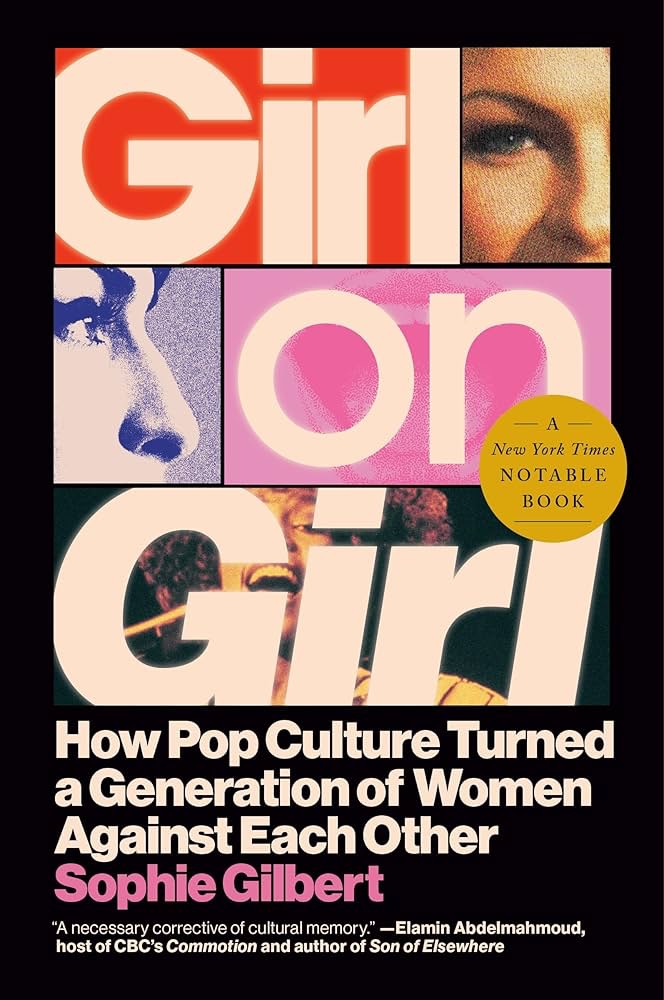
Gilbert’s Girl on Girl is an unsettling chronicle of the last several decades of the women’s movement, hijacked by pop culture in the 1990’s and 2000’s, promoting rivalry, self-objectification and unconcealed misogyny. It is an anti-fairy-tale for all women weaned on Britney Spears and schooled on a steady diet of reality tv. Gilbert’s essays are academic in character, a thorough excavation and criticism of the collapse of feminism correlated to the rise of must-have beauty brands and the advent of body dysmorphia. It is an ugly lens on performative femininity, petty rivalries, the feminine experience as seen through television, branding and pop culture. Warning – this book will excite your cynicism with its focus on media and big business branding, training women to scrutinize, compare and compete with each other. Girl on Girl is a slap in the face for readers, an autopsy of the cultural wrecking ball dismantling feminism. Gilbert’s writing tries for levity to engage the reader but I found nothing to laugh at in this book, or its thesis. Girl on Girl is a horror story with the staying power to make you think twice before opening another fashion magazine or bingeing the next big reality tv series. Gilbert gets a 6/10.
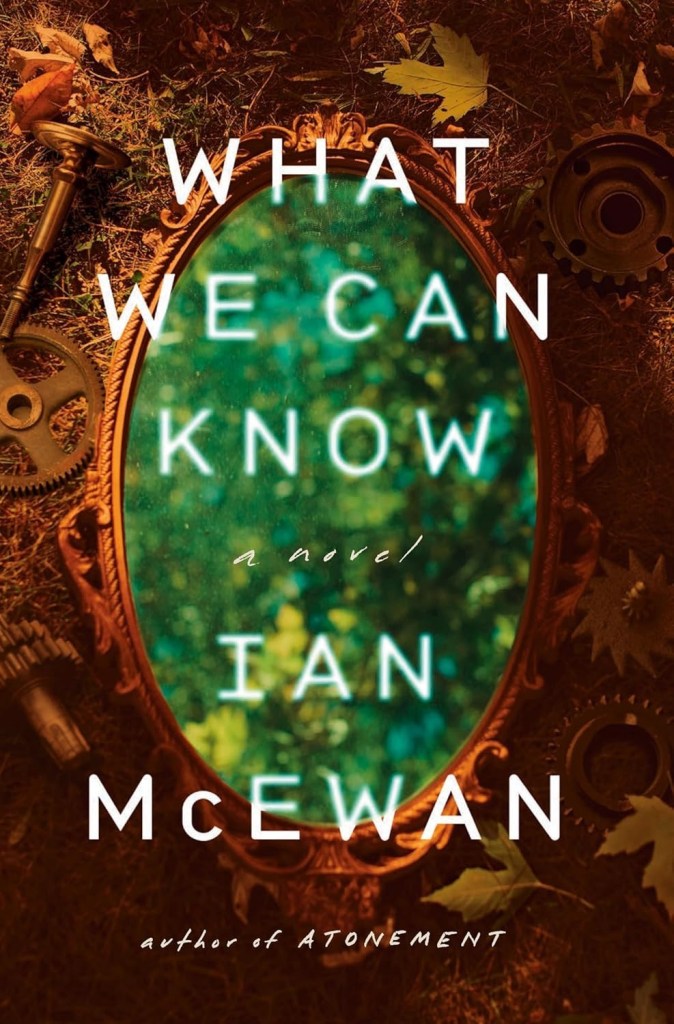
What We Can Know is the latest offering from one of my favourite writers, Ian McEwan. It’s the story of a humanities professor, Thomas Metcalfe, living and working about 100 years in the future, dedicated to discovering a famous unpublished poem composed circa 2014, ‘A Corona for Vivian’, an undiscovered poem that Metcalfe argues has become “a talisman to survivors and the promise of a better future.” The story has the pace of a literary mystery and the smart dinner party parlance McEwan excels at. What We Can know is a dystopian look at what the world becomes after “the resource wars,” devastating climate change, and nuclear exchanges. It is a story about the redemptive power of art and the artefacts we leave behind, puzzle pieces of half furnished meaning, approximations of truth. McEwan is a masterclass in storytelling and as a reader it’s wonderful to think that poetry survives our apocalyptic tendencies. What We can Know was a perfect pairing for a quiet thoughtful weekend for this LOLIW. 8/10
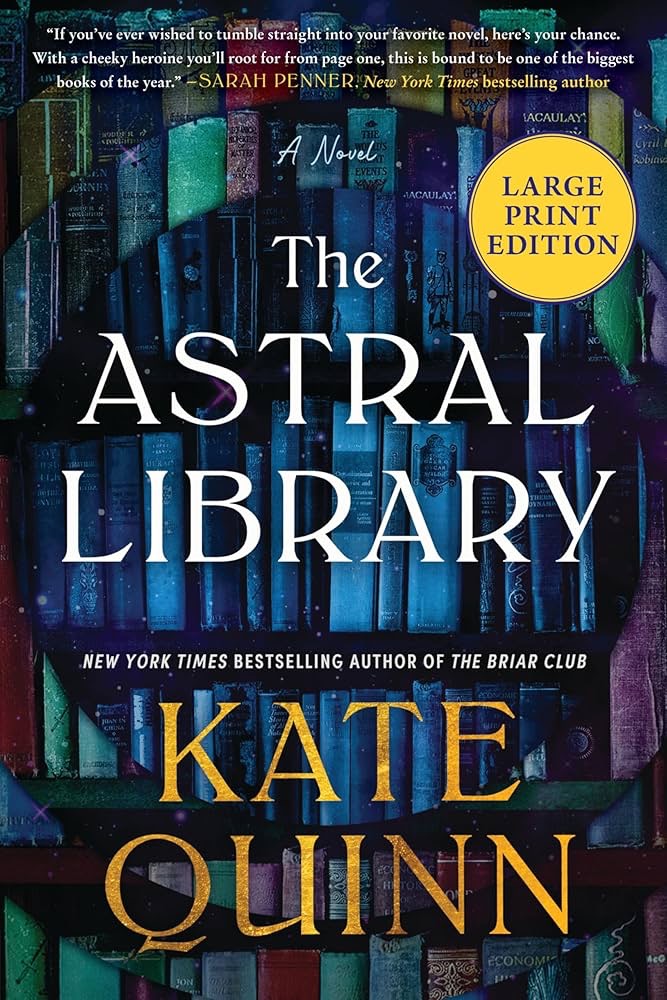
If you could live in any book, which one would you choose? That’s the question the twenty-something, smart talking, library-loving heroine of Kate Quinn’s latest novel must ask herself. While the plot does take the reader into the narratives of Sherlock Holmes, the Jane Austen novels and a bevy of other well-loved classics, we don’t settle their long enough for any real reader satisfaction. Quinn’s book is really a meditation on the value of a library as sanctuary and the perils of repurposing them as for-profit business ventures. While it’s fun to romp through various classic book settings, The Astral Library reads like a bad after school special and has the whiff of young adult fiction. On the up side it did have me contemplating which book I might choose to live in. I couldn’t decide between The Elegance of the Hedgehog set in an elegant apartment building in modern Paris or The Guernsey Literary Potato Peel Pie Society, in the post-war chapters. 2/10
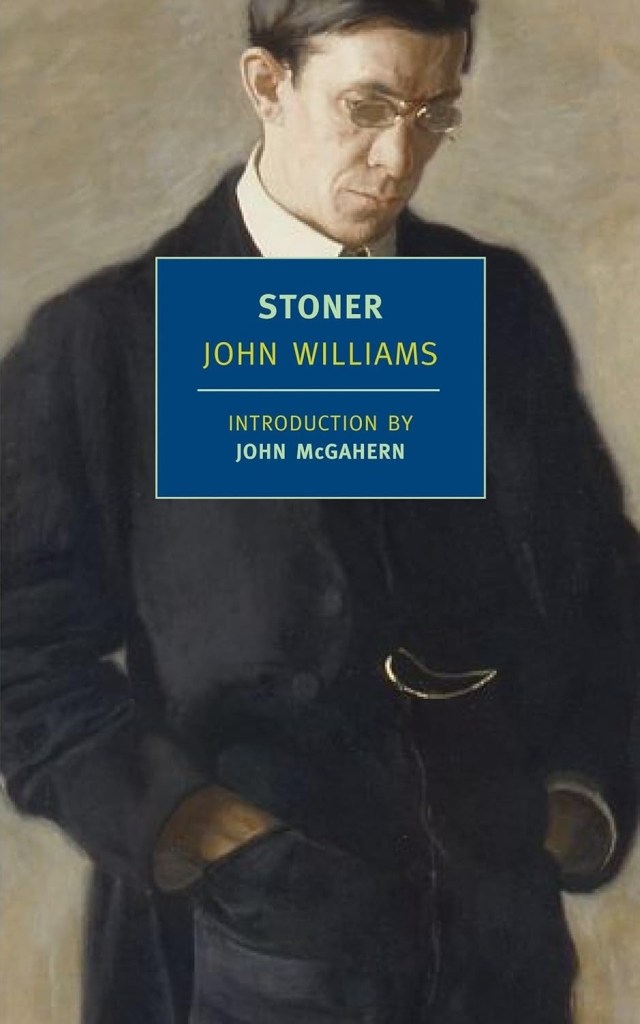
Stoner by John Williams is the unadorned life story of a virtuous man (in the classical sense) from the American Midwest who is exposed to literature, poetry specifically, which changes the trajectory of his life. He becomes a teacher at a small Missouri college where he spends a 40-year career in the first half of the 20th Century, canvassing two world wars, a failed marriage, a tender love affair and deplorable departmental power politics where ego usurps the sanctity of the ideal of the university, an ivory tower meritocracy. Williams’ book is a meditation on the virtue of hard work, the import and joy of a teaching life, and the dangers of allowing the things of the world to corrupt the sanctuary of higher learning, where the search for truth and knowledge must reign supreme. Stoner is a powerful reminder that what little knowledge we manage to acquire in a lifetime leads ultimately to an ill-fated understanding that “in the long run of things, “even learning is diminished into a nothingness.” Williams delivers a dark and true ending. Spoiler alert, the death scene at the end is incredibly accurate and beautifully rendered…it stopped me for some time. 8/10

