Tag: reading

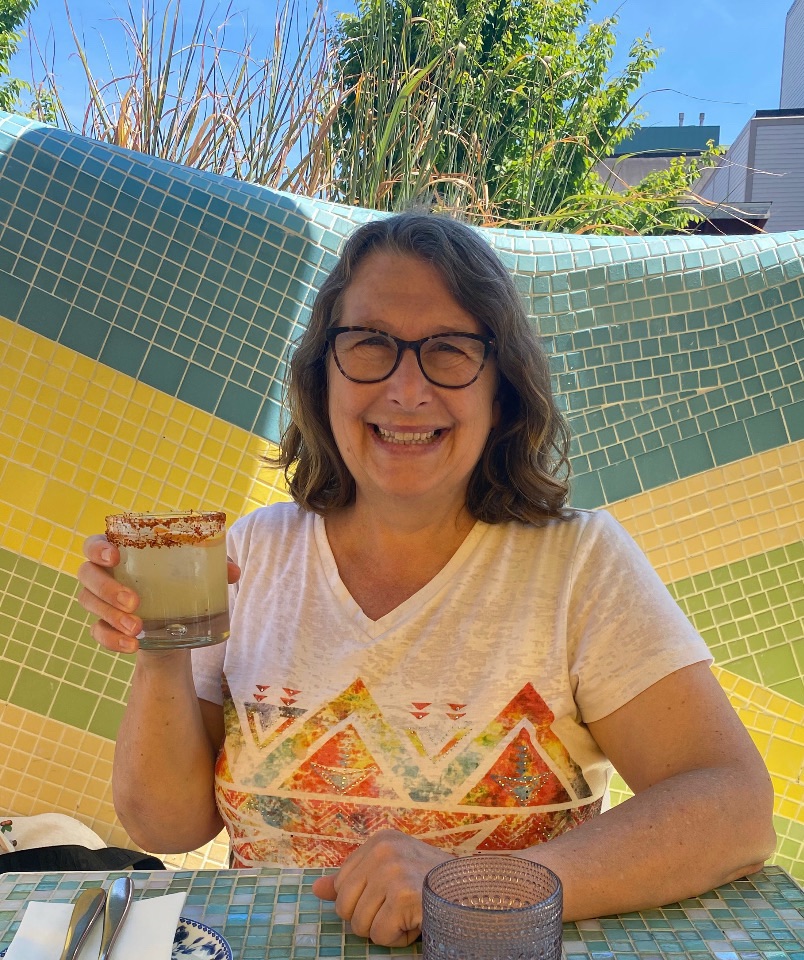
  • In Conversation with Michelle Hooton

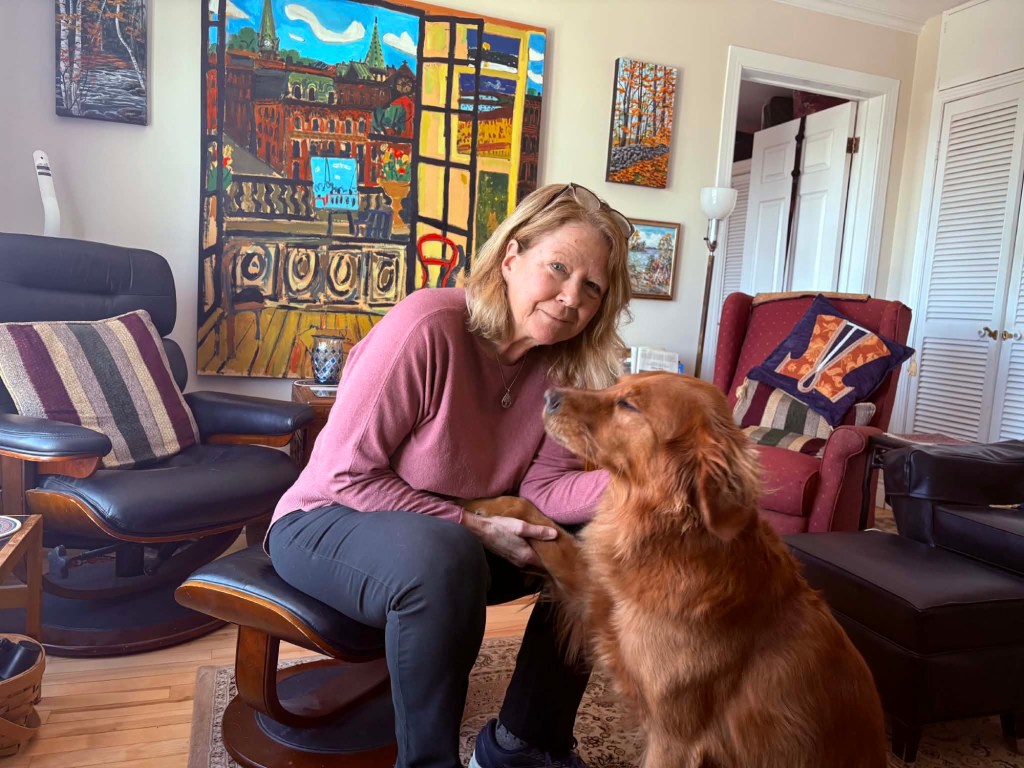
    I met Michelle Hooton a little over 20 years ago when I accepted an invitation to attend a book club evening at the home of a mutual friend.  We’ve been meeting once a month ever since with a small, stimulating, always surprising set of eclectic readers, opening our homes and our cookbooks, hosting rigorous debate, developing literary discussion points, and reciting deeply meaningful or contentious passages with the power to engage, transform and elevate. Not a bad way to spend some 200 evenings together, sharing meals, and laughter, drinking wine, and exploring a lot more than plot twists, and prose.

    You can learn a great deal about a person after perusing their bookshelves, and far more still, in the way a person approaches a book, what they find meaning in, passages they deem beautiful or poignant, what moves them to tears, what makes them angry, what words they underline to read out loud again later.

    I can tell you that Michelle Hooton is an intelligent and discerning woman, a reflective and respectful reader, less prone to deconstruction, always in earnest, mining an authors’ artwork for the gold within.  She is an immersive reader, with an ear attuned to a well-crafted story, and is often drawn to quieter books, with characters who have earned their place in the narrative, settings that transport the reader, inform, and enhance our experience, and ideally leave us with something to take away, to hold dear.

    If Michelle was a book, she would be a well-researched one. The cover design would be expertly engineered eye candy. The prose would be succinct and distilled.  There would be multiple passages where the reader could pause and rest a while in serene, inspired settings.  The heroine would be original and authentic, a self-made woman who believed in hard work, and her own powerful magic, and the ending would never disappoint.

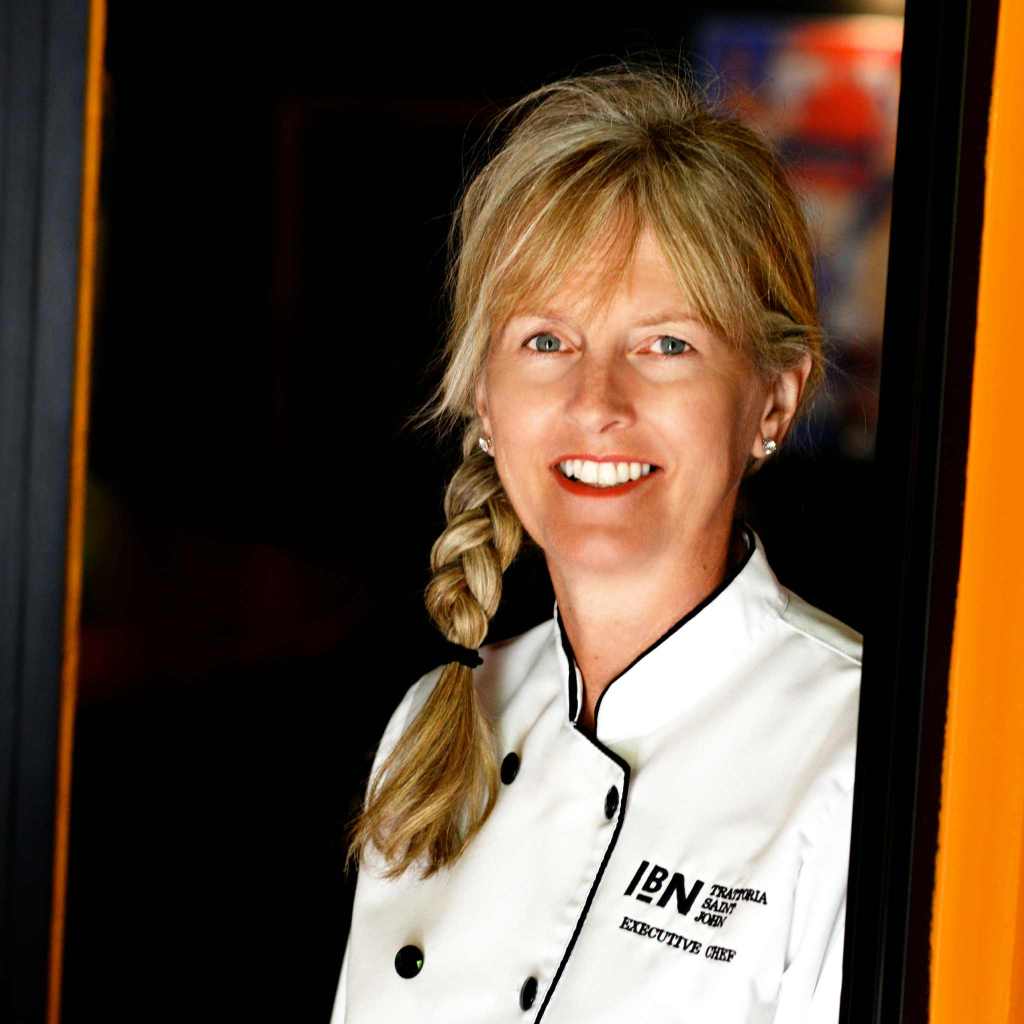
    Michelle has the kind of confidence that comes from many years of self-reliance and trusting her inner compass. She is charismatic, a polished conversationalist, a flawless hostess, a gifted gardener, a celebrated chef, and an accomplished and award-winning entrepreneur.  An astute businesswoman, she is also a creative, and excels at designing beautiful settings and spaces where her circle of friends and family, may repose in charmingly rendered rooms that inspire and delight, while being treated to her many gifts, not the least of which, is her mastery in the kitchen.  As I sit in her highly photographable home, decked out in her curated Christmas finery, I feel a deep sense of comfort and joy. She tells me it’s her love language. It’s how she expresses her gratitude for you giving her your time.

    Michelle describes herself as a “serial entrepreneur” launching her first business venture at age 17. “Growing up I never heard the words ‘You can’t do it’…it was … ‘How are you going to do it?’ Once I realized that I could steer my own course and succeed, that was it.  I have worked for other people, but I didn’t care for it.  Whoever I worked for, I felt like I gave them my best, but I always operated like I owned the business, and when it got to the point where we were conflicting about the work …that was it…it was time to go”

    In 1982, Michelle opened Body Electric, an aerobic exercise studio in uptown Saint John.  A year later she opened Body Electric Aerobics on Broadway, in NYC, and a year after that, was listed as one of the top studios in Manhattan by the New York Times.

    In 1992, now back in Saint John, she opened The Secret Garden, specializing in fresh and dried florals shipping throughout Canada and the United States. In 1999, Michelle opened Sisters Italian Foods, a small Italian deli and imported food shop located in the City Market. She ran both businesses concurrently, until selling Sisters in 2005 after being elected Deputy Mayor for the City Saint John, serving from 2004-2008.

    Thirty-eight years and five businesses later, Michelle fulfilled a lifelong dream, opening Italian by Night in 2016 with business partners, Elizabeth Rowe and Gord Hewitt. This premier Saint John dining experience has been featured on Open Table’s ‘Most Romantic’ list for Canada for seven consecutive years, Best Italian Restaurants in Canada in 2017 and Top 100 Most Beloved Restaurants in Canada in 2022, accolades based exclusively on guest ratings.

    “My lifelong dream was to create the best Italian restaurant in Atlantic Canada. I don’t believe geography limits one’s ability to produce a world-class product. Achieving this requires intense knowledge, focus, the ability to inspire those around you to share your dream, and the passion and spirit to believe you can do it.”

    Michelle won Entrepreneur of the Year at the Saint John Chambers Outstanding Business Awards in 2024 and her immensely popular food blog Bite by Michelle enjoys a worldwide audience, surpassing 4,500,000 views. Her recipes are hearty and time honoured and easy to follow for even the most recalcitrant cook. They are, each one, small works of art…Michelle’s secret ingredient is love.

    Tell me your life story in seven sentences or less? 

    At a really young age I had experienced great joy and great tragedy. At that young age I chose joy for the rest of my life.  I somehow always had the ability to follow my true north. I trusted my gut, but sometimes my gut feeling was wrong. When I made a mistake, I was never too proud to admit it, and then fix it.  So…on my second try I married the love of my life, raised the three most spectacular women I will ever know, and have built the life of my dreams. I’ve had the great fortune to have been able to turn every passion that I ever had into a way to make a living.  And that’s really the story of my life…that’s it.

    What is the best thing about getting older?

    Clarity.  You just get to that point where you don’t need to see the world as grey anymore because you’ve had so many life experiences. I think people are kidding themselves when they don’t know the difference …when they can’t see whether its’ black or white.  I think it’s safer to live in the grey…and I don’t have any interest in that.

    What is the worst thing about getting older?

    Running out of time. I’m in an industry right now where I am two and a half times older than the national average…and you know there is just so much more to learn, and figure out, and experience and time is not on my side anymore.

    What would you title this chapter of your life?

    Grace. I want to finish this chapter of my life with grace. The life Ralph and I built together has given me a gift—this time to live gracefully and with gratitude. I feel incredibly grateful, constantly. It’s like a prayer, like saying grace before a meal—giving thanks. For me, it’s an internal conversation, a continuous acknowledgment of how grateful I am. And I hope that gratitude shows to the world in a graceful way.

    If you could retain or retrieve one quality from your youth, what would it be?

    The belief in endless possibilities.  It didn’t matter if I made the wrong decision when I was young because I had time…I could fix it …I was always gonna have time until all of a sudden I don’t.

    What’s the most important lesson you’ve learned so far?

    There is no finish line. All my life there was always that imaginary…when I get there…when I do this…when I accomplish that… Once I realized there is no finish line, I was free. Life is wide open. You just keep going. Be open to the universe and whatever else is thrown at you. Just keep going, without that nagging feeling that you’re running towards something.

    Do you have a favourite quote?

    Definitely, and it’s the mantra of my life.  I cross stitched it and framed it and it hung beside the door in my house so the kids would see it every morning on their way to school.

    Whatsover thy hand findeth to do, do it with thy might; for there is no work, nor device, nor knowledge nor wisdom, in the grave, whither thou goest.” (Ecclesiastes 9:10)

    I’ve lived that way my whole life, in the way I work, and the way I love, the way I garden, the way I cook…everything that is a part of my life… that was just the way I approached it.

    Do you have a favourite word?

    Grammy. I adore my children, and I never thought I could love like that again. But I do—it’s remarkable. Being with my grandchildren is incredible. When I hear them say “Grammy,” my body experiences a molecular shift. No other word gives me that feeling.

    Describe your perfect day.

    I’ve had this day and I hope to have many more of them. Its summertime…I’m at the farm and all of my family are home.  I’m the first one up. I put on the coffee… and start to make breakfast. One by one they slowly start waking up. We have breakfast on the verandah. We drink slow coffee while the girls use ‘all their words’ …thats an expression the girls use when they they tell me everything that’s going on in their lives. We spend the day on the boat. We have a place further upriver where we like to swim…its magical. I take a picnic with Prosecco, some beer, and all sorts of treats. We’ll stay there until 5 or 6 o’clock and then it’s back to the farm. We get supper ready. My mom and dad will join us. We’ll dine on the veranda under  candle light. We graze until 10 or 11 o’clock at night.  We finish off by the fire table.  Yawns start and we all go to bed, and it is a perfect day.

    If you could have tea with anyone, real or fictional, dead, or alive, who would it be and what would you talk about?

    So, I took some political license here.  If I could do that, I would come back many decades from now and have tea with my elderly grandchildren and we would talk about their lives, and all the things I’ll miss.

    Tell me three things that bring you joy.

    The people I love.  Creating beauty.  And anticipating…anticipating Christmas, anticipating family coming home…anticipating what we’re going to do next… I love it.

    Name a guilty pleasure.

    Dairy Queen. The first time that I ever tasted it, it was like a taste explosion…I couldn’t believe something could taste that good. and I’ve never lost that love of it. You could put the most fabulous European dessert on the table and a peanut buster parfait, and I guarantee you I’m gonna take the peanut buster parfait every time. It’s a special little treat and I usually have it alone.

    Do you believe in life after death? What does it look like?

    I guess it depends on how you characterize life. I believe that we have an inextinguishable life force and I believe that life force carries on after our physical bodies expire.  I’d like to think that my life force will find its way into future generations of my family.

    What would you like your eulogy to say?

    Life was not a dress rehearsal for her.  She lived her life like it was the opening night of the greatest performance she had the honour of playing.

  • A Curated Life

    “If you want a golden rule that will fit everything, this is it: Have nothing in your house that you do not know to be useful or believe to be beautiful.” – William Morris

    “Those who commit to nothing are distracted by everything.” – Bhagavad Gita

    I’m twelve weeks into a “down to the studs” reno of my basement. We are getting there…almost ready for paint and wallpaper …yes…that’s right…I said wallpaper. I happen to like wallpaper…just not the 50 year old striped job that lined the stairwell leading from my kitchen to the lower level of our home. I’ve hated that patterned stairwell since we moved into the house almost fifteen years ago. That’s a long time to abide an abhorent passage in your home. So…ankle deep into quasi-retirement, and my baby moving out to a beautiful space of her own; it’s got me thinking about embracing a less lackadaisical, more curated life. I refer here not only to my immediate setting, and decor choices in my home, but also to a more bespoke aproach to everything I allow entry into my mental and physical space. How we spend our time and who we choose to spend it with are weighty considerations indeed, particularly as the sands of time accelerate through the LOLIW hourglass.

    I am a woman who has always known what she loves. I’m never at a loss for how to spend my time. My baseline is reading in bed, followed closely by reading upright in well lit rooms, rooms with doors to discourage the detritus of day to day discourse. Toss in a daily walk, a few writing hours, and few games of pickleball (a smattering …mind), and maybe a sprinkling of meaningful communication with friends and family and you have the basic components of my perfectly appointed life.

    It won’t surprise you to learn that with respect to decor I like to sit in spaces that smell and feel like 19th century reading rooms. Jane Austen meets functional, animal-friendly, old-world elegance and comfort, with Rembrandt lighting in the shade of expensive cognac and furniture made to last let us say, longer than me. I like plain lines…nothing busy…smalls piles of books in every conceivable nook, and walls overfilled with art that makes me think and feel.

    Approaching 60 it seems long past time to take charge of my decor and embrace a more curated lifestyle. With more time at home to play and ponder and be, its important to invest in our space and make it conform to our notion of how to live well. Out with the acquired furniture that found its way into every corner of the basement (granny’s telephone table, the uni trunks, the side tables the dogs used as chew toys, the wedding art, the chairs I reupholstered one time too many…gone). What would your space look like if you started from scratch… what gets to stay, what gets dumpstered in the night?

    To curate is to carefully gather sift, choose and organize so that everything is handpicked, assembled, and edited by you. This might mean the dedication of an old bedroom to a fly tying workshop or a yoga studio or a writing room. The downstairs grand room might be reworked as a cozy british bar, or a working library, or a music or pottery studio. Adult spaces like day nap chaise-lounges in light colours might be positioned near full window walls for stargazing with telescopes or simply to watch the dancing autumnal leaves or the spring rains pelting your garden seedlings to life, or the magical snow that falls on Christmas eve.

    Of course lighting is everything… my mother taught me that. She liked rose tinted bulbs for evening ambiance, strong enough to read by in the after dinner hours but not so bright you can see the skin wrinkles on your LOL hands as you turn the pages…its a delicate balance ladies. A comfortable seat by the fire built for you and yours is essential for the long Canadian winters, perhaps a dartboard, a drinks cabinet… you get the idea. It’s time to focus less on containment of mess and sticky fingered childrearing chaos, and more on zones of comfort and joy for the soft bellied adults who remain. Don’t forget a posh pillow for the geriatric dog.

    Take your time visioning how to create yout LOL space.. explore your options…think about what you want your home to provide now, and build it from the inside out. There are no design rules that can’t be broken except one, namely, abandoning your own ideas on beauty and functionality. This is your home we’re speaking of, you have only yourself to please so if you want to string eddison lights from the rafters, share space with too many plants or cats or books, create an industial feel by painting the piping black or steel coloured… do it. If you want to showcase some macabre collection of antique surgical instuments or early century pharmaceutical elixirs (weirdo), now is the time to make your space into a reflecting pool for all your darlings. An invitation to your home should always feel like an invitation to you.

    Outside your home it’s equally important to curate the spaces you decide to inhabit. In rertirement if you don’t decide how you’ll spend your time, others, well meaning friends and colleagues, will ensnare you in their version of a life well lived. The siren call of casual work, the escalating addictive properties of pickleball, best resticted to promote injury preention, the silent scream of the sour dough starter and its incessant demand to be fed. That little white bread baby isnt the boss of me.

    A few years ago I read a little book called “The Subtle Art of Not Giving a Fuck” which espoused a pretty basic but essential philosophy with respect to time management and boundaries. Summarily, the author suggests that in an age where we are inundated with information and competing demands on our attention, and very often incompacitated by overstimulation and endless options, its important to decide to live deliberately and in accordance with a few key individual values and interests and spend our time and ultimately, our lives, accordingly. The book advises adopting a maximum of 5 things to give a fuck about. Thats not a lot if family and healthy living are 1 and 2. If reading, writing and pickle ball are my 3,4,5 then maybe maybe pottery and painting, knitting and felting, are curated out of my daily living line up…at least this year. Every LOLIW must choose how best to spend their time. Maybe you’ll make your garden and greenhouse your second home from May to September, perhaps you’ll join a rug hooking guild or a choir or an arts collective during the long winter months. Let your interests drive your pursuits and don’t be cajoled, or convinced to spend your time in settings that don’t meet your individual criteria for comfort and joy.

    A quick comment on mental space. I live so much of my life in my mind it’s important for me to dine on a steady diet of images and words that resonate with meaning. I hold space for vetted novels and films and converations with new and old friends who know secret things. Stories and stimuli that bring comfort and joy and occasionally cast out to higher things. While I have just as much of an unseemly fascination with Ed Gein and his skin suit pursuits and niche decorating vibe, I’m not sure I need to absorb the 8 episode narritive of the man who was the inspiration for Psycho, The Chain Saw Massacre and Buffal Bill. I mean I guess he didnt eat anyone …so thats good…right? My point is that curating that series out of my mental space and protecting my inner sanctum and sleep hygiene is probably for the best. I don’t need a visit from Gein in my dreams at night. But if real crime horror is your LOL jam, maybe Ed Gein gets a pass.

    You are the gatekeeper of your mental and physical space. Guard your boundaries, with knitting needles if need be. Allow entry only to what you decide to give a fuck about. Design a space and a life dedicated to your passions… an art room…a dream kitchen…a library…a pocast studio… a music room. It’s waiting for you beneath the debris of a lifetime of collecting the residue of other people’s idea of how to live well. So if you’ve been neglecting your mental and physical space like I have, begin an inventory of everything that you find beauty and comfort in, then drag the rest to the curb and begin again, consulting no one but your own inner curator. I believe you’ll find her taste is unerring.

  • Reading Room – Series 4

    “So often, a visit to the bookstore has cheered me, and reminded me that there are good things in the world.”

    Vincent Van Gogh

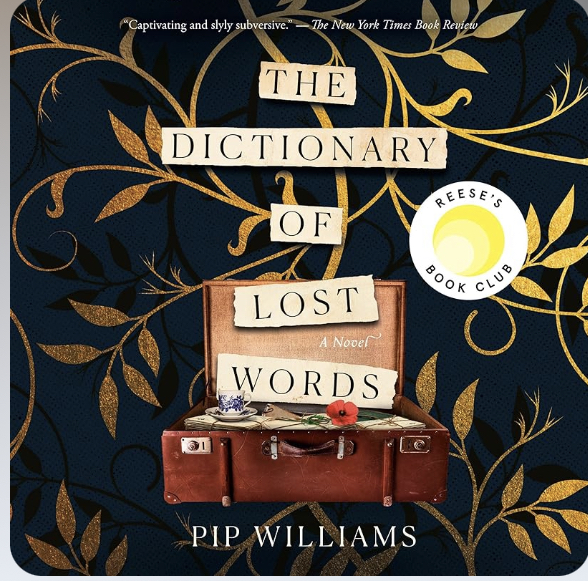
    The Dictionary of Lost Words is the story of a young girl who grows up beneath the sorting table of a Scriptorium where words were collected and scrutinized and judged worthy or discarded by a small group of learned lexicographers who produced the first Oxford dictionary. Esme is indoctrinated into a culture that cares for and reveres the written word, that understands the import of language, and begins her own collection of discarded words, those deemed unworthy due to their pedestrian nature or obsolete status…words like bondmade and other words that coalesce around the language of women, words like suffragette and cunt. William’s work is an interesting exploration of the social history of the first half of the 20th Century, including women’s emancipation and the onset of the Great War. The novel is a love letter to anyone who loves language and saveurs words, and who understands the power of written script and the importance of preserving what may be so easily lost. I am a lover of words like my father before me, he collected them like they were something to treasure and hold dear. This book is a perfect read for a bookish woman who dreams of scholarly hours and endless days within the stacks of The Bodlean Library which has a starring role in the novel – 8/10

    This book was recommended by a friend after discussing The Thursday Murder Club books. Killers of a Certain Age, as the title implies, is the story of a group of four post-menopausal assassins on the precipace of retirement. Meet Helen, Mary Alice, Nathalie and Billy our engaging, intelligent first person narrator. They are embarked on a cruise that goes very wrong very quickly and they are forced to fall back on their killer instincts. While the book offers an interesting premise and is no doubt headed for a big or small screen adaptation, it did not read as well as the Thursday Murder Club books. I found it hard to distinguish between the title characters, with the exception of the narrator, Billy…the others weren’t drawn distinctly enough, and the murky nazi-hunting “museum”, the assassins employer, which may have been a source of endless fascination, seemed almost farcial in its presentation. While the lead character, Billy, was well written and sympathetic, as was the dexter-like work ethic the assassins used as a code for killing, erasing only the morally disposable, the book reads like its arrived a little late to dinner. Flashbacks to training days and themes like the invisibility of the older woman are definate high-points in the book, but we’ve read the aged gang of adventurers story before and the writing was better. – 6/10

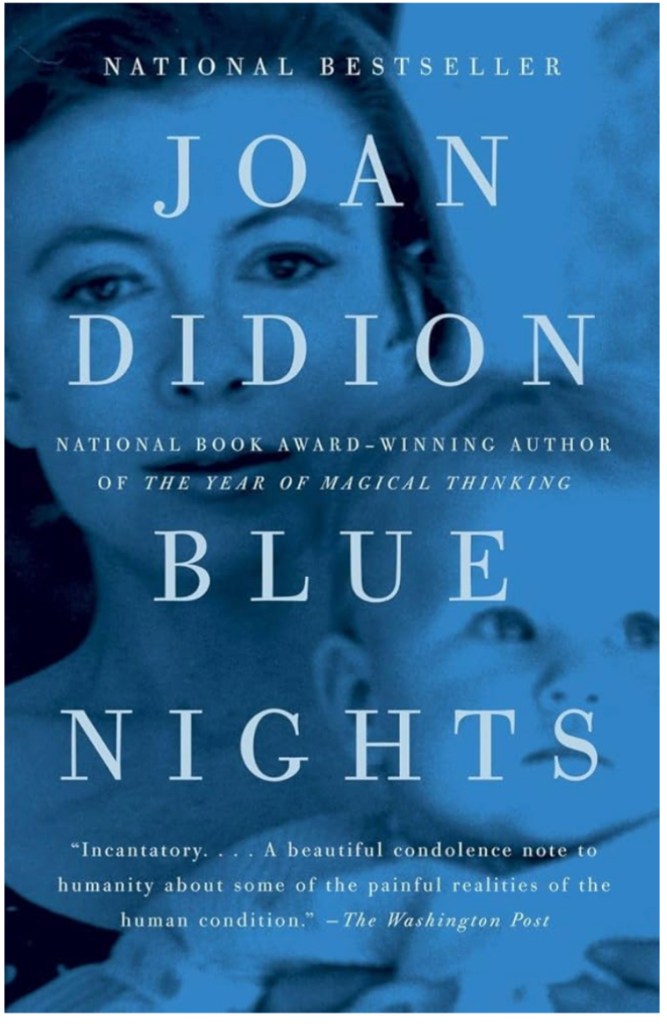
    Blue Nights by Joan Didion is a heartbreaking remembrance of the life and death of her only daughter, Quintana Roo Dunne. Didion recounts blue nights, the gloaming moments, what the French call ‘l’heure blue, “the end of promise, the dwindling of days.” The book’s subject is very weighty – what greater grief can there be for mortals than to see their children dead. (Euripides). Didion’s narrative explores what it means to be without your child, what it means to let them go, and what it is to be tasked with “protecting the unprotectable.” It invokes the terrible pain of remembered parenting, “Brush your teeth, brush your hair, Shhhh, I’m working.” It is painful and poetic and hard to look away from. It is a meditation on the scourge of depression and anxiety, the imperfect art of medicine, and the horrifying realization that we can never deserve our darling children, that we may fail to keep them safe, and that in death we may begin to forget them. A haunting read. – 7/10

    The Novice is a departure from Hahn’s usual meditative prose. It is a short work of fiction that will resonate with anyone who has lived a life and experienced injustice or unwarranted judgment. It is based on the true story of Quan Am Thi Kinh, a tale that every Vietnamese countryman is told from earliest childhood. Kinh was a woman who masqueraded as a man in order to join a monastery and is revered for manifesting infinite forgiveness. A character accused unfairly of misdoing, she endures many hardships while cultivating a spiritual life, and aquiring the qualities of loving kindness, compassion, joy and equanimity. The book is a parable for our times, a simple powerful fable that counsels us to “go home to the island within ourselves,” While the book is not my favourite of Hahn’s, I am perhaps not evolved enough to feel transformed by his simple beautiful message, at least on this occasion, I recognize The Novice is an important read, one that will stay with you awhile. – 6/10

    Copeland’s Eleanor Rigby, as the book title suggests, is a swansong to the lonely. Liz Dunne is a frumpy , middle aged, over weight, friendless redhead and the story centers around her transformative relationship with her newly found son. Written in first person narrative, my favourite, Copeland’s story is sad and funny, sometimes both at once, and explores what it means to be lonely in the modern world. “Loneliness is my curse – our species’ curse – it’s the gun that shoots the bullets that makes us dance on a saloon floor and humiliate ourselves in front of strangers.” It is a salute to the invisible among us. At one point our narrator asks if she should finish up, “perhaps you might not wish me to go any further.” But as Copland wisely suggests a little later in the narrative, “nobody’s story is boring who is willing to tell the truth about himslf.” I liked Liz, a woman who knows she has lost many chances and opportunities for new experiences and is finally ready to embrace the gift of being alive. – 6/10

    Screenshot

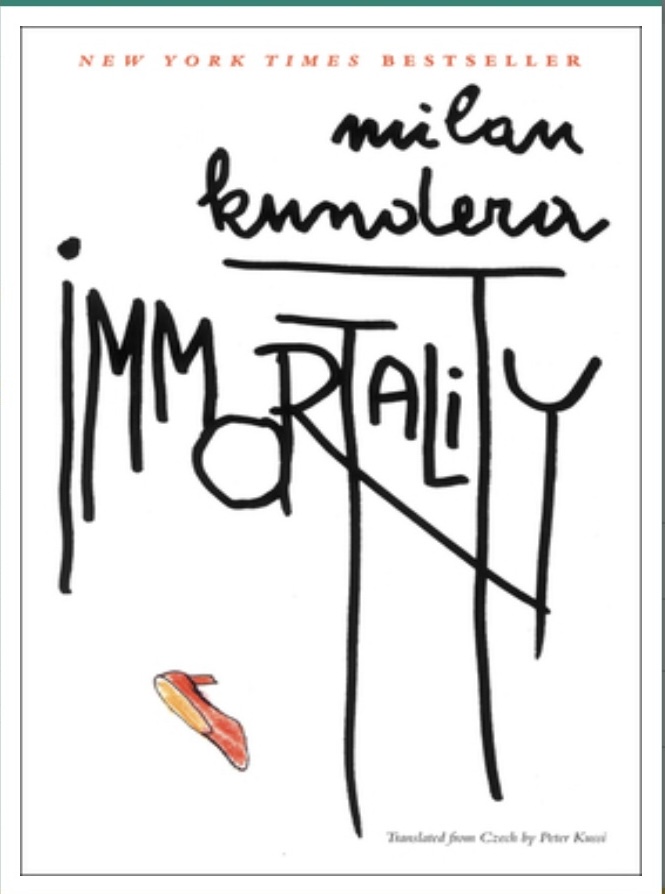
    I picked this novel up on a recent trip to Prague with my daughter. I handed her The Unbearable Lightness of Being which I read when I was her age and then grabbed a copy of Immortality for my little old lady in waiting library. The story held great promise. Agnes a little old lady herself, living life in a tenured marriage on the mean streets of Paris, revisiting her childhood and coming of age including former love stories and complex family relationships…pour me cup of tea and lets get lost together I promised myself. Sadly the book did not deliver with its incessant back and forthing to a classic love affair between Goethe and Bettina. A running parallel story that I was, no doubt, not clever enough to enjoy. I wish Kundera could have contented himself with a simple contemplation of death in real time, less high theatre, metaphorical references, more…death is coming and do I want to spend eternity with the people I made a life with here, the interesting idea of the world as an ad agency, or how about “hypertrophy of the soul”, or maybe the changing nature of time, just a few of the loftier notions he introduces…aren’t those themes sufficient to build a novel on? Overly academic and ambitious Kundera…we know you’re smart, you dont have to reference every page…you told us so much and showed us so little, and left us with nothing to keep. Cardinal sin…you broke your contract with the reader. –2/10

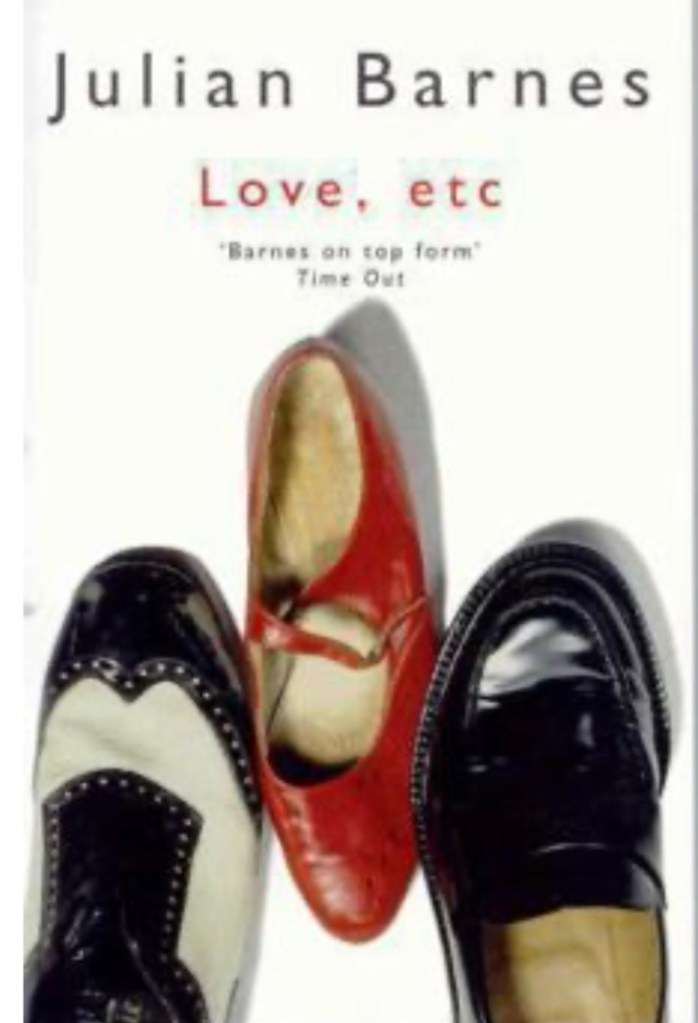
    Love etc. is a dark ad twisty menage a trois between Gillian and husband number 1, steady, reliable Stuart, and husband number 2, witty, entertaining, out of work, Oliver. The story is told in the voices of the three principles, with a few fifth-business cameos inserted for respite care of the reader I imagine. The three stars of the novel tell their truth without interruption or the contamination of conversation. The book is a sequel to Barne’s eariier work, Talking it Over and reads a lot like a one man play, spoken in three distinct voices. Perhaps I might have enjoyed the work more if I had read its forerunner first, but I doubt it somehow. I found the characters very real and clever and charmless, and the narrative full of pithy one liners like “lets just fall into bed and not have sex.” Barnes talent is without doubt, he expertly conveys his weighty themes – the inexplicable sadness of things (“I want mommy to be more cheerful”), the advantage of age and the priviledge of not explaining everything (“you are very naive about us, the old people”), and the last gasps of a used up marriage (Do I still love Oliver? I think so, I suppose so. You could say I’m managing love”). I applaud Barnes mastery and his keen eyed take on the larger life questions and still I did not enjoy this work and cannot recommend it. – 5/10

    Screenshot

    Thurber’s book of essays and amusements is a collective look at the imperilled english language, disdained and disfigured in the mouths of users and abusers of the spoken word. The well known humorist invites readers to “urge up a footstool, loosen your stays, and saucer a scotch,” as he makes fun of our child centred culture, warning us to watch out for “the darlings at the top of the stairs.” Thurber’s work is a call to arms for phrases like “ya know” spreading like viruses, and his essays read like a fairwell speech to proper diction or the decline and fall of the King’s English. He accuses the nation of breeding a band of “tired teachers and apathetic students.” Other topics include the decline of comedy in our time, the poor standards of pronunciation (“mindless, meaningless mumbling”) and other verbal atrocities like the smokescreen of political jargon, and the overuse of idioms. You might have to be a bit of a language geek to get your money’s worth on this read, the comedy is niche, but pleasing if wordplay is your cup of tea. – 6/10

  • The Art of Happiness

    “I must learn to be content with being happier than I deserve.” – Jane Austen

    “Letting go takes a lot of courage. But once you let go, happiness comes very quickly” – Thich Nhat Hahn

    Happiness is a slippery state of being, an elusive, inconstant companion. Like a feckless lover or an indifferent cat, it’s never near at hand when you need it most. It’s approach is often unheralded, it’s visit, never long enough, it resists all enticements to stay. It cannot be captured…it will not be held…we cannot keep it. It is as impermanent as an ice cream on a hot summer afternoon, as fleeting as a first kiss, or a glass of fine wine, it lingers briefly, and disappears into the realm of memory. The art of happiness sits haplessly in the space between our first world sense of entitlement, and our readiness to cultivate a sense of wonder, that magnifies the trace elements of happiness drawn from everyday dealings. Little things like the dog’s yawn, the carol of the wind in the trees, the smell of freshly brewed coffee, or the uncalled-for-kindness of a stranger can, with practice, conjure a sensation of peace, an ‘invisible cloak’ of contentment, protection against the certain storms of life. There are glimmers everywhere if we learn to spy them, and they can sustain us, even on our darkest days, if we apprentice in the art of happiness.

    First lesson – kill all expectation of happiness. It’s Buddhism 101, the first noble truth, ‘Life is suffering.’ Happiness is not our baseline or our birthright. We don’t deserve it, and we can’t earn it. We are not on some episode of Friends with a laugh track running every 30 seconds. Chandler Bing died of drug use disorder, and Rachel’s husband left her for Angelina Jolie. We’re in the ‘real’ people, and to quote the venerable Monty Python, ‘Life’s a piece of shit…just remember it.’ (It works better if you sing it). My kids would say that that’s a bit dark or defeatist, but I’m with Schopenhauer and the Pessimists, you need a sense of humour to get through the tragicomedy we call life, and ‘the safest way of not being very miserable is not to expect to be very happy.

    Buddha’s second noble truth is that we’re the problem…we are the root of all our suffering…we build our own hell. The art of happiness is to desire less…stop trying to make the world conform to our preferred narrative…that way lies madness. Relax…we control nothing… and anyway, sometimes bad news is good news in disguise, if we wait long enough. It is a mighty thing to slay your expectations and lay yourself open to your share of frustrations, disappointments, and loss. My mother always told me that ‘acceptance is liberation.’ She was a very wise woman, a gift earned from enduring her measured cup of sorrows.

    William James wrote ‘We need to stop deciding how we want things to be and then getting ourselves upset when things don’t turn out that way.” Easier said than done Willie, especially when you discover the last piece of cake gone, or the poop your geriatric dog deposits on the dining room floor every night.  Still, I say give it a try next time you’re provoked by an uncapped toothpaste, a Sunday driver when you’re running late, a rainy day when you wanted it fine.  Start there and when you’re ready you can move on to little old lady sized stuff, like chronic pain, or learning about a friend’s new cancer diagnosis, or loosing someone you loved very deeply…someone you thought you could keep forever…a loss that feels like the sky’s gone out and taken all the stars away. It gets a little harder to wash down then, even with a good red.

    James would say, ‘If you believe feeling bad, or working long enough will change a past or future event, then you are living on a different planet, with a different reality system.’ He’s right of course. we can’t get so mired in the shitty pieces of our story that we miss the good bits…the glimmers.

    We can’t be ‘shiny, happy people’ all the time and I guess we shouldn’t even try. Don’t we need a certain measure of malcontent to get anything done? It’s only unhappiness, disappointment and disenchantment that puts our clay feet on the floor every morning, isn’t it, that fuels our pursuit of wisdom…some magic beans to make the daily grind a bit more palatable? If we were happy all the time, we’d stay at home all day and roll around in it, wouldn’t we, hedonists supping on donuts and Netflix until our brains and our bodies turned to mush.  That’s Hotel California my friends…’and you can never leave.” (Again, much better if you sing it with me)

    If we can’t capture happiness and keep it caged, as we might like best, then we can cultivate habits and practices that invite happiness in, offer her tea and something sweet to encourage a long and robust relationship.  Gratitude is the first and best invitation to happiness that I’ve discovered.  It is that great looking glass that magnifies all the beauty and riches around us, large enough for us to see all that we have been allowed to keep… legs that take us walking, minds that may still read and discuss, running water still clean enough to drink, maybe even a hand to hold.  I’ll add to this the extraordinary occasion for a fine cup o’ tea and in good company.  Vonnegut suggests we recite in such moments of clarity, ‘If this isn’t nice, I don’t know what is.”

    We must fall in love with the beauty that is all around us.  Cast our eye about ourselves each morning and count our blessings.  Oscar Wilde wrote that ‘most of us are living in the gutter, but some of us are looking at the stars.’  We need to look for the glimmers.  They’re everywhere once you start practicing: the dance of late summer leaves, the first line of a new book, or that feeling of being understood…an easy, effortless fellowship that lets us know we’re not alone.

    Friendship is the second essential pillar in my study of happiness.  Friends come in many shapes and sizes.  They can be fictional, or four-legged, they can be blood, and people we grew up with, or choose to grow old with, but more often than not you’ll find them out roving on some adventure.  They arrive unexpectedly, a happy surprise, and their company can feel like coming home after a long time away, or a gift you didn’t know to ask for, but have wanted your whole life. ‘The secret Alice, is to surround yourself with people who make your heart smile, it’s then, only then, that you’ll find wonderland.’

    If you’ve not yet landed in Wonderland, then I suggest you take a break from your own troubles and concerns and look around you for a way to help others with theirs.  Service is chapter 3 in the little old lady book of happiness.  My brother was in love with Emily Dickinson, she was a dear friend of his.  She wrote, “If I can ease one life the aching, or cool one pain, I shall not die in vain.”  I say do harm to no man and never miss an opportunity to do a kindness. Be a light for others.  I love the old Indian proverb, ‘Blessed is he who plants a tree under whose shade he will never sit.’ To my mind there is no better way to cultivate your own happiness than to contribute to the happiness of others, unseen, unacknowledged and with great humility. If we’re all made of the same stuff in the great fabric of being, then watching out for a dropped stitch here and there only makes good sense…keeps us all from unravelling. 

    If we can stay with the knitting analogy for a minute, then I suggest that the fourth practice in this little old lady’s guide to a happiness, is to keep to your knitting every day.  The work we choose to do is key to practicing good happiness hygiene. If you love your work, then every day is a delight and you’ll be a success, no matter the weight of your wallet. That’s not to say you won’t have to find some job to keep you in beer and bread and a roof over your head.  But you must never let those necessary hours detract from your real work, the work you recognize as your own. And if you haven’t yet found this work then, to quote Ms. Dickenson once more, you must be ‘out with lanterns, looking for yourself.’ 

    John Muir the great naturalist counsels that ‘nothing dollerable is safe.’  That’s the way, he implies, to Thoreau’s ‘life of quiet desperation.’ I say be curious, go adventuring, stretch yourself beyond your imagined limits, investigate, take yourself away, let yourself go quiet.  Your work will find you…artist, teacher, carer, baker, candlestick maker…it matters not.  Trust only that which speaks to your soul, that engages you wholly, that causes you to lose time and that you can’t wait to get back to again each day on rising. ‘It’s foolish for people to want to be happy,’ wrote Georgia O’keeffe, ‘our interests are the most important thing in life.’ ‘Happiness,’ she said, ‘is only temporary, but our interests are continuous.’

    Lastly, and maybe most importantly, happiness lives principally in the present moment.  We need to slow down and stay grounded here in the now, and as the Stoics suggest, ‘do every act of our lives as though it was the very last act of our lives.’ All the greats say the same. To quote my favourite Buddhist, Thich Nhat Hahn, we must ‘drink our tea reverently, as if it is the axis on which the world revolves.’ ‘Eternal life’ wrote Wittgenstein, ‘belongs to those who live in the moment.’  But the poets say it best, To see a world in a blade of grass…heaven in a wildflower.’  It’s that moment when the musician understands that he is not only the strings of the instrument he plays on, but also the music that fills the room and touches the heart strings of everyone who hears.  There can be no higher experience of happiness to my mind then being fully present and awake to your surroundings.

    If you asked me the raw ingredients of my own happiness, I would quote Tolstoy, ‘Rest, nature, books, music, such is my idea of happiness.’ I also try to practice what my brother taught me… to live in a state of radical amazement.  E. B. White urged us to ‘always be on the lookout for wonder.’ So, I get up each morning and try to look at the world in a way that takes nothing for granted. The art of happiness lies in extracting it from commonplace things and as a little old lady in waiting, I’ll give the last word to that old sage, Socrates, ‘Let’s enjoy ourselves,’ now, ‘It’s later than we think.’

  • Reading Room 3

    Sally Rooney is a favourite writer, maybe more than a little old lady in waiting should admit. Her characters are brilliant, ruined twenty somethings who overthink their way into clinical depressions trying to outrun their Irish childhood trauma. Rooney’s writing is fresh and smart and made from the modern gestalt. The Observer in their review of her latest novel, suggests there is no better author at work today.

    Beautiful World, Where Are You is essentially a correspondence between Alice, a novelist, nestled in the Irish countryside, freshly arrived from a psych ward, and her best friend Alice, an underpaid intellectual living in Dublin. They write about their relationships, and their work, and the state of the world they live in, “standing in the last lighted room before the darkness, bearing witness to something.” The book earns a high rating from me for the sex scenes alone (I’m imagining you making note of the title now). I’d rate the story even higher, I believe, if Rooney was my contemporary, perfectly capturing the age my children are living in now in which “the easiest way to live is to do nothing, say nothing, and love no one.” Her characters are “untouched by vulgarity and ugliness” and looking for moments of “something concealed …the presence at all times, in all places, of a beautiful world.” 8/10

    Screenshot

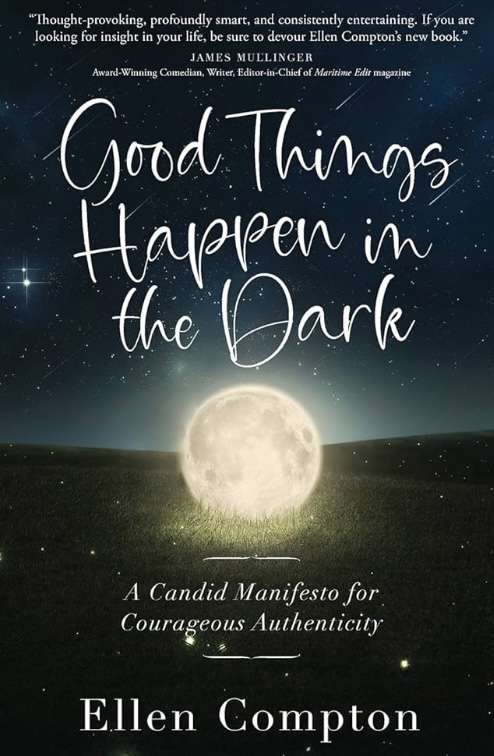
    I picked this book up at a favourite design shop uptown last winter. I liked the title and her chapter headings had quotes from writers I admire like C.S. Lewis, Anne Lamott, Carl Jung and Pema Chodren. I believe the author is local, a Maritimer, which makes my less than glowing review a bit more uncomfortable. While I appreciated the author’s true to life anecdotes and the general premise of her book, that bad things lead to growth and a more evolved self, I hated her God-squad vernacular and her overly familiar tone. I liked the road she is taking, I just didn’t love her running commentary as she journals about her boundaries and her conversations with her God. I applaud her vulnerability, I abhor her candor. 2/10

    Screenshot

    I’ve read enough Kate Quinn to understand that she is a no fail formula story writer. She creates strong period pieces, in this case 1950’s Washington in the heart of the McCarthy trials, when the rights of women were predicated on their status as wives and mothers, where reputations were guarded, and romances were discreet, and every woman held a secret in her wasted heart.

    The Briar Club is the story of a supper club in a women’s boarding house that brings together and bonds a motley crew of women ranging from widows and war brides, to single moms, and civil servants, a mobster’s moll, an immigrant artist, and an injured baseball star, to name a few. Quinn captures unique, compelling narratives, drawn and crosshatched by a master story teller who showcases our social history, as seen through the eyes of women, our stories, lesser known and more delectable for their subtleties. 7/10

    Stella Maris by Cormac McCarthy is a unique story, intellectually challenging and structurally unorthodox, it is essentially the documented therapy sessions between a brillaint twenty year old mathmatician and her psychiatrist in 1972 when she voluntarily commits herself to a psych hospital as she processes the death of her brother, Bobby. With a history of paranoid schizophrenia and suicidal ideation, this is not her first visit to Stella Maris hospital, but her first conversations with a new therapist who engages her in a game of cat and mouse that makes a voyeur of the reader and keeps our attention despite the challenging sections that review the magic inherent in advanced math. The rewards are exponential as we meet her chimeras, the highly constructed hallucinations only she can see, and follow the “My Dinner With Andre” conversation that swings back and forth in the space between philosophy and quantum mechanics with cameos from Wittgenstein and Topos Theory that transport you to the edge of another universe. Stella Maris is a master work of intricate ideas and an absorbing examination of the “billion synaptic events clicking away in the dark like blind ladies at their knitting.” Warning – this is no beach book. Have wine at the ready for the deep thoughts aftershock . 8/10

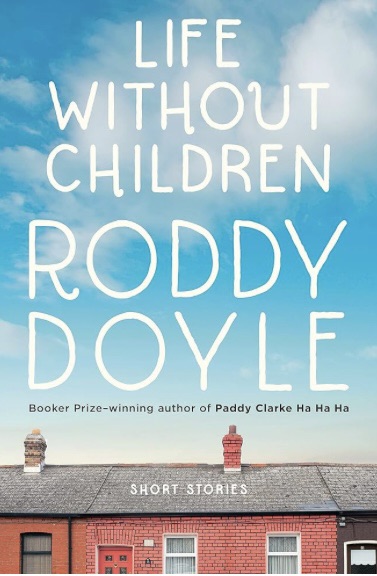
    Doyle is a delight to read on any occasion but Life Without Children, a collection of Corona stories, is truly superb. His eye for the everyday detail distills something true and generalizable for every reader who anxiously sang the Happy Birthday song while washing their hands like surgeons, and danced the supermarket side step, or binged their way through the Netflix scandi-noir series, and social distanced themselves out of work and relationships.

    Doyle’s brilliant story collection looks at the masks we wore, discarded, like “underwear on the footpath“, and examines lives under lockdown, “that ripped away the padding“, with “no schedule, or job, no commute, nothing to save us.” His characters explore their smartphone addiction, and earworms, and engage in real conversations, “the tricky ones that stray from the usual.”

    Doyle’s book beautifully frames the silent, deadly days of our very recent past when Covid hemmed us in, he shows us our fragility, our interdependence and our essentialness, and will make you laugh until you cry. 8/10

    Pema Chodren is a Buddhist nun and meditation teacher who I have read for many years, including her meditation series which I highly recommend. Taking the Leap is a series of teachings designed to help you stay open to the many vexations of human life and build a space or pause within highly charged situations before reacting with our smaller selves, and further contributing to the deepening and seemingly entrenched polarization that governs so much discourse in today’s world that labels the ‘other’ as ‘bad’ or ‘wrong’. What she offers is a Buddhist prescription with the potential to reduce suffering.

    It starts with staying open and present and awake to whatever is going on no matter how uncomfortable or seemingly intolerable, no easy task when we are, most of us, pleasure seeking, or putting our heads in the sand.

    Pema is big on the pause and embracing impermanence and the underlying uneasiness that is an integral part of the human condition. Her book is a guide that coaches us to stay with the “tightening” when it comes, to break the habital chains and reactions that rule us unconsciously. Taking the Leap offers a formal teaching, a map to a more peaceful approach to living, but it is no easy journey. There is an undertow, a dopamine hangover that will distract and discourage your efforts…still its worth a read even if all you get is that there is a spiritual toolbox waiting for you when you’re ready to open it. 8/10

    Alexander McCall Smith, a professor of medical law at Edinburgh University, turned highly successful detective story writer, is a very popular and commercially successful storyteller. He understands that great detective fiction has more to do with setting and the personal charisma of the detective than any murder or plot device. Career mystery readers are rarely surprised by the denoument of the books they devour. We read mysteries because we love to be in the company of the detective, or immersed in the world that the writer places their heroes and the villains they sort out. The No. 1 Ladies Detective Agency is McCall Smith’s first run at a winning detective series and it does not disappoint. Mma (Precious) Ramotswe is a keen and unusual gumshoe, “the only lady detective in Botswana,” with an unerring understanding of human nature and a love for her native Africa. “A good woman in a good country, one might say.”

    McCalls stories document unrecorded lives, the narratives of ordinary people who see beauty in simple things and find happiness with very little material wealth. Detective Ramotswe deals in absentee husbands, African gangsters, and witchdoctors, and a disinterested police presence, outsmarting her fellow characters, armed with nothing more than a detective manual and a small inheritance from her father. She is a unique sleuth with a Columbo like innocence, an interesting backstory, and a determination to succeed that will have you routing for her. Best ecapist read this summer. 7/10

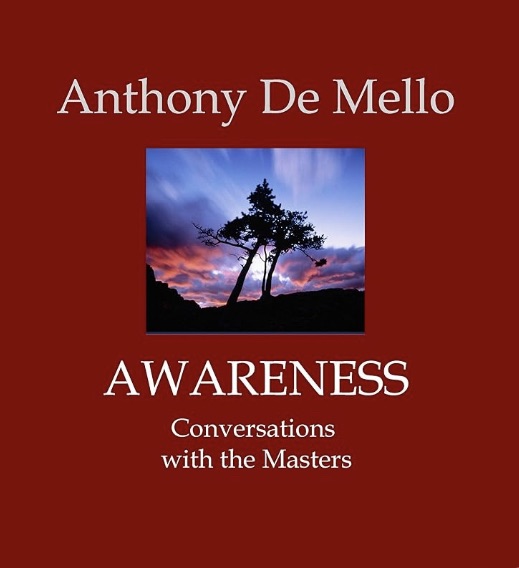
    This book came to me via an interview I did for the blog that will be dropping later this month. It’s a life changer… the kind of book you buy in bulk and try to force on everyone you love. Published posthumously, it is a compilation of wisdom teachings presented by Anthony de Mello, a Jesuit priest and psychoanalyst, who describes a paradise on earth, waiting inside each of us, just beyond the reach of our conceptualized world and the limitations of language, out beyond the boundaries of our egos and all our charitable good works (a more refined ego construct).

    Awareness shows a way to wake up from the modern day miasma, an all consuming mass illusion that keeps us trapped in a hamster wheel of self absorption and unhappiness, derived from a short term self soothing dopamine cycle that breeds a disquiet we’ve acclimated to through a lifetime of conditioning.

    De Mello asks us to kill our expectations, to remain open, and to detach from our desires.

    Awareness leaves readers with a series of excellent prompts but the real work comes after the close of the book. De Mello’s message is a little like “trying to capture the feel of the ocean in a bucket of water.” Its a beginning. It starts in awareness. You cannot strive for the world he describes or, he cautions, it will elude you. It begins with a willingness to sit in the present and observe the majesty that is the reality hidden beneath the ego and its self serving thought stream, it glimmers only in the present, turning to dust in a mind that travels to the past or the future.

    He coaches the reader to watch everything within you and around you as if it were happening to someone else. He counsels that real happiness resides in you and no where else, in no thing, in no other person.

    De Mello’s book is a call to awaken from a world in which we are dying of spirtual thirst surrounded by a sea of fresh water, living in a world filled with joy and happiness and love, but brainwashed, hynotized and sirened to sleep, trained not to see what is all around us.

    Awareness is by far the most important, insightful and funny rendering of the truth of the universe that I have found in a decade of searching. I cannot recommend this book highly enough not only for how powerfully it could impact our lives individually but also what it might mean for an awakening world. 15/10

  • In Conversation with (Iwona) Maria Kubacki

    I first met Maria Kubacki when we were still teenagers.  She was a friend of my brother’s… think artsy, intellectual, an outsider, by choice or design. Recently arrived home to Saint John from a Toronto private school, she was the iconic, underground campus ‘it’ girl, a ‘Lit chick’- all cat’s eye eyeliner, black tights, and arthouse lipstick.  She was clever and cool, straight out of a Sally Rooney novel, this quixotic mix of edge and vulnerability that was foreign and familiar all at once.  Her style acumen was just the pretty wing man for her real talent, an unpretentious academic mind, a well-spoken confidence, and a reverence for the written word.

    Fast forward 40 years, Maria, a fellow little old lady in waiting (possibly in denial) forwarded her initial remarks with a disclaimer: “I’m a little embarrassed and intimidated by this. I don’t want people to think, ‘who does she think she is?’ I have no particular accomplishments. I’m just answering these questions as a fellow little old lady in waiting who is in the thick of middle age and thinking about how to make the most of the last third of life.” This same little old lady in waiting, earned a Master of Arts degree in English Literature and has worked as a book reviewer and freelance writer as well as an associate editor, and editor.  Currently she lives and works in Ottawa as a communications manager for the federal government. She took up writing fiction a few years ago and has published her short stories.  She is married to a lovely man named Ken and has two twenty-something children, Jane, and Mike. She sidesteps the 7-sentence limit of the first interview question so adeptly, using a series of semi-colons, dashes, and ellipses, that I had to allow it. Maria Kubacki is still very clever…and cool, maybe even more so as a little old lady…in waiting.

    Tell me your life story in seven sentences or less? 

    I was born in Warsaw, came to Canada when I was 4 ½, lived in Quebec City briefly and grew up in Bathurst in the 70s, where we were one of the few immigrant families, but it was pretty idyllic …double-dutch in the street with my friends, summers at Youghall Beach. I went to high school at a girls’ boarding school in Toronto where I was more focused on smoking, drinking and New Wave music and fashion than on my education, and where I started going by my middle name, Maria, instead of Iwona (my actual first name, pronounced Ee-vohn-ah and mangled by nearly everyone because of the “w”), or Yvonne (what everyone called me in Bathurst because it’s the French version of Iwona) – it was fairly common back then for immigrants to change their names to something easier for Canadians to pronounce, but it was weird and embarrassing to me to have all these names, and sometimes still is, as my parents, Polish family and friends still call me Iwona (or Iwcia, the diminutive, pronounced Eef-cha)…Bathurst friends and some cousins call me Yvonne, and everyone else calls me Maria.

    I never knew what I wanted to be when I grew up, but I loved reading – my parents were and still are big readers so we always had lots of books in the house, and also I learned English the summer I turned 9 from a British family from the Isle of Man who had all kinds of children’s classics all over their house, the Narnia series and that sort of thing – so I ended up getting a BA and then MA in English at UNB.

    I was quite lost in my twenties and dragged my MA on for many more years than I care to admit, but during that time I started doing freelance writing as a way to earn a bit of money and avoid my thesis – art reviews for a magazine called Arts Atlantic, and book reviews for the Telegraph Journal, which eventually led to a job as associate editor and then editor of the New Brunswick Reader, the Telegraph’s weekend magazine.

    I got married and had my two kids in Saint John before moving to Ottawa where we have lived for 22 years and where I wrote for the Ottawa Citizen and worked as a writer/editor at what was then Canwest News service (now Postmedia).

    For the last 16 years I have been working as a communications manager for the federal government and recently I started writing and publishing fiction, which I had never even thought about doing until I turned 50.

    What is the best thing about getting older?

    People always say things like not caring what others think anymore, or not sweating the small stuff. Sadly, I still sweat the small, medium, and large stuff – I sweat all of it. I haven’t yet reached the part of getting older where you’re relaxed and just flowing and enjoying life. I’m still in the thick of it – middle age, work, responsibilities. I think the “best thing about getting older” hasn’t come yet, or maybe I’m just doing it all wrong.

    What is the worst thing about getting older?

    Becoming set in your ways and more reluctant to try new things, acting and thinking like you are even older than you are. You’re drunk and high a lot more when you’re young, maybe that’s why you’re more open to new experiences then.  Children are like that naturally…they’ll be friends with anyone, they’ll try new things, and as we age, we tend to stick to what’s familiar, what we know we will like, people like us etc. Our world can get smaller and smaller.

    If you could retain or retrieve one quality from your youth, what would it be?

    Being open to life, people, and experiences.

    What’s the most important lesson you’ve learned so far?

    Children and dogs have it all figured out – be in the moment, and enjoy every little thing, every day. Our beloved golden doodle, Tippy, who we had to put down a few years ago, was still chasing rabbits, making new friends, and wagging her tail the night she died.

    Do you have a favourite quote?

    Does anyone actually have a favourite quote or do they just Google “famous quotes” when asked? I don’t have one off the top of my head, but whenever I see one from the Stoics, it resonates – like the Marcus Aurelius one at the top of your blog, which I love and need to meditate on every day, because I don’t think I am living my life this way now: “Think of yourself as dead. You have lived your life. Now, take what’s left and live it properly.”  I have lived a pretty cautious, small life. My anxiety, a lifelong affliction, has always held me back in life, even when I was younger. I would like to become a more fearless or at least less fearful person. Do more, see more, travel more. One of the reasons that it’s fun to read and write is that we all only have one life to live, and we have to make choices, and for some of us fear holds us back, but through writing and reading we can vicariously live many lives. 

    Do you have a favourite word?

    ‘Actually‘ – with index finger held up, because I’m a bit of a know-it-all, as my family and friends will tell you. One anecdote: on a family trip to Florida we took a drive through a ritzy area in St. Petersburg where there were big mansions…so we’re driving around  and all having a nice time, and we drive by this house that has these ornate pillars and my sister-in-law says ‘oh look, there are statues of dolphins on them’ and I was trying to fight the reflex and telling myself, ‘don’t do it’  and then it just came out, ‘Actually, I think they’re manatees.’ Everyone just rolled their eyes at me but they actually were manatees! It’s become part of the family narrative. 

    Describe your perfect day.

    Any day when I’m on a beach anywhere, in almost any weather, or just somewhere near the ocean or near water. It could be Venice, or Seven Mile Beach in Grand Cayman, or Bar Harbor, Maine. Or Brackley Beach in PEI, Sandbanks Provincial Park, Saints Rest in Saint John.  I think it connects back to happy memories of growing up in the Maritimes, spending a lot of time at Youghall Beach in Bathurst every summer throughout childhood and my teen years, and then living in Saint John for many years going to places like Cape Spencer, the Irving Nature Park, St. Martin’s.  I guess to me water also feels very open to possibility.  I think I like imagining what’s on the other side of the ocean. I also love the feeling of being on the water, I love kayaking… it’s just very freeing. 

    If you could have tea with anyone, real or fictional, dead or alive, who would it be and what would you talk about?

    I know people often say Jane Austen, Shakespeare, or Churchill but I can read them, no need to have tea with them. I love Jane Austen, but I think she would be really catty and judgmental in real life – I would be afraid of her. Maybe hanging out with Churchill while he sat around in his pink satin undies and robe while drinking and trying to figure out how to defeat Hitler might have been cool. But I think what I would really like is to have tea with both my grandmothers, although separately. I would ask them about their lives in Poland. My mother’s mother had a farm outside Warsaw and raised 5 children during the Second World War. She was not educated but was very smart, wise, funny, kind, and resourceful. She was milking the cows at like 4 am, made all the kids’ clothes by hand…during the war, German soldiers took over their farm and the kids all had scarlet fever as well …and somehow, she managed to keep everyone alive. And found time to make beautiful hand-embroidered tablecloths.

    My father’s mother was very ahead of her time.  She went to medical school in the 1920s when there was a “numerus clausus” – a quota that only allowed 10 % of the students to be women, and she was smart and tough enough to be one of the 10%. She did a PhD and was a specialist in internal medicine. She also loved to travel and trying new foods and was sporty and adventurous – she would rent scooters for her, my dad and his brother and they would all go adventuring together.

    Tell me three things that bring you joy.

    My family and friends. Walking/hiking/kayaking. Travelling almost anywhere, whether it’s a day trip near Ottawa, a road trip to New York or New England, or Europe. I’m going to cheat and list way more things because many things bring me joy. Going to museums, big or small, almost anywhere. Cappuccinos and spritzes. Chocolate. Music. Going to movies at the Bytowne, our local rep cinema. Conversations about life with my kids, Jane, and Mike. Family dinners with the kids and my parents. Rewatching favourite movies and TV shows with my husband, Ken – Remains of the Day being the movie we rewatch most often, because it’s perfect in almost every way – from the writing and the acting to the period costumes and interiors and the incredibly sad but beautiful score.  Ken and I also like making up our own words to songs and making ourselves laugh. Sometimes we also meow songs – we don’t remember why we started doing that, but I think it was when our kids were little, but anyway it makes us laugh. It’s not possible to list just 3 things.

    Name a guilty pleasure.

    Taking a day off just for myself to do whatever I want. Or years ago, when my kids were little, Ken and I would sometimes take an afternoon off work to go to a movie just the two of us.

    Do you believe in life after death? What does it look like?

    I don’t really think about it. It’s probably just oblivion – we probably just get reabsorbed into whatever the universe is made of…ashes to ashes, dust to dust. But if there was some kind of life after death, it would be nice if it were an eternal sleep where we dream forever and get to be with everyone we loved and experience everything we ever wanted to but did not get to experience in life. In this eternal dreamworld I hope I get to fly, and look down over the earth, like Google Street view, but better.

    What would you like your eulogy to say?

    I guess my kids would be writing my eulogy. I hope they say I was a decent human being who taught them to be decent people. I think they might say that I gave unsolicited advice very freely, but I hope they feel that sometimes it was good advice. I hope they also remember our Amazing Race-style family trips where I made them see and do everything, even if we were exhausted and our feet were sore from walking 20,000 steps a day.

  • The Reading Room – Issue 2

    “If a book is well written I always find it too short.”

    Jane Austen

    A book review is a highly subjective exercise and so, in the interest of full disclosure, as a Little Old Lady in Waiting, I know you won’t be surprised when I tell you that I like little old lady subjects and settings. I like my people past their prime and living by the sea or someplace equally sublime. I like subtle, nuanced, tender narratives with a philosophical bent and characters who feel like friends I’d like to know. People who have lost important relationships and parts of themselves, and know its possible to keep on existing…people who understand that ghosts are real…people who have paid a price for their place in the story. Layer in fresh, visceral language that routinely makes you stop to reread or recalibrate your breathing and I’ll stay with you untill the very end, and when it’s over, I’ll take a little piece of you with me.

    The rating system I assign is roughly as follows:

    10/10 – The illusive unicorn. “Your heart understood mine”

    9/10 – I loved this book, it changed me in some way

    8/10 – Great read. I’m still thinking about it

    7/10 – A good read. I’d pass it to a friend

    6/10 – Adequate I suppose

    5/10 – Flawed in some subtle but no less dissapointing way

    4/10 – Major story flaw (cardboard characters, poor pace, sledghammer story-craft)

    3/10 – The author has failed the reader, the editor should be escorted from the building

    2/10 – No… just no

    1/10 – I will never get those hours back


    I have long admired the personal and professional life of Agatha Christie. I’m a fan. I’ll read anything about her work and career and so when I discovered The Christie Affair in a used book store it was a little like finding a thrift-store cashmere cardi in a colour that suits. The Christie Affair is Nina de Gramont’s first novel and takes as its subject the eleven days that Christie went missing and the marital discord that immediately proceeds it. In the novel, Chistie’s husband, Archie, is conducting an affair with a younger, Irish woman named Nan O’Dea who reads like Saoirse Ronan from the film Brooklyn , a clever compassionate character that carries the story in many ways, and has a compelling back story of her own. The book becomes a multi layered mystery to be solved, complete with a war weary police detective, a tragic love story, and a satisfying tale of revenge. I loved the characters, the post war UK setting and the glimpse into Christie’s private world. 7/10

    There was a lot of buzz about this book on social media and a sequel already in print, so I picked up a copy of this novella for a vacation read. It’s marketed as a transformation story of a young woman who drops out of her life and spends a year reading in the cramped upstairs quarters of a family run second-hand bookstore. A perfect story premise for a bookish woman of any age. Set in Tokyo, the heroine of the book is a love spurned 25 year old named Takako, a non-reader, immersed in a hip deep depression post a humiliating break up, when she accepts the invitation of her eccentric uncle to live and work at the Morisaki bookstore. This is Yagisawa’s debut novel and it did not deliver on any level. The characters are unsympathetic, the story line is non existent, even the theme, ostensibly the joy of reading as a transformative experience is poorly executed. The most generous thing I could write is that any merit or charm Yagisawa may have conjured in his original work is wholly lost in translation. 1/10

    Peggy is the fictionalized portrait of Peggy Guggenheim, American heiress, art collector and feminist icon who begins life as a New York debutant and becames embroiled in the bohemian Paris of the 1920s, dallying with the likes of James Joyce, Emma Goldman and Samual Beckett. Peggy, begun by Rebecca Godfrey who passed away in 2022, was finished by the author’s good friend, Leslie Jamison and in some ways the story does feel like two separate books. The heiress is portrayed as a poor little rich girl who suffers the loss of a beloved father who goes down with the Titanic, a dear sister who dies in childbirth, and a son lost via a dissolved marriage with an abusive, parasitic poet. She is snubbed by an anti-semetic society as a Jewess, and ridiculed in the boheniam art world as little more than “a wallet.’ Despite her millions she has the reader’s sympathy as an intelligent, philanthropic outsider with a keen understanding and appreciation of the post war modern art movement. This fictional biography is an interesting look into the elite world of early 20th Century New York aristocracy as well as post WWI Paris and the intellectuals who mingled there and became known as the lost generation. 6/10

    Depressed mid 40’s academic, Phoebe Stone, distraught after her husband leaves her for another woman, her career stalling, her geriatric cat found dead at home, decides to treat herself to an expensive evening gown and a posh holdiay at a decadent hotel, all with the intention of killing herself. A dark tale indeed, except Espach’s voice is so intelligent and noir comic that the reader tags along despite the downer of our heroine’s final destination. Enter the wedding people who descend on the hotel as the only other guests and, despite their annoying, narcissistic and waspish ways, they ineveitable disarm, distract, and detour our hero’s journey. The setting, Newport, Rhode Island, is a charming backdrop to Espach’s first novel, but the real winner is her smart heroine whose thoughts, suicidal and otherwise are always authentic and relatable and rife with literary references that appeal to readers who are fans of the Brontes and Virginia Woolff. A great book to pass to a friend with a Litt degree and an appetite for a dark night of the soul. 7/10

    Anne Lamott’s book, Help Thanks Wow is a call to prayer as well as a prayer tutorial for the uninitiated and the out of touch. It is a book about gratitude and finding perspective and it is an invitation to cultivate a state of wonderment. Lamott’s simple, comical and self deprecating style could charm even the most determinined non-believer. She keeps it simple, three one word prayers to recite, to hold fast through the tough times, and to stay mindful and intentional through the mundane everyday; to look for the good, and experience all the beauty that lies in wait for us if only we have the eyes to see it. I found Lamott’s style and non-denominational approach inviting and pragmatic. She didnt alienate her readers with old fashioned God talk, “asking an invisible old man to intervene.” She understands there are no words for the ‘broken hearts of people losing people’; there is no fixing the unfixable. But prayer as a spiritual experience, a one word incantation that helps you become more generous, more patient, more kind to yourself and others, there surely can be no harm in such a practice. I loved Lamott’s comical, tender, and real life prayer book, made for misfit souls of all ages. 7/10

    Julia Cameron, best known for her book , The Artist’s Way, delivers a comparable artistic toolbox for writers who work with story craft, routinely tackling the often intimidating blank page to create meaning and art. The Sound of Paper is essentially a workbook with a series of exercises and disciplines designed to open the creative narrative approach, so often stymied by a writers own critical voice, that values product over process and atacks fledgling writing projects before they’ve had a chance to mature. Cameron’s writing drills are designed to explore and develop your authentic voice, to place emphasis away from a perfect script, with a series of self care indulgences that cultivate a safe space for creative work, and structured play projects designed to reignite a love of writing. Daily rituals include walking, and morning pages, and being open to the idea of working poorly, breaking free of the ego’s need to be brilliant, and instead contenting ourselves to being functioning wordsmiths, with the freedom to embrace new forms. This is a perfect gift for any writer looking to learn or advance her craft. 8/10

    Emilia Hart’s Weyward, chronicles the lives of three Weyward witches, separated by generations but related by blood; the three principle characters include , Altha, on trial for witchcraft in the 16th Century, Violet, at the mercy of an opportunistic father and an unscrupulous suiter in the 1940s, and Kate, the victim of present day domestic violence. Their stories highlight a history of patriarchy and misogeny that targets powerful women and condemns or attempts to harness that power. I’ve always enjoyed a good witch story, ever since I watched Bell Book and Candle with Kim Novak and Jimmy Stewart. The Weyward witches are more like botanists with animal familiars, less broomsticks and incantations. The book is at its best drawing attention to the understated, undocumented power that exists between women, “the most feared…and the most potentially transforming force on the planet.” The story’s pace is a little slow moving in the first half, and the book reads a bit like three separate novellas with tie-ins too carelessly woven, and coming too near the book’s close. I have read better witcherature and while Hart’s story gets a passing grade, it didnt put a spell on me. 6/10

    I read this book several years ago but as it is always on my night stand and as I am continuously rereading passages, a review seems in order. I have recommended this book to many, many friends, particularly those who have experienced their first ‘shot across the bow’, a personal health scare, and have come face to face with their own mortality. If I still have the capacity to read and understand this book’s ancient teachings as I lay dying, this will be the last book I hold . I take great comfort in its thesis that what we are has no beginning and no end…what was never born may never truly die. I can hear the critique of my scientific rationalist friends prpeparing their remarks as I write, but the little old lady that waits in me, made peace with Pascal’s wager decades ago.

    I Am That was first published in 1973 and is a collection of teachings from the great Hindu spirtitual teacher and seer, Nisargadatta Maharaj. This book takes its title from the Upanishads and delves into who we reallly are, “nothing perceivable, or imaginable,” and is a guidebook to cultivate an awareness of our natural state. Topics include acceptance, the way through pain, a ‘do no harm’ discipline and is a call to “wake up” from the daydream that enchants us. Reading this book is like donning a cloak of grace or a cape that insulates us from fear of death. I cannot recommend it highly enough, particularly for readers who have received a disappointing diagnosis and believe their time is finite. 9/10

  • In Conversation with Dr. Margaret Anne Smith

    I sat down with Margaret Anne Smith at a local coffee house with a reputation for good lattes and a spectrum of social justice projects that support many marginalized members of our community.  It seemed a fitting setting for a conversation with a woman who is, among other things, an advocate for the disenfranchised, sitting on the board of a harm reduction enterprise that supports people living with addiction.  Margaret Anne Smith holds a PhD in English Literature, specializing in 20th Century poetry, and has taught her entire career in the post-secondary setting.  She is an academic, a teacher, a poet, and a fiber artist.  She is married, a mother of two, and has the sort of old-world integrity and essential goodness that makes you believe that we are not without hope, no matter what unbelievable chicanery we witness daily on the evening news.  As I listened to her speak, I couldn’t help thinking of the power of a single individual to effect great change in the world around her, especially one armed with a sharp analytical mind trained to notice what others do not see, and gifted with a clear, insightful voice to ask the right questions.  She is currently at work on a book of poetry that celebrates local coastal beauty and lure.  It is a collection I very much look forward to reading someday.

    Tell me your life story in seven sentences or less? 

    I grew up in Saint John and…same sentence… moved back here on purpose, after spending a dozen years away.  I love my extended family and friends. I have been married to David for 36 very good years. We have two great kids. I live near the Bay of Fundy. I am a teacher. I am a reader and a writer.

    What is the best thing about getting older?

    Learning…I was going to say discovering, but it’s not like a momentary discovery, there is no switch that flips, there’s no ‘aha moment’… it’s a gradual process of learning what I care about. And the other side of it, is learning what I don’t give a fuck about, and that list has changed with time.

    What is the worst thing about getting older?

    Joint pain and not being able to see as well as I want to in my 50s. That’s the part that surprised me, the pain came so much earlier than I anticipated.  I’m on the cataract waiting list which depresses me, but I look forward to losing the heavy progressive lenses.

    If you could retain or retrieve one quality from your youth, what would it be?

    My knees and my feet to be honest.  It’s not my optimism…it’s not my hope, it’s not my energy level I’m worried about losing …it’s my joints. I had envisioned at this age, those walking trips in Europe, but there’s no chance.  I couldn’t physically do it… it’s my knees. I want to be able to hike for ten kilometers and I just can’t.

    What’s the most important lesson you’ve learned so far?

    I think it’s probably learning the difference between spending your energy on things you cannot change and spending your energy on things you can.  And that exists on several levels   So there are things that maybe I cannot change about myself,… my feet hurt, I can’t take a walking trip across Ireland. Ok…goodbye to that idea, and now what can I do instead? Because I think spending your energy on things you can’t change makes you bitter, and we don’t want to be bitter little old ladies in waiting… because it would be easy, wouldn’t it?

    So that’s personal, so now let’s take it to the next level to the people in my circle.  There are certain things I can’t change, and you can invest in those relationships but there are some things you just absolutely cannot change.  I like Glennon Doyle’s Podcast?  It’s called “We Can Do Hard Things”.  It’s American and its funny as hell, and they interview  a lot of interesting people and one of the great episodes is about  how to fortify yourself for the holiday season in terms of dealing with your family and expectations.  A great piece of advice he gives is ‘Be not surprised’ because you know Uncle Bob is going to go down the same road he took last year, so don’t be outraged and horrified by it, just adopt an attitude of ‘yeah, whatever, I still love you,’ when people behave in ways they have always behaved, ‘be not surprised.’

    Jewel has a song I really like from 1998, I’m dating myself here, it’s called Life Uncommon. She says ‘no longer lend your strength to that which you wish to be free from.”  It’s about using your voice and that  speaks to me now…where do you use your energy… where do you use your voice.

    The other part of that question is what you do about the global piece and that is much more difficult right now.  I try to be selective and pick the bite-sized things that I can do.  I joined the Board of Avenue B that operates on a harm reduction model.  I have no lived experience with addiction myself, or in my circle, but I thought I can be on the board.  I’m good at policy and procedure…and I try to make choices with some integrity. I don’t live in a tent, I’m not a drug user, but l am devastated by the inhumanity that’s everywhere in our cities and small towns now and how people are being treated so badly and left out.  We talked about water fountains at the meeting last night.  If you were thirsty and unhoused…where do you go?   

    Do you have a favourite quote?

    Yes, it’s a quote by Vaclav Havel.  I like it because he distinguishes between hope and optimism. It’s a quote from his time in prison.  His language is beautiful of course, but for me the beauty is that he isn’t saying, it will all be fine…because so often it is not fine. He takes hope from being a big cartoony rainbow thing and makes it real.

    “The kind of hope I often think about (especially in situations that are particularly hopeless, such as prison) I understand above all as a state of mind, not a state of the world. Either we have hope within us, or we don’t; it is a dimension of the soul; it’s not essentially dependent on some observation of the world or estimate of the situation. Hope is not prognostication. It is an orientation of the spirit, an orientation of the heart; it transcends the world that is immediately experienced, and is anchored somewhere beyond its horizons.

    Hope, in this deep and powerful sense, is not the same as joy that things are going well, or willingness to invest in enterprises that are obviously headed for early success, but, rather, an ability to work for something because it is good, not just because it stands a chance to succeed. The more unpropitious the situation in which we demonstrate hope, the deeper that hope is. Hope is not the same thing as optimism. It is not the conviction that something will turn out well, but the certainty that something makes sense, regardless of how it turns out. In short, I think that the deepest and most important form of hope, the only one that can keep us above water and urge us to good works, and the only true source of the breathtaking dimension of the human spirit and its efforts, is something we get, as it were, from “elsewhere.” It is also this hope, above all, which gives us the strength to live and continually to try new things, even in conditions that seem as hopeless as ours do, here and now.”

    Do you have a favourite word?

    Sea…as in the ocean. The word sea represents all kinds of things metaphorically but for me it is both a personal, and local place of refuge…it always has been …since I was old enough to ride my bike off the cliff, which I did by the way…I was a free-range kid in West Saint john.  I might edit that out for my mother.

    There is something timeless about the sea… I love the rhythm, I love the sound.  It’s also a metaphor for connection, wrapping around the globe, and it’s a measuring stick for what we are doing to the planet which is a big concern for me.  I think because we can see the trees being cut down and we can see the trees on fire on tv, it’s a little harder to ignore, but we could go to Bayshore this morning and think all is well…and it’s not.  We need to pay a bit more attention… we need to pay a lot more attention. 

    Describe your perfect day.

    Sunshine. Great coffee. The ocean.  My husband and my kids and their partners and nothing planned. 

    If you could have tea with anyone, real or fictional, dead, or alive, who would it be and what would you talk about?

    Given the state of the world, I want to sit down with Greta Thunberg.  Three reasons.  She is young and we need to listen to the younger voices, about everything. I mean look at where the power is…still in the hands of old rich white guys and that has to change.  Secondly, she is willing to make incredible sacrifices for the future. I’m interested in asking her, why, what do you see, what do you envision, what are you giving up and what are you giving it up for?  Three would be the climate crisis, it’s going to cook us and were pretending it’s not.  I want to talk about that.

    Tell me three things that bring you joy.

    Real conversations.  Real, not honest, because even honest conversations have a few lies in them.

    David, Kevin, and Maureen …from the beginning all the way to this morning.  So much joy in that little family of mine.

    Time outdoors.  Some of it goes back to the free-range childhood.  Total freedom.  It might have been an illusion, or it might have been quite real, that no one was paying any attention to us kids.   We were free, and time outdoors reminds me of my freedom.  Also, as an artist I appreciate the changing light and the shadows cast by the sun and the changing colours of the season.  My shoulders lower when I step out the door.

    Name a guilty pleasure.

    Ice cream. Too much fat, too much sugar but it hasn’t made me give it up.  It’s a favourite treat.

    Do you believe in life after death? What does it look like?

    I do believe in life after death, but I don’t know what it looks like.  And I don’t even have an assumed visual. I think when I was young, I did have an idea that was based on a religious tradition…heavenly gates…clouds. So now I think there is so much beauty and goodness, despite the horrors, and I don’t think those things can just come to an end.  There has to be something else.  My sense of what that is has changed, because I think there is something else for the right whale as well, and for the pigeon on the roof… that we’re all part of this interconnectedness that we can’t really, fully appreciate now and maybe our great joy in the afterlife is coming to understand what that interconnectedness means.   

    What would you like your eulogy to say?

    I boiled it down to two things. First, I want my children to write it, and I trust them. Second, and how’s this for a mothers’ control, I hope they would say that they saw that I remained engaged until the end of my days.  I don’t like the word engaged… maybe passionate, passionate is better, engaged is so psycho-ed, or maybe that I cared, but that’s too Hallmark.  Passionate works, and passionate about what doesn’t really matter…maybe when I’m 80 I’ll be passionate about my pansy collection.

  • The Reading Room

    ‘The best moments in reading are when you come across something – a thought, a feeling, a way of looking at things – which you had thought special and particular to you. Now here it is, set down by someone else, a person you have never met, someone even who is long dead. And it is as if a hand has come out and taken yours.’ – Alan Bennett


    ‘The first thing that reading teaches us is how to be alone.’ – Jonathon Franzen

    Author’s Note

    I have an insatiable appetite for story.  Books – their bindings, the cover art, their texture, and deckled edge… even their smell and, most especially, the marks and notes left by other readers – everything about them appeals to me.  I maintain a small library at home, I get uneasy when my TBR pile runs low, and have even planned trips around famous bookstores and libraries.  I felt teary the first time I entered the iconic Strand Books in NYC; I needed a moment to myself in the reading room of the Boston Public Library, and I could probably write a short story about my visit to The Bodleian in Oxford or Shakespeare and Company Bookstore in Paris. There is a small town in Wales, Hay-on Why, known as the ‘town of books’ due to its many bookstores, and I hope to visit it next summer with an oversized empty suitcase to celebrate my 60th birthday. 

    Perhaps my love of reading stems from a lonely adolescence, or maybe it has more to do with what I consider to be my best and worst quality…curiosity;  but I’m never happier than when I’m settling into someone else’s narrative.  For me, every book I open feels like a clue to the secret of ‘Life, the Universe, and Everything.’  Books find their way to me or I to them, often by happenstance, and seemingly at the exact time I am most ready to receive them. Others sit in small dusty piles in every conceivable corner of my home, waiting for the right moment to renew our acquaintance. I plan to spend an unhealthy percentage of the life hours I have left, turning pages, devouring stories and exploring answers to questions that greater minds than mine have plumbed. To that end I present to you The Reading Room, a new blog series showcasing a smattering of books, earnestly read, and scantily reviewed by a  Little Old Lady in waiting.


    All The Colours of the Dark is marketed as a thriller, a prosaic airport page-turner, but it did not hold me in suspense.  Set in the 1970’s, it’s the story of a traumatic childhood event and a lifelong hunt for a serial killer.  Although the book disappoints as a would-be whodunit, it is far more interesting as a study of the enduring bonds of childhood friendship, and the dialectic between good and evil inside each one of us, setting the reader up for an interesting examination of what exactly goes into the making of a hero/villain.  The book meanders down paths it need not have taken and does not satisfactorily resolve, but it includes characters that I will remember long after the close of the story including a career alcoholic and art dealer who had me hanging on his every word.  For him alone I give Whitaker – 7/10

    Easily one of the most enjoyable reads for me so far this year, Strout is a favourite author, and her story, set in a small town in Maine, is peopled with well-developed characters from previous books including Olive Kitteridge, Lucy Barton and Bob Burgess. Ostensibly the plot revolves around a murder investigation, but the book is really about the ordinary everyday events that make up a life and the stories we tell each other in quiet asides, on walks or with cups of tea in conversation with the company of people we call our own.  Strout can tell me everything and anything she chooses.  Her novels are packed with the kind of true to life details that strike at the heart of all good narrative and readers can’t help but pull up close to her stories and sit a spell. – 9/10

    My daughter passed me this book and while it is not my preferred genre the buzz on my socials piqued my curiosity. In summary, the book is a highly accessible, basic retelling of some ancient wisdom remarketed for the modern-day attention span. A reworking of Stoicism 101 or the Buddhist practice of detachment, the book’s easily digestible maxims, ‘Let them’ and ‘let me’ stuck with me and made their way into my everyday life, at work, and at home with my adult children.  Every time my inner control freak was tempted to interfere in matters outside my sphere of influence, I recited her magic words and presto my life became a lot let stressful. ‘Let Them’ gives you permission to stop trying to steer anyone else’s course but your own…marvellously freeing.

    Robins also plies her tools to romantic relationships and reading those chapters I couldn’t help but wish I’d had access to this wisdom in my early to mid-twenties before I learned how to believe people when their actions showed me who they were. Acceptance of what ‘is’ is a liberating experience, and Robbin’s book is a powerful tool for reclaiming your own power, directing your energy to the only thing any of us can control, our own words and actions. – 7/10

    Small Things Like These is the first book I have read by Claire Keegan, but it will not be my last.   The slender novella has been made into a film starring my current cinematic crush, Cillian Murphy.  Set in 1980s Ireland, Keegan looks at her country’s relatively recent history of housing unwed mothers in laundry workhouses, run by the Catholic Church, where young women were physically and emotionally abused and forced to live in squalor. The protagonist, Bill Furlong (Cillian), is a compassionate and virtuous man who must decide between doing the right thing and risking almost certain formidable consequences for his family. The story line is compelling, but the party piece of the book is Keegans’ evocative, lyrical language that grounds the reader in a kind of cultural cellar transporting us to a dark, cold, shameful place where ‘so many things had a way of looking finer, when they were not so close’  –  9/10

    Helen Humphries is another favourite writer.  She could probably write about the head of a pencil and make it compelling for me. So, when I pick up one of her books and read that it’s about dogs and writing, it’s kind of a perfect day in the making.  The book chronicles the first several months of life with a new puppy as experienced by Humphries,  herself a little old lady in waiting, and the story chapters are configured around the writing process with a few nods to other famous writers and their canine companions.   Somehow the story falls short and, for me, I’m pretty sure it has more to do with the author’s nonfiction competence as compared with her narrative voice which never fails to hit the high notes.  I was a little bored inside her dog-eared story.  – 6/10

    Bletchley code breakers, Prince Philip as a young lover – The Rose Code is set in WWII Britain in a time when women were liberated from their homes and allowed to be active members of society, and  brilliant women were needed for the war effort.  The whole book was like a large piece of decadent cake with a nice cup of tea.  Throw in an asylum, a betrayal, and a story told in reverse and Quinn delivers another delicious read where smart girls showcase their grit, and live happily ever after, even without their prince.  A lovely few hours leisure – 7/10

    This title is the first in a series of 4 books that chronicles a lifelong friendship between two brilliant women who grow up in Naples between the wars in an Italian ghetto where access to education is a rare privilege that only one of them is afforded.  Their lives cross back and forth across socio-economic lines and class distinctions in a gripping tale of survival and emancipation as each woman finds her strength and eventual escape from a world they have each outgrown.  The book begins and ends in mystery.  The story is atmospheric and dynamic and beautifully written with a special focus on the hard-won independence of Italian women in the 60’s and 70’s.  I don’t know which of the two friends I admired most in Ferrante’s story, but I highly recommend the books to anyone who understands the joy of forgetting you are reading, so fully immersed in the lives of the characters that you are virtually transported to their world. – 9/10

    This book is a sequel or companion book, to Burkeman’s previous bestseller, Four Thousand Weeks.  Both books, I strongly suggest, are worth your finite time.  Comparable to The Subtle Art of Not Giving a F*ck, Burkeman, previously a popular Guardian columnist, reads a bit more existential and cerebral and aims less for efficiency and more for enchantment.  His book helped me enormously in coming to terms with the fact that life is unfolding right now…not later when I’m more prepared or when I’ve completed X,Y and Z on my must do list.  Immersing yourself in Meditations for Mortals is a bit like going on retreat. It’s a reawakening, and a memento mori that none of us are getting out of here alive, especially we little old ladies in waiting whose book might more aptly be titled, One Thousand Weeks.  Thumbs way up on this one – 9/10

    Note bene

    If you have any book suggestions please leave a comment. I would be thrilled to know what you are reading 📚.