Tag: passion

  • In Conversation with Dr. Alison Luke

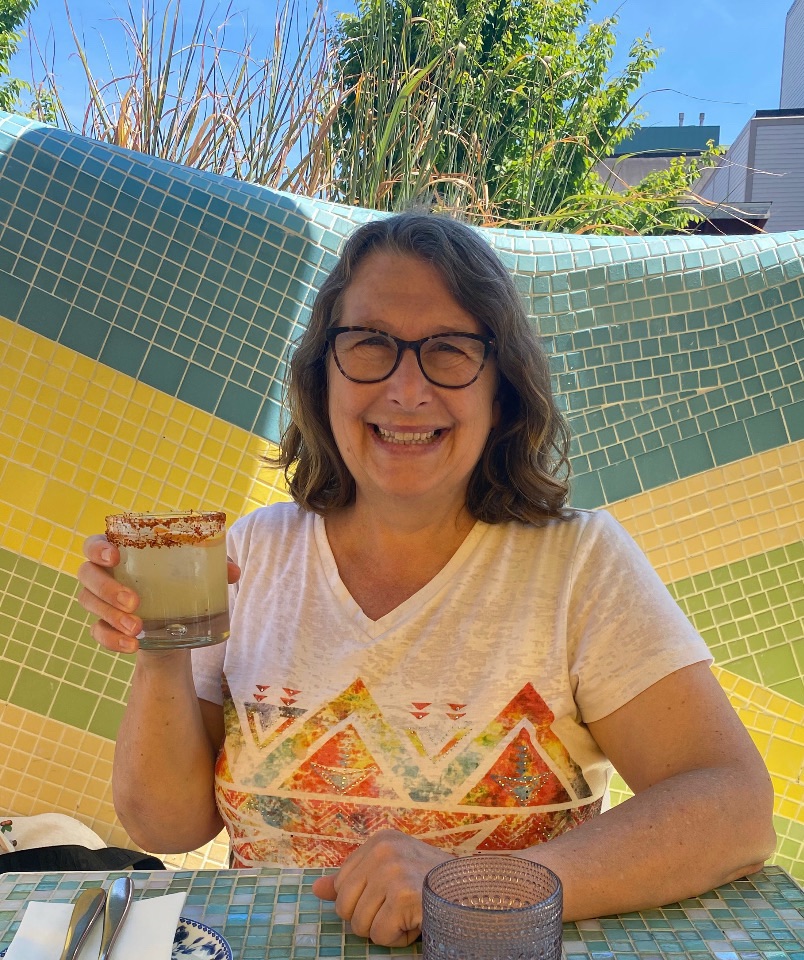
    Alison Luke is a witty, artsy intellectual who I had the great good fortune to meet in the schoolyard when our first-born darlings entered kindergarten together. A founding member of the “Coffee Mommies” collective, the setting for so many rich and sumptuous mornings of coffee and conversation, and the genesis of a great many stimulating and enduring friendships, Alison was always that triple threat friend: maker of tasty baked goods, a scintillating conversationalist and a formidable academic, well versed in a wide spectrum of subjects, always happy to engage on topics ranging from literature and art to philosophy and politics.  Her eyes shine brightest when she gets her teeth into questions of class, culture and power. 

    Perhaps the best way to describe Alison is like a character in a Woody Allen film, one of the better ones, maybe Manhattan Murder Mystery …think urban, cultured, a perfect dinner party guest.  Curious, thoughtful and ethically grounded, Alison is verbally agile, vivacious, and delightfully funny, especially when existentially alarmed.  In short, she is most excellent company and an exceptional friend to call one’s own.

    Born in Belfast, Northern Ireland, Alison’s father, a British South African engineer was in the UK doing graduate work when he met and married a small-town girl from Lincolnshire, England.  A poverty activist and social worker, Alison’s mother was instrumental in establishing the first homeless shelter for men in Fredericton, NB, calling them her ‘angels.’  Growing up in Fredericton where her father taught at the University of New Brunswick, Alison developed an early and lifelong interest in politics, excelling in debate and model parliament.  Today, she is a proud card-carrying member of the NDP, an ideologue, who votes her conscience in a well-established two-party system, and remains deeply left of center on the political spectrum when much of her cohort has crept quietly to the midlands.

    Originally planning on becoming a country doctor, but confounded by the multiple-choice format exams, Alison finished her first degree in English Literature with a drama option in theatre, and completed a PHD in Sociology in 2010, remotely from the Maritimes while raising a family. No small accomplishment. I asked her how she landed on Sociology. “Sociology is the study of society, trying to understand why we do the things we do but rooted in social structures. Marxism, Feminism, Critical Race Theory…all that comes out of Sociology.  My PhD looked at how our attitudes change over time around things like religious identities and sexual/gender identities…not as much of a political bent to it as I might have liked but at the PhD level you learn very quickly that you need to do something you can finish…and that was something I could finish,” she laughs.

    Today Alison works as Associate Research Director at the Center for Research and Integrated Care at UNB, which focuses on models of care designed to improve health care delivery. “We are working on making health care less fragmented and more integrated, so we do assessments and implement pilot projects like patient navigation or case management and then evaluate to see how it’s working. My work is all about health service delivery, and everything we do is patient oriented which means we always have patient partners or care givers or more broadly people with lived experience who sit on our research team and inform everything we do.”

    Timely work indeed.  I asked Alison if she feels her team is making any real progress within the maelstrom of the current health care crisis. “Frankly one thing that drives me nuts, working with the government who use the language of efficiency and cost-cutting, is that they always want more for less. I’m often the person in the meeting…at 58 I don’t care so much about optics now…I speak up and say maybe the answer might actually be that we need to invest more in primary care, because we don’t invest as much in primary care as say the UK.  If you’re worried about the ER overflowing with people and long wait times, and people lying in hospital beds and worried about whether they should be there, then invest more in primary care.”

    In the last few years, Alison recently took up the tuba and the euphonium or ‘little tuba’, lovingly described as “the cello of the concert band” and plays in Saint Mary’s Band as well as a lovely local ensemble called The Second Chance Band, an orchestra of enthusiastic, eclectic and quirky amateur musicians whom she affectionately likens to the “land of misfit toys.” “I have band practice three nights a week and have reclaimed a lot of joy in having music in my life again. A band is a beautiful thing.”

    Tell me your life story in seven sentences or less? 

    I grew up with a strong sense of community and a love for helping others and a strong belief that everyone should be treated with dignity and respect.  My mother was an extremely strong influence…maybe not the most nurturing person in the world, but she showed me how to be strong and passionate and to care about the world around me. My dad taught me a love of learning, to be interested and curious about the world…wanting to know about everything and I like to think I embody those qualities.  I have always been interested in debate and public speaking and politics and even theatre which I think is a way of showcasing passion. I love the whole performance aspect. I was always involved in music and theatre; it was a big part of my formative years. Later I got to travel a bit around Canada.  I think I got a pretty good education, I had two amazing children, and eventually settled in Saint John…and the rest as they say is history.

    What is the best thing about getting older?

    I think it’s not giving a fuck. I’ve heard that before, I’ve read it, but it really resonates with me. I do think there is some freedom in getting older and I don’t care so much about most things these days.  Now with that, there is the whole other thing about being a woman getting older. Invisibility, which can be freeing, is also wrapped up in all this ageism stuff. We become little old ladies and people maybe start to treat you a little differently, and that can be a bit demeaning. But overall, the freedom I think on the whole is good.

    What is the worst thing about getting older?

    It’s kind of two sides of the same coin.  I work with a lot of people who are under 40, so a lot of young people, and you do hear a lot of little jokes about the fact that maybe Alison can’t hear very well, which I can laugh about, but it is interesting to me.  Somebody at work once referred to a pair of shoes suggesting they must belong to Alison because they look like old lady shoes, so I promptly called him out.   I do find ageism very interesting.  I saw it with my mother when she became sick, people talking over her or making an assumption that she couldn’t answer for herself. And so even though I’m not yet 60, you start to see this creep in of ageism and it kind of pisses me off.  The worse part of it is imagining someday being seen as having no value at all.

    What would you title this chapter of your life?

    Autumn. The Fall is my favourite season. There is a sense of comfort and plenty in the Fall season. You’re not trying to fit into bikinis, it’s the season of comfy sweaters and layering. Back to school is my favourite time of year and it reminds me of this season of my life.

     If you could retain or retrieve one quality from your youth, what would it be?

    Sometimes I wish I was more easy-going. As we age, we maybe worry a bit more about certain things.  I wish I could just have people over and not worry so much about what my house looks like, I don’t know when that happened.  I never used to care quite so much about those things.  Maybe we become our parents a bit more as we age.  I think of us now as the accumulation of all the things we were when we were young and I don’t think those things are gone.  But as we mature, maybe we soften, and maybe some of our younger insecurities are gone now, but new worries take hold, like worrying about not being around for your kids someday.

    What’s the most important lesson you’ve learned so far?

    To focus on what’s in front of you and to live your life in the moment.  I think we spend so much time thinking about regrets or worrying about something that hasn’t happened yet, and I think it’s enough to just focus on what’s in front of you today.  And that may be a problem to solve or maybe something really awful that’s happening in the moment.  I’m not some Pollyanna saying “Don’t worry, be happy in the moment” but I’ve learned to focus on what’s right in front of me and let that be enough for now.

    Do you have a favourite quote?

    Yes, it’s a quote by Anton Chekhov.  It’s a line in the Cherry Orchard about a character being teased for being a perpetual student. It’s not a fancy quote, it’s more the idea.  “He moved through the world as a perpetual student, more interested in understanding life, than in ever mastering it.” For me it’s about having a lifelong interest in learning and staying curious.

    Do you have a favourite word?

    Melancholy. I love the word melancholy.  It’s a great sounding word.  I love it because it’s kind of that interesting place where you’re not euphoric but you’re not sad … but you’re not quite content either.  It’s this sweet place, like a Fall day, it feels kind of cloudy, or windy, maybe late in Fall, and you’re bundling up to go outside, or settling down to a good book.  I think we reflect when we’re melancholy. I think of the Romantic poets, and this idea of being in the depths of despair, like Anne Shirley in Anne of Green Gables…I guess I like getting caught up in the idea of being tragically cast sometimes.

    Describe your perfect day.

    My perfect day would be sleeping in a little bit for a start.  I don’t like to get up really early.  Working full time, I long for days when I can work from home and push the snooze till about 8 am.  After that, I would love to have a really good cup of coffee, probably two.  Then I’d like to do my New York Times puzzles. And on a perfect day with no housework or anything like that, I would want to go for a really great hike in the Fundy area with ocean views. After that, I would like to go to a pub for a nice craft beer and come home for a good dinner, listen to some music, talk politics, put the news on, maybe watch a show and I would be sure to carve out a good hour or so to read in bed, a favourite pastime.

    If you could have tea with anyone, real or fictional, dead, or alive, who would it be and what would you talk about?

    Well, if I really think about someone I’ve always wanted to sit down to tea with, it would be Karl Marx.   He believed that if people can suddenly wake up from their sleep, we can realize that our numbers mean we can change the world. Our numbers are our power and there is hope in that.  I see Marx as very hopeful, and I would just love to pick his brain. I’d love to hear his take on what’s going on now around the world. We would talk about politics, of course. I want to sit with him in some smoky old pub, drink a beer and smoke a cigarette and talk to Karl Marx about the state of the world.

    Tell me three things that bring you joy.

    Hard to narrow it down to three.  I mean there is the obvious, my children, and my children do bring me huge joy but if I was to think of just me, it would be reading.  Reading brings me great joy. Also camping in my little camper.  It was a pandemic purchase that has brought so much joy.  Our favourite place to camp and hike is Fundy National Park. We have a little heater and a functional bathroom…I love it so much, I love the Maritimes; I love everything about where we live and with the camper, we can explore it all. A third joy would be spending time with family.  My dad visits every weekend and time with family and friends means everything to me.

    Name a guilty pleasure.

    I don’t feel guilty about any pleasure.  I love wine and I love chocolate. I love to eat…I love good food… I love butter. But I try very hard to not to think of them as guilty pleasures, they’re just pleasures, they’re my pleasures. One of my favourite ways to spend an evening is to go out for a good meal or make a nice meal at home…some nibblies and wine and maybe trying a new recipe.

    Do you believe in life after death? What does it look like?

    Well, I’ve thought a lot about this one, and though I was raised going to church, I’ve never believed in the whole idea of this place called Heaven. In all of my various sociology of religion courses, I was always a big fan of the eastern traditions, like Buddhism and even Hinduism, and I’m very drawn to the idea that energy is neither created or destroyed. But also, there is a side of me as well, the existentialist, who hates the idea of living for something better after death. That sort of thinking can work to oppress people and keep people poor, ‘Oh don’t worry, at least you’ll go to heaven.’   I think people need to make the best of the life they have right now…act now, and make this life a good one.  But at the same time, I pair that with an idea that once we go, I think we’re in the trees and the birds and we may even be reincarnated.   That would be more where my thoughts might go to as a belief system, if there is anything.  My practical brain says I become good compost, and that’s also great.   I’d be eaten by worms or be food for a tree, and then become the tree or the birds. Bury me in the ground, I want a compost burial.  I hope that kind of thing is available as an option around here.

    What would you like your eulogy to say?

    I’ve thought a lot about this one as well. There is what you think you’d like people to say, what people will say, and then you’ve got the self-deprecating person who might wonder if anyone will say anything nice at all.  ‘Maybe nobody will come to my party,’ Alison laughs.  But what I’d like my eulogy to say is that I was passionate, that I cared about people, that I had a love for life and that I was compassionate.


  • The Meaning of Life

    “To stand at the edge of the sea, to sense the ebb and flow of the tides, to feel the breadth of a mist moving over a great salt marsh, to watch the flight of snowbirds that have swept up and down the surf lines of the continents for untold thousands of years.”

    Rachel Louise Carson

    I’ve been thinking about the way, when you walk
    down a crowded aisle, people pull in their legs
    to let you by. Or how strangers still say “bless you”
    when someone sneezes, a leftover
    from the Bubonic plague. “Don’t die,” we are saying.
    And sometimes, when you spill lemons
    from your grocery bag, someone else will help you
    pick them up. Mostly, we don’t want to harm each other.
    We want to be handed our cup of coffee hot,
    and to say thank you to the person handing it. To smile
    at them and for them to smile back. For the waitress
    to call us honey when she sets down the bowl of clam chowder, and for the driver in the red pick-up truck to let us pass.We have so little of each other, now. So far
    from tribe and fire. Only these brief moments of exchange.
    What if they are the true dwelling of the holy, these
    fleeting temples we make together when we say, “Here,
    have my seat,” “Go ahead—you first,” “I like your hat.

    Danusha Lameris

    150 odd days shy of turning 60, I’ll admit, a blog post titled “The Meaning of Life” seems a little ambitious, even arrogant… utter hubris really.  Shouldn’t I be a bit closer to posthumous before attempting such a feat.  Still, it’s a dark, rainy, January day as I write this, and on rainy days when the lights glow orange, and the rain patters against the windowpanes, “no one…not even the rain has such small hands” (Cummings), I find myself incapsulated in liminal space, a portal between what has been and what will be.  It feels like the clocks have stopped and the kettle is whistling shrill, and I have been gifted stolen hours to decipher secret things, adrift in a liminal sea. I have some notes… and as the house settles around me, if I’m honest, I find myself engaged in a full-on discourse with my dear, departed brother.  If that lends the following any weight, I’m glad of it…most days I think all my thoughts are his alone anyway, truly, and I, but the scribe.

    Greater minds than ours have contemplated this age-old riddle a time or two, certainly, but, of late, I’m all the time wondering about meaning, a penchant of little old ladies in waiting, especially as we begin to lose loved ones. What are we meant to be doing, do you think, with the time we have left to us?  What’s the meaning of life?

    Maybe every soul is charged with solving this particular puzzle to their own satisfaction. But standing on the shoulders of giants, Victor Frankl, a beautiful mind if ever there was one, is as near a perfect starting point as possible. Frankl wrote that our greatest task in this life is to find meaning, and maybe what meaning we find, he suggests, depends on who we are, inside, or the eye glass we peep through for a look at the world around us. It’s important work, this search for meaning, and I’m sorry to say that a great many of us are asleep at the wheel.  Kierkegaard believed that we’re all too busy focusing on the ‘minutiae of life’. We ‘tranquilize ourselves with the trivial’, he wrote.  He called these poor souls, ‘immediate men,’ men engaged in the mundane, lost in a life of endless, repetitive deck swabbing, and never looking out to sea.

    Still others among us get so weary in their search for meaning, they convince themselves that there is no meaning to be found at all.  Even wise old Uncle Bill wrote that, “Life is a tale, told by an idiot, full of sound and fury, signifying nothing.” A beautiful line, but complete blather of course.  Shakespeare isn’t alone either.  Douglas Adams’ answer to “life, the universe, and everything” is just a number, 42 to be exact. Literary critics have worked themselves into a frenzy of deconstructive contortion, mining for meaning in Adams’ enigmatic answer but, it’s just a random number. Adams is suggesting, ever so smartly, that the universe is, in fact, random, morally neutral, an accident, and that there is no actual meaning to be found at all. I confess, a much younger version of myself took some shelter here for a time, but nihilism is a lonely planet, and not the one I intend to die on.

    Adams is a fine fellow, I concede, but my brother taught me to start with the poets when looking for the truth, or at least something to be getting on with, a figurative foothold, if you will, as we hang by our fingernails, over the vast existential abyss. It’s Whitman’s lines about life’s meaning that come to me now, “Answer: That you are here, that life exists, and identity; that the powerful play goes on, and you may contribute a verse.” So, perhaps, it’s finding purpose, or a life of service or some combination of the two that makes for a meaningful life.  Picasso wraps it up pretty, “the meaning of life” he said, “is to find your gift, and its purpose is to give it away.” Bleck…sugar spike…I promise that’s as greeting card, sickly sweet derivative as I’ll get…do read on dear friends.

    Cultivating your passions, and finding purpose, are, without doubt, excellent cards to play in the boardgame of life. It’s important to find work that you love to do… daily, if only as an antidote for boredom and disenchantment…it’s like a get out of jail free card that you can play anytime, a ticket to the ferris wheel of full engagement. Of course by this calculation, a meaningful life might equate to making a lot less money, and living without many of the material comforts we hold dear in this country… a home… a car…a Sunday pot roast. Still, I’ve always found soulless work to be the greater poverty, a cost far more dear than a slender pocketbook. Finding meaning may come at a price, but it’s a fair trade I believe, just not for the faint of heart.  Maybe meaning is best mined by the brave.   Certainly such a virtue can only help. 

    It takes a bit of courage to start you on the road less travelled, but on the plus side, any quest for meaning is also, where you’ll meet your people…the ones that you’ll carry in your heart, that you’ve somehow always known, but never met before…they’re waiting for you there…on your chosen path…and such fellowship, when you find it, is like a cheat code for unlocking lasting meaning.   Thomas Merton wrote, “we do not find meaning by ourselves alone, we find it with each other.”  I’ll add to this a little venerable Vonnegut, a wise man if ever there was one, ‘the purpose of life,” he wrote, “no matter who is controlling it, is to love whoever is around to be loved’.” That certainly has the resounding sound of truth, to my ear at least.

    Fellowship, a sense of belonging or kinship, is like a keystone, the puzzle piece that opens up a blue sky horizon or the gate to a secret garden in full bloom, each piece unique, all connected, waves moving in tandem on a wild primordial sea. Albert Schweitzer wrote that “life becomes harder when we have love for others, but it also becomes richer and happier,” and, with apologies to our learned German friend, more meaningful. “The full measure of a man,” he wrote, “is not to be found in the man himself, but in the colours and textures that come alive in others because of him.”

    Above all, when I am finished with my days, wrote Schweitzer, “may those who knew me say, ‘He was so kind.’” Hell of an epitaph, that, and maybe the best and truest route to real and lasting meaning in this life, and further still perhaps. It’s the sort of thing people said about my brother, and the kind of person I’m working hard to become, as a little old lady…in waiting (some of us are slow learners).

    That old high school dropout, Einstein, told us that “although we experience ourselves as separate from each other and the universe as a whole, it’s actually a mass optical delusion, and that the delusion is a kind of prison.” Our job, he said, is to free ourselves from that prison and widen our circle of compassion to include all living creatures and the whole of nature.

    The natural world is a multifocal Mecca for encountering meaning. It’s encrypted in the birdsong, falling leaves and snowflakes like so many clues, and the perfume that hangs in the quiet wooded trails and winding coastal paths wakes us from our slumber, like an ancient wind that whispers the wisdom of our ancestors, and lets us walk alongside them awhile. John Muir, the renowned Scottish naturalist, wrote that, “the sun shines not on us, but in us,” and “the river flows not past us but through us.”  Muir believed that going into the woods is like going home. “Into the forest I go,” he wrote, “to lose my mind and find my soul.

    My brother tells me that meaning is all around us, but you can only see it if you nurture a sense of wonderment.  “We need to watch things” he says, “as though they were worth watching…and not just the fireworks, and the bonfires, and the birthday cake candles, mind, but all the little beauties…everywhere.  I mean the dog napping, and everyday early morning bird chatter, the laundry lines alight like kites on windy days, or the chorus that echoes from a stand of trees. It’s the rough decaled edge of an old leather bound book with a secret inside, or a kettle boiled, the first lick of frosting on a cake made with love, and the last; it’s a letter penned, a pillowed plumped, a perfectly paired sock drawer, or the glow of a lamp lit at dusk that envelopes a common room with a golden Rembrandt hue.  Even the remembering of such moments takes my breath,” he tells me.

    Is that it then…we need just look at everything with a sense of wonder…that’s where life’s meaning is found, I ask? “That’s always been enough for me,” he replies, a knowing familiar smile on his face, “and maybe one thing more.  You see, I think we’re meant to learn something while we’re here, and if we’re good students, well…then the lessons get a little harder.  The ultimate lesson of course is unconditional love. I mean, all the best people we know have experienced defeat, and struggle and loss, haven’t they, and they found their way back out of the dark, and with an even brighter light inside themselves; the sort of light that tends to ignite a spark in everyone they meet.  It’s a light that others can warm themselves by, isn’t it?”

    “Maybe we don’t need to search for meaning at all.  Maybe if we just watch closely enough, we catch glimmers of it here and there, as we swirl past.  Life is like that isn’t it, just a waltz around the room really.  There is nowhere to go, or be, nothing that must be done…maybe let go of all that sister, and just fall into step when you hear the music.”

  • In Conversation with Michelle Hooton

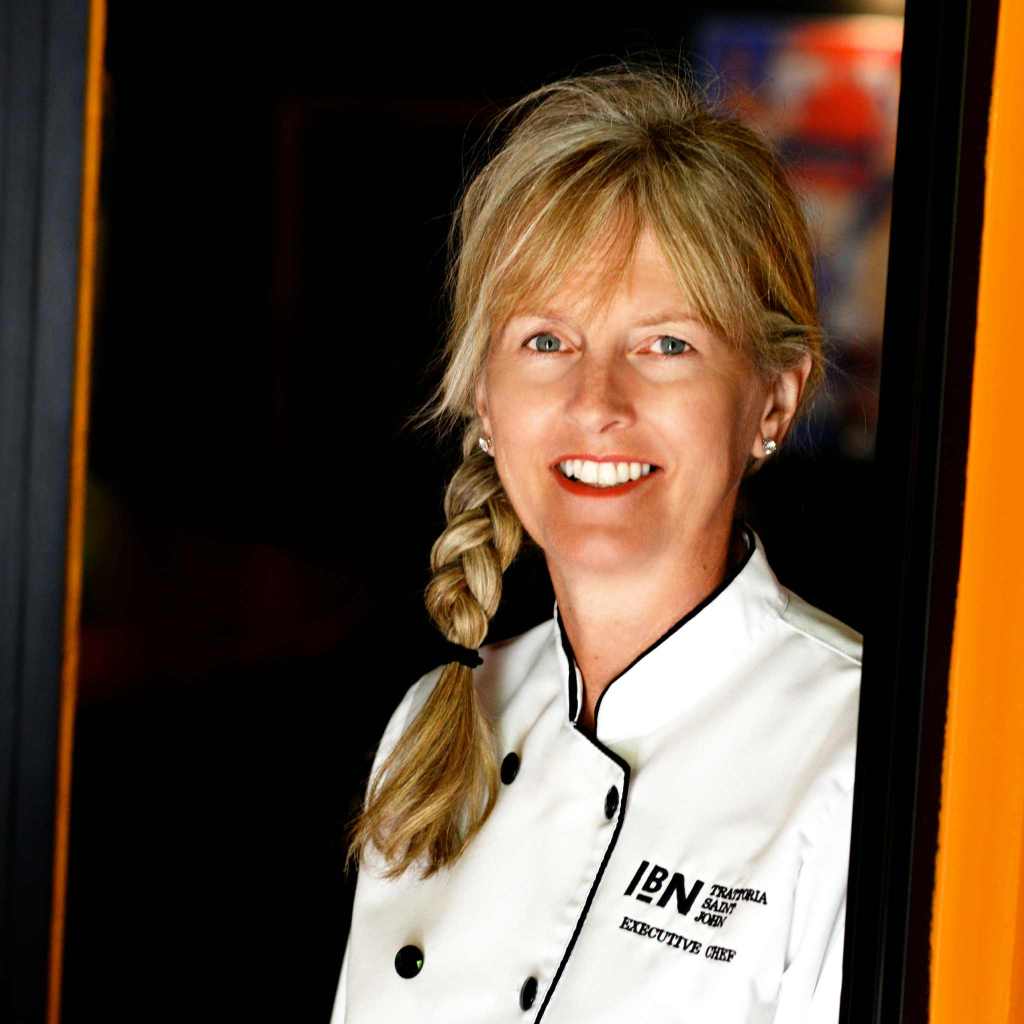
    I met Michelle Hooton a little over 20 years ago when I accepted an invitation to attend a book club evening at the home of a mutual friend.  We’ve been meeting once a month ever since with a small, stimulating, always surprising set of eclectic readers, opening our homes and our cookbooks, hosting rigorous debate, developing literary discussion points, and reciting deeply meaningful or contentious passages with the power to engage, transform and elevate. Not a bad way to spend some 200 evenings together, sharing meals, and laughter, drinking wine, and exploring a lot more than plot twists, and prose.

    You can learn a great deal about a person after perusing their bookshelves, and far more still, in the way a person approaches a book, what they find meaning in, passages they deem beautiful or poignant, what moves them to tears, what makes them angry, what words they underline to read out loud again later.

    I can tell you that Michelle Hooton is an intelligent and discerning woman, a reflective and respectful reader, less prone to deconstruction, always in earnest, mining an authors’ artwork for the gold within.  She is an immersive reader, with an ear attuned to a well-crafted story, and is often drawn to quieter books, with characters who have earned their place in the narrative, settings that transport the reader, inform, and enhance our experience, and ideally leave us with something to take away, to hold dear.

    If Michelle was a book, she would be a well-researched one. The cover design would be expertly engineered eye candy. The prose would be succinct and distilled.  There would be multiple passages where the reader could pause and rest a while in serene, inspired settings.  The heroine would be original and authentic, a self-made woman who believed in hard work, and her own powerful magic, and the ending would never disappoint.

    Michelle has the kind of confidence that comes from many years of self-reliance and trusting her inner compass. She is charismatic, a polished conversationalist, a flawless hostess, a gifted gardener, a celebrated chef, and an accomplished and award-winning entrepreneur.  An astute businesswoman, she is also a creative, and excels at designing beautiful settings and spaces where her circle of friends and family, may repose in charmingly rendered rooms that inspire and delight, while being treated to her many gifts, not the least of which, is her mastery in the kitchen.  As I sit in her highly photographable home, decked out in her curated Christmas finery, I feel a deep sense of comfort and joy. She tells me it’s her love language. It’s how she expresses her gratitude for you giving her your time.

    Michelle describes herself as a “serial entrepreneur” launching her first business venture at age 17. “Growing up I never heard the words ‘You can’t do it’…it was … ‘How are you going to do it?’ Once I realized that I could steer my own course and succeed, that was it.  I have worked for other people, but I didn’t care for it.  Whoever I worked for, I felt like I gave them my best, but I always operated like I owned the business, and when it got to the point where we were conflicting about the work …that was it…it was time to go”

    In 1982, Michelle opened Body Electric, an aerobic exercise studio in uptown Saint John.  A year later she opened Body Electric Aerobics on Broadway, in NYC, and a year after that, was listed as one of the top studios in Manhattan by the New York Times.

    In 1992, now back in Saint John, she opened The Secret Garden, specializing in fresh and dried florals shipping throughout Canada and the United States. In 1999, Michelle opened Sisters Italian Foods, a small Italian deli and imported food shop located in the City Market. She ran both businesses concurrently, until selling Sisters in 2005 after being elected Deputy Mayor for the City Saint John, serving from 2004-2008.

    Thirty-eight years and five businesses later, Michelle fulfilled a lifelong dream, opening Italian by Night in 2016 with business partners, Elizabeth Rowe and Gord Hewitt. This premier Saint John dining experience has been featured on Open Table’s ‘Most Romantic’ list for Canada for seven consecutive years, Best Italian Restaurants in Canada in 2017 and Top 100 Most Beloved Restaurants in Canada in 2022, accolades based exclusively on guest ratings.

    “My lifelong dream was to create the best Italian restaurant in Atlantic Canada. I don’t believe geography limits one’s ability to produce a world-class product. Achieving this requires intense knowledge, focus, the ability to inspire those around you to share your dream, and the passion and spirit to believe you can do it.”

    Michelle won Entrepreneur of the Year at the Saint John Chambers Outstanding Business Awards in 2024 and her immensely popular food blog Bite by Michelle enjoys a worldwide audience, surpassing 4,500,000 views. Her recipes are hearty and time honoured and easy to follow for even the most recalcitrant cook. They are, each one, small works of art…Michelle’s secret ingredient is love.

    Tell me your life story in seven sentences or less? 

    At a really young age I had experienced great joy and great tragedy. At that young age I chose joy for the rest of my life.  I somehow always had the ability to follow my true north. I trusted my gut, but sometimes my gut feeling was wrong. When I made a mistake, I was never too proud to admit it, and then fix it.  So…on my second try I married the love of my life, raised the three most spectacular women I will ever know, and have built the life of my dreams. I’ve had the great fortune to have been able to turn every passion that I ever had into a way to make a living.  And that’s really the story of my life…that’s it.

    What is the best thing about getting older?

    Clarity.  You just get to that point where you don’t need to see the world as grey anymore because you’ve had so many life experiences. I think people are kidding themselves when they don’t know the difference …when they can’t see whether its’ black or white.  I think it’s safer to live in the grey…and I don’t have any interest in that.

    What is the worst thing about getting older?

    Running out of time. I’m in an industry right now where I am two and a half times older than the national average…and you know there is just so much more to learn, and figure out, and experience and time is not on my side anymore.

    What would you title this chapter of your life?

    Grace. I want to finish this chapter of my life with grace. The life Ralph and I built together has given me a gift—this time to live gracefully and with gratitude. I feel incredibly grateful, constantly. It’s like a prayer, like saying grace before a meal—giving thanks. For me, it’s an internal conversation, a continuous acknowledgment of how grateful I am. And I hope that gratitude shows to the world in a graceful way.

    If you could retain or retrieve one quality from your youth, what would it be?

    The belief in endless possibilities.  It didn’t matter if I made the wrong decision when I was young because I had time…I could fix it …I was always gonna have time until all of a sudden I don’t.

    What’s the most important lesson you’ve learned so far?

    There is no finish line. All my life there was always that imaginary…when I get there…when I do this…when I accomplish that… Once I realized there is no finish line, I was free. Life is wide open. You just keep going. Be open to the universe and whatever else is thrown at you. Just keep going, without that nagging feeling that you’re running towards something.

    Do you have a favourite quote?

    Definitely, and it’s the mantra of my life.  I cross stitched it and framed it and it hung beside the door in my house so the kids would see it every morning on their way to school.

    Whatsover thy hand findeth to do, do it with thy might; for there is no work, nor device, nor knowledge nor wisdom, in the grave, whither thou goest.” (Ecclesiastes 9:10)

    I’ve lived that way my whole life, in the way I work, and the way I love, the way I garden, the way I cook…everything that is a part of my life… that was just the way I approached it.

    Do you have a favourite word?

    Grammy. I adore my children, and I never thought I could love like that again. But I do—it’s remarkable. Being with my grandchildren is incredible. When I hear them say “Grammy,” my body experiences a molecular shift. No other word gives me that feeling.

    Describe your perfect day.

    I’ve had this day and I hope to have many more of them. Its summertime…I’m at the farm and all of my family are home.  I’m the first one up. I put on the coffee… and start to make breakfast. One by one they slowly start waking up. We have breakfast on the verandah. We drink slow coffee while the girls use ‘all their words’ …thats an expression the girls use when they they tell me everything that’s going on in their lives. We spend the day on the boat. We have a place further upriver where we like to swim…its magical. I take a picnic with Prosecco, some beer, and all sorts of treats. We’ll stay there until 5 or 6 o’clock and then it’s back to the farm. We get supper ready. My mom and dad will join us. We’ll dine on the veranda under  candle light. We graze until 10 or 11 o’clock at night.  We finish off by the fire table.  Yawns start and we all go to bed, and it is a perfect day.

    If you could have tea with anyone, real or fictional, dead, or alive, who would it be and what would you talk about?

    So, I took some political license here.  If I could do that, I would come back many decades from now and have tea with my elderly grandchildren and we would talk about their lives, and all the things I’ll miss.

    Tell me three things that bring you joy.

    The people I love.  Creating beauty.  And anticipating…anticipating Christmas, anticipating family coming home…anticipating what we’re going to do next… I love it.

    Name a guilty pleasure.

    Dairy Queen. The first time that I ever tasted it, it was like a taste explosion…I couldn’t believe something could taste that good. and I’ve never lost that love of it. You could put the most fabulous European dessert on the table and a peanut buster parfait, and I guarantee you I’m gonna take the peanut buster parfait every time. It’s a special little treat and I usually have it alone.

    Do you believe in life after death? What does it look like?

    I guess it depends on how you characterize life. I believe that we have an inextinguishable life force and I believe that life force carries on after our physical bodies expire.  I’d like to think that my life force will find its way into future generations of my family.

    What would you like your eulogy to say?

    Life was not a dress rehearsal for her.  She lived her life like it was the opening night of the greatest performance she had the honour of playing.

  • A Curated Life

    “If you want a golden rule that will fit everything, this is it: Have nothing in your house that you do not know to be useful or believe to be beautiful.” – William Morris

    “Those who commit to nothing are distracted by everything.” – Bhagavad Gita

    I’m twelve weeks into a “down to the studs” reno of my basement. We are getting there…almost ready for paint and wallpaper …yes…that’s right…I said wallpaper. I happen to like wallpaper…just not the 50 year old striped job that lined the stairwell leading from my kitchen to the lower level of our home. I’ve hated that patterned stairwell since we moved into the house almost fifteen years ago. That’s a long time to abide an abhorent passage in your home. So…ankle deep into quasi-retirement, and my baby moving out to a beautiful space of her own; it’s got me thinking about embracing a less lackadaisical, more curated life. I refer here not only to my immediate setting, and decor choices in my home, but also to a more bespoke aproach to everything I allow entry into my mental and physical space. How we spend our time and who we choose to spend it with are weighty considerations indeed, particularly as the sands of time accelerate through the LOLIW hourglass.

    I am a woman who has always known what she loves. I’m never at a loss for how to spend my time. My baseline is reading in bed, followed closely by reading upright in well lit rooms, rooms with doors to discourage the detritus of day to day discourse. Toss in a daily walk, a few writing hours, and few games of pickleball (a smattering …mind), and maybe a sprinkling of meaningful communication with friends and family and you have the basic components of my perfectly appointed life.

    It won’t surprise you to learn that with respect to decor I like to sit in spaces that smell and feel like 19th century reading rooms. Jane Austen meets functional, animal-friendly, old-world elegance and comfort, with Rembrandt lighting in the shade of expensive cognac and furniture made to last let us say, longer than me. I like plain lines…nothing busy…smalls piles of books in every conceivable nook, and walls overfilled with art that makes me think and feel.

    Approaching 60 it seems long past time to take charge of my decor and embrace a more curated lifestyle. With more time at home to play and ponder and be, its important to invest in our space and make it conform to our notion of how to live well. Out with the acquired furniture that found its way into every corner of the basement (granny’s telephone table, the uni trunks, the side tables the dogs used as chew toys, the wedding art, the chairs I reupholstered one time too many…gone). What would your space look like if you started from scratch… what gets to stay, what gets dumpstered in the night?

    To curate is to carefully gather sift, choose and organize so that everything is handpicked, assembled, and edited by you. This might mean the dedication of an old bedroom to a fly tying workshop or a yoga studio or a writing room. The downstairs grand room might be reworked as a cozy british bar, or a working library, or a music or pottery studio. Adult spaces like day nap chaise-lounges in light colours might be positioned near full window walls for stargazing with telescopes or simply to watch the dancing autumnal leaves or the spring rains pelting your garden seedlings to life, or the magical snow that falls on Christmas eve.

    Of course lighting is everything… my mother taught me that. She liked rose tinted bulbs for evening ambiance, strong enough to read by in the after dinner hours but not so bright you can see the skin wrinkles on your LOL hands as you turn the pages…its a delicate balance ladies. A comfortable seat by the fire built for you and yours is essential for the long Canadian winters, perhaps a dartboard, a drinks cabinet… you get the idea. It’s time to focus less on containment of mess and sticky fingered childrearing chaos, and more on zones of comfort and joy for the soft bellied adults who remain. Don’t forget a posh pillow for the geriatric dog.

    Take your time visioning how to create yout LOL space.. explore your options…think about what you want your home to provide now, and build it from the inside out. There are no design rules that can’t be broken except one, namely, abandoning your own ideas on beauty and functionality. This is your home we’re speaking of, you have only yourself to please so if you want to string eddison lights from the rafters, share space with too many plants or cats or books, create an industial feel by painting the piping black or steel coloured… do it. If you want to showcase some macabre collection of antique surgical instuments or early century pharmaceutical elixirs (weirdo), now is the time to make your space into a reflecting pool for all your darlings. An invitation to your home should always feel like an invitation to you.

    Outside your home it’s equally important to curate the spaces you decide to inhabit. In rertirement if you don’t decide how you’ll spend your time, others, well meaning friends and colleagues, will ensnare you in their version of a life well lived. The siren call of casual work, the escalating addictive properties of pickleball, best resticted to promote injury preention, the silent scream of the sour dough starter and its incessant demand to be fed. That little white bread baby isnt the boss of me.

    A few years ago I read a little book called “The Subtle Art of Not Giving a Fuck” which espoused a pretty basic but essential philosophy with respect to time management and boundaries. Summarily, the author suggests that in an age where we are inundated with information and competing demands on our attention, and very often incompacitated by overstimulation and endless options, its important to decide to live deliberately and in accordance with a few key individual values and interests and spend our time and ultimately, our lives, accordingly. The book advises adopting a maximum of 5 things to give a fuck about. Thats not a lot if family and healthy living are 1 and 2. If reading, writing and pickle ball are my 3,4,5 then maybe maybe pottery and painting, knitting and felting, are curated out of my daily living line up…at least this year. Every LOLIW must choose how best to spend their time. Maybe you’ll make your garden and greenhouse your second home from May to September, perhaps you’ll join a rug hooking guild or a choir or an arts collective during the long winter months. Let your interests drive your pursuits and don’t be cajoled, or convinced to spend your time in settings that don’t meet your individual criteria for comfort and joy.

    A quick comment on mental space. I live so much of my life in my mind it’s important for me to dine on a steady diet of images and words that resonate with meaning. I hold space for vetted novels and films and converations with new and old friends who know secret things. Stories and stimuli that bring comfort and joy and occasionally cast out to higher things. While I have just as much of an unseemly fascination with Ed Gein and his skin suit pursuits and niche decorating vibe, I’m not sure I need to absorb the 8 episode narritive of the man who was the inspiration for Psycho, The Chain Saw Massacre and Buffal Bill. I mean I guess he didnt eat anyone …so thats good…right? My point is that curating that series out of my mental space and protecting my inner sanctum and sleep hygiene is probably for the best. I don’t need a visit from Gein in my dreams at night. But if real crime horror is your LOL jam, maybe Ed Gein gets a pass.

    You are the gatekeeper of your mental and physical space. Guard your boundaries, with knitting needles if need be. Allow entry only to what you decide to give a fuck about. Design a space and a life dedicated to your passions… an art room…a dream kitchen…a library…a pocast studio… a music room. It’s waiting for you beneath the debris of a lifetime of collecting the residue of other people’s idea of how to live well. So if you’ve been neglecting your mental and physical space like I have, begin an inventory of everything that you find beauty and comfort in, then drag the rest to the curb and begin again, consulting no one but your own inner curator. I believe you’ll find her taste is unerring.

  • In Conversation with Dr. Margaret Anne Smith

    I sat down with Margaret Anne Smith at a local coffee house with a reputation for good lattes and a spectrum of social justice projects that support many marginalized members of our community.  It seemed a fitting setting for a conversation with a woman who is, among other things, an advocate for the disenfranchised, sitting on the board of a harm reduction enterprise that supports people living with addiction.  Margaret Anne Smith holds a PhD in English Literature, specializing in 20th Century poetry, and has taught her entire career in the post-secondary setting.  She is an academic, a teacher, a poet, and a fiber artist.  She is married, a mother of two, and has the sort of old-world integrity and essential goodness that makes you believe that we are not without hope, no matter what unbelievable chicanery we witness daily on the evening news.  As I listened to her speak, I couldn’t help thinking of the power of a single individual to effect great change in the world around her, especially one armed with a sharp analytical mind trained to notice what others do not see, and gifted with a clear, insightful voice to ask the right questions.  She is currently at work on a book of poetry that celebrates local coastal beauty and lure.  It is a collection I very much look forward to reading someday.

    Tell me your life story in seven sentences or less? 

    I grew up in Saint John and…same sentence… moved back here on purpose, after spending a dozen years away.  I love my extended family and friends. I have been married to David for 36 very good years. We have two great kids. I live near the Bay of Fundy. I am a teacher. I am a reader and a writer.

    What is the best thing about getting older?

    Learning…I was going to say discovering, but it’s not like a momentary discovery, there is no switch that flips, there’s no ‘aha moment’… it’s a gradual process of learning what I care about. And the other side of it, is learning what I don’t give a fuck about, and that list has changed with time.

    What is the worst thing about getting older?

    Joint pain and not being able to see as well as I want to in my 50s. That’s the part that surprised me, the pain came so much earlier than I anticipated.  I’m on the cataract waiting list which depresses me, but I look forward to losing the heavy progressive lenses.

    If you could retain or retrieve one quality from your youth, what would it be?

    My knees and my feet to be honest.  It’s not my optimism…it’s not my hope, it’s not my energy level I’m worried about losing …it’s my joints. I had envisioned at this age, those walking trips in Europe, but there’s no chance.  I couldn’t physically do it… it’s my knees. I want to be able to hike for ten kilometers and I just can’t.

    What’s the most important lesson you’ve learned so far?

    I think it’s probably learning the difference between spending your energy on things you cannot change and spending your energy on things you can.  And that exists on several levels   So there are things that maybe I cannot change about myself,… my feet hurt, I can’t take a walking trip across Ireland. Ok…goodbye to that idea, and now what can I do instead? Because I think spending your energy on things you can’t change makes you bitter, and we don’t want to be bitter little old ladies in waiting… because it would be easy, wouldn’t it?

    So that’s personal, so now let’s take it to the next level to the people in my circle.  There are certain things I can’t change, and you can invest in those relationships but there are some things you just absolutely cannot change.  I like Glennon Doyle’s Podcast?  It’s called “We Can Do Hard Things”.  It’s American and its funny as hell, and they interview  a lot of interesting people and one of the great episodes is about  how to fortify yourself for the holiday season in terms of dealing with your family and expectations.  A great piece of advice he gives is ‘Be not surprised’ because you know Uncle Bob is going to go down the same road he took last year, so don’t be outraged and horrified by it, just adopt an attitude of ‘yeah, whatever, I still love you,’ when people behave in ways they have always behaved, ‘be not surprised.’

    Jewel has a song I really like from 1998, I’m dating myself here, it’s called Life Uncommon. She says ‘no longer lend your strength to that which you wish to be free from.”  It’s about using your voice and that  speaks to me now…where do you use your energy… where do you use your voice.

    The other part of that question is what you do about the global piece and that is much more difficult right now.  I try to be selective and pick the bite-sized things that I can do.  I joined the Board of Avenue B that operates on a harm reduction model.  I have no lived experience with addiction myself, or in my circle, but I thought I can be on the board.  I’m good at policy and procedure…and I try to make choices with some integrity. I don’t live in a tent, I’m not a drug user, but l am devastated by the inhumanity that’s everywhere in our cities and small towns now and how people are being treated so badly and left out.  We talked about water fountains at the meeting last night.  If you were thirsty and unhoused…where do you go?   

    Do you have a favourite quote?

    Yes, it’s a quote by Vaclav Havel.  I like it because he distinguishes between hope and optimism. It’s a quote from his time in prison.  His language is beautiful of course, but for me the beauty is that he isn’t saying, it will all be fine…because so often it is not fine. He takes hope from being a big cartoony rainbow thing and makes it real.

    “The kind of hope I often think about (especially in situations that are particularly hopeless, such as prison) I understand above all as a state of mind, not a state of the world. Either we have hope within us, or we don’t; it is a dimension of the soul; it’s not essentially dependent on some observation of the world or estimate of the situation. Hope is not prognostication. It is an orientation of the spirit, an orientation of the heart; it transcends the world that is immediately experienced, and is anchored somewhere beyond its horizons.

    Hope, in this deep and powerful sense, is not the same as joy that things are going well, or willingness to invest in enterprises that are obviously headed for early success, but, rather, an ability to work for something because it is good, not just because it stands a chance to succeed. The more unpropitious the situation in which we demonstrate hope, the deeper that hope is. Hope is not the same thing as optimism. It is not the conviction that something will turn out well, but the certainty that something makes sense, regardless of how it turns out. In short, I think that the deepest and most important form of hope, the only one that can keep us above water and urge us to good works, and the only true source of the breathtaking dimension of the human spirit and its efforts, is something we get, as it were, from “elsewhere.” It is also this hope, above all, which gives us the strength to live and continually to try new things, even in conditions that seem as hopeless as ours do, here and now.”

    Do you have a favourite word?

    Sea…as in the ocean. The word sea represents all kinds of things metaphorically but for me it is both a personal, and local place of refuge…it always has been …since I was old enough to ride my bike off the cliff, which I did by the way…I was a free-range kid in West Saint john.  I might edit that out for my mother.

    There is something timeless about the sea… I love the rhythm, I love the sound.  It’s also a metaphor for connection, wrapping around the globe, and it’s a measuring stick for what we are doing to the planet which is a big concern for me.  I think because we can see the trees being cut down and we can see the trees on fire on tv, it’s a little harder to ignore, but we could go to Bayshore this morning and think all is well…and it’s not.  We need to pay a bit more attention… we need to pay a lot more attention. 

    Describe your perfect day.

    Sunshine. Great coffee. The ocean.  My husband and my kids and their partners and nothing planned. 

    If you could have tea with anyone, real or fictional, dead, or alive, who would it be and what would you talk about?

    Given the state of the world, I want to sit down with Greta Thunberg.  Three reasons.  She is young and we need to listen to the younger voices, about everything. I mean look at where the power is…still in the hands of old rich white guys and that has to change.  Secondly, she is willing to make incredible sacrifices for the future. I’m interested in asking her, why, what do you see, what do you envision, what are you giving up and what are you giving it up for?  Three would be the climate crisis, it’s going to cook us and were pretending it’s not.  I want to talk about that.

    Tell me three things that bring you joy.

    Real conversations.  Real, not honest, because even honest conversations have a few lies in them.

    David, Kevin, and Maureen …from the beginning all the way to this morning.  So much joy in that little family of mine.

    Time outdoors.  Some of it goes back to the free-range childhood.  Total freedom.  It might have been an illusion, or it might have been quite real, that no one was paying any attention to us kids.   We were free, and time outdoors reminds me of my freedom.  Also, as an artist I appreciate the changing light and the shadows cast by the sun and the changing colours of the season.  My shoulders lower when I step out the door.

    Name a guilty pleasure.

    Ice cream. Too much fat, too much sugar but it hasn’t made me give it up.  It’s a favourite treat.

    Do you believe in life after death? What does it look like?

    I do believe in life after death, but I don’t know what it looks like.  And I don’t even have an assumed visual. I think when I was young, I did have an idea that was based on a religious tradition…heavenly gates…clouds. So now I think there is so much beauty and goodness, despite the horrors, and I don’t think those things can just come to an end.  There has to be something else.  My sense of what that is has changed, because I think there is something else for the right whale as well, and for the pigeon on the roof… that we’re all part of this interconnectedness that we can’t really, fully appreciate now and maybe our great joy in the afterlife is coming to understand what that interconnectedness means.   

    What would you like your eulogy to say?

    I boiled it down to two things. First, I want my children to write it, and I trust them. Second, and how’s this for a mothers’ control, I hope they would say that they saw that I remained engaged until the end of my days.  I don’t like the word engaged… maybe passionate, passionate is better, engaged is so psycho-ed, or maybe that I cared, but that’s too Hallmark.  Passionate works, and passionate about what doesn’t really matter…maybe when I’m 80 I’ll be passionate about my pansy collection.