Tag: mental-health

  • Solvitur Ambulando…It Is Solved by Walking

    “Walking, I am listening to a deeper way. Suddenly all my ancestors are behind me. Be still, they say. Watch and listen. You are the result of the love of thousands.” – Linda Hogan (Native American writer )

    “‘But it isn’t easy ‘ said Pooh. ‘Poetry and hums arent things which you get, they’re things that get you. And all you can do is go where they can find you.’”- A.A. Milne

    If I’ve ever invited you on a walk then there is a fair chance you’re someone I love very much…family, and a handful of friends I keep close, like “a cloak, to mind (my) life.”(O’Donahue) I don’t walk, as our ancestors once did, to arrive at a particular destination, nor can I honestly say that I walk to safeguard my health, although, as a nurse, I know it to be powerful medicine, and an essential practice in the Little old lady in waiting’s handbook on how best to live a long and healthy life.  For me, walking is a sacred sojourn, like writing in a journal, or sitting down for a cup of tea on a busy day to savour a last bit of cake; it is a solitary ritual, a reflective exercise, a rich, sensual, fortifying experience, that grounds me in the present moment, and reveals a deeper way of looking, illuminating a world just beyond what our sedentary eyes can capture. Walking is a portal to the natural world where time may stand still, where we may even disappear for a while, as our unconscious unfurls, and insights and creative leaps lay waiting on well-trod paths like so many flowers to be gathered, an endless bouquet of ideas and dreams waiting to be revealed and rehomed.

    I have always believed a regular walking regime to be a salve for most of life’s ailments.  All those feel-good neurotransmitters dormant and eager for activation. I won’t bore you with the overly marketed health benefits…well, maybe just a quick review. Just as the doctors have always preached, walking, even a little, can significantly increase your lifespan, and reduce your biological age (marginally more appealing to the chronologically disadvantaged).  Walking also lowers your risk of cardiovascular disease, diabetes, and depression.  If that’s not enough to persuade you, there is also statistically significant evidence that walking lowers your stress level and reduces rumination and negative thinking.  Wait… I mean I’m down with the stress management, but I’m kind of trauma bonded with the rumination and negative thinking, that’s half my material.  Whatever…you get the idea…the health zealots are spot on, walking is good for you, body, and mind…but when has that ever been sufficient incentive to lace up, or drop the fork, if you see what I mean…again with the negative thinking and rumination. Let’s try again. Little old lady in waiting to little old lady in waiting, post-menopausal women who walk 4 hours a week have a 41% lower risk of hip fracture.  I like that. That’s positive…right?  I’m not sure where they get these exact numbers but I found it on my socials so it must be true. 

    Health considerations aside, here is what I know about walking from my own clinical trials, population of one.  No matter the setting for my walk: be it the sleepy, maturely tree’d, largely childless suburb that I call home, or any of the woodland parks scattered liberally in our beautiful picture province, or possibly the sea paths that wind along the miles of coastland in our stunning port city, nestled on the Bay of Fundy, or even a streetscape in the heritage block of Canada’s oldest incorporated city; a walk out of doors is a way through the wardrobe to a bountiful sensual world, where a steady stream of eye candy and auditory enchantments remind us to embrace the wild animal within, an invitation to howl for all the little old ladies in waiting, sat at home disguised  in grandma’s clothes, both figuratively, and literally some days.  We are meant to move our bodies, we our built to explore on foot, our ancestors walking ten times the distances we typically cover today. 

    Outside, in the natural world I am routinely transported by the startling beauty of the Disneyesque birds that sing in choirs on my quiet street, their sweet sad tunes in perfect pitch; or the spiral dance of autumnal leaves twirling upward as though commanded by the invisible hand of some ancient sorceress, reciting a spell to safeguard the woodland wildlife from winter on its way.  I hope she remembers to include me and mine in her magic. The animals nearby have a narrative all their own as they go about their daily errands and I nod to them when we meet: the black-sheep squirrel who lives in the tree at the front of my house, alone and happy to be so, or the family of deer who eat from my neighbours unpicked apple tree, heavy with fruit. I met, by chance, a beautiful fox not long ago, but neither of us had time to stop.

    Near the sea, I always envision I am walking with my dead relatives and even imagine I can hear their whispers in the wind and on the waves.  Walking in the woods, the air is perfumed with spruce and pine and something more elusive that smells like childhood and brings me back to a more innocent age, when the scariest monster I could imagine lived under my bed, not some beast who throws Gatsby themed balls, an evil, self-proclaimed king whose every soundbite is some variation of “let them eat cake.”  In the woods, while I’m walking at least, the king is dead…long live all the wild beings who walk this beautiful planet in peace.

    Saunter, stroll, scuttle, scale or stride,  I walk faithfully, alone, into the halcyon summer breeze of fresh cut grass and full strength sunny days, or the warm spring rain that bursts gardens into bloom, or my favourite, the crisp autumnal harvest days scented with chimney smoke and alight with golden interior tapestries of life, the window frames of  our neighbours homes in the gloaming, or out into the first snowfall of winter, a crampon crawl up and down frozen streets,  footfalls in virgin snow where I spy the tracks of smaller species, freshly awoken from a winter’s sleep.  Garlanded in cap and scarf, mittened, earmuffed, and balaclava’d, I’m adrift, a snowman flying through the air…la la la la la laaaaa.

    Outside, enveloped by ancient all-knowing trees, or surrounded by heritage architecture older than three little old ladies in waiting counted together, or stood at the thin space adjacent to the sea, there is a clarity of mind to be discovered that cannot be found in a book, or sat safely by the fireside, nor even under the tutelage of a wise seer.  There is a reverie known to the solitary walker (Rousseau), an enlightenment, an illumination, a flow of insights around every corner we turn. One foot in front of the other, there is space to think and puzzle and solve all the vexations visited upon us. Walking costs us nothing but time, no special gear required, only the capacity to listen to the resounding truth of our own intuition, a voice inside that speaks louder in silence, in the quiet found out of doors.

    A walkers’ trail is alive with imagery that invokes tangential lines of poetry and philosophical enquiry.  There is a hum when we walk…a higher frequency, a quiver of ideas and creative sparks. “What will you do with your one wild and precious life?” (Oliver) “I have measured out my life in coffee spoons.” (Elliot) And if while walking we by chance fall awake for a moment, to know this life is only a dream, how do we stay awake long enough to remember we are dreaming? (Wittgenstein). Walking is a whirlwind dance of ideas, a flow, an unconscious current in a deep primordial sea. And the story we rehearse inside ourselves, making up the parts we can’t quite recall, is a conversation I am happy to host most every day.

    I like to walk at a slower pace now, not quite the crawl my geriatric dog prefers, stopping to sniff every few feet, but I’m more interested in exercise for my mind and the quieting or distilling of my thoughts, than I am in exercising my body or protecting my cardiovascular health or even promoting longevity…still, perhaps aging backwards is something to aspire to.

    For me walking is a meditation, “with every step, I arrive.” (Thich Nhat Hahn) I practice slowing down, I come awake and allow time to stretch out before me, like clotheslines where birds gossip with their friends and freshly laundered linens flap their wings.  I see winter bared branches with captured notes and receipts, escaped from recycled bins, adrift in the wind like so many clues. I listen to the sound of my own footsteps and then deeper still to my breath, and my own heartbeat, and the hum that hangs over everything, the sound of the universe, I suspect, like an hourglass set close to a microphone recording the ever-escaping sands of time.

    I have found many treasures on my walks: old coins and worry stones, sea glass and driftwood art, lost letters and grocery lists, emblems of lives lived next to our own, and reminders that we are, none of us, alone.   I have heard the voices of lost loved ones and remembered the thoughts and images of versions of myself long since lost with them.  Walking I have found the answers to problems, big and small, I’ve found perspective, and gratitude, an abiding peace, and a strong feeling of connection with something greater than myself, something capable of conjuring the unspeakable beauty that is all around us, best viewed by foot, moving at your own pace, walking alone, in the natural world.

  • In Conversation with Jan Lucy

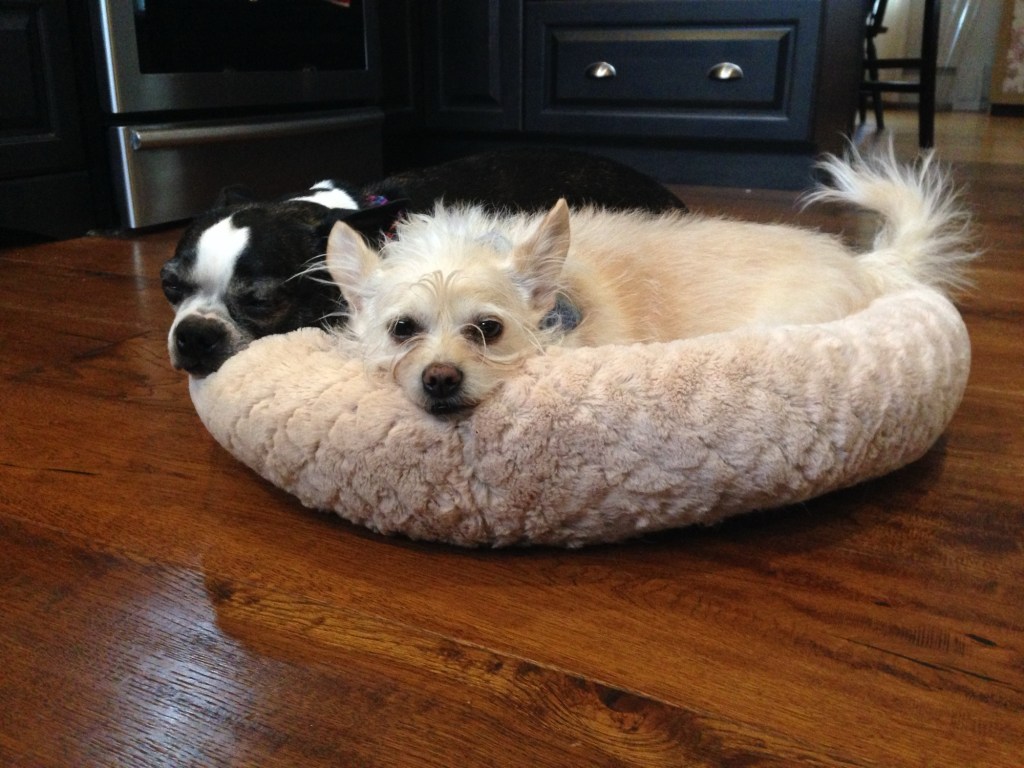
    I wasn’t looking for a new friend when I met this captivating woman.  She was waiting for me in what we now refer to as the ‘therapy pool,’ the LOLIW early morning aquacise class at the local YMCA.  A large part of me believes she was sent to me by someone who now ‘walks invisible.’ Jan’s scientific rationalist core would smile at the notion, but there are days when I believe I have her half convinced in the power of a good God Box.  Exquisitely kind, intelligent, politically progressive, community minded, and sea-loving, Jan moved to Saint John from Ontario with her husband, Don, three years ago to be close to the water in retirement. 

    Graduating with a degree in English from the University of Guelph, a proud Guelph ‘Griffin’, excelling in competitive swimming, Jan lived and worked for much of her career as a campus administrator at a satellite campus of Nipissing University in a small Ontario town called Bracebridge, cottage country for the rich and famous including such stars as Stephen Spielberg, Goldie Hawn and Martin Short.  ‘I bumped into Kurt Russell at a bar once,’ she laughs. 

    Born in Picton, Ontario, her early childhood was spent in Germany as her father was a meteorologist seconded to the military. She grew up in Ottawa and met her husband by putting an ad in the Toronto Star classifieds. ‘Where are all the Alan Aldas in the world?’ she wrote.  ‘He was a feminist, he was a humorist, and he was political,’ she explains. She received 44 responses. ‘Don was in my ‘no’ pile,’ she laughs.  ‘It was my girlfriend who pulled out Don’s letter and said, ‘What’s wrong with this guy?‘  So, I wrote to him, and he wrote back and the rest, as they say, is history.’

    After a series of unsuccessful pregnancies and adoption attempts, Jan eventually privately adopted her first child, Vincent, from Brazil.  ‘It was my labour,’ she remembers, describing the painful journey that eventually led to the great joy of bringing home their first son.  ‘When he was 4, I knew I really wanted another child and so it was back to Children’s Aid to begin again. This time it was different. Now we were considered a ‘black family,’ and so it was more a case of how many do you want?  We went to the front of the line and through a progressive adoption process we eventually welcomed our second son, Omar.  I was 39 by the time he arrived, and he was like a kitten climbing the drapes.’

    Since arriving in Saint John three years ago, Jan, socially dexterous, with charming old-world manners, and an earnest desire to connect and give back, has worked with new Canadians helping them navigate and acclimate, she has become an active member of the Saint John Naturalist Society, engaging in  ‘citizen science’. and data collection, and is a member of the Lift Community Choir, singing and supporting local causes. Most days she can be found hiking or bird watching in our beautiful province in the company of her husband, Don, and her LOL dog, Siskin.

    Tell me your life story in seven sentences or less? 

    I grew up the youngest of 3 children in a loving home. I lost my father at aged 14, when he died in a British-European plane crash…no survivors.  I went to the University of Guelph and received a degree in English where I was also a Guelph Griffin, a synchronized swimmer.  I have been married to my husband Don for 38 years, after meeting him through the Toronto Star’s Companions Wanted section. I have 4 children, two stepdaughters and two adopted boys…I like to say they were all born in my heart.  I worked for 20 years as a campus administrator for Nipissing University’s Muskoka campus where I had the best students and faculty to grow along with.  I moved to Saint John three years ago at the age of 64, buying my house online, not knowing what would come next or who I would meet.

    What is the best thing about getting older?

    The best thing…is that I’ve had the opportunity to get older.  So many people don’t. Whether it’s disease or accidents or suicide…and I think maybe it’s because of Vincent (son) being ill… and family member struggles with mental health…this idea that it could end for any of us.  So just to make it this far has been great…I hope I still have many more years, but you don’t know.

    What is the worst thing about getting older?

    Feeling like I’m running out of time…and again maybe it’s because my dad died so suddenly…he was only 46, that I worry about my life being taken away from me before I’m finished doing the things I want to do.  I’ve always been a big list maker and I like to accomplish many things in a day. What’s that old expression, “I want to arrive at the graveside all dishevelled, skid in and say, ‘Wow, what a ride!’ I don’t want to sit in a lazy boy…that’s not my thing.

    If you could retain or retrieve one quality from your youth, what would it be?

    Being more playful, I think.  I grew up with this ‘What will the neighbours think?’ mentality.  So not worrying so much about what’s expected, not worrying if your socks match.  I almost didn’t give my husband a second date because he didn’t put his cutlery together on his plate.  Or when someone is coming over…are there dust balls?  I was more playful as a younger woman.  We stayed outside and played until the streetlights went out.  So, I find if I’m given an opportunity now, I try to be more spontaneous, less wary.

    What’s the most important lesson you’ve learned so far?

    I don’t know who said it to me about your impact on your environment or on the world…that a single drop of water can overflow a cistern or a well… so not to underestimate what your small gesture or your small action can do, positively. So, I try to lift others up…I need to listen more…I know that…but by listening… if others want my advice, to try and provide what is needed. I also know I need that too. So…we all struggle in life, and I guess that’s why I love the pool so much…and why we call it the ‘therapy pool.’ It’s sharing those struggles that helps us remain optimistic and hopeful. And celebrating the high notes too, like when your son asks to speak to your friend on the phone, because he knows she is important to you.

    Do you have a favourite quote?

    “Don’t tell me not to worry, the things I worry about never happen.” (Unknown author). The other thing that my mother used to say all the time that kind of ties in to that is…’this too shall pass.’  And the whole idea that anxiety happens in the past or in the future but not when you are truly here, in the present.

    Do you have a favourite word?

    I do. It’s a made-up word, it’s ‘snigg.” So my mom and my grandmom were very progressive with their use of technology…I think they were probably emailing before I was.  My mom meant to type, after a very sentimental message, the word ‘sniff’…like after a sad story, ‘sniff’.  But typed ‘snigg’ instead.  So we’ve all taken on this accidental word whenever we come across anything sentimental or that touches our heart, we’ll always write ‘snigg,’  And what’s kind of cool is that my son does it now too, so it’s a three generational thing now.

    Describe your perfect day.

    This one was a little more challenging for me, but it has to do with water…being near water, being on it, being in it…that’s where the day starts…with water.  And then learning, I’d like to learn something and whether that’s something I’ve read, something I’ve researched, gone to a lecture or a play, but something that I’ve learned.  And lastly sharing thoughts and time with friends. 

    If you could have tea with anyone, real or fictional, dead, or alive, who would it be and what would you talk about?

    So… I thought about this one and I think it would be my mom’s mom, my grandmother. She was born in 1894. I just thought she was amazing.  She was an equal partner in her marriage to my grandfather who was Professor Emeritus of Botany at the University of Alberta.  She always felt it was important to be an intellectual equal with him and provide him with companionship.  She was pretty educated for her era as well.  She attended Alma College, a liberal arts college, but she also helped my grandfather type and illustrate his work for his PhD. And she raised two amazing, strong women, my aunt and my mother.  One of the stories that sort of exemplifies her is that on her 100th birthday there was a big reunion of family and she remembered everyone’s name, what they did, what their partners did, and asked wonderful questions.  Also, that same year, she was in a nursing home at that time, and she played the Virgin Mary and was on the front page of the Victoria paper wearing her blue scarf and holding a live baby, a little brown baby.  Before she died, there was a picture of her in the pageant by her bed, and her last words to my mother were, ‘I like to look at that picture and imagine I’m holding baby Vincent.’ Snigg.

    Another story is that when she first learned that I was moving in with Don, my grandmother’s response was, ‘Does she have a prenup?’ And then, I have a gay older brother, and it was just at the peak of the AIDS epidemic when he came out and he didn’t know how she would respond, and he went to her apartment and said, ‘am I allowed to come in?’ and she just reached out her arms to him.  So, I would like to have a discussion with her around how she became so wise, beyond her years, when there was homophobia, there was racism, and women were subservient in society…what drew her to be more? What was her thought process?

    Tell me three things that bring you joy.

    Taking some risk..like joining a choir…I mean, not bungee jumping, but I guess maybe moving to New Brunswick. I think sometimes life can be too comfortable. Do you know the story about the lobster?  The whole thing about how a lobster grows…how it has to shed its shell because it’s getting too tight, and becomes very vulnerable because it doesn’t have its hard exoskeleton. It could be dashed against the rocks…but to grow it  has to shed its shell. I always loved that story.

    The other is obviously learning new things. I never thought I would be a bird watcher until I moved here.  I love the fact that we are so multicultural here too because where I used to live it was very white…boring…one dimensional.

    And then helping others…which is a big part of my experience in Africa. It started with my sister probably fifteen years ago or more when she went on her dream vacation to Tanzania, and she met a young safari guide who had dreams of owning his own safari vehicle. She befriended him and helped with a website and referring some clients and creating itineraries for guests.  The guide’s wife was a schoolteacher, but she donated her salary back to their community.  They are incredibly lovely people and wanted to do more for their village. The guide eventually became a village elder and reached out to my sister for some help, initially for water, and then for a school.  They started very small… educating the village children and then as time progressed and climate change was affecting their livestock and food, our family became more involved.

    We ended up doing a sibling safari and as part of that, my brother who is a huge permaculture believer, suggested we might bring in a specialist from Kenya who had some success there, to see if there were possibilities for the village. We thought if they could start a small farm, then they could harvest the fruits and vegetables to feed the school.  They started teaching farming skills in the school and the kids began working with the permaculture and redirecting water runoff, and within 3 months they were feeding the kids at the school. After that some of the mammas started planting as well and the school expanded, and we were able to fund kids who couldn’t afford school fees through the ones who could, and the garden was expanded to 7 acres, and they sold the extra produce.  This all happened over the course of many years but we still talk to the village the first Friday of every month. I asked them once if I could ever be a Maasai chief.  Women don’t traditionally have much position, but I was told, not long ago by that same guide who my sister befriended, ‘Jan, you’ll be happy to know, I have three women on my advisory board now.’ Helping others brings me joy…we’re a ripple in the pond.

    Name a guilty pleasure.

    I try not to feel guilty…but I do. It’s around sweet things, specifically chocolate…really good chocolate. I never feel guilt over a kitkat…I mean going out and spending a fortune on high end truffles, because it’s money for sugar.  I feel like it’s a drug and it seems so silly and petty and something I should just let go of but at the same time, as it provides me with pleasure, why should I feel guilty about it…why don’t I deserve it?

    Do you believe in life after death? What does it look like?

    Ahh…I wish I did. I believe energy leaves me when I pass.  I want to hope there is something … maybe it’s living with a scientist. I don’t think there is, but I’ve also had these things happen…and I can’t explain it …so maybe there is something beyond what we know…but I don’t know what it is.  Is it the pearly gates…I don’t think so.  When I went on my sibling safari with my brother and sister…we were in Kenya and we were sitting at a resort and this man was wandering around singing, and all of a sudden he started singing ‘You Lift Me Up’ by Josh Groban  which was my mother’s funeral song and my brother and sister and I all looked at each other…I mean…in the middle of Africa…a song so meaningful to us all.  So, it’s those kind of things, but at the same time…I don’t know.

    What would you like your eulogy to say?

    I think I would like it to say…and this is a big task but…’She left the world a little better than when she arrived.’

  • A Curated Life

    “If you want a golden rule that will fit everything, this is it: Have nothing in your house that you do not know to be useful or believe to be beautiful.” – William Morris

    “Those who commit to nothing are distracted by everything.” – Bhagavad Gita

    I’m twelve weeks into a “down to the studs” reno of my basement. We are getting there…almost ready for paint and wallpaper …yes…that’s right…I said wallpaper. I happen to like wallpaper…just not the 50 year old striped job that lined the stairwell leading from my kitchen to the lower level of our home. I’ve hated that patterned stairwell since we moved into the house almost fifteen years ago. That’s a long time to abide an abhorent passage in your home. So…ankle deep into quasi-retirement, and my baby moving out to a beautiful space of her own; it’s got me thinking about embracing a less lackadaisical, more curated life. I refer here not only to my immediate setting, and decor choices in my home, but also to a more bespoke aproach to everything I allow entry into my mental and physical space. How we spend our time and who we choose to spend it with are weighty considerations indeed, particularly as the sands of time accelerate through the LOLIW hourglass.

    I am a woman who has always known what she loves. I’m never at a loss for how to spend my time. My baseline is reading in bed, followed closely by reading upright in well lit rooms, rooms with doors to discourage the detritus of day to day discourse. Toss in a daily walk, a few writing hours, and few games of pickleball (a smattering …mind), and maybe a sprinkling of meaningful communication with friends and family and you have the basic components of my perfectly appointed life.

    It won’t surprise you to learn that with respect to decor I like to sit in spaces that smell and feel like 19th century reading rooms. Jane Austen meets functional, animal-friendly, old-world elegance and comfort, with Rembrandt lighting in the shade of expensive cognac and furniture made to last let us say, longer than me. I like plain lines…nothing busy…smalls piles of books in every conceivable nook, and walls overfilled with art that makes me think and feel.

    Approaching 60 it seems long past time to take charge of my decor and embrace a more curated lifestyle. With more time at home to play and ponder and be, its important to invest in our space and make it conform to our notion of how to live well. Out with the acquired furniture that found its way into every corner of the basement (granny’s telephone table, the uni trunks, the side tables the dogs used as chew toys, the wedding art, the chairs I reupholstered one time too many…gone). What would your space look like if you started from scratch… what gets to stay, what gets dumpstered in the night?

    To curate is to carefully gather sift, choose and organize so that everything is handpicked, assembled, and edited by you. This might mean the dedication of an old bedroom to a fly tying workshop or a yoga studio or a writing room. The downstairs grand room might be reworked as a cozy british bar, or a working library, or a music or pottery studio. Adult spaces like day nap chaise-lounges in light colours might be positioned near full window walls for stargazing with telescopes or simply to watch the dancing autumnal leaves or the spring rains pelting your garden seedlings to life, or the magical snow that falls on Christmas eve.

    Of course lighting is everything… my mother taught me that. She liked rose tinted bulbs for evening ambiance, strong enough to read by in the after dinner hours but not so bright you can see the skin wrinkles on your LOL hands as you turn the pages…its a delicate balance ladies. A comfortable seat by the fire built for you and yours is essential for the long Canadian winters, perhaps a dartboard, a drinks cabinet… you get the idea. It’s time to focus less on containment of mess and sticky fingered childrearing chaos, and more on zones of comfort and joy for the soft bellied adults who remain. Don’t forget a posh pillow for the geriatric dog.

    Take your time visioning how to create yout LOL space.. explore your options…think about what you want your home to provide now, and build it from the inside out. There are no design rules that can’t be broken except one, namely, abandoning your own ideas on beauty and functionality. This is your home we’re speaking of, you have only yourself to please so if you want to string eddison lights from the rafters, share space with too many plants or cats or books, create an industial feel by painting the piping black or steel coloured… do it. If you want to showcase some macabre collection of antique surgical instuments or early century pharmaceutical elixirs (weirdo), now is the time to make your space into a reflecting pool for all your darlings. An invitation to your home should always feel like an invitation to you.

    Outside your home it’s equally important to curate the spaces you decide to inhabit. In rertirement if you don’t decide how you’ll spend your time, others, well meaning friends and colleagues, will ensnare you in their version of a life well lived. The siren call of casual work, the escalating addictive properties of pickleball, best resticted to promote injury preention, the silent scream of the sour dough starter and its incessant demand to be fed. That little white bread baby isnt the boss of me.

    A few years ago I read a little book called “The Subtle Art of Not Giving a Fuck” which espoused a pretty basic but essential philosophy with respect to time management and boundaries. Summarily, the author suggests that in an age where we are inundated with information and competing demands on our attention, and very often incompacitated by overstimulation and endless options, its important to decide to live deliberately and in accordance with a few key individual values and interests and spend our time and ultimately, our lives, accordingly. The book advises adopting a maximum of 5 things to give a fuck about. Thats not a lot if family and healthy living are 1 and 2. If reading, writing and pickle ball are my 3,4,5 then maybe maybe pottery and painting, knitting and felting, are curated out of my daily living line up…at least this year. Every LOLIW must choose how best to spend their time. Maybe you’ll make your garden and greenhouse your second home from May to September, perhaps you’ll join a rug hooking guild or a choir or an arts collective during the long winter months. Let your interests drive your pursuits and don’t be cajoled, or convinced to spend your time in settings that don’t meet your individual criteria for comfort and joy.

    A quick comment on mental space. I live so much of my life in my mind it’s important for me to dine on a steady diet of images and words that resonate with meaning. I hold space for vetted novels and films and converations with new and old friends who know secret things. Stories and stimuli that bring comfort and joy and occasionally cast out to higher things. While I have just as much of an unseemly fascination with Ed Gein and his skin suit pursuits and niche decorating vibe, I’m not sure I need to absorb the 8 episode narritive of the man who was the inspiration for Psycho, The Chain Saw Massacre and Buffal Bill. I mean I guess he didnt eat anyone …so thats good…right? My point is that curating that series out of my mental space and protecting my inner sanctum and sleep hygiene is probably for the best. I don’t need a visit from Gein in my dreams at night. But if real crime horror is your LOL jam, maybe Ed Gein gets a pass.

    You are the gatekeeper of your mental and physical space. Guard your boundaries, with knitting needles if need be. Allow entry only to what you decide to give a fuck about. Design a space and a life dedicated to your passions… an art room…a dream kitchen…a library…a pocast studio… a music room. It’s waiting for you beneath the debris of a lifetime of collecting the residue of other people’s idea of how to live well. So if you’ve been neglecting your mental and physical space like I have, begin an inventory of everything that you find beauty and comfort in, then drag the rest to the curb and begin again, consulting no one but your own inner curator. I believe you’ll find her taste is unerring.

  • The Art of Happiness

    “I must learn to be content with being happier than I deserve.” – Jane Austen

    “Letting go takes a lot of courage. But once you let go, happiness comes very quickly” – Thich Nhat Hahn

    Happiness is a slippery state of being, an elusive, inconstant companion. Like a feckless lover or an indifferent cat, it’s never near at hand when you need it most. It’s approach is often unheralded, it’s visit, never long enough, it resists all enticements to stay. It cannot be captured…it will not be held…we cannot keep it. It is as impermanent as an ice cream on a hot summer afternoon, as fleeting as a first kiss, or a glass of fine wine, it lingers briefly, and disappears into the realm of memory. The art of happiness sits haplessly in the space between our first world sense of entitlement, and our readiness to cultivate a sense of wonder, that magnifies the trace elements of happiness drawn from everyday dealings. Little things like the dog’s yawn, the carol of the wind in the trees, the smell of freshly brewed coffee, or the uncalled-for-kindness of a stranger can, with practice, conjure a sensation of peace, an ‘invisible cloak’ of contentment, protection against the certain storms of life. There are glimmers everywhere if we learn to spy them, and they can sustain us, even on our darkest days, if we apprentice in the art of happiness.

    First lesson – kill all expectation of happiness. It’s Buddhism 101, the first noble truth, ‘Life is suffering.’ Happiness is not our baseline or our birthright. We don’t deserve it, and we can’t earn it. We are not on some episode of Friends with a laugh track running every 30 seconds. Chandler Bing died of drug use disorder, and Rachel’s husband left her for Angelina Jolie. We’re in the ‘real’ people, and to quote the venerable Monty Python, ‘Life’s a piece of shit…just remember it.’ (It works better if you sing it). My kids would say that that’s a bit dark or defeatist, but I’m with Schopenhauer and the Pessimists, you need a sense of humour to get through the tragicomedy we call life, and ‘the safest way of not being very miserable is not to expect to be very happy.

    Buddha’s second noble truth is that we’re the problem…we are the root of all our suffering…we build our own hell. The art of happiness is to desire less…stop trying to make the world conform to our preferred narrative…that way lies madness. Relax…we control nothing… and anyway, sometimes bad news is good news in disguise, if we wait long enough. It is a mighty thing to slay your expectations and lay yourself open to your share of frustrations, disappointments, and loss. My mother always told me that ‘acceptance is liberation.’ She was a very wise woman, a gift earned from enduring her measured cup of sorrows.

    William James wrote ‘We need to stop deciding how we want things to be and then getting ourselves upset when things don’t turn out that way.” Easier said than done Willie, especially when you discover the last piece of cake gone, or the poop your geriatric dog deposits on the dining room floor every night.  Still, I say give it a try next time you’re provoked by an uncapped toothpaste, a Sunday driver when you’re running late, a rainy day when you wanted it fine.  Start there and when you’re ready you can move on to little old lady sized stuff, like chronic pain, or learning about a friend’s new cancer diagnosis, or loosing someone you loved very deeply…someone you thought you could keep forever…a loss that feels like the sky’s gone out and taken all the stars away. It gets a little harder to wash down then, even with a good red.

    James would say, ‘If you believe feeling bad, or working long enough will change a past or future event, then you are living on a different planet, with a different reality system.’ He’s right of course. we can’t get so mired in the shitty pieces of our story that we miss the good bits…the glimmers.

    We can’t be ‘shiny, happy people’ all the time and I guess we shouldn’t even try. Don’t we need a certain measure of malcontent to get anything done? It’s only unhappiness, disappointment and disenchantment that puts our clay feet on the floor every morning, isn’t it, that fuels our pursuit of wisdom…some magic beans to make the daily grind a bit more palatable? If we were happy all the time, we’d stay at home all day and roll around in it, wouldn’t we, hedonists supping on donuts and Netflix until our brains and our bodies turned to mush.  That’s Hotel California my friends…’and you can never leave.” (Again, much better if you sing it with me)

    If we can’t capture happiness and keep it caged, as we might like best, then we can cultivate habits and practices that invite happiness in, offer her tea and something sweet to encourage a long and robust relationship.  Gratitude is the first and best invitation to happiness that I’ve discovered.  It is that great looking glass that magnifies all the beauty and riches around us, large enough for us to see all that we have been allowed to keep… legs that take us walking, minds that may still read and discuss, running water still clean enough to drink, maybe even a hand to hold.  I’ll add to this the extraordinary occasion for a fine cup o’ tea and in good company.  Vonnegut suggests we recite in such moments of clarity, ‘If this isn’t nice, I don’t know what is.”

    We must fall in love with the beauty that is all around us.  Cast our eye about ourselves each morning and count our blessings.  Oscar Wilde wrote that ‘most of us are living in the gutter, but some of us are looking at the stars.’  We need to look for the glimmers.  They’re everywhere once you start practicing: the dance of late summer leaves, the first line of a new book, or that feeling of being understood…an easy, effortless fellowship that lets us know we’re not alone.

    Friendship is the second essential pillar in my study of happiness.  Friends come in many shapes and sizes.  They can be fictional, or four-legged, they can be blood, and people we grew up with, or choose to grow old with, but more often than not you’ll find them out roving on some adventure.  They arrive unexpectedly, a happy surprise, and their company can feel like coming home after a long time away, or a gift you didn’t know to ask for, but have wanted your whole life. ‘The secret Alice, is to surround yourself with people who make your heart smile, it’s then, only then, that you’ll find wonderland.’

    If you’ve not yet landed in Wonderland, then I suggest you take a break from your own troubles and concerns and look around you for a way to help others with theirs.  Service is chapter 3 in the little old lady book of happiness.  My brother was in love with Emily Dickinson, she was a dear friend of his.  She wrote, “If I can ease one life the aching, or cool one pain, I shall not die in vain.”  I say do harm to no man and never miss an opportunity to do a kindness. Be a light for others.  I love the old Indian proverb, ‘Blessed is he who plants a tree under whose shade he will never sit.’ To my mind there is no better way to cultivate your own happiness than to contribute to the happiness of others, unseen, unacknowledged and with great humility. If we’re all made of the same stuff in the great fabric of being, then watching out for a dropped stitch here and there only makes good sense…keeps us all from unravelling. 

    If we can stay with the knitting analogy for a minute, then I suggest that the fourth practice in this little old lady’s guide to a happiness, is to keep to your knitting every day.  The work we choose to do is key to practicing good happiness hygiene. If you love your work, then every day is a delight and you’ll be a success, no matter the weight of your wallet. That’s not to say you won’t have to find some job to keep you in beer and bread and a roof over your head.  But you must never let those necessary hours detract from your real work, the work you recognize as your own. And if you haven’t yet found this work then, to quote Ms. Dickenson once more, you must be ‘out with lanterns, looking for yourself.’ 

    John Muir the great naturalist counsels that ‘nothing dollerable is safe.’  That’s the way, he implies, to Thoreau’s ‘life of quiet desperation.’ I say be curious, go adventuring, stretch yourself beyond your imagined limits, investigate, take yourself away, let yourself go quiet.  Your work will find you…artist, teacher, carer, baker, candlestick maker…it matters not.  Trust only that which speaks to your soul, that engages you wholly, that causes you to lose time and that you can’t wait to get back to again each day on rising. ‘It’s foolish for people to want to be happy,’ wrote Georgia O’keeffe, ‘our interests are the most important thing in life.’ ‘Happiness,’ she said, ‘is only temporary, but our interests are continuous.’

    Lastly, and maybe most importantly, happiness lives principally in the present moment.  We need to slow down and stay grounded here in the now, and as the Stoics suggest, ‘do every act of our lives as though it was the very last act of our lives.’ All the greats say the same. To quote my favourite Buddhist, Thich Nhat Hahn, we must ‘drink our tea reverently, as if it is the axis on which the world revolves.’ ‘Eternal life’ wrote Wittgenstein, ‘belongs to those who live in the moment.’  But the poets say it best, To see a world in a blade of grass…heaven in a wildflower.’  It’s that moment when the musician understands that he is not only the strings of the instrument he plays on, but also the music that fills the room and touches the heart strings of everyone who hears.  There can be no higher experience of happiness to my mind then being fully present and awake to your surroundings.

    If you asked me the raw ingredients of my own happiness, I would quote Tolstoy, ‘Rest, nature, books, music, such is my idea of happiness.’ I also try to practice what my brother taught me… to live in a state of radical amazement.  E. B. White urged us to ‘always be on the lookout for wonder.’ So, I get up each morning and try to look at the world in a way that takes nothing for granted. The art of happiness lies in extracting it from commonplace things and as a little old lady in waiting, I’ll give the last word to that old sage, Socrates, ‘Let’s enjoy ourselves,’ now, ‘It’s later than we think.’

  • The Revenue of Rest and Experiments in Daytime Napping

    “How beautiful it is to do nothing, and then to rest afterward.” – Spanish Proverb

    “Shut your eyes and see.” – James Joyce

    I have always resisted the arguable allure of rest, and the notion of daytime napping triggers a little anxiety somewhere deep in my little old lady amygdala.  I’m not sure we need to investigate exactly why that is …well …ok, since you asked, it could be fear of lost finite time, or years of positive reinforcement for multi-tasking and maximizing efficiencies… go to work, work out, work at home, homework.  For most women, rest is the thing you do 15 minutes before you pass out at the end of the day, while you’re making a to do list for tomorrow, right? Well, those days are done.  The truth is, and I’m going to whisper this bit in italics, as a little old lady in waiting, there is not all that much on my to do list anymore.  I have more free time than ever before. Shhhh … experiments in daytime napping in progress.

    After a few weeks of unstructured bliss in your retirement infancy, you may, like me, find yourself contemplating the most optimal use of your time, and exploring the scientifically proven compensations of good sleep hygiene and the merits of ritualized rest seems a suitable starting point. Leading sleep experts advise 8 plus hours of sleep a night.  That’s a big piece of life pie that we’re never getting back, so just how essential is rest, if our goal is to savour as much pie as possible.

    The world hangs, quite literally on a good night’s sleep. Mathew Walker, a leading neuroscientist, in his book, “Why We Sleep”, points out that we conduct a worldwide experiment on the significance of sleep twice a year during daylight savings time. Walker’s research indicates that when we Spring ahead, effectively losing an hour of sleep, bad things happen.  After only one hour of lost sleep, there are more reported traffic accidents, heart attacks, and suicides, and judges even hand down harsher sentences.  Conversely, when we gain an hour of sleep in the Fall, the opposite is true, with statistically less incidences in all categories. Message received… sleep is good and, according to Walker, more sleep is better, indicating that most of us aren’t getting enough.

    My husband is like a Zen master when it comes to the impromptu snooze.  I find myself studying his napping habits, squinty eyed, coveting his capacity to drift off into restful slumber without a moment’s hesitation, and wonder why it is that the idea of a little mid-afternoon siesta seems so anathema to me.  Despite my inherent discomfort with the practice of daylight dozing, my little old lady in waiting body and mind is telling me, even now, that it’s time to embrace the nap habit and all of health benefits associated: enhanced relaxation, mood, alertness and improved performance, reaction time and memory. Staving off cognitive decline is something I have a keen interest in and so, properly incentivized, I have begun experimenting with taking rest when tired, no matter what time of day.

    Right now, I’m setting my timer for 30 minutes, and skulking back to bed for a midday nap.   I feel a little self-conscious, but two coffees in, I am still sleepy.  It’s a sunny day, my deck is calling, the dog needs to be walked, the breakfast dishes are still strewn across the counter, I could be reading right now, but I’m choosing to prioritize my neuroplasticity, I’ll see you in 30. (Half hour time lapse) Initial clinical trials are not promising. When the alarm sounds, I can report only a half hour of horizontal ineptitude, eyes closed, mind wide awake and running, nary a wink of sleep.  But I have had some thoughts…a million of them in fact, a chaotic, slip stream of consciousness that feels like the opposite of rest.  What I feel now, after a botched nap, is the sensation of lost time.  Time I could have been, writing, reading, walking, even cleaning, or maybe just figuring out how to con someone else into making dinner tonight. Also, there is the added aggravation of renewed sleep fatigue, the brain fog that accompanies your first several hundred vertical steps, not to mention the bed head.

    Alas, maybe napping is not for me.  I know what you’re thinking… give it another go, the Land of Nod wasn’t built in a day, I mean even babies know how to nap.  How hard could it be?  But the truth is I have always found focused mental or physical activity, engagement for lack of a better word, far more restful that actual sleep.  Maybe that’s just how people like me…the tired, the cranky, rest, or maybe I just don’t excel at rest, at least not yet. I’m willing to continue my daytime sleep trials but between you and me, I’ve lowered my expectations considerably.

    Perhaps before I attempt a master class like daytime napping, I need to do some preliminary work in getting comfortable with doing nothing…not so easy as you might imagine. Simply to sit, without occupation, no task, no agenda, seems a little like walking into the men’s room by mistake, the crib of some slack teenage manboy in the middle of a growth spurt, or maybe the diary of a little old man in waiting.  I’m not sure I have enough testosterone for this.

    What I do know is that there is kind of gold to be mined in each of us, and rest is how we frack it.   Not only does it allow our brains to reset to the so-called default network that lights up like a Christmas tree when we are at rest, it also opens a conduit to connect disparate ideas and potentially solve problems in new and imaginative ways.  This is the value of going quiet, being still and resting.  Stopping the assembly line of constant activity for a short time each day, turns out can be pretty productive.  Quiet can be very loud, and some of our best ideas are born in stillness.  Rest is being re-branded as the radical new prescription for many of the ills of modern life. Anne Lamott writes, “almost everything will work again if you unplug it for a few minutes…including you.”  So, while practicing doing nothing might make me feel uncomfortable, and even incompetent, at least initially, the contemplative, creative, and therapeutic inducements of doing nothing are too persuasive to ignore. 

    Little old lady to little old lady, I highly recommend a daily discipline of doing nothing. Being still, learning to simply be a “silent witness” watching the world unfold, a world oblivious to all our attempts to contain or control it, maybe that’s enough of challenge for a nap novice like me. You’ll think of a million things you could be doing.  It’s hard to resist the seductive lure of a checked off to do list, the ever-present temptation of a clean house, the silent scream from the heights of a towering TBR pile, but tomorrow instead of a nap, I’m shooting for 30 minutes of sitting and doing nothing, I’m scheduling nowhere to be. 

    Join me. Just steal away somewhere, alone, maybe near a window where you can hear the birds sing and smell the morning air.  Practice doing nothing before your morning workout, before breakfast, before you think about the demands of the day.  Don’t open a book, or a journal, or your phone, don’t even begin a conversation with your cat; don’t allow anything to come before you and nothingness.  After a while the art of doing nothing, resting in stillness, starts to feel like a holy thing, a mystery to be  illuminated. Just go quiet for a time and see what you can hear. I listen to the breeze in the trees, the flap of a bird’s wing in flight, the dog’s yawn, the tread of morning walkers, my own heart beating, and always the ticking of a clock.  Sometimes the silence is deafening. Thoughts will come and go like clouds floating in the sky, I watch them like they belong outside myself, and then I Iet them float on by.  This is how I know for certain that “I am not my thoughts, I am the one who hears them.”  And that is an immeasurable treasure, mined after only a single day of doing nothing.

    Author’s post script

    A successful daytime nap experiment was conducted within one week of commencing clinical trials. It is my working hypothesis that a daily discipline of doing nothing is a statistically significant independent variable.