Tag: life

  • The Revenue of Rest and Experiments in Daytime Napping

    “How beautiful it is to do nothing, and then to rest afterward.” – Spanish Proverb

    “Shut your eyes and see.” – James Joyce

    I have always resisted the arguable allure of rest, and the notion of daytime napping triggers a little anxiety somewhere deep in my little old lady amygdala.  I’m not sure we need to investigate exactly why that is …well …ok, since you asked, it could be fear of lost finite time, or years of positive reinforcement for multi-tasking and maximizing efficiencies… go to work, work out, work at home, homework.  For most women, rest is the thing you do 15 minutes before you pass out at the end of the day, while you’re making a to do list for tomorrow, right? Well, those days are done.  The truth is, and I’m going to whisper this bit in italics, as a little old lady in waiting, there is not all that much on my to do list anymore.  I have more free time than ever before. Shhhh … experiments in daytime napping in progress.

    After a few weeks of unstructured bliss in your retirement infancy, you may, like me, find yourself contemplating the most optimal use of your time, and exploring the scientifically proven compensations of good sleep hygiene and the merits of ritualized rest seems a suitable starting point. Leading sleep experts advise 8 plus hours of sleep a night.  That’s a big piece of life pie that we’re never getting back, so just how essential is rest, if our goal is to savour as much pie as possible.

    The world hangs, quite literally on a good night’s sleep. Mathew Walker, a leading neuroscientist, in his book, “Why We Sleep”, points out that we conduct a worldwide experiment on the significance of sleep twice a year during daylight savings time. Walker’s research indicates that when we Spring ahead, effectively losing an hour of sleep, bad things happen.  After only one hour of lost sleep, there are more reported traffic accidents, heart attacks, and suicides, and judges even hand down harsher sentences.  Conversely, when we gain an hour of sleep in the Fall, the opposite is true, with statistically less incidences in all categories. Message received… sleep is good and, according to Walker, more sleep is better, indicating that most of us aren’t getting enough.

    My husband is like a Zen master when it comes to the impromptu snooze.  I find myself studying his napping habits, squinty eyed, coveting his capacity to drift off into restful slumber without a moment’s hesitation, and wonder why it is that the idea of a little mid-afternoon siesta seems so anathema to me.  Despite my inherent discomfort with the practice of daylight dozing, my little old lady in waiting body and mind is telling me, even now, that it’s time to embrace the nap habit and all of health benefits associated: enhanced relaxation, mood, alertness and improved performance, reaction time and memory. Staving off cognitive decline is something I have a keen interest in and so, properly incentivized, I have begun experimenting with taking rest when tired, no matter what time of day.

    Right now, I’m setting my timer for 30 minutes, and skulking back to bed for a midday nap.   I feel a little self-conscious, but two coffees in, I am still sleepy.  It’s a sunny day, my deck is calling, the dog needs to be walked, the breakfast dishes are still strewn across the counter, I could be reading right now, but I’m choosing to prioritize my neuroplasticity, I’ll see you in 30. (Half hour time lapse) Initial clinical trials are not promising. When the alarm sounds, I can report only a half hour of horizontal ineptitude, eyes closed, mind wide awake and running, nary a wink of sleep.  But I have had some thoughts…a million of them in fact, a chaotic, slip stream of consciousness that feels like the opposite of rest.  What I feel now, after a botched nap, is the sensation of lost time.  Time I could have been, writing, reading, walking, even cleaning, or maybe just figuring out how to con someone else into making dinner tonight. Also, there is the added aggravation of renewed sleep fatigue, the brain fog that accompanies your first several hundred vertical steps, not to mention the bed head.

    Alas, maybe napping is not for me.  I know what you’re thinking… give it another go, the Land of Nod wasn’t built in a day, I mean even babies know how to nap.  How hard could it be?  But the truth is I have always found focused mental or physical activity, engagement for lack of a better word, far more restful that actual sleep.  Maybe that’s just how people like me…the tired, the cranky, rest, or maybe I just don’t excel at rest, at least not yet. I’m willing to continue my daytime sleep trials but between you and me, I’ve lowered my expectations considerably.

    Perhaps before I attempt a master class like daytime napping, I need to do some preliminary work in getting comfortable with doing nothing…not so easy as you might imagine. Simply to sit, without occupation, no task, no agenda, seems a little like walking into the men’s room by mistake, the crib of some slack teenage manboy in the middle of a growth spurt, or maybe the diary of a little old man in waiting.  I’m not sure I have enough testosterone for this.

    What I do know is that there is kind of gold to be mined in each of us, and rest is how we frack it.   Not only does it allow our brains to reset to the so-called default network that lights up like a Christmas tree when we are at rest, it also opens a conduit to connect disparate ideas and potentially solve problems in new and imaginative ways.  This is the value of going quiet, being still and resting.  Stopping the assembly line of constant activity for a short time each day, turns out can be pretty productive.  Quiet can be very loud, and some of our best ideas are born in stillness.  Rest is being re-branded as the radical new prescription for many of the ills of modern life. Anne Lamott writes, “almost everything will work again if you unplug it for a few minutes…including you.”  So, while practicing doing nothing might make me feel uncomfortable, and even incompetent, at least initially, the contemplative, creative, and therapeutic inducements of doing nothing are too persuasive to ignore. 

    Little old lady to little old lady, I highly recommend a daily discipline of doing nothing. Being still, learning to simply be a “silent witness” watching the world unfold, a world oblivious to all our attempts to contain or control it, maybe that’s enough of challenge for a nap novice like me. You’ll think of a million things you could be doing.  It’s hard to resist the seductive lure of a checked off to do list, the ever-present temptation of a clean house, the silent scream from the heights of a towering TBR pile, but tomorrow instead of a nap, I’m shooting for 30 minutes of sitting and doing nothing, I’m scheduling nowhere to be. 

    Join me. Just steal away somewhere, alone, maybe near a window where you can hear the birds sing and smell the morning air.  Practice doing nothing before your morning workout, before breakfast, before you think about the demands of the day.  Don’t open a book, or a journal, or your phone, don’t even begin a conversation with your cat; don’t allow anything to come before you and nothingness.  After a while the art of doing nothing, resting in stillness, starts to feel like a holy thing, a mystery to be  illuminated. Just go quiet for a time and see what you can hear. I listen to the breeze in the trees, the flap of a bird’s wing in flight, the dog’s yawn, the tread of morning walkers, my own heart beating, and always the ticking of a clock.  Sometimes the silence is deafening. Thoughts will come and go like clouds floating in the sky, I watch them like they belong outside myself, and then I Iet them float on by.  This is how I know for certain that “I am not my thoughts, I am the one who hears them.”  And that is an immeasurable treasure, mined after only a single day of doing nothing.

    Author’s post script

    A successful daytime nap experiment was conducted within one week of commencing clinical trials. It is my working hypothesis that a daily discipline of doing nothing is a statistically significant independent variable.

  • On Travel and the Importance of Periodically Upending your Setting

    “A journey is a person in itself; no two are alike.  And all plans, safeguards, policing, and coercion are fruitless.  We find after years of struggle that we do not take a trip; a trip takes us.”  – John Steinbeck

    We shall not cease from exploration, and the end of all our exploring will be to arrive where we started and know the place for the first time.”  – T.S. Elliot

    Hemingway in his novel, A Moveable Feast, wrote, “Never go on trips with anyone you do not love.”  Perhaps that’s because you might be tempted to leave them en-route if you cared for them any less.  Travelling despite all the anticipated splendour and excitement, the unforgettable moments, and the memory making, can be hard graft. Navigating in unknown streets, deciphering foreign languages, walking 20000 steps a day, and surviving only on world class pastries and untested wines…these are mighty challenges indeed and not for the faint of heart, or poorly heeled as it turns out.  Little old lady in waiting to little old lady in waiting, sandals that feel like sneakers, at least pre travel, are still sandals … but honestly can you really be expected to pair Reeboks with a slip skirt after 50?

    The demands of travel and its accompanying tribulations, can test even the most tenured and enduring relationships.  I am recently arrived back on the continent from a tri city European tour with a much-loved Gen Z daughter.  As you may expect, she outwalked, out navigated, and generally out travelled me at every turn.  She slept better, she knew when to stop and insta the roses, and, maybe most importantly, she knew how to work a travel boundary, to carve out space for herself within the confines and constancy of the vacation vortex.

    The donning of air pods was my cue to retreat behind the veil of a novel where we both exhaled deeply into much needed solitide.  Alone, together, we enjoyed daily retreats from the uncensored, stress-born commentary characteristic of unconditional love. That is to say, we, at times, annoyed the “fodors” out of each other.  Still, after a few days at home, each immersed in our own self soothing rituals (Cortados, yoga, pickleball, Netflix), I can, after less than a week in-country, regard our time away as a perfectly sublime excursion with my favourite girl in the world. I have the pictures to prove it. But this trip has got me thinking about the true value of travel and in particular, the part that comes home with us… the part we get to keep.

    Jon Kabot Zinn in his much lauded book, “Wherever you go, there you are,” suggests that no matter how many miles from home you travel, you can’t escape yourself.  Kabot Zinn goes on to say some very powerful things about mindfulness and I can’t recommend his work highly enough, but as to his initial premise … I have some notes. I think travel changes you in significant and lasting ways.  Free from the hamster wheel of our daily lives and the safety of our usual routines, we are forced to navigate differently, to tolerate the stress of unknowing in a foreign landscape, and, if we’re lucky, we may begin a process of unbecoming.  Without the mirror of our usual relationships and roles, who are we…without the reflecting pool of our everyday lives?   Answer…whoever we want to be.

     As a little old lady in waiting, travel is a tremendously liberating experience, far more intoxicating than the constant stream of eye candy and the sugar coating of clean rooms and meals made by another’s hands.  There was wine on occasion, of course, but that wasn’t the real elixir.  Free of the demands of everyday life, walking and watching our principle occupation, my mind was let loose to travel too, with a renewed intellectual energy reminiscent of years long past,when I had only my own path to consider. In Budapest I stood near “the shoes” on the Danube and felt a little disoriented by my freedom.  I was  steeping tea in a strange teapot, brewing a history of ideas that belonged to a much younger, more politicized version of myself. In Vienna, I was bedazzled by beauty at every platz and struck by the metaphorical significance of the German aphorism, “Auch die pause gehort zur musik” (the rest, or silence also belongs to the music). In Prague, the city of Kafka and Kundera, I felt immersed in a dark story book setting and began narrating a conversation inside myself that is still ongoing.

    I think it was David Mitchell in Cloud Atlas, who wrote, “travel far enough, you meet yourself.”  I couldn’t agree more.  Travel never goes completely as expected.  I’m referring here to the missed flights (never… ever book impossible to get concert tickets  within 48 hours of touch down); the too packed itinerary (trying to do everything ensures you’ll enjoy nothing); the high season, overcrowded attractions ( Mona Lisa mosh pit in June); and the disasterous over-hyped venues( read the reviews my friends – the Szechyny  spa in Budapest looks like a refreshing break from the castles and cafes, but in truth it’s a 3rd rate, dirty aquatic center whose thermal pools are tepid at best). The point is the seasoned traveller knows how to wash off the detritus of a disappointing day  with a good pinot grigio and the promise to buy yourself a small objet d’art to remember the day ironically. 

    The planning and negotiation of a journey is a labour of love, an entity all it’s own, but once you land at your destination, all plans are fluid and so must your approach and acceptance of “what is” be,  because fretting, bemoaning and catastrophizing about what a journey “is not”, is  a waste of your travel budget, literally and figuratively.  Maybe if you’re say…a highly structured, control-loving mom, a trip hiccup is an invitation to float (2025 aspirational word of the year) to be frivolous or dare I say, even selfish.  Maybe a daughter takes the helm and suddenly you’re transported to a very pink Viennese café that sells an ice cream called Kardinalschnitten, that apparently corresponds to the colours of the Catholic Church and tastes like God herself is inside.  Before you know it you’re having a serious conversation about God’s existence and what a poor chalice language is when it comes to discussing she who has no name.  Or maybe a highly anticipated classical concert enjoyed on tortuous church pews gives way to a meaningful discussion of uncomfortable life choices, the importance of maintaining a relationship with yourself, and the longing for a space of one’s own; a beautiful setting for your baby to announce her decision to leave home. 

    The point is that without the usual trappings of life, the social cues, the roles and masks we all wear, we are free to reinvent or re-imagine ourselves.  We meet ourselves on distant shores and it’s the best kind of homecoming.  Travel changes you, if you let it.  You are not the same person as when you left, maybe only in small ways but it’s there, this tiny voice inside; the woman who tasted God in an ice cream and decided to cherish herself like someone she loves, or the girl who bought a new watch in Vienna, and knew it was time to leave home.

    The Dalai Lama suggests “Once a year, go someplace you’ve never been before.”  He doesn’t say why but I believe he is prompting us to open our minds and experience all things with new eyes. St Augustine wrote that “the world is a book, and that those who do not travel read only one page.” I think he’s right.  I have been an armchair traveller all my life but have only found opportunity to travel in the real world in the last decade.  It is a different kind of education, a remembrance of who we are, an understanding of our own acquired lens on the world.  Anais Nin knew a secret thing.  She said “we do not see things as they are, we see them as we are.”  I read this truth in a book long ago, but I understand it best because of my travels.  I have had many occasions to remove my glasses in transit, en-route, in unfamiliar terrain, to see things with different eyes.  It’s knowing that our glasses are there at all that has the power to transform, to make all that we left at home, new again, and that, I guess, is the real enchantment of travel…a reawakening. It’s the part we get to keep, long after the unpacking.

  • Little Old Lady to Little Old Lady Wisdom

    Sister Rhona Gulliver


    Author’s Note: The following profile is the first in a series of interviews based on a standardized set of questions designed to illicit insights and wisdom from Little Old Ladies in waiting. For me the exercise might be likened to what London black-cab apprentices refer to as ‘The Knowledge’; a mapping or learning the grid…the Grand Dame essentials, all the best bits and bobs to be discovered on the road to little old ladydom. The guiding spirit behind the profiles is best captured in a line by Rilke; “I want to be with those who know secret things, or else alone.”  I hope to interview women with considered and varied life experience, interesting and unusual career paths, a sprinkling of accolades, and maybe a smidgen more than their just share of “je ne sais quoi.”  

    The very first person that came to mind, satisfying all qualifiers, was Sister Rhona Gulliver.  I consider Rhona one of the most learned and wise women of my acquaintance.  She has a sharp intellect, a rich interior world, and a well-established and dearly appreciated wit.  She is a writer and an artist, with the singing voice of a sweet young girl, and the conversational acumen of a late-night radio host.  She has a genuine love of people, asking questions that open up all those who enter her realm, and paying us the ultimate compliment of her complete attention.  She may be the most skilled listener I have ever met with an unparalleled capacity for friendship. 


    Tell me your life story in seven sentences or less?

    What I have done… I attended 7 universities including Dalhousie, McMaster, Ottawa, as well as Dublin City University searching for a career and life values.

    Where have I been… I’ve been engaged three times to be married, looking for romance and companionship. I entered the Congregation de Notre Dame in Montreal in 1970 to become a religious sister and after three years they told me to go home. I had come to know and love the foundress, Marguerite Bourgeoys, of Notre Dame. Ten years later I entered the Sisters of Charity in Saint John and it felt more in keeping with the career I had chosen, leading to a deeper spirituality and giving of my gifts to others.  I worked many years in the community as a nurse, social worker, family councillor, and teaching at Queens University specializing in forensic psychiatry. My desire through life was to encourage others to learn and experience the best they could and give back to others.

    What is the best thing about getting older?

    The best thing is that you have less responsibility, and you can speak your mind without worrying too much about whether someone is getting upset… you also take things with a grain of salt.

    What is the worst thing about getting older?

    Always worrying that something else will go wrong with your health… some little thing that hurts. Your health starts to deteriorate and there is nothing you can do about it… you’re at the back of the line.

    If you could retain or retrieve one quality from your youth, what would it be?

    Dancing… I love to dance. I took lessons until I was 14 or 15 and then it wasn’t cool anymore. I’d like to dance again.

    Do you have a favourite quote?

    Yes, it’s a quote my great grandmother told me.

    “When you educate a man, you educate a man. When you educate a woman, you educate a generation.”

    Do you have a favourite word?

    Kretzimah” (Unfamiliar with this word, I requested a definition)

    I made it up. It means you’re soft or enjoyable, a gentle person… it describes everything delightful.

    Describe your perfect day.

    One that I would be free of all responsibilities – the telephone, visitors… with time to paint and write poetry, to read and have some spiritual time for rejoining my connection with God… maybe pieces of chocolate here and there.

    If you could have tea with anyone, real or fictional, dead or alive, who would it be and what would you talk about?

    Pierre Elliott Trudeau. I find him very fascinating. He broke the rules of etiquette and of government. He did what he liked to do. We would have a swinging good time. We could talk about everything: great books, philosophy, theology, politics. There aren’t that many you can talk to about such things.

    Do you believe in life after death? What does it look like?

    Yes, I believe in life after death. Most of life is getting ready for death. Life isn’t always pleasant but after this life all will be revealed, and the feeling of love will be so powerful you won’t have time to think of anything other than the love of God. Sometimes in this life after traumatic things have happened, I have contemplated suicide, but in the end, I thought I might be cheating myself of a higher form of love. I don’t mean to say that suicide is sinful, I mean that the more you can accept and survive the hard times, the greater your capacity for love… for other people, for yourself, and for God.

    Tell me three things that bring you joy.

    Chocolate. People. The Arts – painting, singing, music.

    Name a guilty pleasure.

    I like flirting with men. My brothers always told me if I kept my mouth closed, I could find a better boyfriend.

    What would you like your eulogy to say?

    I came… I was… I went.

  • On Mothers, Mothering, and the Mother Choice

    “Making the decision to have a child is momentous. It is to decide forever to have your heart go walking around outside your body.” – Elizabeth Stone

    “You are my sun, my moon, and all my stars” – E.E. Cummings

    Author’s Note:

    The decision to become a mother and the experience of being a mother is highly individual and personal.  My thoughts on the matter are based solely on my own experience of being mothered, becoming a mother myself, and a recent discussion with my adult children about the pros and cons of choosing to become a mother (parent).  The following essay is an opinion piece, not intended to critique or explore anyone’s choice or experience but my own.  It is part love letter, and part cautionary tale, as written by a little old lady…in waiting, the mother of two twenty somethings who recently asked, incredulously, “If you got to do it all over again, would you still choose to become a mother?”

    This post is dedicated to everyone who has ever asked themselves if motherhood was for them and, however they answer, a celebration of the right to choose and define that role on their own terms.  There are many ways to mother, and we need not be corseted by traditional paradigms.  As every mother knows, there is a bottomless well of love inside to bestow on all those whom we choose to call our own.


    A few months back I was walking into a glass fronted store when I caught my reflection in the entrance.  It was my mother’s face that stared back at me, and not my own.  It shocked me at first, and then a feeling of such unexpected happiness and peace came over me, as though she was there with me for a moment, and covertly always close by, watching over me, even when she “walks invisible”. My mother passed away suddenly almost ten years ago now, a massive hemorrhagic stroke at the age of 82.  She was old, I guess, but I didn’t know it.  She had survived breast cancer and open-heart surgery and she was very much alive and present in my life, my companion most days, and my first and closest friend always. There are days when I miss her so badly, I surrender to the emotion, I crumple, and after a time I rise and try to remember everything she taught me about life, including how to be a mom.

    My mother, like so many women of her generation, stayed at home with us when we were growing up, and her constant companionship and attention informed our understanding of our worth.  Surely, we must be important if we could command so much of her time.  In those early years our family did not have much in the way of material wealth, but I was blissfully unaware. I felt like a princess because that’s what I saw in my mother’s eyes when she looked at me.   She didn’t work outside our home, so our humble abode was spotless. There was always a home cooked meal for dinner, and most days a cookie as big as your head when I got home from school.  And so beget a lifelong addiction to sweets … but that’s another post.  It’s always the mother’s fault.

    My mother took her work seriously.  She saw her role as the keeper of the home and the keeper of our hearts.  She never cared if we earned good grades, or made AAA sports teams, but she was hard core when it came to the inner workings of our moral compass.  She was always our True North and is largely responsible for what I have come to refer to as a strong Catholic sense of guilt.  We were just as rotten as other kids, of course, but Mom made sure we learned how to feel bad about it afterwards.  She was a master class in empathy and a maker of men who will, 9 times out of 10…perhaps with a little prompting, attempt to do the right thing…if convenient, especially with the promise of a sugary treat for good behavior. And I guess if we’re talking world peace and the survival of the planet and, you know,…the human race, there can surely be no more important work, no higher goal than making sure the next generation feels a bit bad about not being good.

    My own daughter, aged 24, has a slightly different take on the whole mothering concept.   She recently returned home from her first peer group baby shower with a serious case of “ick”.   Although she was happy for her friend, near bursting with an almost fully baked baby, she was a little disgusted by the idea of body sharing with what she currently considers a kind of parasite, and as a qualified nurse she is more than a little horrified by the idea of the coming out party.  It doesn’t take Psych 101 to understand in my small, Catholic guilted heart, that as her mother, I must be to blame.  Did I overshare when I recounted her own birth story, that in the absence of an epidural, if I could have gotten off the birthing gurney and thrown myself out the window, I would have.  Too much?  I mean it was still one of the best days of my life…right?  I didn’t have the heart to tell her that pregnancy, labour and delivery are the easy parts. 

    The truth is that I felt very much the same about becoming a mom when I was in my 20’s. I’m still not sure what happened to make me change my mind: falling in love, the biological imperative, socialization, FOMO.  I don’t know how it happened… well, I mean, I know how it happened …I’m just not sure exactly when or how the idea first came for me. I only know that when it came it was a complete knowing, not some indifferent or half-hearted decision.

    “Would I do it again,” they asked me, would I choose to become a mother knowing all that I know now about the sacrifices, the highs and lows, the weight of the responsibility and the constancy of the relationship?  Of course, I told them what every mother must, that knowing and loving them as I do, I could never choose differently.  But a little later that same evening I gave their question a more rigorous and honest consideration.  I thought about what I had willingly given up or done without to accommodate the mother role.

    I spent 12 years at home with my kids in their formative years.  I had never mentally prepared myself for that kind of mothering, I had my mom set up to be the 9 to 5 Nanny, but after her heart attack, it became clear that I had just landed a full-time position well above my aptitude test.  Let’s just say I wasn’t a natural. I had never really learned to play, I had the patience of a gnat, I hated crafting, and organized sport remains a mystery to me to this day.  I had only the vaguest understanding of toddler milestones.  Looking back on those challenging years I will admit it wasn’t all idyllic or Instagramable.  Being a mother is, without a doubt, the hardest job I’ve ever had.  It’s a learn-as-you- go deal with no gentle onboarding.  The hours are unacceptable, the pay is shite, and the performance reviews can be eviscerating.

    The pragmatics of mothering, the meal prep and lunch bags, the homework, the chauffeuring and learning to tolerate the child centred activities: the birthday parties, the bowling alleys, the soccer fields and hockey arenas… all of that can be managed.  For me, by far the hardest part of being a mother is that you’re “only ever as happy as your unhappiest child.”  The scraped knees and fevers, the broken hearts, the car accidents, and the plethora of little wounds that befall our children are far more agonizing than anything we could experience ourselves. The mother bond is like a Chinese finger trap and cuts deep when tested.

    Despite all the hard graft of mothering, the blessings…the gifts far outweigh the grievances.  I am not the person I was before I became a mother.  My children changed me.  Mother love is the fiercest, most intense, highest frequency, unconditional love that we can experience.  No one… no one will ever love you like your mother does.  Motherhood is a transformative experience.  It taught me humility and patience, it showed me how little we can control and how much we have to be grateful for every day we get to spend together.  Even as adults my kids continue to help me grow with their contemporary take on what constitutes a life well lived and their insights on how we should best spend our time. To be clear, I am in no way suggesting that cohabitating with twenty somethings is easy.  It is not.  But the Zoomer zeitgeist does keep things interesting.

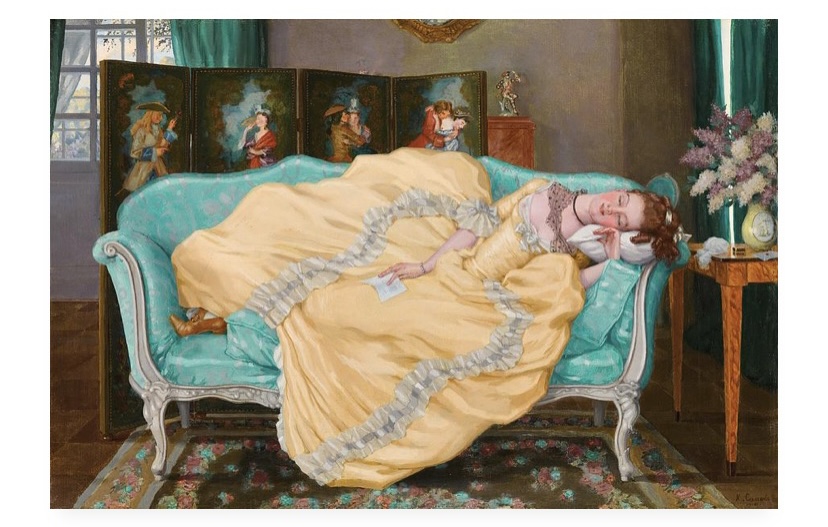
    In short, being a mother, in my experience, is both the best of times and the worst of times.  Would I choose to become a mother again, with the perspective of time, and the convenient memory of a woman well past the heavy-lifting years of mothering – an emphatic, “yes.” Adding up all the mom hours I have logged over a lifetime, do I sometimes wonder what I might have accomplished had I spent that time in pursuit of projects more in keeping with my natural inclinations  – again “Yes.”  Do I crave a more serene environment with less shoes at the door, fewer dishes in the sink, with more time to read and walk and wonder, without consideration of anyone’s needs but my own?   “Perhaps.” Do I sometimes fantasize about an alternate life where I am a lady of leisure and letters, in Rembrandt-lit rooms filled with books, reclining in a Chaise-lounge overlooking the sea… CBC radio my only company?  Of course, I have…Moms are human beings too you know.  Did I live up to the bar my own mother set?  Did I do my job well?  Am I the True North that will help guide my children in making decisions that align with their values and beliefs when it is my time to “walk invisible?”   I hope so. All I know for sure is that I would rather be a merely adequate or average mother to my two darling descendants than an excellent anything else.

    If you’re still searching for the perfect gift for Mother’s Day, take some advice from a little old lady in waiting – make dinner, wash the dishes, clean the house, do the laundry, and if you still live at home, maybe take yourself out for the day.  Give your Mom some time to herself, time to remember the woman she was before you owned her entire heart, in the days before your chapters of her story, when she belonged only to herself. 

  • To Retire or Not to Retire…that is the question

    A Blessing for One Who is Exhausted

    “…There is nothing else to do now but rest and patiently learn to receive the self you have forsaken for the race of days…

    You have travelled too fast over false ground; and now your soul has come to take you back.

    Take refuge in your senses, open up to all the small miracles you rushed through…

    Be excessively gentle with yourself. Stay clear of those vexed in spirit.

    Learn to linger around someone of ease who feels they have all the time in the world.

    Gradually you will return to yourself, having learned a new respect for your heart and the joy that dwells far within slow time.”  – John O’Donohue

    There comes a moment in the life of every little old lady in waiting to consider the merits and limitations of retirement, il dolce far niente (the sweetness of doing nothing – English translation…taking time to smell the roses). Perhaps it’s just a whisper inside yourself for now, that smiles a knowing smile on sunny days that seem too precious to trade for mere money; or maybe, like me, that whisper has mutated into a belligerent bitch who wins every argument and laughs openly at your attempts to ignore her. The truth is that the voice within always knows best. Once you entertain the notion of retirement, it establishes a little foothold somewhere between your world-weary gut and your hard-working heart. It grows strong on a steady diet of IDGAF workplace disenchantment and a flirtation with a trending new prescription known as self-care. The decision, once taken, is definitive.  For this little old lady in waiting, it is time to retire.

    Two months shy of 59, I have traded life hours for money for almost 45 years now. I have had a long and varied work history and worn many different hats in my career.  I’ve worked in libraries and restaurants, offices and classrooms, hotels and bars, hospitals, bookstores, and teashops, and even from the comfort of my own home while freelancing and raising my kids. I have, overall, enjoyed my working life and all its compensatory gifts. My mind is most at peace when engaged, and so work has been my ally all these many years, my morning coffee, my daily talk, and at times my evening companion as well.  If I factor in all the extraordinary humans I have met along the way – the work wives, the confidants and confessors, the friends who carried you on the hard days, and allowed you to carry them in return; it’s clear that work, for most of us, is a lot more than what we produce with our hands and minds, it’s also a journey into each other’s lives in a very real and lasting way. 

    Work has far more value than whatever dollar amount that magically appears in our bank accounts every two weeks, so whatever it is that starts you down the path to reclaiming your freedom, it’s important to consider the metrics and logistics very carefully.  Are you absolutely sure that you’re ready to embrace your freedom, because I think we all know why the caged bird sings. Agendaless days and a wide-open appointment book can be a bit overwhelming for the uninitiated.  I mean, when is the last time you asked yourself what it is you would like to do today?

    Let me be frank, a practiced readiness and a thorough accounting of your life goals is an essential prerequisite to any serious retirement discussion. What price freedom?   How grand a lifestyle does your current salary maintain?  Does your retirement require the maintenance of a cottage, a boat, travel, seasonal wardrobe revitalizing, adult children, aging parents?  Maybe your only essentials are a good pair of walking shoes, a library card, and the company of someone who can still make you laugh.  I fall somewhere in between.  My non-negotiables include a towering TBR pile of books, a pickleball squad on speed dial, and the occasional stimulating conversation.  I can make do with two out of three in a pinch.

    The decision to retire is hugely dependent on how much your work adds or detracts from your life. I have friends working well into their 60’s whose work transforms and inspires them:  artists, chefs, academics, writers and makers whose work is so intrinsically a part of their lives that retirement would seem a sort of death, at least of the spirit. They are the lucky few. I have other friends, smart and autonomous, who make their living comfortably ensconced in their own homes, using only their brilliant minds, and lifting no more than a finger or three to upload their work. At the top of their monetary game, “why on earth would I ever consider retirement,” they cluck. Huge monetary earnings … minimal effort… bit of a no-brainer really. 

    For everyone who feels fully engaged in their work, who love the role they play in their workplace, and who might even feel lost without their work, I say play on.   But for those other friends, no less successful in their chosen fields, who count the days and the dollars needed to free themselves from the alienating chains of industry, or those who spend even one of our apportioned days contemplating a life more fully lived, I say retire and God’s speed. 

    My own decision to pull the retirement rip cord was ignited by a few seminal life events including a devastating personal loss, and an injury that necessitated a protracted period away from work.  The first put me in touch with my own mortality and taught me that time, specifically time with loved ones, is the only real wealth. The second provided a safe space to test drive what a life free of the shackles of gainful employment might be like.  It did not disappoint.

    Earlier this week I retired from a position I have held for over a decade as a Palliative Care nurse.  In that time, I have watched hundreds of people die and, of late, anecdotally at least, it seems I have nursed a great many little old ladies…in waiting.  None of the patients that roll down the hall onto the Palliative Care unit are ever truly ready for what comes next, even those with significant disease burdens and those who have been unwell for a long time.  It always takes these brave souls a bit by surprise when they come to fully understand, that they are living their last days and hours, that they are lying on their deathbed, where they will take their last breath.

    It has been a great privilege to attend the dying in their last days of life, to understand the absolute value of time through their eyes, and bear witness to their unspeakably beautiful, quiet acts of courage and grace.  Despite every small aortic tear my work has cost me, to stay present and care for my patients and their families, they have paid me back a thousand-fold in what they have taught me about life and about death. Nothing is promised.  There is only now.

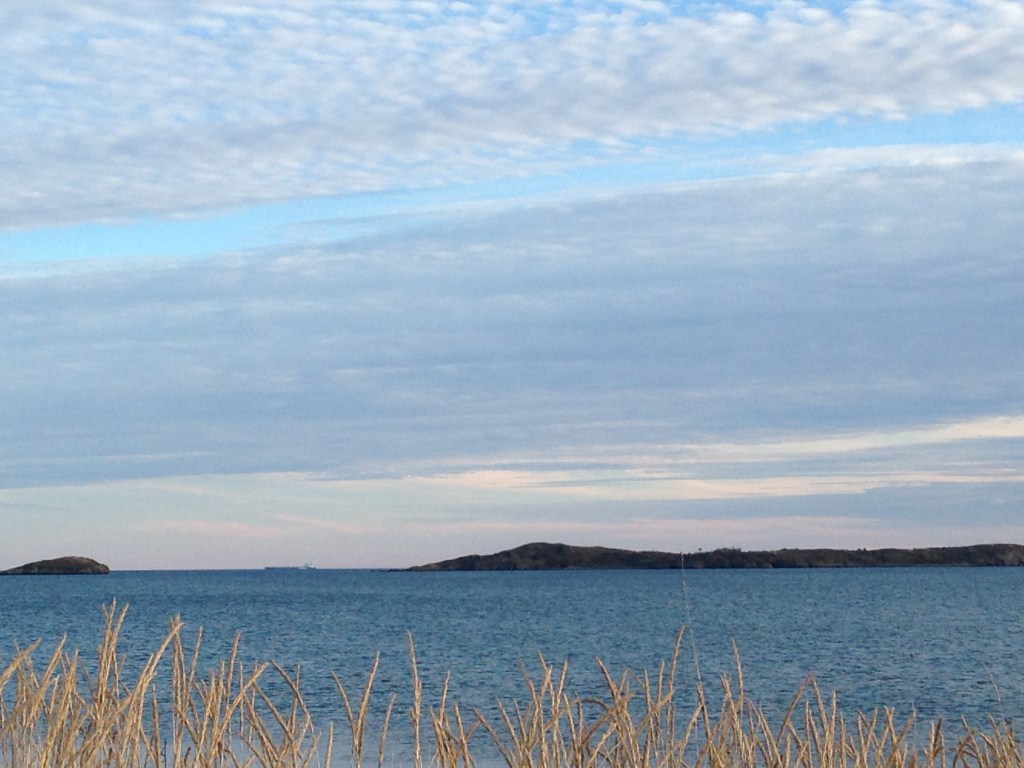
    If you’re a little old lady… in waiting, like me, then maybe it’s time to explore a life unfettered by labour, or, at the very least, time to ask yourself how it is you’d like to spend your days in the last quarter of your life.  If you’ve grown weary “running up that hill”, it might be wise to have a listen inside yourself, a little away from the madding crowd, with time and space to hear what you’re thinking in there. Steal away with me awhile.  I’ll be sat low to the ground somewhere near the sea, with my dog and a flask of tea, looking out on the water’s unknowable depths and meditating on a fine line by T.S. Elliot, “to make an end is to make a beginning.  The end is where we start from.”