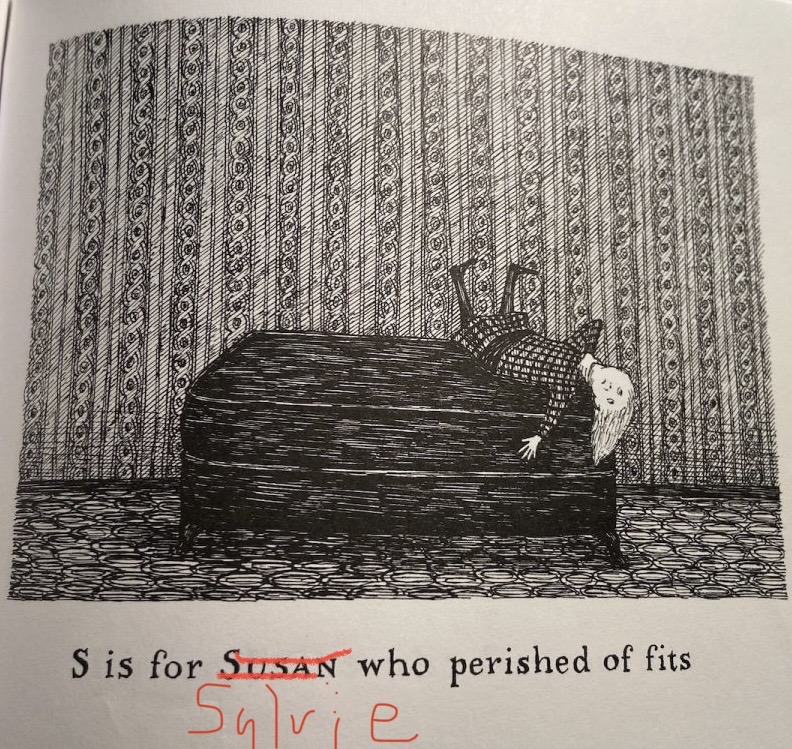
“Death comes equally to us all, and makes us all equal when it comes” – John Donne
“Memento Mori” (Remember Death)
I’m not saying I think about death a lot, but my best friend’s husband has nicknamed me ‘Terminal’ Sylvie. Perhaps a dozen or so years working as a palliative care nurse has left me marginally more noir than what strict social mores decree, but working adjacent to the dying, holding space for their final insights and experience, and catching glimpses through the eyes of those close to death, is a life-altering awakening. It’s difficult to capture with mere words, but as a little old lady… in waiting, let’s just say I feel a certain readiness to share what I’ve learned from the front row seats, as close as anyone can get without taking to the stage themselves.
Those near death understand a secret thing that we do not. Once you’ve been assigned an expiration date, you come to fully understand that there is nothing that we can truly own, nothing tangible or material that we can keep, there is no permanence, there is only the love we give away, the investment we make in others, and the ripple effect our actions have, for good or ill, is our only real legacy. Between you and me, I’m hoping for a bit more time to invest my ‘goodwill’ stock and watch my portfolio grow, but I know that nothing is promised. I try to stay awake to the end game and challenge myself never to overlook an opportunity for kindness. My record is sketchy at best, I’m a work in progress, of course, but I caution you now, that treating death as a taboo topic and putting our heads in the sand is ill advised, at best. A good death takes a little planning, and that starts with one irrefutable truth – that no matter how healthy or fit, rich, or connected (spiritually or otherwise), clever or credentialled you may be…no one is getting out of here alive.
Let’s start with the easy stuff – a quick review of the logistics. A few years ago, I attended a national palliative conference in Ottawa. There were a lot of very interesting and learned speakers there, but the lecture that got my complete attention was a presentation entitled ‘Getting ready to go.’ The lecturer provided some significant demographic data that suggested that the death trajectory as we currently know it, complete with nursing home beds, hospice care and access to in-hospital palliative care, may not be available to us. That is to say, we don’t currently have the capacity to accommodate the glut of Boomers that will die in a very concentrated time period. There is no more room at the ‘End of Days’ inn. The lecturer advised looking for community resources as we will almost certainly be dying at home. So have a look around you…know any docs or nurses, maybe have your kids practice injecting an orange or two … just thinking out loud here.
The lecture also included a detailed inventory of ‘good death’ questions for review. Do your kids know your passwords? Have you got a will, a DNR, a POA (medical vs financial)? What are your thoughts on MAID? Does you religion dictate that you suffer before death? Do you understand that if you lose cognitive capacity, MAID is no longer an option for you? Perhaps better to consider your position sooner rather than later and more important still, to communicate your ‘last orders’ to your substitute decision maker. You have a substitute decision maker… right? Isn’t it a kinder thing to consider your options now before your children or SDMs have to bear that burden? As a palliative care nurse, I’m reasonably confident that I can keep you comfortable as you lay dying, but my ability to comfort or mediate the pain and sadness of your friends and families sat beside you, holding vigil through the long days or possibly weeks as you lay dying… I know no medicine strong enough for that.
It’s important to have a think about what constitutes a meaningful life and what factors detract too much from that ideal to be tolerable for you, individually. It’s a very personal decision. If you’re asking me, I’m thinking I could possibly tolerate a little incontinence, I’m already acclimating to the indignities of cognitive decline (the forgotten pickleball scores, the word-finding, and could any of us LOLW get home if we didn’t have our key fobs to find our cars…just today I watched a friend open the door to an SUV that wasn’t hers…pretty funny actually, and tolerable I suppose. I’m going to go on record here and say I could, in theory at least, endure a modicum of pain (reserving the option to change my mind at any time on the pain piece…huge fan of pain management…give me the drugs – all of the drugs). However, if I was confined to hospital with no chance of returning home, or if I developed a dementia that meant I no longer recognized the people I love, then maybe a nice little hospital acquired pneumonia isn’t such a poor prognosis. Maybe comfort measures only at a certain point is the most humane treatment option.
Talk to your kids or your appointed decision makers about what you want and, more importantly, what you don’t want. I promise you that if I brought you to work tomorrow, even for an hour or two, you would be on the phone with your loved ones by the end of day. Think about who it is you want standing around your deathbed. Invite them to dinner, open a bottle of wine… maybe three. If possible, wait for the dessert course before you dive in to the deep end…ask about their day, tell them how much they mean to you, and as you cut into the pie, begin the difficult but essential conversation about what a ‘good death’ would look like to you. A mildly uncomfortable dessert course now, will spare your loved ones from having to make unthinkable decisions on your behalf at a time when all they’ll want to do is hold your hand, share a laugh about pie night, and find the strength to say goodbye.
Now, to the really important bit. It’s been my experience that those who make a happy end…those who die well, are those who live well, investing themselves in the people around them, and in whom others depend. The best death scenes I’ve witnessed are alive with love and rife with family folklore, where stories are shared of times well spent, and laughter erupts, and perhaps some tears as loved ones share their memories from over the years. ‘The day I met your dad…the day you were born…remember that big snowstorm…the camping trip from hell…’ or any number of Christmas poemics. I remember a famous local watercolourist whose family met in his hospital room every day at 5…Happy hour they called it. The wine was poured liberally, a hand-picked playlist in the background, the dulcet tones of Vera Lynn, ‘I’ll be seeing you in all the old familiar places…‘, the dying man, the guest of honour, enveloped by his chosen few, every afternoon the same bespoke soundtrack, storytelling and laughter, until the music stopped.
All we accumulate in this life, the acquisitions… the accolades…. they mean nothing in the end. It’s more about kindness brewed on darkest nights, and passions discovered and developed in ourselves and encouraged in those around us. What is most important in the end, are the broken hearts we helped to mend, our fortitude, our dedication, and our prowess as a friend, and all the little beauties we cultivate in whatever sort of garden we decide to tend. What matters most I think, as you take your last breath, is the love you gave away and the joy you helped create, in the time you were here. It’s our only job really … to love and be kind, if we can, and I have found that those who die well, with peace and with grace, find the time to be kind despite the many burdens they face… some even in their last hours and days. I will never forget a gentleman who rang his call bell at change of shift, with no ask or agenda, only to serenade his night nurse with the most beautiful rendering of ‘Fly me to the moon’ that I will ever know. I can still hear his voice a decade later, and I pray I’ll find it in myself to sing a little song in my last hours, to know such grace.
For me death is only a door to an unseen place, a speed bump between this world and what comes next, ‘it is the last unprinted snow‘ (Stoker). I think of it as a final adventure, a quest, a magical mystery tour. I know for many it may seem scary… the travel restrictions are untenable, you travel alone, no company, no carry on. I think the only thing we get to take are the string of moments when we are fully awake… the Fly me to the Moon occasions of human connection, a cache of all the unspeakable beauty we are capable of conjuring … a steadfast heart, a gentle word, an earnest ear, the softest kiss. All the love we give away is the only investment we need ever make, and the only prayer we need ever pray. But if, like me, you’re looking to hedge your bets, to grow a little more in the time you have left, there are three little questions I like to ask now and again: am I honouring my gifts, have I learned to love true, and is the world a slightly better place, even a smidgeon, because there was you? If you can answer these questions with any degree of satisfaction, I can almost promise you a beautiful death, where a parting glass will be raised in your name and those who loved you best will stand together in the “coke machine glow” that was you and mourn the loss of your incandescant light. In the meantime, dig out your rolling pin…it’s time to make pie.




 Little Old Lady … in Waiting