
Shova Dhar is my oldest friend. We met in third grade. She was the smartest kid in my class, and in most rooms she enters I suspect. Becoming her friend changed the trajectory of my life, motivating me to push myself academically in a way I might never have done had we never met. I can still remember our Grade 3 Health project, a beautifully drawn portrait of a boy skeleton, with breakout close-up drawings for the more intricate bones. Shova was the artist, I, the lucky bone labeller. We wrote a play together some years later, titled, ‘How do you like your murder, steamed or boiled?’ earning a solid A for our efforts in advanced English.
Shova describes herself as a ‘gregarious introvert.’ She is, in fact, a peerless, exceptionally gifted human, a scientist and a seer, an artist and a stargazer…there is no one else in all the world like her. She is an ageless, exotic beauty, and ‘my brilliant friend.’ A biologist by trade, an accomplished artist by nature, and an animal lover (all species), Shova exhibits the kind of charisma that only storybook heroines possess. Fiercely loyal, generous in spirit, she is a boundless treasure to anyone lucky enough to call her friend.
Shova earned a BSc in Biology and a Bachelor of Education from UNB. She has published research in marine biology, worked as a lab instructor at UNB, and as a Laboratory manager at the NB Department of Fisheries and Aquaculture. She has studied salmon anemia, virus tested potatoes, and worked in animal health and rabies. She has been responsible for fish, meat and dairy inspection, food recalls and risk assessment. For the last twenty-five years she has worked for the Canadian Food Inspection Agency, and for the last 17 years as a food safety specialist, currently residing in Halifax, N.S.
Of course, I asked her what she eats, and while she wasn’t comfortable discussing her food choices on the record, she did share that listeria is real, and that as we get older, we can’t fight it off as well, or if we’re too young, or don’t have enough stomach acid, or are pregnant. ‘I’ll be eating a lot of mush that’s hot or frozen as I get older,’ she laughs, ‘and I don’t eat out much as I am too leery of food handling practices that I can’t control.’
Tell me your life story in seven sentences or less?
I was born with mixed heritage in the heat of the summer, the younger sister to one older brother but grew up with my Canadian extended family on my maternal side, as my father was killed in a car accident when I was only 8 months old. I grew up outside of Saint John and was formally educated at the University of New Brunswick. I am a biologist, an educator, a Food Safety Specialist, a Reiki Master, and a Theta Healer™, with a love of artistic expression, especially the performing arts. As a strong unionist, I have always focused on championing the rights of others who cannot fight for themselves. I have married my best friend, travelled to many countries, enjoyed the company of many beings (human and other species), and have learned to work in light and energy. That’s my other side…the ‘woo-woo side’ as people would say.
What is the best thing about getting older?
Ahh…perspective. You can see the bigger picture and therefore there’s less drama about every little hiccup that happens. Even though there are times I don’t do that, as we age our edges get rounded off a little and you have a better perspective of what life is … you see the span of your own life, and things you used to think were the end of the world are no longer the end of the world for you. That’s the best thing.
What is the worst thing about getting older?
Coping with loss. That’s the thing that gives me anxiety. Can I do it? Losing the ones you love, the pets you love, your cohorts, your generation. The feeling of gradual obsolescence.
If you could retain or retrieve one quality from your youth, what would it be?
I found this a very difficult question because there are so many things I would want to retrieve and some I wouldn’t want to, however, the sense of endless possibility, and the feeling of immortality, or ignorance of the finality of this temporary corporeal existence that we’re in right now, is something I would love to experience again. As younger women we were more present in our lives, we lived more in the moment, we weren’t worried so much about what’s gonna happen when our time was limitless, we weren’t concerned if we could squeeze it all in… we never even thought about all that, we were just living, and I miss that, that spontaneity, being in the moment, a time when we were less reflective and less conscious.
Now with perspective we’re always weighing one thing against another, whereas younger people are more present in their lives…even if you were full of angst as a young person, you were still anchored in the moment…not worrying about the quality of the experience. People say youth is wasted on the young. It’s not. They’re not wasting it…they’re really in it. They don’t even realize how precious it is. That is the sad part. They don’t yet own their magic…they’re magical but they don’t know it yet. The magic of being fully immersed in living. If we were able to go back in time, we would be super powerful, and we could use that power for good or ill. I would hope we would use all that energy and power of youth for good, but it depends on the trappings of the soul. People are still flawed even armed with perspective. Maybe that’s why we can’t go back. God is pretty smart.
What’s the most important lesson you’ve learned so far?
I don’t know, I haven’t learned too many easy ones. I have so many lessons to learn. For me, so far, forgiveness is the big one …forgiveness and gratitude. Forgiveness of yourself and others. It’s hard to do that. But gratitude is huge as well…to learn how to maintain gratitude…because you cannot be unhappy and feel gratitude at the same time. Those two emotions cannot exist at the same time. That has changed my life knowing that. So, whenever I’m terribly unhappy, I imagine a scenario, even if I have to invent one, a scenario where I feel grateful. I’ll share my go to scenario with you. I imagine I’m carrying a big armful of priceless china in boxes, not very well packaged, and I have to get through a door, and I can’t manage it without maybe dropping a parcel. There is a guy on the other side of a busy street, he sees me struggling…he crosses the busy street, arrives at my side, and opens the door for me and I can enter in and I think ‘Thank you,’ and I feel gratitude washing over me…gratitude for him being so kind, and then I go through the door. And at that moment if I’m unhappy I allow the gratitude from the scenario to wash over me and it helps…small acts of kindness, real or imagined, help a lot. I use it all the time. The shift is immediate when you feel that gratitude wash over you and the sadness may come back but its less when you can feel gratitude. It brings instant perspective.
Other lessons I’m still trying to learn are trust, to trust in God, and to accept the things that I cannot change. Those are hard lessons that I’m still trying to learn. Forgiveness…I’ve worked hard on forgiveness… and I’m getting better at it. I used to be full of resentful thoughts. I’m a very protective person of the people I love. I’m a grudge holder from way back.
Do you have a favourite quote?
I have four quotes on two themes. I couldn’t pick. First, ‘Whatever you can do, or dream you can, begin it; boldness has genius, power and magic in it.’ And I put in brackets…this is not part of the quote, Begin it now,’ because I’m a procrastinator. I had it in my university dorm room, its Goethe, and it has served me for many, many years. A second quote on the same theme is from the Ghost of Christmas Present (Dickens), ‘There is never enough time to do or say all the things that we would wish. The thing is to try to do as much as you can in the time that you have. Remember Scrooge, time is short and suddenly, you’re not here anymore.’ I always think, let’s not procrastinate with the important things.
The second theme is again from Scrooge, the 1970’s soundtrack from Leslie Bricusse on happiness. ‘Happiness is whatever you want it to be.’ I had that at my wedding as one of my songs. And finally, a quote by Kurt Vonnegut, ‘If this isn’t nice, then I don’t know what is.” It’s a quote I learned from my husband, and when I hear his voice in my mind saying it, it calms me down and gives me perspective and makes me feel gratitude.
Do you have a favourite word?
‘Justice’ and ‘perseverance’. I have two, but I love justice, just the sound of it, it’s a sweet sound to my ear. It’s a real part of who I am, and it always has been. I’ve always been a bully fighter in school, a fierce advocate for others…and courage is there because of it. It takes courage to fight for justice. In tarot, the symbol for strength is a lion and, being a Leo, I’ve always felt it was just part of who I am. It takes strength to fight for justice. And ‘perseverance’, it’s a very important word for me as well. You have to persevere…things aren’t instant, and you have to keep fighting for the things that really count. You have to persevere against your own weakest nature. If you want to obtain things you have to work hard and again that comes back to my quote, ‘begin it now.’ When things aren’t easy you have to persevere and if you don’t, you’re giving up on yourself.
Describe your perfect day.
This was harder than I thought it would be, but I experienced the perfect day not that long ago with my family…this summer actually, and I reflected on that day when I formulated my answer. The day starts with me waking up from a restful sleep and with good energy. There are some planned activities but nothing stressful. A nice morning stretch…I move my joints…I have a good breakfast. I spend time with the ones I love, and unexpected events lead to unanticipated fun. There is the sense of surprise, camaraderie and sharing laughter. The unexpected events put you in the present. I don’t always want to be planning and then judging whether or not things went well…it harkens back to the youthful joy of just being alive. And after camaraderie and laughter, then you come back to your place of peace and revisit the day’s events together with your family. You retell the story of the day, sharing your impressions, enjoying it all a second time in the telling…and then you go to bed feeling grateful knowing you’re loved and that you’ve loved others. That’s a perfect day.
If you could have tea with anyone, real or fictional, dead, or alive, who would it be and what would you talk about?
I would want to see my father. I would want to talk to him about his decision to agree to leave this life when he was only 38. He died in a car accident. But I believe that people talk to their creator before beginning a new life, we choose our soul family and choose the lessons that we want to learn. Maybe my lesson this time around was learning to be a woman who grows up without a father. His absence in my life has been so huge and yet I never really got to know him. At some point he decided he would come here and be my father and leave, allowing me the space to learn the lesson I had chosen. I’d like to speak with him about his decision and ask why he left me…because I know he loved me.
Just recently I looked at my father’s passport picture and I feel like I saw him for the first time, and I’ve looked at that picture a thousand times, and I realized that he is in many ways still here with me.
The other person I’d like to have tea with would be Carl Sagan. I’d like to talk to him about intelligent design. I’d like to explore his thoughts on that. I had the hugest crush on him, I was in love with him for so long.
Tell me three things that bring you joy.
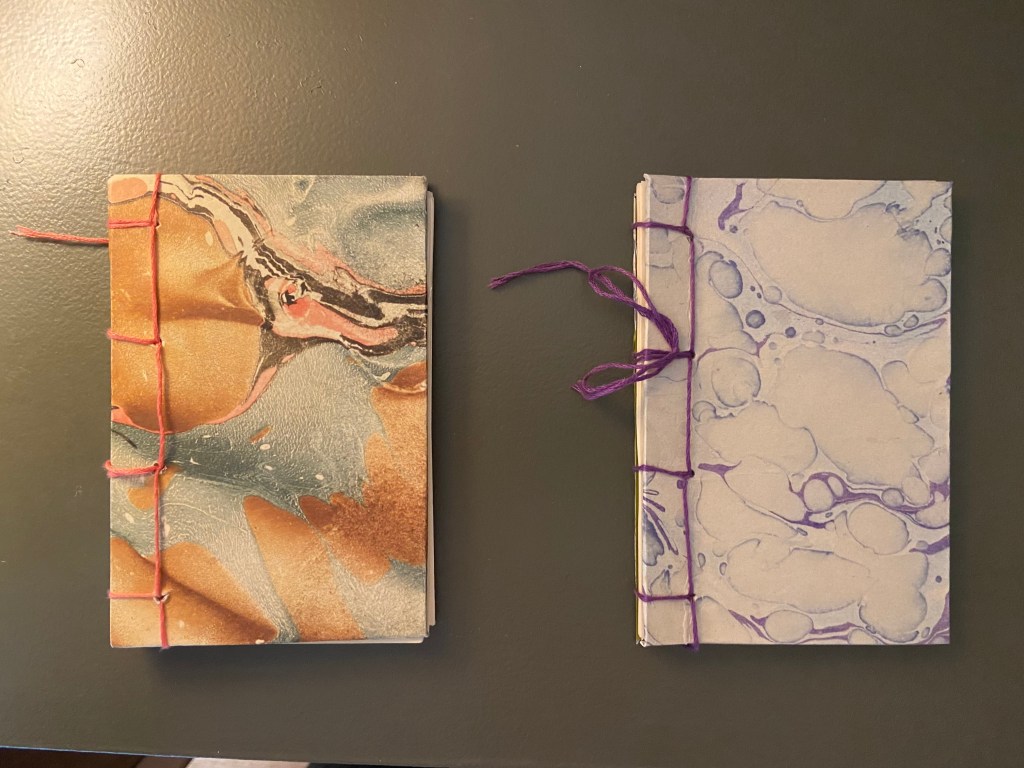
Creating things… creating things for others to enjoy, and myself. Anything from food, a good meal, making baklava, or creating a more fair, stable, and safe workplace. I do a lot of Occupational Health and Safety (OSH)…that’s near and dear to me. I also like making music…learning a new piano piece or improving my vocal range while I’m singing in the car. Nobody needs to hear it, but I get great joy when I manage to expand my range and enjoy little successes. Artwork of course, I like creating art, that gives me a lot of joy. I don’t do it a lot anymore, but I will again… soon. I’ve been doing some needle felting and making some 3d figures and those are fun little projects and after making art I always think that was so much fun, why don’t I do this more often. And maybe writing too because this project and thinking about my mother’s story…I think I’d like to delve a little deeper into that. I’d like to work more in watercolour, I have to persevere there, watercolour is unpredictable, and trust is not there, so learning to trust the process and persevering… and then revel in the outcome, whether it’s what you planned or not.
A second source of joy for me is being the presence of or caring for animals, especially baby critters of any sort. To have a kitten in your hand, and care for it is the most joyful thing. Looking after the young of any species I find very joyful. We have an unofficial office cat named Spooky and I enjoy looking after her right now. She is my therapy cat. We do a daily session before I enter the office.
My third joy is stargazing. I look forward every year to watching the Perseids meteor showers that peak on my birthday in August. I usually go out to the cottage and lie on the beach or in a field near Freeman Patterson’s place at Shamper’s Bluff to watch them. I watch as well for lunar and solar eclipses, and, of course, the aurora borealis.
Name a guilty pleasure.
Again, I found this question difficult because I don’t feel guilty about too many things except for maybe online shopping and surfing the internet… scrolling, that’s a guilty pleasure that I’d like to get rid of… it’s a bad habit. It’s wasting your life. It’s instant pleasure, but it’s a distraction from the real work that we’re here to do. I could be in a studio, where I can make messes. That’s real pleasure. ‘Boldness is genius.’ We need to stop procrastinating.
Do you believe in life after death? What does it look like?
Absolutely. The basis of my belief in God and in an afterlife is from my grandmother. She…as a child had blood poisoning and died and went to another place, a beautiful garden with a man who she described as very much like Jesus, lovely white robes, a gentle man…holding her hand, walking along a path and she was so happy, she had never felt such joy and contentment in her whole life. They walked for a long time and then he said, ‘Fern, we’ll soon be near the end of this path and when we get there I’ll have a question for you, and I want you to answer honestly. He said, ‘You can stay in the garden with me or if you want you can go and see your mother.’ At that point she looked down from a height and she could see her lifeless body and her mother bending over her, weeping. And then she said, ‘I think I want to go see my mother,’ and she was returned to her body, and she lived a very long life. Every day, twice a day, she was on her knees on the hard floor kneeling beside her bed, in the morning and the evening, and she would pray to God and say how grateful she was for being allowed to live. She lived a life that showed me that what she experienced as a young girl was the truth. The rest of her life was a testament to her decision to return here. She would feed homeless people. She never knew if that was the man in the garden coming to test her or see if she was still happy to be here. That’s how she lived her life.
My father grew up in the Hindu tradition and although he never shared that with me, I think it worked its way into my understanding that God is there all the time. We drove across the site where he was killed every day, twice a day my whole childhood life, and we could feel him there. My brother, a year older, as a child saw his “Daddy” standing at the accident site there once.
Finally, through Theta Healing …Theta uses the theta brainwave state, a very relaxed state, where you can access your subconscious beliefs. Part of my training to become a Theta healer involved accessing spirit and listening to what they have to say. We worked in teams to access spirits we did not know, rooted in our training partner’s life, not our own. And in your mind’s eye, images reveal themselves with qualities recognizable to the person you’re working with, and you could ask the spirits questions. Spirit is there. Our souls continue and come back in other forms…I think all those things are possible. Obviously, there is continuance of our souls. Theta experiences have helped me know that. Sometimes you might worry, ‘am I making this up,’ but sometimes being open, things come to you that you don’t understand but when you share it with the person asking questions, they understand it. They know what I’m talking about…I don’t…I’m just a vessel, I’m just a process. The other person is the authenticator. So yes, I know there is something more, and I don’t fear death. And when we do die, I don’t think we’ll be very far away.
What does it look like…the afterlife? A hyper reality where we are totally supported all the time…where we know we are taken care of always. We are complete there.
What would you like your eulogy to say?
How I would like to be remembered…I’d hope someone would say that I was kind, and also that I was fierce, a protector, a good friend, and that I knew how to have fun, that I was fun loving… I’m self-described as a perpetual adolescent…that I was confidant, and had lots of personality.







 Little Old Lady … in Waiting