Tag: health

  • The Art of Happiness

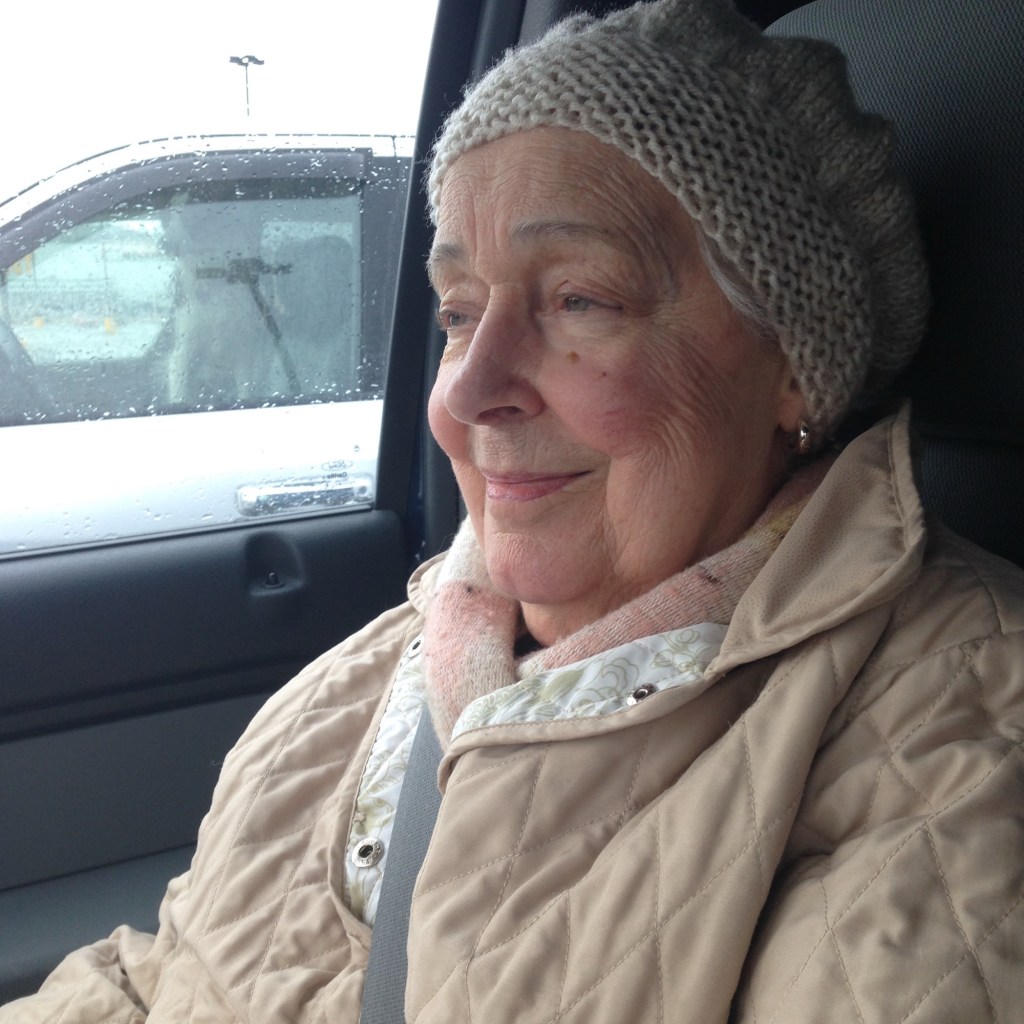
    My mother, Mary Eileen (Bunny) Lewis caught in a moment of everyday happiness

    “I must learn to be content with being happier than I deserve.” – Jane Austen

    “Letting go takes a lot of courage. But once you let go, happiness comes very quickly” – Thich Nhat Hahn

    Happiness is a slippery state of being, an elusive, inconstant companion. Like a feckless lover or an indifferent cat, it’s never near at hand when you need it most. It’s approach is often unheralded, it’s visit, never long enough, it resists all enticements to stay. It cannot be captured…it will not be held…we cannot keep it. It is as impermanent as an ice cream on a hot summer afternoon, as fleeting as a first kiss, or a glass of fine wine, it lingers briefly, and disappears into the realm of memory. The art of happiness sits haplessly in the space between our first world sense of entitlement, and our readiness to cultivate a sense of wonder, that magnifies the trace elements of happiness drawn from everyday dealings. Little things like the dog’s yawn, the carol of the wind in the trees, the smell of freshly brewed coffee, or the uncalled-for-kindness of a stranger can, with practice, conjure a sensation of peace, an ‘invisible cloak’ of contentment, protection against the certain storms of life. There are glimmers everywhere if we learn to spy them, and they can sustain us, even on our darkest days, if we apprentice in the art of happiness.

    First lesson – kill all expectation of happiness. It’s Buddhism 101, the first noble truth, ‘Life is suffering.’ Happiness is not our baseline or our birthright. We don’t deserve it, and we can’t earn it. We are not on some episode of Friends with a laugh track running every 30 seconds. Chandler Bing died of drug use disorder, and Rachel’s husband left her for Angelina Jolie. We’re in the ‘real’ people, and to quote the venerable Monty Python, ‘Life’s a piece of shit…just remember it.’ (It works better if you sing it). My kids would say that that’s a bit dark or defeatist, but I’m with Schopenhauer and the Pessimists, you need a sense of humour to get through the tragicomedy we call life, and ‘the safest way of not being very miserable is not to expect to be very happy.

    Buddha’s second noble truth is that we’re the problem…we are the root of all our suffering…we build our own hell. The art of happiness is to desire less…stop trying to make the world conform to our preferred narrative…that way lies madness. Relax…we control nothing… and anyway, sometimes bad news is good news in disguise, if we wait long enough. It is a mighty thing to slay your expectations and lay yourself open to your share of frustrations, disappointments, and loss. My mother always told me that ‘acceptance is liberation.’ She was a very wise woman, a gift earned from enduring her measured cup of sorrows.

    William James wrote ‘We need to stop deciding how we want things to be and then getting ourselves upset when things don’t turn out that way.” Easier said than done Willie, especially when you discover the last piece of cake gone, or the poop your geriatric dog deposits on the dining room floor every night.  Still, I say give it a try next time you’re provoked by an uncapped toothpaste, a Sunday driver when you’re running late, a rainy day when you wanted it fine.  Start there and when you’re ready you can move on to little old lady sized stuff, like chronic pain, or learning about a friend’s new cancer diagnosis, or loosing someone you loved very deeply…someone you thought you could keep forever…a loss that feels like the sky’s gone out and taken all the stars away. It gets a little harder to wash down then, even with a good red.

    James would say, ‘If you believe feeling bad, or working long enough will change a past or future event, then you are living on a different planet, with a different reality system.’ He’s right of course. we can’t get so mired in the shitty pieces of our story that we miss the good bits…the glimmers.

    We can’t be ‘shiny, happy people’ all the time and I guess we shouldn’t even try. Don’t we need a certain measure of malcontent to get anything done? It’s only unhappiness, disappointment and disenchantment that puts our clay feet on the floor every morning, isn’t it, that fuels our pursuit of wisdom…some magic beans to make the daily grind a bit more palatable? If we were happy all the time, we’d stay at home all day and roll around in it, wouldn’t we, hedonists supping on donuts and Netflix until our brains and our bodies turned to mush.  That’s Hotel California my friends…’and you can never leave.” (Again, much better if you sing it with me)

    If we can’t capture happiness and keep it caged, as we might like best, then we can cultivate habits and practices that invite happiness in, offer her tea and something sweet to encourage a long and robust relationship.  Gratitude is the first and best invitation to happiness that I’ve discovered.  It is that great looking glass that magnifies all the beauty and riches around us, large enough for us to see all that we have been allowed to keep… legs that take us walking, minds that may still read and discuss, running water still clean enough to drink, maybe even a hand to hold.  I’ll add to this the extraordinary occasion for a fine cup o’ tea and in good company.  Vonnegut suggests we recite in such moments of clarity, ‘If this isn’t nice, I don’t know what is.”

    We must fall in love with the beauty that is all around us.  Cast our eye about ourselves each morning and count our blessings.  Oscar Wilde wrote that ‘most of us are living in the gutter, but some of us are looking at the stars.’  We need to look for the glimmers.  They’re everywhere once you start practicing: the dance of late summer leaves, the first line of a new book, or that feeling of being understood…an easy, effortless fellowship that lets us know we’re not alone.

    Friendship is the second essential pillar in my study of happiness.  Friends come in many shapes and sizes.  They can be fictional, or four-legged, they can be blood, and people we grew up with, or choose to grow old with, but more often than not you’ll find them out roving on some adventure.  They arrive unexpectedly, a happy surprise, and their company can feel like coming home after a long time away, or a gift you didn’t know to ask for, but have wanted your whole life. ‘The secret Alice, is to surround yourself with people who make your heart smile, it’s then, only then, that you’ll find wonderland.’

    If you’ve not yet landed in Wonderland, then I suggest you take a break from your own troubles and concerns and look around you for a way to help others with theirs.  Service is chapter 3 in the little old lady book of happiness.  My brother was in love with Emily Dickinson, she was a dear friend of his.  She wrote, “If I can ease one life the aching, or cool one pain, I shall not die in vain.”  I say do harm to no man and never miss an opportunity to do a kindness. Be a light for others.  I love the old Indian proverb, ‘Blessed is he who plants a tree under whose shade he will never sit.’ To my mind there is no better way to cultivate your own happiness than to contribute to the happiness of others, unseen, unacknowledged and with great humility. If we’re all made of the same stuff in the great fabric of being, then watching out for a dropped stitch here and there only makes good sense…keeps us all from unravelling. 

    If we can stay with the knitting analogy for a minute, then I suggest that the fourth practice in this little old lady’s guide to a happiness, is to keep to your knitting every day.  The work we choose to do is key to practicing good happiness hygiene. If you love your work, then every day is a delight and you’ll be a success, no matter the weight of your wallet. That’s not to say you won’t have to find some job to keep you in beer and bread and a roof over your head.  But you must never let those necessary hours detract from your real work, the work you recognize as your own. And if you haven’t yet found this work then, to quote Ms. Dickenson once more, you must be ‘out with lanterns, looking for yourself.’ 

    John Muir the great naturalist counsels that ‘nothing dollerable is safe.’  That’s the way, he implies, to Thoreau’s ‘life of quiet desperation.’ I say be curious, go adventuring, stretch yourself beyond your imagined limits, investigate, take yourself away, let yourself go quiet.  Your work will find you…artist, teacher, carer, baker, candlestick maker…it matters not.  Trust only that which speaks to your soul, that engages you wholly, that causes you to lose time and that you can’t wait to get back to again each day on rising. ‘It’s foolish for people to want to be happy,’ wrote Georgia O’keeffe, ‘our interests are the most important thing in life.’ ‘Happiness,’ she said, ‘is only temporary, but our interests are continuous.’

    Lastly, and maybe most importantly, happiness lives principally in the present moment.  We need to slow down and stay grounded here in the now, and as the Stoics suggest, ‘do every act of our lives as though it was the very last act of our lives.’ All the greats say the same. To quote my favourite Buddhist, Thich Nhat Hahn, we must ‘drink our tea reverently, as if it is the axis on which the world revolves.’ ‘Eternal life’ wrote Wittgenstein, ‘belongs to those who live in the moment.’  But the poets say it best, To see a world in a blade of grass…heaven in a wildflower.’  It’s that moment when the musician understands that he is not only the strings of the instrument he plays on, but also the music that fills the room and touches the heart strings of everyone who hears.  There can be no higher experience of happiness to my mind then being fully present and awake to your surroundings.

    If you asked me the raw ingredients of my own happiness, I would quote Tolstoy, ‘Rest, nature, books, music, such is my idea of happiness.’ I also try to practice what my brother taught me… to live in a state of radical amazement.  E. B. White urged us to ‘always be on the lookout for wonder.’ So, I get up each morning and try to look at the world in a way that takes nothing for granted. The art of happiness lies in extracting it from commonplace things and as a little old lady in waiting, I’ll give the last word to that old sage, Socrates, ‘Let’s enjoy ourselves,’ now, ‘It’s later than we think.’

  • In Conversation with Margo Beckwith-Byrne

    At the grand dame age of 65, Margo Beckwith-Byrne self-identifies as a ‘little old lady’ proper, although her trim, athletic figure and sporty lifestyle are characteristic of a much younger woman. An avid tennis and pickleball player, Margo is a spitfire that punches well above her fighting weight in any given scenario. She is confidant and decisive, and a natural born manager of men. On the personality tests that assign an animal archetype I’d guess Margo is more at home in the shark tank than the petting zoo. She is spirited, and salty, and strong…she’s had to be strong. Widowed at 42 when her husband went out for a swim on a family vacation and never came back in, she became a single working mom overnight, her kids were then 2,5 and 7.

    Equipped with a B.Ed. in Home Economics, Margo taught for two years in Labrador City before transferring her skills to work more in keeping with her natural aptitudes and temperament. She became a boss.  With the mind of an engineer, and an innate understanding of process and efficiency, Margo started her career in business, first at the Saint John General Hospital, where she very quickly assumed a supervisor role, and later in HR, first at Fundy Cable and later at Labatt Breweries, as an HR Manager.  Her last job was as Senior Vice President at Wyndham.  She was downsized at 54, which today she describes as a gift, one she did not recognize at the time.  An astute businesswoman and investor, Margo never worked another day, and is a poster girl for how to retire well.

    About a year ago, Margo visited the ER with what she describes as stomach discomfort and was eventually diagnosed with stage 4 colorectal cancer. Since then, she has undergone surgery, and chemotherapy which she says is “the most miserable thing you could ever do.’ Margo tells me she is lucky because the cancer she has, MSI-H, is rare and responsive to her current immunotherapy. Her cancer-versary is July 31st.  She shares that the hashtag for colorectal cancer is ‘KFG…Keep fucking going.’  

    Margo speaks with the clear-cut, resolute voice of a woman who has found her truth, and in the process of documenting her wisdom, I caught myself re-evaluating a little of my own inner engineering. I am grateful for what she shared with me on a sunny afternoon, at her beautiful home that overlooks the sea.

    Tell me your life story in seven sentences or less? 

    I was born a Saint Johner and I grew up wanting to leave.  I had children, and then I wanted to come back.  I went to school first at St. FX and then finished at UNB Fredericton … I really liked sewing, I liked making clothes, I didn’t like cooking so much, but I ended up with a B.Ed. in Home Economics and after that I knew very quickly that I didn’t want to teach.  What was important to me at a young age was financial stability and so I spent the rest of my life trying to achieve that. There were lots of twists and turns but ultimately, I spent my whole life believing that happiness and contentment lay in things outside of me, and now I realize I was wrong.  Not everybody is afforded the knowledge that it’s not the external circumstances but rather the internal…because maybe they don’t achieve as many of their material goals, and I was very lucky to acquire mine, only to find out it doesn’t work. Some people still think it’s that car they’re saving for that will bring you happiness… I know it’s not that. 

    What is the best thing about getting older?

    I know it’s cliché, but it’s not giving a fuck about the good opinion of others. Hands down… the best.  Fuck you all!

    What is the worst thing about getting older?

    Your body breaking down. Not being able to physically do the things that you used to be able to do.

    If you could retain or retrieve one quality from your youth, what would it be?

    Let me flesh it out this way. I wish when I was young, I had had a better sense for how good I really looked.  I spent a lot of time in my youth wrecking vacations, get-togethers, events, thinking about my weight. I resent that time now. The focus growing up in my house and with friends was often about, ‘Are you fat or are you skinny.’  And the thing is, when I look back at my life, I was never fat, but it’s all relative.  Your appearance was more important than any kind of achievement.  I still have high school friends who’ll ask, ‘is she fat or skinny’. I was like 125 poinds and I would be obsessed with my weight.   Recently when I had to weigh in for chemo, the nurse said, ‘that’s great you haven’t lost any weight,’ and my natural thought is well fuck, and I’ve been exercising my ass off.  I guess I’m answering the question in reverse, but I’d like to go back and tell my younger self that no matter what you weigh or how you look, you’re still beautiful. They say youth is wasted on the young.

    But what do I wish I could retain, to answer your original question, my memory… I wish I didn’t have to write everything down to remember it.  But I guess the flip side of that is I can be humbled now because fuck…I can’t remember anything. Some days even with the ball in my hand, I can’t remember who’s serving.

    What’s the most important lesson you’ve learned so far?

    Oh my god… again it’s going to sound so cliché but, happiness is an inside job. It has nothing to do with your external circumstances. I’ll give you an example, someone came to my house and looked out at my view and said, ‘oh my god you must be the happiest person in the world to be able to look at this every day,’ and I looked at them and went, ‘are you out of your fucking mind?’ because ‘wherever you go, there you are.’  I don’t strive for happiness…happiness is relative and the word is overused.  I strive for peace and contentment, and I recognize that it’s a moment-to-moment thing, and the minute I move past where I’m at, to the future or to the past, I lose the present, and that does me no service, nor is it of service to the people around me.

    The other interesting thing that I’ve learned, and I’m going to try and not come off all Christian when I say this, but so many things in my life I have orchestrated, worked hard towards, and wanted so badly, that achieving the result was all I cared about, with the belief that if I achieved that result I would be happy. Things would be good…I’ll finally have what I wanted.  But the things that have brought me the most joy in my life, were unexpected things that I did not orchestrate.  So, I’m gonna say it two different ways… now, I don’t try to determine how the day will unfold… I let the Holy Spirit do it, or to be more universal, I let the universe decide because to quote the Desiderata, “No doubt the universe is unfolding as it should.”

    Do you have a favourite quote?

    “The great way (life) is not difficult for those who have no preferences.” (Seng-ts’an, the 3rd Chinese patriarch of Zen)

    Or Michael Singer, who I love, his take on it is “Life is not difficult for those who prefer everything.”

    Let things come and let them pass through. It’s resistance, our free will to resist, to hold onto all that stuff, that’s what affects us and causes pain.

    Do you have a favourite word?

    Oh, you know I have a favourite word, ‘Fuck.’  It’s so versatile, it is the most versatile word on the planet, and I like it even more that it’s harsh and it’s disapproved of. 

    Describe your perfect day.

    You know I thought about this, I thought about this long and hard, and I don’t have one, and I’ll tell you why. My mother said something to me years ago and I never really understood, but I do now. She said, ‘I am only as happy as my unhappiest child’ and I thought about that and thought, oh my god, she’s right, and no matter how I try to separate myself from the lives of my children in a ‘they’re on their own journey…it’s not my journey…they need to experience whatever they experience and the universe is there to teach them,’ it’s a lifelong lesson for me.  But if you want to know what I love doing everyday- it’s playing a racquet sport and knitting.  I think for me it’s like working a Rubix cube or something…it’s a puzzle. When I’m playing tennis, every game is fresh and different and challenging. When I’m knitting, I can’t knit the same thing over and over again because I’d be bored out of my mind. I like a challenge, and I like to keep my hands busy. Also, I guess I better say this in case my kids read this, I love spending time with my grandchildren…preferably without their parents around.

    If you could have tea with anyone, real or fictional, dead, or alive, who would it be and what would you talk about?

    That would be Anthony De Mello.  I discovered him in 1992, after he died, in 1987. He wrote a book called Awareness. I had been reading Wayne Dyer, but De Mello took me up to a whole different level.  He was a Jesuit priest who woke up one day and thought, the Catholics don’t have all the answers so he incorporated Hinduism and Buddhism and every other ‘ism’ that you could possibly imagine and was basically the first person who helped me understand that it’s all the same.  All religions, at their core, they’re all the same.  And I read his book a million times and gave it to as many people as I could find.  When my husband, George died, De Mello was instrumental in getting me through it all.  It helped me understand the cosmos on a different level.

    We would talk about how he got to where he is, his whole philosophy of life, death, and everything in between.  Now that he’s dead, I’d ask ‘How’s it going on the other side?’  The book, Awareness was released posthumously, it’s  just snippets from talks that he had, and it gave me a whole new lease on life, a whole new way to experience joy in ways I didn’t understand before and it started me on a journey of self-awareness.  I would love to know how he got there.  Here is an example of a story that he told.  He was a Jesuit and a professor, and he travelled extensively, and he was in a rickshaw somewhere and the guy pulling him had TB and had just pre-sold his soon to be corpse for science, for the sum of 10 dollars American. De Mello wrote that the driver was a happy man, and thought he himself, was miserable, always complaining, and so he asked the man why he was happy, and he said, ‘well, why wouldn’t I be, what’s not to be happy about?’ And for De Mello that was a beginning of understanding.

    Tell me three things that bring you joy.

    My grandbabies, my sports, and my kids. 

    Name a guilty pleasure.

    Guilty…I don’t feel guilty about stuff… ever,  so I can’t really think of one.  Maybe lame TV, I mean I’m watching Agatha Raison right now which is really poorly done but set in the Cotswolds… so I don’t care. I like lame tv and lamer murder mysteries and I mean really lame, like Midsomer Murders lame…because I can knit and not pay attention.

    Do you believe in life after death? What does it look like?

    I certainly do, but not in the way we experience it.   Do I think that the avatar Margo goes on? No.  Do I think the consciousness that is watching Margo as she goes through life, the consciousness that neither lives nor dies, continues…yes I do. When I wake up from a dream sometimes, I really have a hard time trying to figure out whether it was a dream or reality.  Sometimes it feels like real life, starring the Margo avatar, the life that we think of as reality, is actually just another kind of dream.  I believe that when we die, we just wake up and go ‘God, that was a rush, what was that about?’

    I remember watching some three-year old’s get into a fight and I remember them being upset and thinking…that’s just kids.   Well, that’s how a higher consciousness is likely looking at us and thinking oh, that will be over soon, don’t worry about it.  I mean how can you possibly believe and take seriously anything happening on this planet when you know that there are billions of other galaxies and multi verses… and you’re gonna take this seriously, I mean, come on. I always thought if Merle Haggard’s mother died when he was 21 and in prison she would have died thinking she was a failure as a Mom.  Ultimately, he ended up a rich, country western singer. Why worry about kids…you don’t know what their journey is gonna be.

    What does life after death look like…It’s impossible to imagine. When I look up at the stars on a really clear night, I say I’m not even gonna try to figure it out. I have no frame of reference. The Buddhists have a saying, something like ‘when the Sage points to the moon, all the idiot sees is the finger, or something like that.

    What would you like your eulogy to say?

    I don’t want a eulogy at all.  I’m not interested in the traditional experience of death. I am not arrogant enough to think that anything I say or do will matter anymore than it did when my great great great great great grandmother said whatever she said. I mean the framework that humans have established, the goalposts for life… buy a house… go to school… all that stuff is just a concept that we all agreed on.  It’s like money, money is only worth something because we’ve agreed that it does, and assigned it a value, but if money means nothing to me now, then you saying it has value is meaningless to me. 

    I never understood Jesus in the desert, when the devil comes to him and says you can have castles and all the money you want and Jesus goes, ‘yeah, no thanks, I’m good’.  I never understood that.  Now I get it.  Because no matter what you get…a big house…a fancy car…then you’ve gotta work your ass off to keep it and worry that its gonna go away. So instead of it being something to aspire to, it’s a thing that loses its joy.

    One of my favourite quotes from when I was in leadership is, “Of a great leader they will say, we did it ourselves.”  So, if I shaped anybody, or if I influenced anybody, it wasn’t because that was my intention.  If they got something out of anything I ever did, power to them, but that was not my intention.  I’m just doing my dance and if other people benefit by my dance, good for them, even if all they’re saying is ‘I hate that dance.”  I never ever wanted to be a leader, but I certainly was someone who wanted to control things, and those are two very different things. It’s funny, every now and then my kids will say, ‘you were a good mom,’ but ten years ago when they were teenagers, they were saying something else entirely…it’s all relative, and it’s all irrelevant.

  • On Pickleball – An Addiction, a Meditation, a Playground for Graybeards and Dowagers

    Photo Credit – Joanie Lawrence

    “And though we are not now that strength which in old days moved earth and heaven, that which we are, we are. One equal temper of heroic hearts, made weak by time and fate, but stong in will, to seek, to find, and not to yield.”

    Alfred Lord Tennyson

    Hello. I am a little old lady in waiting, and I am … addicted to Pickleball. It started innocently enough…it was between the early morning Aquacise and the Active Aging strength training class that I first spied them, the Pickleballers (contemporaries, mostly retired, not exactly sportswear models…maybe for the vintage lines), slamming the hell out of a whiffle ball with what looked like oversized ping pong paddles. I stood there transfixed, my nose to the gym windows, mesmerized by the speed of the play and the unique center court positioning, which I later came to refer to as a ‘kitchen party.’ I could hear what sounded like actual whooping and wailing, ‘ooo’s’ and ‘ahhh’s,’ yelps of triumph and elation, and grunts of exertion and defeat.  It was a far cry from the mantras and abiding calm of the yoga studio, or the punishing routines practiced by the contortionists who lift and press and strain in the weight room, teeth clenched. So, when an old friend, I’ll call him ‘Dark Larry’ to protect his identity, invited me to play one day, I ‘screwed my courage to the sticking point’ and grabbed a racquet. I mean how hard could it be…right?

    Half an hour later…ok…20 minutes, I was drenched in sweat and red faced from sprinting and, well… shame and mortification.  I made my excuses and hobbled out. Full disclosure I’m not exactly ‘sporty spice’ unless you count reading outdoors or strolling with my geriatric dog. I couldn’t even return the ball unless it landed on my paddle by some stroke of luck, my eye-hand coordination was… shall we say, non-existent.  It felt like I had a learning disability. My synapses were firing fine but, not fast enough for my body to translate into something approaching athleticism. I sucked. We got pickled…twice, which means we failed to score a single point against our opponents. They say they didn’t know it was my first time, but I’m not sure I believe them.  I’ll never forgive those mean girl grannies.

    Two years later, including an 8-month hiatus for a back injury and surgical repair, I’m still playing pickleball.  My doctor said if I continued to play it was ‘at my peril’, given the number of injuries associated with the game, but when my surgeon, a sports enthusiast, gave me the all clear, I was back at it before the stitches melted away. Today, on a good day, I self-identify as an intermediate level player. I won’t bore you with the metrics, suffice to say, I feel like a badass when playing novices, and cannon fodder when flanked by advanced players, predators of placement, magicians who wave their hand back and forth at the kitchen line, a subtle roll of their paddle and its done; an unreturnable serve to your backhand, a ball that makes no bounce, a paced shot to your dominant shoulder that requires the reflexes of a teenager to return.

    Advanced players drill more than they play, they do battle with ball propellers until they perfect each shot, while intermediates, “the middle children” of the pickleball world,  mostly play each other, shrieking in satisfaction or allowing ourselves small knowing smiles of quiet delight when we land a 5.0 serve, or execute a perfect kill shot that ends a long dynamic rally.  A new favourite partner with the gift of the gab, let’s call him, ‘the Winemaker’‘, always says, “that one’s going on the fridge,‘ in those prized moments of unexpected glory.

    While those adrenaline fueled 10 second highs are satisfying in the extreme, I’m not convinced that’s sufficient reward to tempt a recluse like me to expend the energy required for  my daily pickleball fix. We’re out there for hours most days.  I like people fine, but I find them lovelier from a distance.  My social battery is three times too small, a birth defect I believe.  I have a decided preference for the “usual suspects” of long acquaintance, and well-trod social settings.  I do like the structure of organized play, however, and the fact that very little conversation is required during play. 

    Pickleball has its own vernacular: we speak of drives, and drops, the dink, the lob and my new favourite reset strategy, the drive-drop.  There is the infamous kitchen, or non-volley zone, the seat of power in pickleball, much like the center quad in a game of chess.  She who reaches the kitchen first controls the play, it is where all kill shots (overhead slams or smashes that end a rally) are born. There is the postage stamp at each corner of the court where all good serves hope to land.  Then there are the basic strategies like serve and stay, the deep return, the third shot drop, or the party pieces like ATP, the Ernie, the Houdini, and of course things to avoid, the double hit, the double bounce the foot faults, the net balls and the lets (rallies that must be replayed for any reason).  We won’t even start in on the unique scoring articulation that includes the score and server position, to be announced before each serve. It takes a moment to master, and in the end, no one can remember who is serving anyway, let alone the score. As a friend said only last week, “Sometimes I’m holding the ball and I still don’t know who is serving.”  I usually defer to the youngest player on court, rather than waste precious play time arguing with peers in the early stages of cognitive decline…no one wins those debates.

    Once you’ve learned the basics, and the lingo, then the task is to learn the players.  The lefties who encroach on the center court shots from the right, the lobbers who take advantage of the mobility compromised, the ball hogs, the blind men whose line calls are questionable at best, the players who like to call their opponents’ line calls, your basic complainers, and whiners, the cheaters and liars, those prone to unsolicited advice, those who intentionally misrepresent the score to their advantage  a second before serving, the unkind casual remarkers, passive aggressive mind fuckers….and those are just my friends. Just kidding…I adore my squad…truly. There are vexations of course, any pickleball club is a microcosm of society at large, complete with social miscreants, but for the most part the community, at the intermediate rec level at least, is honourable, inviting, observant of established etiquette, and focused on good solid play.  You win some, you lose some, and most everyone lands a shining moment, even if it never ‘makes the fridge.

    While I’ve met some amazing people playing pickleball, artists, musicians, landscape designers, neuro-surgeons, businessmen, accountants, IT types (all mostly retired); and acknowledge that for many the soft, social side of pickleball, ‘a place where everyone knows your name‘ is a big draw, I can honestly say that for an introvert like me (masquerading as an ambivert because it sounds cooler), the sweaty social petri dish of court society is most definitely not the source or even a triggering  factor of my pickleball addiction.

    So, what is the allure?  If it’s not the thrill of blood sport, or the social networking, what exactly is driving my pickleball predilection? Why do I routinely leave the house, against my better judgement most days, to play a sport that I am only arguably competent in, flailing about with quick furtive movements that can’t be considered optimal exercise for my crumbling spine, and osteoarthritic joints, and that often overwhelms my inner agoraphobic (I mean…I could be home, reading)? 

    Something is driving my need to hit that perforated, neon yellow, plastic chew toy of a ball, and I think it has more to do with my relationship to the ball itself than to any of the dear friends I count myself lucky to have met on the courts. When the ball is in play I am hyper focused, almost as though I was encapsulated in a speed game of Atari pong.  My brain likes the readiness position, awaiting the ball’s rapid-fire approach and the subsequent response signal it sends to my unruly body to return the volley. It likes to look for openings for ball placement and opportunities to dink or lob or drive as it draws me to the kitchen as if by a magnetic force. While my brain is engaged and my body, the recalcitrant slave to its unreasonable demands, I experience a heightened sense of relaxation. At play I am immersed in a thought-less slumber, I’m cocooned in an unconscious whiskeyesque oblivion.  I go animal.  Playing pickleball is a reprieve from the constant flow of thoughts that plague the modern mind.  It is a meditation, a place to rest from the narrative that has no end in the curious mind of this little old lady in waiting.  This emptying of cerebral space to all but the most basic objective, to hit the fast-moving ball, coupled with the therapeutic endorphin ride that accompanies the exacting physical exertion, and the dopamine high of a well played point, I believe that is the root of my pickleball addiction.

    You understand that win or lose, novice, intermediate or advanced, I’m still an introvert sloshing through a sweaty- peopled mosh pit to play pickleball.  Why do I do it? I do it for the dopamine.  Don’t get me wrong, I love  to win, but win or lose, the best games for me are those that are over in a flash, equally matched or playing slightly above your natural abilities, surrounded by the ‘usual suspects’, the squad that invite you out to play each day, the partner that taps your paddle after a missed shot in a show of support, the victories, the defeats, relentless humanity in all its splendour.   In the early morning hours, I tentatively open my car door in the crowded car park of the pickleball courts and am assailed by a chorus of laughter and comradery coming from a cohort who have worked hard all their lives, old enough to have earned their place in the playground, and still young enough to understand the importance of play.  It is a beautiful sound, uncommon and contagious, and sweet enough to cast a reciprocating smile on the face of even the most determined introvert. 

    Author’s Note:

    This blog post is dedicated to my very first pickleball friend who I’ll call ‘Spreadsheet girl’. We started this crazy game together, and she is currently out with an injury.    I hope I’ll see her soon.

  • The Revenue of Rest and Experiments in Daytime Napping

    “How beautiful it is to do nothing, and then to rest afterward.” – Spanish Proverb

    “Shut your eyes and see.” – James Joyce

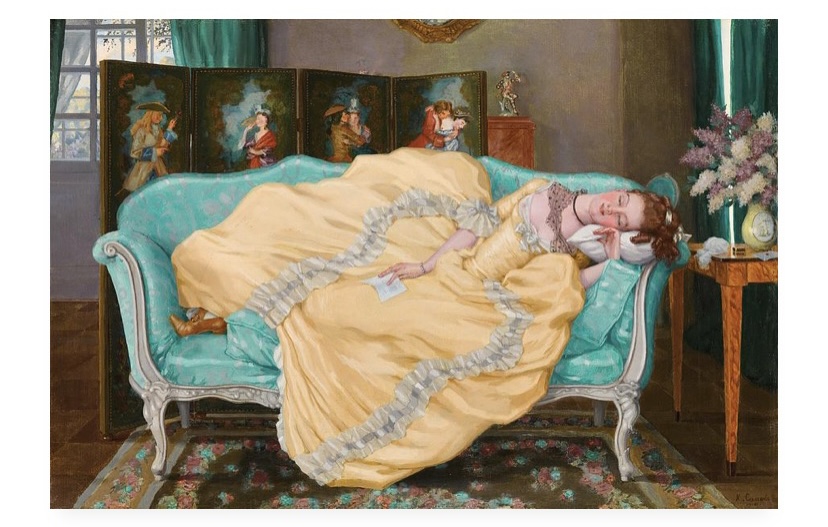
    I have always resisted the arguable allure of rest, and the notion of daytime napping triggers a little anxiety somewhere deep in my little old lady amygdala.  I’m not sure we need to investigate exactly why that is …well …ok, since you asked, it could be fear of lost finite time, or years of positive reinforcement for multi-tasking and maximizing efficiencies… go to work, work out, work at home, homework.  For most women, rest is the thing you do 15 minutes before you pass out at the end of the day, while you’re making a to do list for tomorrow, right? Well, those days are done.  The truth is, and I’m going to whisper this bit in italics, as a little old lady in waiting, there is not all that much on my to do list anymore.  I have more free time than ever before. Shhhh … experiments in daytime napping in progress.

    After a few weeks of unstructured bliss in your retirement infancy, you may, like me, find yourself contemplating the most optimal use of your time, and exploring the scientifically proven compensations of good sleep hygiene and the merits of ritualized rest seems a suitable starting point. Leading sleep experts advise 8 plus hours of sleep a night.  That’s a big piece of life pie that we’re never getting back, so just how essential is rest, if our goal is to savour as much pie as possible.

    The world hangs, quite literally on a good night’s sleep. Mathew Walker, a leading neuroscientist, in his book, “Why We Sleep”, points out that we conduct a worldwide experiment on the significance of sleep twice a year during daylight savings time. Walker’s research indicates that when we Spring ahead, effectively losing an hour of sleep, bad things happen.  After only one hour of lost sleep, there are more reported traffic accidents, heart attacks, and suicides, and judges even hand down harsher sentences.  Conversely, when we gain an hour of sleep in the Fall, the opposite is true, with statistically less incidences in all categories. Message received… sleep is good and, according to Walker, more sleep is better, indicating that most of us aren’t getting enough.

    My husband is like a Zen master when it comes to the impromptu snooze.  I find myself studying his napping habits, squinty eyed, coveting his capacity to drift off into restful slumber without a moment’s hesitation, and wonder why it is that the idea of a little mid-afternoon siesta seems so anathema to me.  Despite my inherent discomfort with the practice of daylight dozing, my little old lady in waiting body and mind is telling me, even now, that it’s time to embrace the nap habit and all of health benefits associated: enhanced relaxation, mood, alertness and improved performance, reaction time and memory. Staving off cognitive decline is something I have a keen interest in and so, properly incentivized, I have begun experimenting with taking rest when tired, no matter what time of day.

    Right now, I’m setting my timer for 30 minutes, and skulking back to bed for a midday nap.   I feel a little self-conscious, but two coffees in, I am still sleepy.  It’s a sunny day, my deck is calling, the dog needs to be walked, the breakfast dishes are still strewn across the counter, I could be reading right now, but I’m choosing to prioritize my neuroplasticity, I’ll see you in 30. (Half hour time lapse) Initial clinical trials are not promising. When the alarm sounds, I can report only a half hour of horizontal ineptitude, eyes closed, mind wide awake and running, nary a wink of sleep.  But I have had some thoughts…a million of them in fact, a chaotic, slip stream of consciousness that feels like the opposite of rest.  What I feel now, after a botched nap, is the sensation of lost time.  Time I could have been, writing, reading, walking, even cleaning, or maybe just figuring out how to con someone else into making dinner tonight. Also, there is the added aggravation of renewed sleep fatigue, the brain fog that accompanies your first several hundred vertical steps, not to mention the bed head.

    Alas, maybe napping is not for me.  I know what you’re thinking… give it another go, the Land of Nod wasn’t built in a day, I mean even babies know how to nap.  How hard could it be?  But the truth is I have always found focused mental or physical activity, engagement for lack of a better word, far more restful that actual sleep.  Maybe that’s just how people like me…the tired, the cranky, rest, or maybe I just don’t excel at rest, at least not yet. I’m willing to continue my daytime sleep trials but between you and me, I’ve lowered my expectations considerably.

    Perhaps before I attempt a master class like daytime napping, I need to do some preliminary work in getting comfortable with doing nothing…not so easy as you might imagine. Simply to sit, without occupation, no task, no agenda, seems a little like walking into the men’s room by mistake, the crib of some slack teenage manboy in the middle of a growth spurt, or maybe the diary of a little old man in waiting.  I’m not sure I have enough testosterone for this.

    What I do know is that there is kind of gold to be mined in each of us, and rest is how we frack it.   Not only does it allow our brains to reset to the so-called default network that lights up like a Christmas tree when we are at rest, it also opens a conduit to connect disparate ideas and potentially solve problems in new and imaginative ways.  This is the value of going quiet, being still and resting.  Stopping the assembly line of constant activity for a short time each day, turns out can be pretty productive.  Quiet can be very loud, and some of our best ideas are born in stillness.  Rest is being re-branded as the radical new prescription for many of the ills of modern life. Anne Lamott writes, “almost everything will work again if you unplug it for a few minutes…including you.”  So, while practicing doing nothing might make me feel uncomfortable, and even incompetent, at least initially, the contemplative, creative, and therapeutic inducements of doing nothing are too persuasive to ignore. 

    Little old lady to little old lady, I highly recommend a daily discipline of doing nothing. Being still, learning to simply be a “silent witness” watching the world unfold, a world oblivious to all our attempts to contain or control it, maybe that’s enough of challenge for a nap novice like me. You’ll think of a million things you could be doing.  It’s hard to resist the seductive lure of a checked off to do list, the ever-present temptation of a clean house, the silent scream from the heights of a towering TBR pile, but tomorrow instead of a nap, I’m shooting for 30 minutes of sitting and doing nothing, I’m scheduling nowhere to be. 

    Join me. Just steal away somewhere, alone, maybe near a window where you can hear the birds sing and smell the morning air.  Practice doing nothing before your morning workout, before breakfast, before you think about the demands of the day.  Don’t open a book, or a journal, or your phone, don’t even begin a conversation with your cat; don’t allow anything to come before you and nothingness.  After a while the art of doing nothing, resting in stillness, starts to feel like a holy thing, a mystery to be  illuminated. Just go quiet for a time and see what you can hear. I listen to the breeze in the trees, the flap of a bird’s wing in flight, the dog’s yawn, the tread of morning walkers, my own heart beating, and always the ticking of a clock.  Sometimes the silence is deafening. Thoughts will come and go like clouds floating in the sky, I watch them like they belong outside myself, and then I Iet them float on by.  This is how I know for certain that “I am not my thoughts, I am the one who hears them.”  And that is an immeasurable treasure, mined after only a single day of doing nothing.

    Author’s post script

    A successful daytime nap experiment was conducted within one week of commencing clinical trials. It is my working hypothesis that a daily discipline of doing nothing is a statistically significant independent variable.