Tag: book-reviews

  • Reading Room – Issue 6

    “The only thing that you absolutely have to know, is the location of the library” – Albert Einstein

    Atmosphere by Taylor Jenkins Reid was my book club’s January pick, chosen by a voracious reader who consistently delivers solid books. I’m happy to report she did not break with that tradition in 2026. Atmosphere is the story of Joan Goodwin, a self contained professor of physics and astronomy selected as one of the first female astronauts for the NASA space shuttle program in the 1980’s. Joan eventually finds her way to the stars, and at the same time, navigates a beautiful star-crossed love story here at home on planet Earth. Jenkins’ book is an insightful meditation on the nature of God and the observable universe, and also an intimate portrayal of forbidden love. The story is based on the ill fated 1984 NASA space mission that ends in tragedy, one every little old lady in waiting will remember watching on tv with our families. The book’s ending was a source of vigorous debate within our club, half our number admitting to sobbing uncontrollably, and others deeply disapointed and disdainful of Jenkin’s denouement… I’ll leave you to guess which category I fell into. 7/10
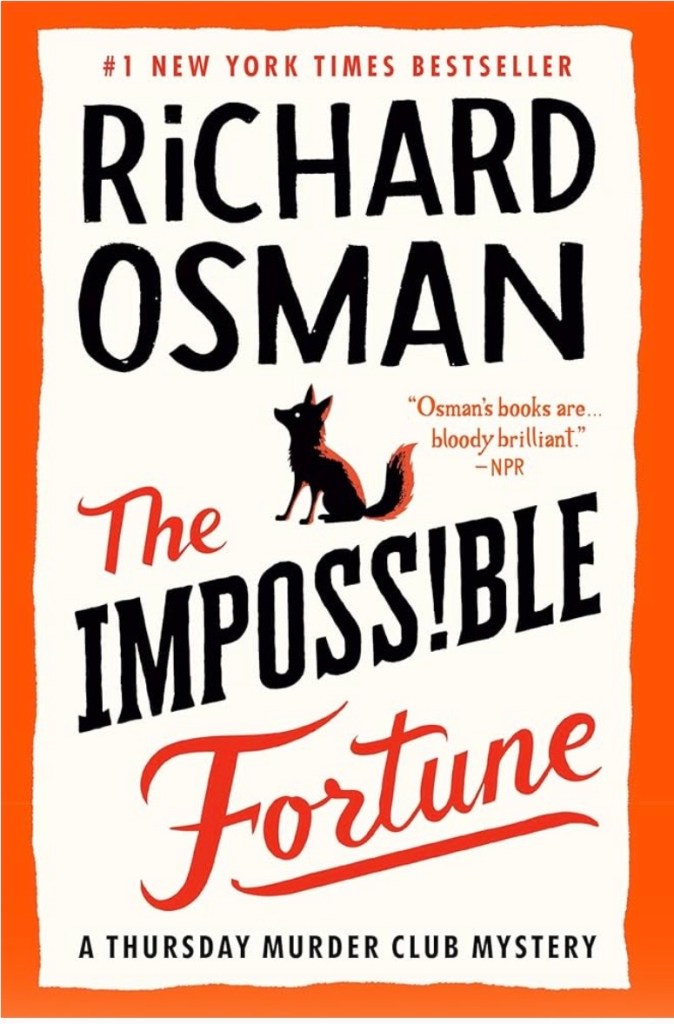
    Merry Christmas to me. Reading the Thursday Murder Club series is like carving away at a velvety cake, each slice more delightful than the last. I read this last instalment, Book 5 in the series, in one sitting. Osman’s characters are as dear to me as any friend and I cannot recommend these books highly enough. The small screen Netflix adaptation, despite its excellent cast, was, shockingly, a huge dissapointment in contrast, so I would caution readers to stick to the books. I’m not sure how Helen Mirren and Pierce Brosnan, Ben Kingsley and Celia Imrie, all favourites, could fall so far short of the charmingly crafted books but my guess is that the author was not involved in the screenplay adaptation, which stays close to the plot action and ruthlessly red-pens the incomparable interior narration of the four geriatic sleuths who solve murders like so many crosswords, all while portraying the ups and downs of ageing out. Elizabeth, a former spy was originally my favourite character but I must confess that Joyce, the Columboesque nurse and her dog Alan, captured center stage for me a few books back now. The therapist and the revolutionary who round out the quartet of central characters make excellent copy as well. Osman has a lot to say between the action sequences, and one can only hope that any further small screen cinema captures the depth of the books’ philosphical architecture and the charm of the characters often inarticulated interior narration. 9/10
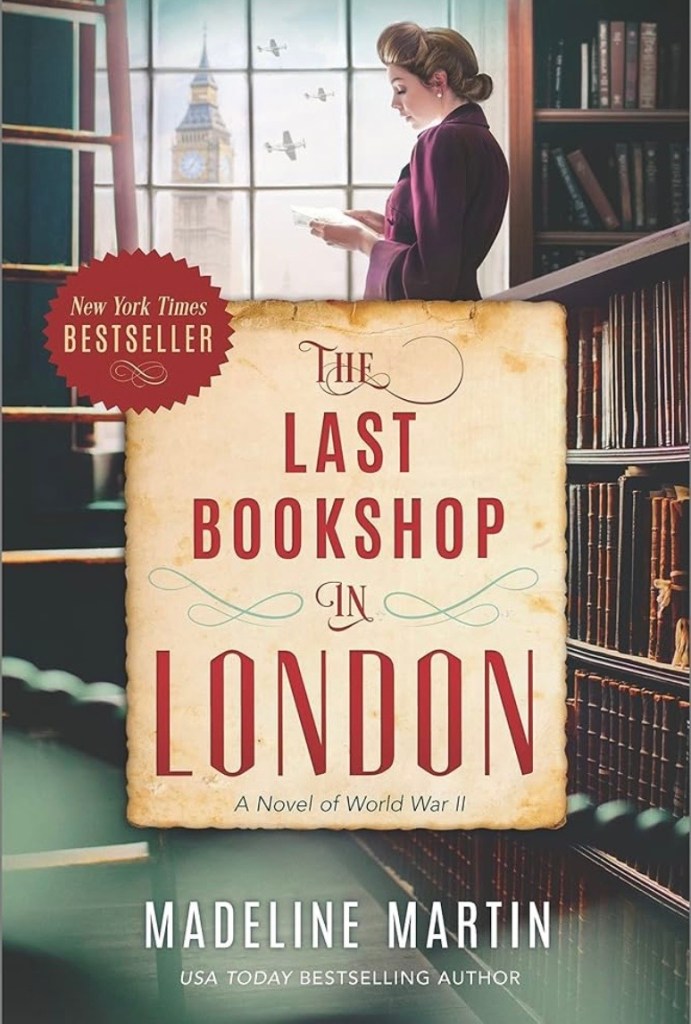
    Wartime Britain during the Blitz, a bookstore, and a young innovative woman discovering the joy of reading is yet another Christmas pudding of a book. Martin’s story is laced with historical anecdotes and details that lend her story authenticty, set in a romantic landscape the book is a beautiful portrait of love and loss, where bomb shelters are transformed into makeshift reading rooms, and where strangers find comfort in the classics and sanctuary from their chaotic and often tragic wartime lives. Grace Bennett begins with The Count of Monte Cristo before moving on to the Austens and Dickens as she comes of age and finds her voice in a dusty bookshop on Primrose Hill, in the heart of London during the Blitz. Martin’s book is a testament to the power of story, and the sanctuary of literature in the darkest days of war. Pretty much porn for a LOLIW who loves to read. 7/10
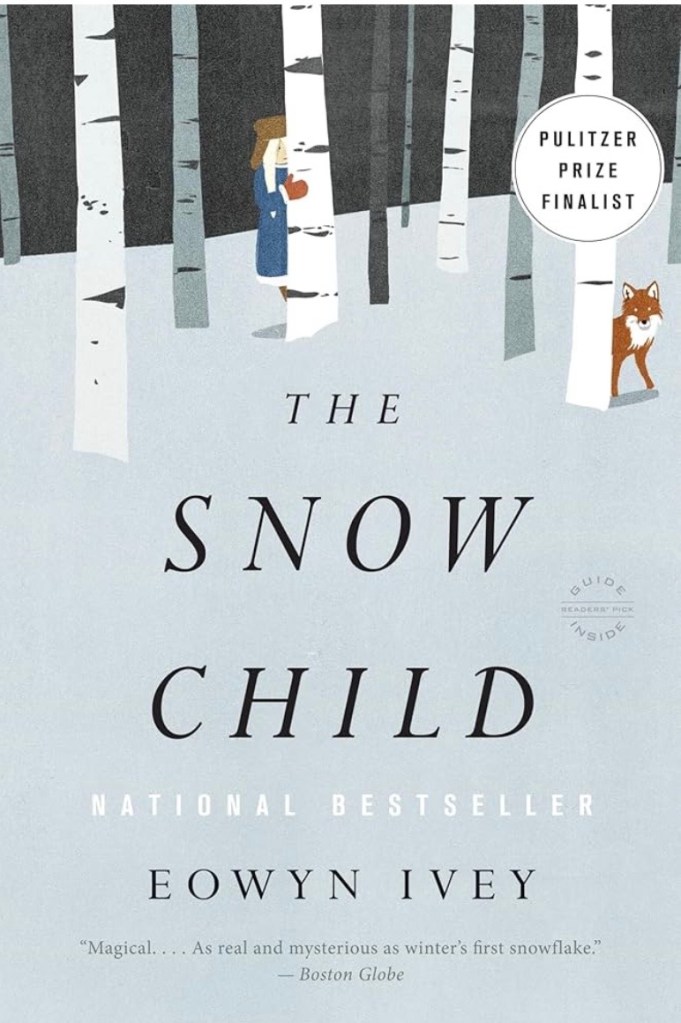
    The Snow Child has been in my TBR pile for an over a year, a gift from a friend at work. It is not my usual fare, magical realism. But when the book title showed up on a Winter’s fare reading list, I decided to pull it from my library and sample this lauded fable/fairy tale. Set in inhospitable Alaska in 1920, two aging, childless homesteaders build a snow girl who seemingly comes to life the next day… a miracle, a mirage, an answer to their prayers, a comfort to assuage all their troubles. Reminiscent of a Russian fairy tale read to her in her youth, Mabel, the would be mother, convinces herself that the girl is their child, conceived in snow. While Jack, the father fugure, is convinced the Faina, their snow daughter has a more orthodox lineage, the daughter of a dead trapper. Ivey’s book was a finalist for the Pulitzer prize in 2013 but I found it slow moving and lacking in the kind of magic I hoped it would hold. While the setting was beautiful and harsh and a near perfect place for some wisdom born of isolation and yearning, for me the book failed to crystalize the promise of the fairy tale and reveals real life as a story more unbelivable and fantastical than any tale told to children. 6/10
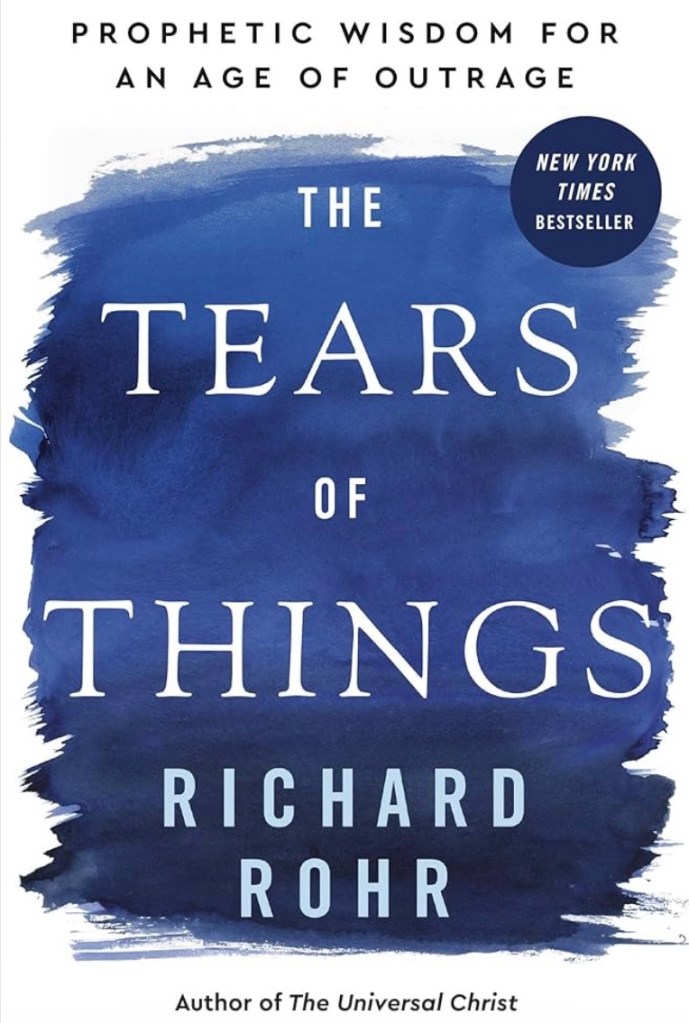
    Richard Rohr’s The Tears of Things aims at cultivating global empathy, “the opposite of judgment”, calling for an end to the polarization of opinion that divides us, and the collective greed currently fueling suffering around the world. Rohr asks us to embrace a deep clarifying sadness as a kind of salvation or doorway to true understanding. He advises us to consider our cultural contradictions: that killing is morally wrong but necessary in war, that greed is evil, but capitalism is lauded. He calls on us to adopt a “view from the bottom” where societies most vulnerable survive, and to act accordingly.

    The Tears of Things is an academic work with extensive biblical references detailing the Prophetic way to pass through disorder to a new and evolved consciousness. Rohr’s thesis is intended as a cultural change agent. The Prophets, he tells us, are realists and truth tellers, alchemists taking on contrary agents and conjuring a spiritual transformation towards wholeness, individually and collectively. Rohr is calling us to adopt a state of forgiveness and grace.”You must listen and listen again, and not understand, see and see again, but not perceive….until you understand with your heart.”(Isaiah)

    Rohr’s book is a timely and powerful reminder to examine and ultimately abandon our “us verses them” assumptions, and relinquish our cult of innocence to become “the light of the world.” 7/10
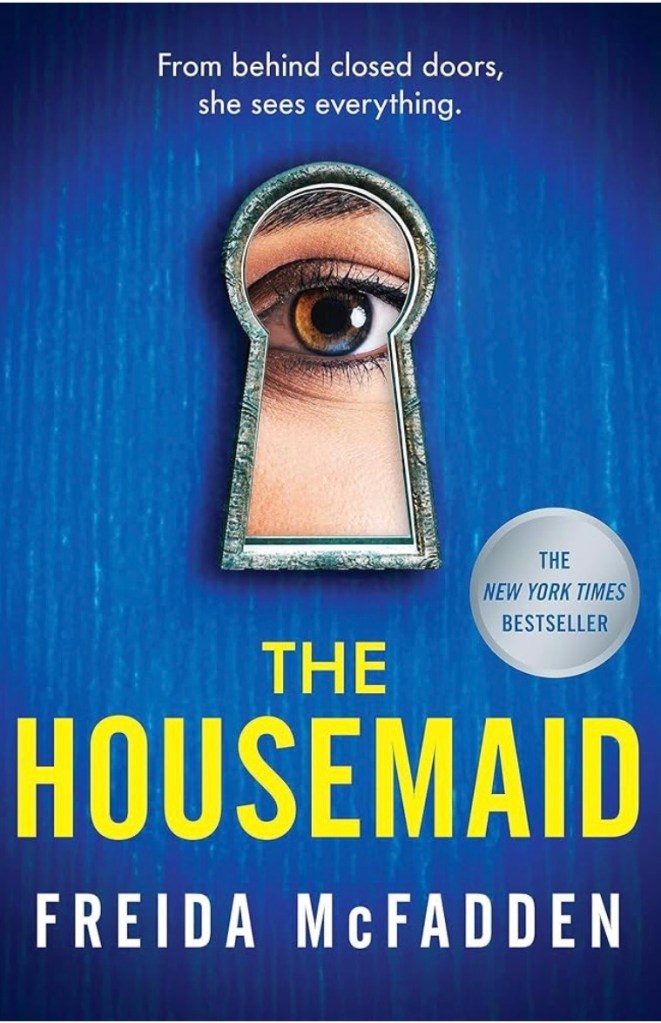
    This hugely popular page turner is a bullet train that delivers. The plot is unique enough to capture your interest immediately and McFadden keeps you on a hotseat of nervous tension chapter after chapter. No small feet in a genre that has exploded and saturated the market in the last decade. McFadden maintains pace throughout and more importantly she creates characters you want to explore, to discover more of their back story and ultimately, to understand their motivation. The story has already been made into a blockbuster film and though I havent seen it on the big screen, I am tempted to sample the cinema version if only to see how the story is cast, particularly the devastatingly handsome husband. While the reader is well aware of where the real danger lies in the story, we are unable to look away as the protagonist finds her way through the subtefuge and reveals her own dark history. The book sets the reader up for a sequel and I understand that there are, in fact, three books in the series now available in print. I will no doubt throw them in my TBR pile and pull the next one out when I’m in the mood for a tight rope narrative very late and very alone at home with a character who intrigues and shocks and has you enraptured in the darker side of the fairer sex. 7/10
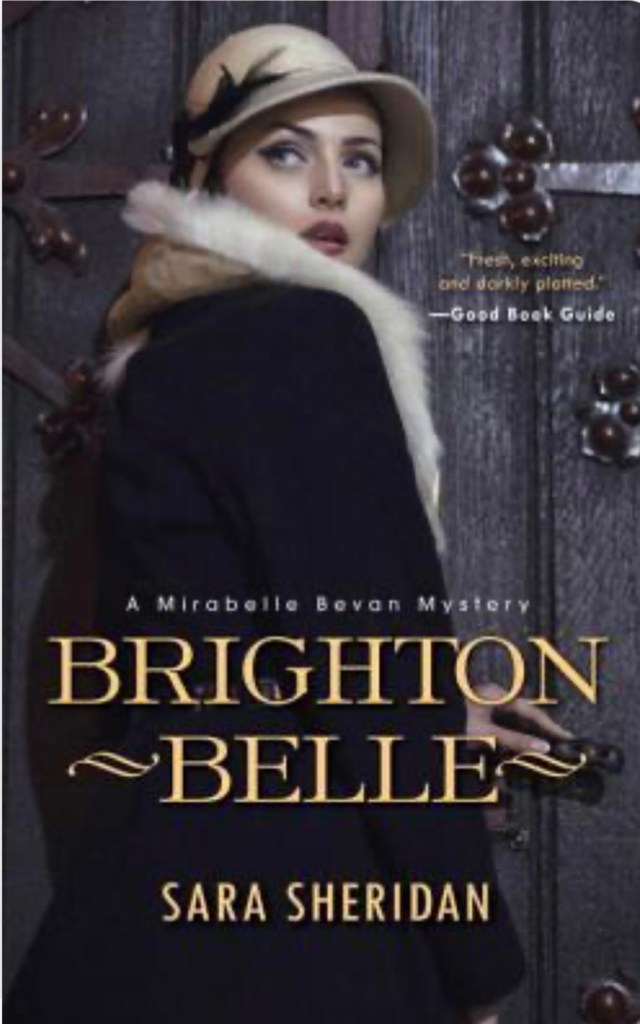
    I picked this mystery up at a book sale last summer having no idea it was part of a larger series. I grabbed the first in the series thank goodness. Sheridan has created a delectable detective in Mirabelle Bevin, ex British intelligence in post WW2 England, a time of Nazi hunting, before the full horror or extent of war crimes are revealed at the Nuremberg trials. Bevin is everything a good detective need be, bright, with a half revealed history that lends her an air of mystery, and of course an essential flaw of some kind, in this case a broken heart and a dead, married, war-hero lover. Set in Brighton, Sheridan’s characters eat fish paste sandwiches and stare out to sea, and put the kettle on and break out tinned biscuits mid afternoon. Sheridan’s book captures an underlooked time in history just after the war’s end when women who were involved in Intelligence work for the war effort were dispursed and forced to find new ways to cultivate a life of the mind in a patriarchal age. The story is peopled with interesting 5th business characters, a patronizing police detective who I suspect wiill develop into a romantic interest and a novice sleuth gal-pal, a black woman in 1950’s Brighton who I hope to see more of in subsequent books. This series promises to deliver a succession of perfect Sunday afternoons. 8/10
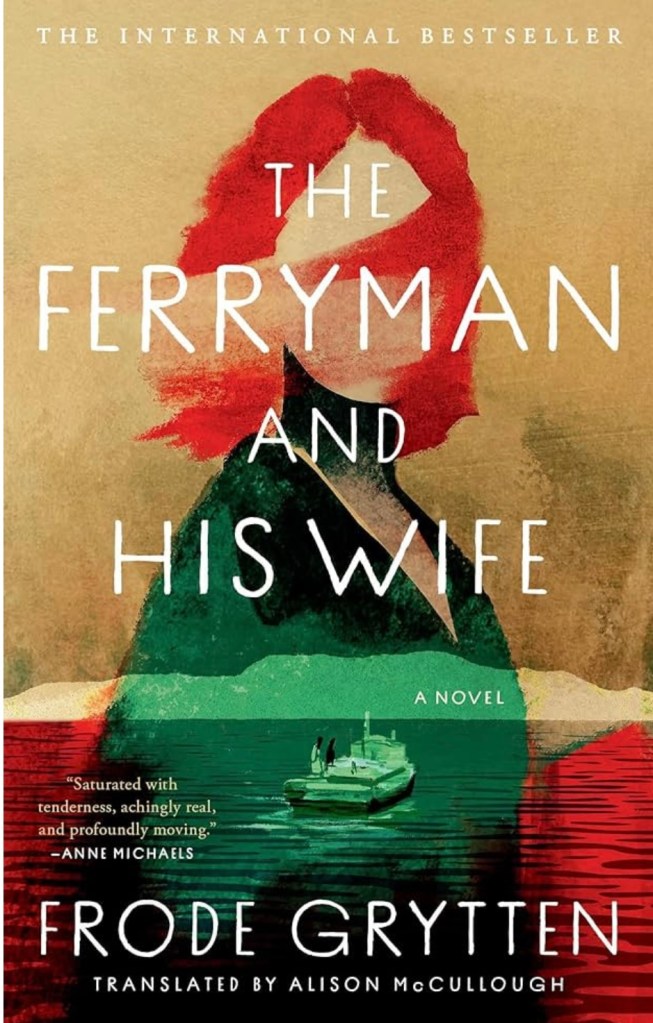
    This book is an absolute gem I picked up in New York last week at a charming book store called Three Lives and Company, rumored to be the bookstore that inspired The Shop Around the Corner from the film,You’ve Got Mail starring Meg Ryan and Tom Hanks and written by Nora Ephron. It was the loveliest little book store I have ever been inside. It felt like each book housed there was hand picked after serious vetting as space was at a premium. I could have stood there all day and listened to the lively conversation and book talk within those walls … a short story all its own.

    Grytten’s book is the narrative of Nils Vik, an aged ferryman on a Nordic fjord who wakes one morning aware that it’s the last day of his life and sets off on his boat, a day like so many others, to travel his ferry route where he meets people from his past, the dead, including his beloved long dead companionable dog. The book is a tender and beautiful tribite to all the little ways we help our neighbours and friends and how intimately we touch each other’s lives, often unknowingly. The Ferryman and his Wife is a charming tale written in the liminal space that separates this world and the next, a time when our dead will be revealed and we, each of us, have an assignment, an assignment to remember. 8/10
  • “What’s for Dinner?”

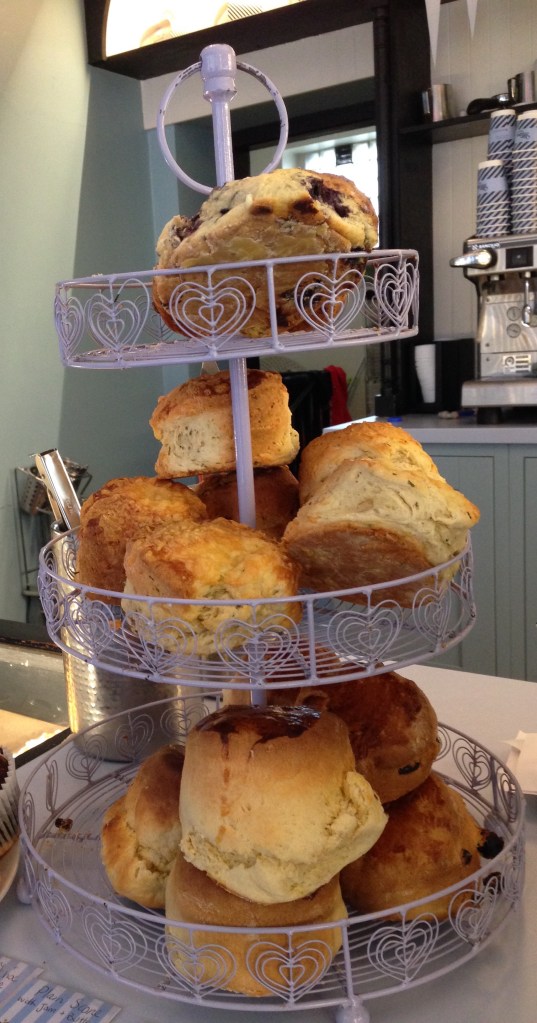
    Edinburgh Tea Biscuits

    As a little old lady in waiting I try not to think about what’s for dinner anymore. For years it was the first thing I thought of each day, even before my feet hit the ground. I’ve spent a lot of my life thinking about food, too much of it. What’s best to eat, when to eat, what not to eat, what to pack for lunches, the daily miracle of coordinating, mandating and delivering family dinner at the table, the sometimes dubious nutritional value of said dinner, and the fallout of loosing the family dinner battle. What should I eat to maintan a healthy BMI? What does a healthy diet means beyond the parameters of the food pyramid? Which diet is best: vegan, vegetarian, low fat, low carb, high protein, one meal.. three meals…four, ‘one potato, two potato, three potato, four.’

    As a woman who stayed home for a dozen years and felt the full weight of the domestic hausfrau experience, food purchase, prep and delivery was a significant part of my work day. Suffice to say, I’ve steamed my way through several rice makers and peeled enough potatoes to feed the whole of Ireland. I’ve menu planned and scrutinized thousands of grocery lists and contemplated how best to infuse two growing humans, with as many fruits and vegetables as possible, a herculean task in an age of ‘lunchables’ and packaged candy in the shapes and flavours of actual fruit…highly processed, heavily marketed frankenfood. I take pride in the fact that my daughter refers to us as an “ingredient family’, where very little comes from a box or is overly processed (notable exceptions – yogurt, cheese and bread…we’re in the 21st Century friends… I draw the line at kneading, churning, aging or vigilent attention to temperature). There is very little that is instantly consumable in my cupboards…all food stuffs require some sort of preparation: rinsing, dicing, slicing, roasting, toasting..or a quick commingling in the Ninja.

    For my 50th Birthday I decided to hang up my apron for good. Back to work outside the home for a number of years, I was ready to resign from my second job as menu architect, head chef, prep chef, pastry chef, bus boy, dish diva, and lunch maker. Happy Birthday to me. I explained to my family that I would cook only if the spirit moved me and that dinner was no longer to be expected by any of my spoiled, unskilled, hangry housemates, especially on days when they arrived home before me. Looking back it was the death toll for the family dinner, that and competing schdules. The kids were both in high school at the time. Ten years later, on the road to 60, I can report only mixed success in divesting my culinary role…I blame myself, and my misguided attempts to safeguard my family’s heath, protect my kitchen, and reduce ceiling splatter and any permanent damage to appliances.

    “Whats for dinner?” is a kitchen query that still eminates from my hungry adult children in the late afternoon from time to time. Shoulder deep into the fridge or pantry, desperate to make the ingredients on display coalesce into something approaching a satisfactory meal, but too inexperienced or myopic to see the beauty of ‘breakfast for supper’, or the fact that chickpeas are really hummus in disguise. I think it’s important to acknowledge here that my husband is too clever to ever broach the subject of dinner. When the kids do slip up and ask whats for dinner, I smile a happy little boundary smile, and if I’m not hangry myself, I might suggest cereal, or eggs or pb and j’s. At other times I simply repeat, “dinner” with a slightly stupefied, quizical brow, as though they were speaking in some foreign language… a look I learned from my husband, a master at navigating family life with minimal effort on his part.

    The subject of supper aside, as a little old lady in waiting…who am I kidding here…at all stages of ladydom, I have given a great deal of thought to my diet, in an attempt to consume nutrient dense, high volume, low caloric-load foods, to look good in my jeans, to avoid suburban square arse syndrome, a hideous plague of middle age, and later, as a nurse, to avoid carcinogenic foods like processed meats and cardiac villains like trans fats, and more recently, to restrict inflammatory culprits in order to reduce pain…that’s right…I’m going after the sugar and simple carbs, to reduce the meno-pot, the 10 or so pounds of fluff floating around my mid section. No, its not there to protect our organs as we age. Closing in on 60 it’s time to quit the cake … not the wine though (maybe ditch the fruity sugary stuff), but wine’s a living whole food ..its not processed… its allowed to age. LOL to LOL no one is taking the wine off the table.

    Dessert, however, and the bread basket I believe are a fair trade for decreased joint pain, ease of zipper glide, improved meno head and energy levels, and potentially increased longevity with greater functionality and mobilty in the last quarter of our lives. After a lifetime of exhaustive and ongoing research on the topic of food and diet I can recommend only three books on the subject that form the genesis of my LOL approach to food. The first, Michael Pollan’s In Defence of Food – an Eater’s Manifesto” can be distilled in a simple maxim: “Eat food (real food), not too much, mostly vegetables.” Next, Savour: Mindful Eating – Mindful Life by Thich Knat Hahn which encourages a mindful reverence when eating and a grateful appreciation of all the work and people involved in bringing food to your table. Lastly, French Women Dont get Fat by Mireille Giuliano, which promotes a self awareness of individual food challenges and suggests a highly customized self-taught approach that respects your personal food picadillos and preferences. No foods are off the table for les femmes francais.

    I’ll be honest and say that if I get to choose my last meal, one final opportunity to taste, smell and enjoy food, my pedestrian pallette will no doubt yearn for a tea biscuit made by some proper little old lady…perhaps of Scottish descent. I’d lather each half with a generous mound of clotted cream (the kind from a jar imported from England) and lemon curd (also imported from the British isles…not the lemons mind). I love simple carbs and homemade sweets. I grew up on them. Cheap, easily portable and quickly put together, some of my fondest childhood memories by the Bay of Fundy in the wilds of the Maritimes, star these cheerful oven baked ‘rib stickers.’ My mother taught me that there isn’t much a good tea biscuit or pan of fudge can’t cure…except maybe diabetes. I know sweets are not recommended on anyone’s food pyrimad, even the ones heavily influenced by “Fat/Sugar/Salt” pressure groups …yeah …they’re out there, doing a sweet business with their sugar-coated promise of a 10 second dopamine high that will keep you coming back for more. Hanging onto my fifties by my fingernails, I have grudgingly come to accept that my dear old friend, bread, the plain sister of the sweet family, is nothing but a nutritionally void filler… bread is bad, and I’m finally ready to embrace a life without sugar laden simple carbs.

    For this little old lady in waiting, dinner for the foreseeable future is some variation of fruit and veggies, legumes and lean protein, like fish, quinoa, nut butters and beans. I’m allowing for reevaluation at age 80 depending on the efficacy of a clean diet as regards pain management and cognitive capacity. There may come a day when tea and toast and biscuits lathered in cream become a mainstay again but for now this LOLIW is off the edible dopamine drip and opting for foods that promote less fluff, more energy, a clear head and ideally a pain free active lifestyle for many years to come. That’s what’s on the menu.

  • Reading Room – Series 4

    “So often, a visit to the bookstore has cheered me, and reminded me that there are good things in the world.”

    Vincent Van Gogh

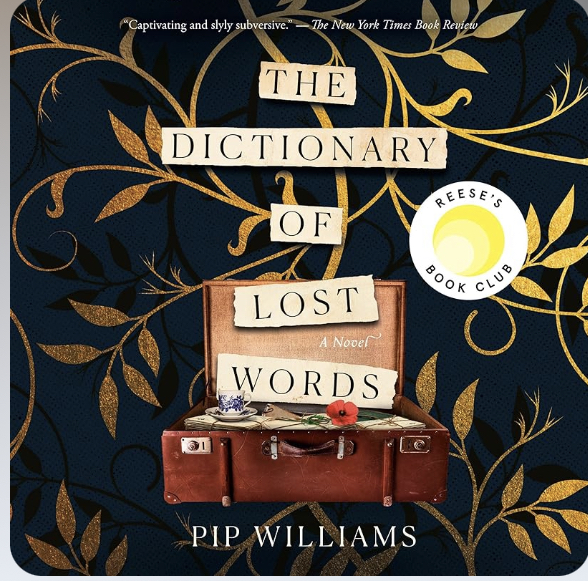
    The Dictionary of Lost Words is the story of a young girl who grows up beneath the sorting table of a Scriptorium where words were collected and scrutinized and judged worthy or discarded by a small group of learned lexicographers who produced the first Oxford dictionary. Esme is indoctrinated into a culture that cares for and reveres the written word, that understands the import of language, and begins her own collection of discarded words, those deemed unworthy due to their pedestrian nature or obsolete status…words like bondmade and other words that coalesce around the language of women, words like suffragette and cunt. William’s work is an interesting exploration of the social history of the first half of the 20th Century, including women’s emancipation and the onset of the Great War. The novel is a love letter to anyone who loves language and saveurs words, and who understands the power of written script and the importance of preserving what may be so easily lost. I am a lover of words like my father before me, he collected them like they were something to treasure and hold dear. This book is a perfect read for a bookish woman who dreams of scholarly hours and endless days within the stacks of The Bodlean Library which has a starring role in the novel – 8/10

    This book was recommended by a friend after discussing The Thursday Murder Club books. Killers of a Certain Age, as the title implies, is the story of a group of four post-menopausal assassins on the precipace of retirement. Meet Helen, Mary Alice, Nathalie and Billy our engaging, intelligent first person narrator. They are embarked on a cruise that goes very wrong very quickly and they are forced to fall back on their killer instincts. While the book offers an interesting premise and is no doubt headed for a big or small screen adaptation, it did not read as well as the Thursday Murder Club books. I found it hard to distinguish between the title characters, with the exception of the narrator, Billy…the others weren’t drawn distinctly enough, and the murky nazi-hunting “museum”, the assassins employer, which may have been a source of endless fascination, seemed almost farcial in its presentation. While the lead character, Billy, was well written and sympathetic, as was the dexter-like work ethic the assassins used as a code for killing, erasing only the morally disposable, the book reads like its arrived a little late to dinner. Flashbacks to training days and themes like the invisibility of the older woman are definate high-points in the book, but we’ve read the aged gang of adventurers story before and the writing was better. – 6/10

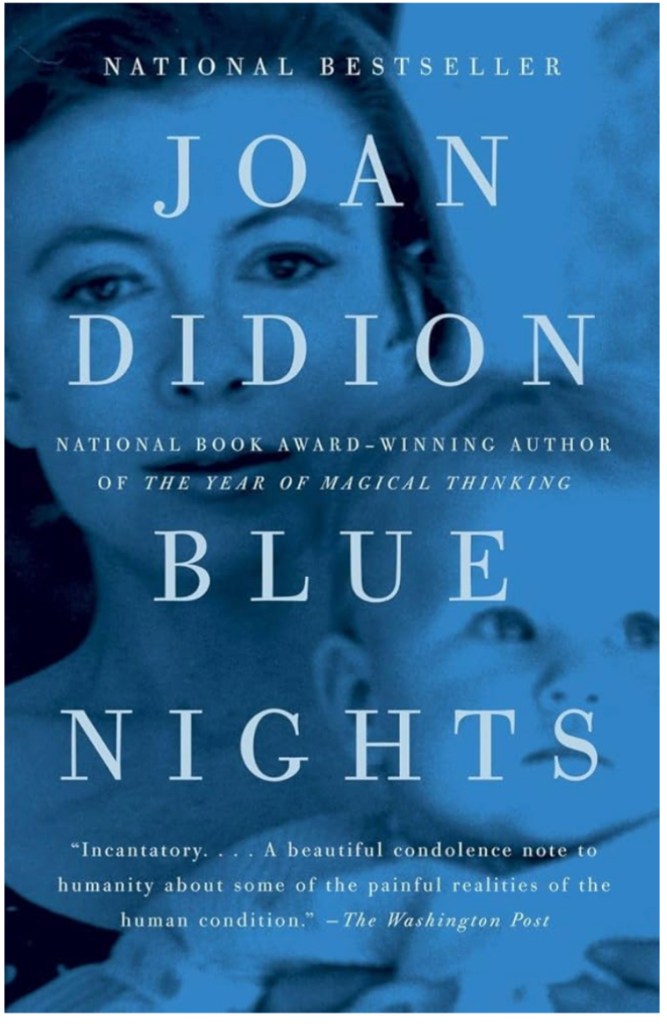
    Blue Nights by Joan Didion is a heartbreaking remembrance of the life and death of her only daughter, Quintana Roo Dunne. Didion recounts blue nights, the gloaming moments, what the French call ‘l’heure blue, “the end of promise, the dwindling of days.” The book’s subject is very weighty – what greater grief can there be for mortals than to see their children dead. (Euripides). Didion’s narrative explores what it means to be without your child, what it means to let them go, and what it is to be tasked with “protecting the unprotectable.” It invokes the terrible pain of remembered parenting, “Brush your teeth, brush your hair, Shhhh, I’m working.” It is painful and poetic and hard to look away from. It is a meditation on the scourge of depression and anxiety, the imperfect art of medicine, and the horrifying realization that we can never deserve our darling children, that we may fail to keep them safe, and that in death we may begin to forget them. A haunting read. – 7/10

    The Novice is a departure from Hahn’s usual meditative prose. It is a short work of fiction that will resonate with anyone who has lived a life and experienced injustice or unwarranted judgment. It is based on the true story of Quan Am Thi Kinh, a tale that every Vietnamese countryman is told from earliest childhood. Kinh was a woman who masqueraded as a man in order to join a monastery and is revered for manifesting infinite forgiveness. A character accused unfairly of misdoing, she endures many hardships while cultivating a spiritual life, and aquiring the qualities of loving kindness, compassion, joy and equanimity. The book is a parable for our times, a simple powerful fable that counsels us to “go home to the island within ourselves,” While the book is not my favourite of Hahn’s, I am perhaps not evolved enough to feel transformed by his simple beautiful message, at least on this occasion, I recognize The Novice is an important read, one that will stay with you awhile. – 6/10

    Copeland’s Eleanor Rigby, as the book title suggests, is a swansong to the lonely. Liz Dunne is a frumpy , middle aged, over weight, friendless redhead and the story centers around her transformative relationship with her newly found son. Written in first person narrative, my favourite, Copeland’s story is sad and funny, sometimes both at once, and explores what it means to be lonely in the modern world. “Loneliness is my curse – our species’ curse – it’s the gun that shoots the bullets that makes us dance on a saloon floor and humiliate ourselves in front of strangers.” It is a salute to the invisible among us. At one point our narrator asks if she should finish up, “perhaps you might not wish me to go any further.” But as Copland wisely suggests a little later in the narrative, “nobody’s story is boring who is willing to tell the truth about himslf.” I liked Liz, a woman who knows she has lost many chances and opportunities for new experiences and is finally ready to embrace the gift of being alive. – 6/10

    Screenshot

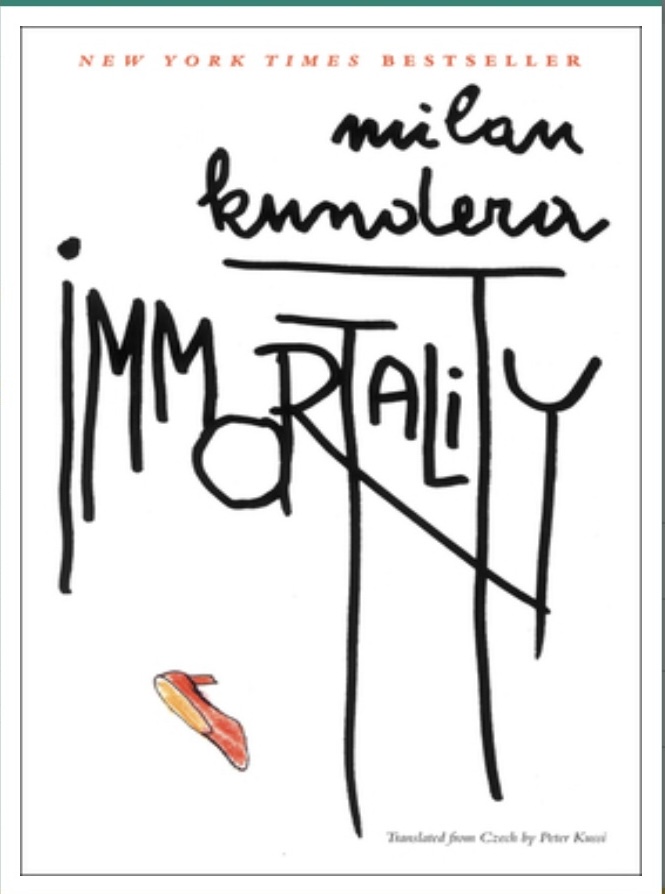
    I picked this novel up on a recent trip to Prague with my daughter. I handed her The Unbearable Lightness of Being which I read when I was her age and then grabbed a copy of Immortality for my little old lady in waiting library. The story held great promise. Agnes a little old lady herself, living life in a tenured marriage on the mean streets of Paris, revisiting her childhood and coming of age including former love stories and complex family relationships…pour me cup of tea and lets get lost together I promised myself. Sadly the book did not deliver with its incessant back and forthing to a classic love affair between Goethe and Bettina. A running parallel story that I was, no doubt, not clever enough to enjoy. I wish Kundera could have contented himself with a simple contemplation of death in real time, less high theatre, metaphorical references, more…death is coming and do I want to spend eternity with the people I made a life with here, the interesting idea of the world as an ad agency, or how about “hypertrophy of the soul”, or maybe the changing nature of time, just a few of the loftier notions he introduces…aren’t those themes sufficient to build a novel on? Overly academic and ambitious Kundera…we know you’re smart, you dont have to reference every page…you told us so much and showed us so little, and left us with nothing to keep. Cardinal sin…you broke your contract with the reader. –2/10

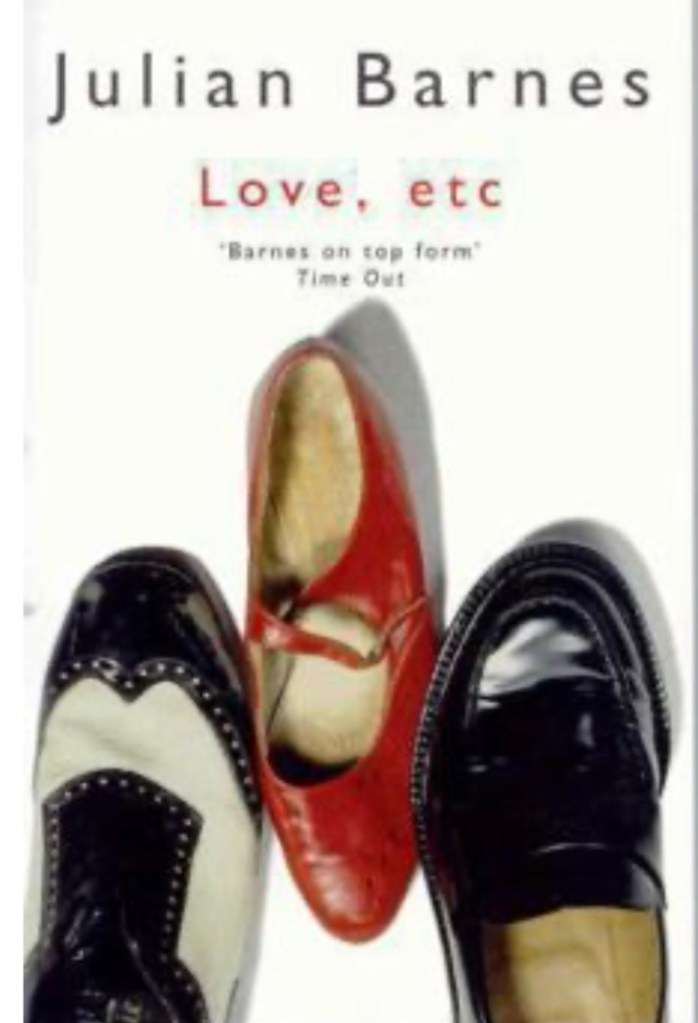
    Love etc. is a dark ad twisty menage a trois between Gillian and husband number 1, steady, reliable Stuart, and husband number 2, witty, entertaining, out of work, Oliver. The story is told in the voices of the three principles, with a few fifth-business cameos inserted for respite care of the reader I imagine. The three stars of the novel tell their truth without interruption or the contamination of conversation. The book is a sequel to Barne’s eariier work, Talking it Over and reads a lot like a one man play, spoken in three distinct voices. Perhaps I might have enjoyed the work more if I had read its forerunner first, but I doubt it somehow. I found the characters very real and clever and charmless, and the narrative full of pithy one liners like “lets just fall into bed and not have sex.” Barnes talent is without doubt, he expertly conveys his weighty themes – the inexplicable sadness of things (“I want mommy to be more cheerful”), the advantage of age and the priviledge of not explaining everything (“you are very naive about us, the old people”), and the last gasps of a used up marriage (Do I still love Oliver? I think so, I suppose so. You could say I’m managing love”). I applaud Barnes mastery and his keen eyed take on the larger life questions and still I did not enjoy this work and cannot recommend it. – 5/10

    Screenshot

    Thurber’s book of essays and amusements is a collective look at the imperilled english language, disdained and disfigured in the mouths of users and abusers of the spoken word. The well known humorist invites readers to “urge up a footstool, loosen your stays, and saucer a scotch,” as he makes fun of our child centred culture, warning us to watch out for “the darlings at the top of the stairs.” Thurber’s work is a call to arms for phrases like “ya know” spreading like viruses, and his essays read like a fairwell speech to proper diction or the decline and fall of the King’s English. He accuses the nation of breeding a band of “tired teachers and apathetic students.” Other topics include the decline of comedy in our time, the poor standards of pronunciation (“mindless, meaningless mumbling”) and other verbal atrocities like the smokescreen of political jargon, and the overuse of idioms. You might have to be a bit of a language geek to get your money’s worth on this read, the comedy is niche, but pleasing if wordplay is your cup of tea. – 6/10