Tag: art

  • Embracing the Crone

    “The crone must become pregnant with herself, at last she must bear herself, her third self, her old age, with travail and alone. Not many will help her with that birth.” (No Time to Spare – Ursula K. Le Guin)

    “When howling gale is rattling doors, or call of lonely wolf is heard, or cry of raven on the wing, or crack of frost upon the ground, tis she, tis she, tis she. (Calleach – Siobhan Mac Mahon)

    Less than a week before Christmas, when family matriarchs are customarily exiled to Santa’s sweatshops, wrapping gifts like Edward Scissorhands, and frosting shortbreads until our collective glycemic index reads “critical,” I decided to take a night off from the Christmas chain gang. I ventured out on a dark and stormy night, in the company of a close friend of comparable vintage, to attend a workshop that promised to introduce, depict, and interpret the power and majesty of the Crone, a feminine archetype, traditionally the last in a triad, after maiden and mother.  The Crone, often portrayed in our culture as a warty hag, complete with kerchief and shawl, is cast as the most powerful as well.   A sage, a witch, a guardian, a memory keeper, a storyteller…these are just a few of the crone synonyms we might try on for fit, as we move into this last, magical, and mysterious phase of feminine folklore.

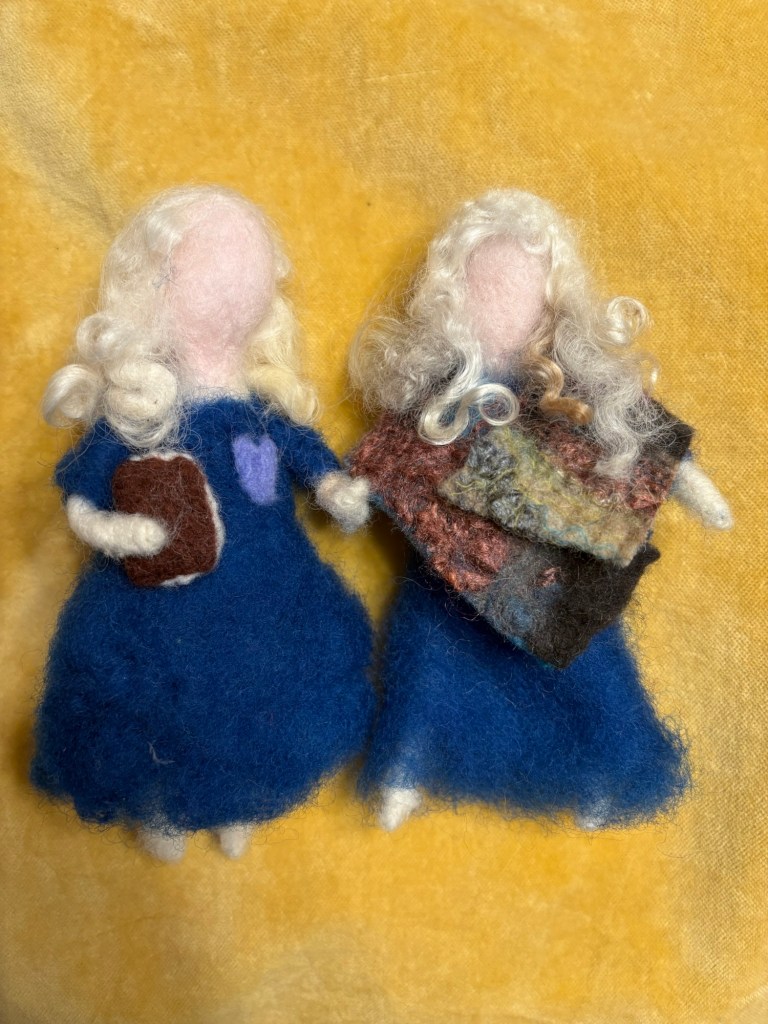
    The workshop was led by a woman who called herself a ceremonialist, a Cailleach, or “veiled one” in Gaelic mythology, who helps people transition through significant life events.  Like so many formative moments in a woman’s life,  it began with a fairy tale and the promise of a little-old-lady felted doll of our own making by night’s end, so we charged our tenuous social batteries, did battle with our homebody hearts, discussed whose eyesight was least perilous for an after dark adventure, packed a journal and a sacred object, as directed (Jesus …will there be sharing), and set off on our quest to Encounter the Crone.

    Sat close to the sea in a small conference room, the wind outside serenaded us like a siren call, a slow whistling sea shanty, and the doors rattled loudly, heralding the night’s import, like the ghost of Christmas past. We were offered tea and invited to sit around a makeshift altar decorated with bones and stones and candlelight.  We added our own holy relics: jewelry passed down from our mothers, artwork, a pinecone, a bird, a doll, the shell of a sea urchin, a heritage Christmas angel, and a witch stone, known for its magical protective properties. We were 12 women together, artists and academics, nurses, and teachers, travelling in the dark, a winter’s walk to honour our experiences, mine for meaning, and navigate together a transformation to feminine elderhood, a privileged freehold of wisdom and authenticity, sovereignty and self-possession. The magic in the room was a palpable thing…not enough to levitate… first time out mind, but strong enough to elevate us all.  I’m certain it surprised no one in the room when the lights went out and we were forced to close our circle prematurely, but not before we built something true and lasting together.

    The fairy tale recited so beautifully by our host was the story of Vasilisa the Beautiful, a kind of hybrid Cinderella and Hansel and Gretel.  Our heroine, Vasilisa, is gifted a tiny doll with magical properties from her dying mother, that protects her throughout a perilous journey to safety.  Spoiler alert she lives a full life and eventually returns to her origin story, living out her days as an elder in the forest.   The tale is simple but rich in imagery and metaphor.  We were asked to share the images that lingered in our mind’s eye.  The death scene between mother and daughter and the gift of legacy, chicken legged furniture, the impossible task of finding poppy seeds in dirt, a metaphor for discernment, and a fire torch crafted from a skull, the instrument that leads to the story’s denoument, all had honourable mention.

    For me, the lasting power of the story was not an image but an incantation.  Vasilisa called upon the power of the doll reciting, “Little doll, little doll, drink your milk my dear, and I will pour all my troubles in your ear, in your ear.” The notion of a talisman for the storms of life, a mother’s magic, an enchantment to conjure a place of safety in our darkest hour, when we’re not sure our own strength will hold; to call on the inherited love of our ancestors and open a portal of protection, or peace abiding….definately worth the price of admission. Were we leaving the workshop later that night with such a prize in our possession, a felted doll infused with magic, a protective cloak spun from our collective sacred offerings? What sorcery was this?  I started thinking maybe I should leave the house more often, even as a tempest raged outside, and Christmas at ours, still only half conjured.

    Properly incentivized we turned our attention to working with archetypes.  We chose a role from the alter at the center of our circle. Interestingly no one chose the same archetype.  There were so many wonderful choices.  I passed on Hag, and Old One, Elder and Witch.  Hearth Keeper and Herb Wife didn’t quite fit either.  We had a Weaver and a Word Witch, I remember. My friend, selected Sage.  A new grandmother, she is interested in legacy building and passing down family tradition and wisdom.  I picked Storyteller.  I’ve always been addicted to story.  It’s my preferred way to learn.  For me it’s high art, allowing us to live a thousand lives in one, a talisman against loneliness, a cure for myopia and polarization.

    After sharing our selections and thoughts around the archetype alter, we moved, some of us more tentatively than others, to worktables set up for needle felting, a dangerous, dexterous art, that comes with small sharp stabbing needles and raw wool to be shaped and prodded into small objets d’art, a felted little old lady…in waiting.  I wish I could tell you there was no blood lost but I’m sure I wasn’t the only hag there to stifle a silent scream that night as the needle pieced my presumably pre-loved stabbing pillow, and caught the delicate skin beneath my fingernail.  Maybe the bloodletting is part of the spell, maybe human sacrifice is the elixir that makes the doll magical.  All I know is that I stabbed my doll a thousand times or more before she came to life in my hands and the stabbing was oddly therapeutic (“psycho -killer…qu’est-ce que c’est”). I plan to continue my felt making education and have already created a companion for my doll, but maybe I’ve shared too much. Still, friends are important…even felted friends.

    The power went out when I was attempting to style my doll’s hair.  Every woman will understand the import of such a moment.  Our felting mentors came to the rescue and held cell phone flashlights for us to finish this crucial phase in the work. Suffice to say, I was never so happy to own such unruly, unkept tresses. It was the work of a moment to complete the effect and even in the dark I recognized the crone I held in my hands as my own, a story keeper and maker, a sovereign in the final decades of her reign, confidant in her unique gifts, generous in her attention to those she held dear, and determined to live intentionally, according to her values and passions until her last moments in this realm. 

    I was afraid the storm raging outside would prevent our eclectic circle from sharing our thoughts on the dolls we created. Insatiably curious, I had an almost visceral need to know how the others would answer the last question on the agenda for the  night, “If your inner doll could speak to you tonight, what would she say?”  One doll spoke of cultivating more trickster energy, to seek opportunities to laugh and have fun, another counselled that there was always something new to learn and explore, others said to ask for help and not to imagine we can do it all ourselves, that it’s ok to be messy, to rest, to be steadfast, to practice unconditional self-love, to keep moving, to offer guidance, to stand in the wind, to practice childlike wonder, and to embrace and celebrate all the beauty within.

    I know the doll is just a small, symbolic, hand-built ornament, but it feels so much bigger than that to me. I know we make our own magic, but I also know that there was a wisdom teaching waiting for us in the dark that wintry night, an introduction to “crone-ology,” a threshold for letting go of all that no longer serves us and a turning point in the pages of our story.  You may cackle, but I have plans to build my doll a small house with a door that opens with ease, so whenever I need to hold her close and feel my mother’s magic near, I’ll find her waiting for me there, her spell unbroken, a warm cloak of protection against the storms of life.

  • In Conversation with Kate Elman Wilcott

    I first met Kate in the home of a mutual friend a few days before our first-born sons, both redheads, set off on a grand adventure, the public school system. I remember we talked about phonics and kindergarten teachers, A Mrs. Fox, and a Ms. Roach, aptly named for the wild animal tamers they turned out to be.  ‘Let the Wild Rumpus’ take a seat…at least until recess.  While the boys toiled at school, we packed up our preschoolers and headed out to each other’s homes, together with a few other like-minded women, and while the littles mingled, we formed a small wolf pack of our own.  We called ourselves the Coffee Mommies, but don’t let the name fool you…there was enough intellectual energy and collective sweat equity sat around those suburban kitchen tables to take over the world, and still be home in time to help with homework.

    I learned a lot about Kate Elman Wilcott during those years. I can tell you that she is a builder.  After earning a degree in Theatre from Dalhousie University, Kate spent the 90’s in Halifax, returning to Saint John in 2001, where she continued to build and expand on an eclectic teaching career in theatre, notably through her very successful not-for-profit venture, Interaction, a children’s theatre.

    Kate has built innumerable theatre sets, and produced countless theatrical productions, while simultaneously engineering a thriving playground for the arts in our city, principally for the youngest members of our community, and in doing so, has helped to build confidence, self-esteem, empathy, and a lifelong appreciation of the arts in a cohort of young minds.

    “Training in the arts is so good for kids.  If you just focus on the people you’re working with and build a strong group dynamic, creating a safe space where people can take risks and figure out what works and what doesn’t… if you just focus on that process, then the product is guaranteed to be great.  At the same time, you’re always working to deadline…the curtain must go up.  I was very much conditioned to work to that deadline because at 7 o’clock on a Friday night at the Imperial Theatre with 600 people in the audience, the show must go on. That’s great training for any career.” 

    As the former Arts and Culture Coordinator for the City of Saint John, and a recognized leader in community development within the region, Kate has worked as a teaching artist, producer, facilitator, collaborator, and director. Her professional and volunteer experience includes policy development, university lecturer, developing public safety protocols, organizing community events, fundraising, and even touring with Symphony New Brunswick. She has performed in an award-winning film, played the bass, trumpet, piano, drums, and guitar in a series of bands, and was named a YWCA Woman of Distinction.  She sits on the Harbour Lights Board and is currently at work writing a series of stories based on anecdotes from her studios.

    Presently serving as our Member of Legislature for Saint John West Lancaster, Kate is at the helm of a very busy constituency and is out working hard most days to build a better province for all of us to enjoy.  At an age when her peers are winding down and looking to divest responsibility, Kate, with her deep-rooted work ethic and sturdy moral compass, is taking on a greater community role, exemplifying the credo of a favourite literary detective, “Everybody counts, or nobody counts.” Kate is an honourable human being, a neighbour you can count on…the kind you want to run for office and represent you, to sift through the politics of competing interests, to search for solutions, and build a better world where we can all belong.  She has my respect, she has my friendship, and she will always have my vote.

    Tell me your life story in seven sentences or less? 

    Ok… so, let’s go backwards for the origin story. I’m the MLA for Saint John West-Lancaster and have served in this role for just over a year, and prior to that I was the Arts and Culture Coordinator for the City of Saint John. For 18 years I ran a non-profit arts organization that focused on community development through the arts, which I founded in 2001 when I moved back to Saint John from Nova Scotia. During those years I also raised my two children and a couple thousand more that I worked with in my studios and in schools throughout southern New Brunswick. I spent the 90s in Halifax, studying and working at Dalhousie University, and professional theatres and schools across the province; that’s also when I met my favourite person in the world who’s been by my side since 1992…that’s my husband, Mike.  And before that I was a west side kid who loved to climb trees, and swim at Dominion Park, and play music, and act in plays, and play sports. For the first two weeks of my life, I lived at 53 Elliott Row, before the Elmans moved to the west side, where I’ve lived ever since.

    What is the best thing about getting older?

    Ok so when I was young, you’re often focused on getting to move on to the next phase of life…so middle school to high school, or graduation from university to the career world. But when I hit 50, I realized that the best part of life is who I am right now. It changes… I change each day with new experiences, but I enjoy being the age I am now, and while I know that I have opportunities ahead of me, I also know each day is to be savoured. And by savoured, I mean we have work to do, and we have to get it done. I fully feel with every ounce of my being that we’re here to serve and make the world better for each other, whether it’s through charity, or making people feel they belong, or nurturing, or entertaining, or problem solving. It’s our legacy and our purpose. I also embarrass far less than I did as a younger woman, and I like that.

    What is the worst thing about getting older?

    The little physical things I guess, that remind you that you’ve lived a good life. The aches and pains remind us that we’re still here…some of them I wish I didn’t have. My dad is 94, his sister and brother-in-law are 92 and 93, and they have such amazing humour and chutzpah…a certain mindset. I can only hope to be as blessed.

    One of the absolute worst things about getting older are the targeted ads on social media. The algorithms that think I really want to do chair yoga, or buy progressive lenses, and I really want to lose 30 pounds this month, or help my daughter raise her 13 kids on the farm. It’s insulting.

    What would you title this chapter of your life?

    GSD (Get Shit Done)

    If you could retain or retrieve one quality from your youth, what would it be?

    The boundless energy and time. I like to think I have managed to hang on to the inner workings of youth. Maybe it’s because I spent so many years playing with young people as my career, or maybe it’s because age…ahem maturity, never seemed like a good enough reason to stop playing, and that’s probably because my coworkers were teenagers for many years and that was very nourishing. I’ve never given aging a lot of thought … it was never something I placed above being genuine and kind…or just being myself.   My grandmother lived to 94 and she lived with us in her 90’s, and I remember in my 20’s shooting baskets in the driveway and she would come out and shoot baskets with me and to me that was normal.   My mom who died at aged 84 was doing yoga until the very end and had a chin up bar in her closet.  I think I’ve managed to hang on to the playfulness of youth, because that’s how I was raised and that’s the perspective I have, but it’s the time and energy that is imbalanced.  I think of my father, a mischievous charismatic prankster at 94. I guess we never appreciate what we have now, comparing ourselves to our 20-year-old selves, but why?  Sure thirty-five-year-olds have it good, but they don’t realize they have it good.

    What’s the most important lesson you’ve learned so far?

    Oh, this was a hard one.  Living a public life brings with it so much, but at the end of the day just knowing that you were honest and true and worked damn hard, is the greatest way to fall asleep. That’s not a lesson I needed to learn myself but one I need to remind myself of when the work gets hard to turn off. I wore the weight of a lot of little people’s lives and their turmoils for decades, and later as a municipal worker with a portfolio working with various demographics and files, and now the lives of constituents and people all the over the province. There will always be buzz and easy trolling comments flying around, but I know I’m solid with people close to me who are good, kind, and honest. And people can disappoint you, but that’s on them more than it’s on you. At the end of the day, we have our own truth and I sleep well at night.

    Do you have a favourite quote?

    It’s a quote by Viola Spolin, who was the premiere leader in the modern improv world, Spolin was a large influence on my approach to creating with others, and I still use her ideas today.

    Through spontaneity we are re-formed into ourselves. It creates an explosion that for the moment frees us from handed-down frames of reference, memory choked with old facts and information and undigested theories and techniques of other people’s findings. Spontaneity is the moment of personal freedom when we are faced with reality, and see it, explore it and act accordingly. In this reality the bits and pieces of ourselves function as an organic whole. It is the time of discovery, of experiencing, of creative expression.”

    I spent almost 30 years teaching and directing in studios and rehearsal halls, and the majority of that time was focused on play and intuition. I also used this theory to work in non-theatre environments such as corporate groups that needed a refresher on group dynamics, or classrooms, and community groups. Sometimes a person can get so bogged down on “the way it’s always been done” or “the end goal has to be…” or “they just don’t behave the way I want them to…” and this mindset of comfort can prevent progress or reaching the goal.

    Do you have a favourite word?

    ‘Yes.  Well, I have far too many favourite words but a word I use a lot is a Yiddish word, chutzpah. Chutzpah doesn’t just mean character, charisma or moxy…it’s very nuanced, like a lot of Yiddish words.  You know it when you see it. Sometimes it can mean a little mischievous, sometimes it can be a bit darker, but it’s always said in a positive way. My dad and his friends at The Villa… they have a lot of chutzpah.’  I ask Kate if she has chutzpah.  She smiles in a reflective, playful way and says, ‘yes, I have chutzpah, and I can up the chutzpah ante when needed.’

    Describe your perfect day.

    Well, I thought it was last Thanksgiving Sunday and then I stepped on a nest of yellow jacket hornets… but really it was a beautiful day.  We brought our Thanksgiving dinner up to the cottage.  I think everybody was at peace that day…until the peace was dispatched by the yellow jackets.  A perfect day for me is a day surrounded by the people I love; walking along city streets and popping into good coffee shops or a pub; being in a studio and creating with people; playing in the woods; learning; great conversations; time spent with my children; and a great meal made by Mike, which is every day.  

    If you could have tea with anyone, real or fictional, dead, or alive, who would it be and what would you talk about?

    Well, first of all, I wouldn’t have tea, I think I’d like to host a dinner party…Mike would cook. There’s a great play called Top Girls by Carol Churchill, and the second half of the play is a dinner party with all sorts of more obscure famous chicks: Pope Joan, Dull Gret, Isabella Bird, Lady Niko…I saw the play when I was 22, it was staged when I was at Dal, and I have often pondered who I’d invite over the years. I prefer a feisty dinner party to a quaint tea. 

    I would absolutely love to spend time with my mom, and my mother-in-law who passed away in August, both of whom still had so many stories to tell, and my grandmothers as well… I would love to be able to talk to them at this point in my life. My mother had me when she was 43 and she passed when I was 40 so I didn’t get to experience that relationship as a more tenured woman.  I would love to share some of my more recent life events with her.  Both of my grandmothers were kick-ass women who quietly but boldly broke the glass ceilings of the early 20th century in their own ways. My paternal grandmother was one of the first women to drive in Saint John, and my mom’s mom ran a business. 

    You know there is a great photo wall in Fredericton in Chancery Place of all the female MLAs who served in New Brunswick, some living, and some passed… I’d like to invite a few of the pioneer female MLA’s as well, and at the head of the table I would seat our current premier, Susan Holt.

    Tell me three things that bring you joy.

    Hearing people laugh.  I like following the lives of the kids that I’ve worked with over the last 35 years, seeing them grow, and following their adventures as adults.  I’m also extremely happy organizing something in the community and then standing back and seeing people connect and find their joy…that brings me joy.

    I absolutely love the camaraderie my little family has. We don’t have much time together lately but those stolen 48 hours when there’s a weekend visit or a stopover are the absolute best.

    Name a guilty pleasure.

    I don’t think I feel guilty about anything, but I do enjoy taking naps during movies and a cozy night in…they are few and far between these days.

    Do you believe in life after death? What does it look like?

    I believe that we stick around through the energy and work that we do while we’re here. It’s like we are little ripples in time. I know that there are people who came before us, either blood relatives or mentors who are living on in the work I do, in lessons I’ve passed along to children who are now teachers and parents, so if that is living on after we die then yes, there is a life after death. It’s a very agnostic way of looking at things, and I also think it’s important to focus on the here and now. 

    What would you like your eulogy to say?

    Oh, I couldn’t possibly start with a eulogy…it’ll be a long party.  But the epitaph would probably read “….and curtain” which can signify the end or the beginning.  The curtain opens and closes the play.

    Authors note:

    I have included an additional question to the LOLIW interview this session: What would you title this chapter of your life?  I was curious how previous interviewees might answer as well…so I asked them.

    Sr. Rhona Gulliver

    “Wisdom, Wit, and Woolies”

    Dr. Margaret Anne Smith

    “The Intentional Years”

    (Iwona) Maria Kubacki

    “Ch-Ch-Changes”

    Margo Beckwith Byrne

    “Coming Full Circle”

    Shova Rani Dhar

    “Renaissance”

    Jan Lucy

    “Revival”

  • In Conversation with Shova Rani Dhar

    Shova Dhar is my oldest friend. We met in third grade.  She was the smartest kid in my class, and in most rooms she enters I suspect.  Becoming her friend changed the trajectory of my life, motivating me to push myself academically in a way I might never have done had we never met.  I can still remember our Grade 3 Health project, a beautifully drawn portrait of a boy skeleton, with breakout close-up drawings for the more intricate bones.   Shova was the artist, I, the lucky bone labeller. We wrote a play together some years later, titled, ‘How do you like your murder, steamed or boiled?’ earning a solid A for our efforts in advanced English.

    Shova describes herself as a ‘gregarious introvert.’ She is, in fact, a peerless, exceptionally gifted human, a scientist and a seer, an artist and a stargazer…there is no one else in all the world like her.  She is an ageless, exotic beauty, and ‘my brilliant friend.’  A biologist by trade, an accomplished artist by nature, and an animal lover (all species), Shova exhibits the kind of charisma that only storybook heroines possess.  Fiercely loyal, generous in spirit, she is a boundless treasure to anyone lucky enough to call her friend.

    Shova earned a BSc in Biology and a Bachelor of Education from UNB. She has published research in marine biology, worked as a lab instructor at UNB, and as a Laboratory manager at the NB Department of Fisheries and Aquaculture. She has studied salmon anemia, virus tested potatoes, and worked in animal health and rabies.  She has been responsible for fish, meat and dairy inspection, food recalls and risk assessment.  For the last twenty-five years she has worked for the Canadian Food Inspection Agency, and for the last 17 years as a food safety specialist, currently residing in Halifax, N.S.  

    Of course, I asked her what she eats, and while she wasn’t comfortable discussing her food choices on the record, she did share that listeria is real, and that as we get older, we can’t fight it off as well, or if we’re too young, or don’t have enough stomach acid, or are pregnant. ‘I’ll be eating a lot of mush that’s hot or frozen as I get older,’ she laughs, ‘and I don’t eat out much as I am too leery of food handling practices that I can’t control.’

    Tell me your life story in seven sentences or less? 

    I was born with mixed heritage in the heat of the summer, the younger sister to one older brother but grew up with my Canadian extended family on my maternal side, as my father was killed in a car accident when I was only 8 months old. I grew up outside of Saint John and was formally educated at the University of New Brunswick.  I am a biologist, an educator, a Food Safety Specialist, a Reiki Master, and a Theta Healer™, with a love of artistic expression, especially the performing arts. As a strong unionist, I have always focused on championing the rights of others who cannot fight for themselves. I have married my best friend, travelled to many countries, enjoyed the company of many beings (human and other species), and have learned to work in light and energy. That’s my other side…the ‘woo-woo side’ as people would say.

    What is the best thing about getting older?

    Ahh…perspective. You can see the bigger picture and therefore there’s less drama about every little hiccup that happens.  Even though there are times I don’t do that, as we age our edges get rounded off a little and you have a better perspective of what life is … you see the span of your own life, and things you used to think were the end of the world are no longer the end of the world for you.  That’s the best thing.

    What is the worst thing about getting older?

    Coping with loss. That’s the thing that gives me anxiety.  Can I do it?  Losing the ones you love, the pets you love, your cohorts, your generation.  The feeling of gradual obsolescence.

    If you could retain or retrieve one quality from your youth, what would it be?

    I found this a very difficult question because there are so many things I would want to retrieve and some I wouldn’t want to, however, the sense of endless possibility, and the feeling of immortality, or ignorance of the finality of this temporary corporeal existence that we’re in right now, is something I would love to experience again.  As younger women we were more present in our lives, we lived more in the moment, we weren’t worried so much about what’s gonna happen when our time was limitless, we weren’t concerned if we could squeeze it all in… we never even thought about all that, we were just living, and I miss that, that spontaneity, being in the moment, a time when we were less reflective and less conscious.

    Now with perspective we’re always weighing one thing against another, whereas younger people are more present in their lives…even if you were full of angst as a young person, you were still anchored in the moment…not worrying about the quality of the experience.  People say youth is wasted on the young.  It’s not. They’re not wasting it…they’re really in it. They don’t even realize how precious it is.  That is the sad part. They don’t yet own their magic…they’re magical but they don’t know it yet.  The magic of being fully immersed in living.  If we were able to go back in time, we would be super powerful, and we could use that power for good or ill.  I would hope we would use all that energy and power of youth for good, but it depends on the trappings of the soul.  People are still flawed even armed with perspective.  Maybe that’s why we can’t go back.  God is pretty smart.

    What’s the most important lesson you’ve learned so far?

    I don’t know, I haven’t learned too many easy ones.  I have so many lessons to learn.  For me, so far, forgiveness is the big one …forgiveness and gratitude. Forgiveness of yourself and others.  It’s hard to do that. But gratitude is huge as well…to learn how to maintain gratitude…because you cannot be unhappy and feel gratitude at the same time. Those two emotions cannot exist at the same time.  That has changed my life knowing that.  So, whenever I’m terribly unhappy, I imagine a scenario, even if I have to invent one, a scenario where I feel grateful.  I’ll share my go to scenario with you.  I imagine I’m carrying a big armful of priceless china in boxes, not very well packaged, and I have to get through a door, and I can’t manage it without maybe dropping a parcel.  There is a guy on the other side of a busy street, he sees me struggling…he crosses the busy street, arrives at my side, and opens the door for me and I can enter in and I think ‘Thank you,’ and I feel gratitude washing over me…gratitude for him being so kind, and then I go through the door.  And at that moment if I’m unhappy I allow the gratitude from the scenario to wash over me and it helps…small acts of kindness, real or imagined, help a lot.  I use it all the time. The shift is immediate when you feel that gratitude wash over you and the sadness may come back but its less when you can feel gratitude.   It brings instant perspective.

    Other lessons I’m still trying to learn are trust, to trust in God, and to accept the things that I cannot change.  Those are hard lessons that I’m still trying to learn.  Forgiveness…I’ve worked hard on forgiveness… and I’m getting better at it.  I used to be full of resentful thoughts. I’m a very protective person of the people I love. I’m a grudge holder from way back.

    Do you have a favourite quote?

    I have four quotes on two themes.  I couldn’t pick.  First, ‘Whatever you can do, or dream you can, begin it; boldness has genius, power and magic in it.’ And I put in brackets…this is not part of the quote, Begin it now,’ because I’m a procrastinator.  I had it in my university dorm room, its Goethe, and it has served me for many, many years.  A second quote on the same theme is from the Ghost of Christmas Present (Dickens), ‘There is never enough time to do or say all the things that we would wish.  The thing is to try to do as much as you can in the time that you have. Remember Scrooge, time is short and suddenly, you’re not here anymore.’  I always think, let’s not procrastinate with the important things.

    The second theme is again from Scrooge, the 1970’s soundtrack from Leslie Bricusse on happiness.  ‘Happiness is whatever you want it to be.’  I had that at my wedding as one of my songs. And finally, a quote by Kurt Vonnegut, ‘If this isn’t nice, then I don’t know what is.” It’s a quote I learned from my husband, and when I hear his voice in my mind saying it, it calms me down and gives me perspective and makes me feel gratitude.

    Do you have a favourite word?

    ‘Justice’ and ‘perseverance’. I have two, but I love justice, just the sound of it, it’s a sweet sound to my ear.  It’s a real part of who I am, and it always has been.  I’ve always been a bully fighter in school, a fierce advocate for others…and courage is there because of it.  It takes courage to fight for justice.  In tarot, the symbol for strength is a lion and, being a Leo, I’ve always felt it was just part of who I am. It takes strength to fight for justice.  And ‘perseverance’, it’s a very important word for me as well.  You have to persevere…things aren’t instant, and you have to keep fighting for the things that really count.  You have to persevere against your own weakest nature. If you want to obtain things you have to work hard and again that comes back to my quote, ‘begin it now.’ When things aren’t easy you have to persevere and if you don’t, you’re giving up on yourself.

    Describe your perfect day.

    This was harder than I thought it would be, but I experienced the perfect day not that long ago with my family…this summer actually, and I reflected on that day when I formulated my answer.  The day starts with me waking up from a restful sleep and with good energy.  There are some planned activities but nothing stressful.  A nice morning stretch…I move my joints…I have a good breakfast.  I spend time with the ones I love, and unexpected events lead to unanticipated fun.  There is the sense of surprise, camaraderie and sharing laughter.  The unexpected events put you in the present.  I don’t always want to be planning and then judging whether or not things went well…it harkens back to the youthful joy of just being alive.  And after camaraderie and laughter, then you come back to your place of peace and revisit the day’s events together with your family.  You retell the story of the day, sharing your impressions, enjoying it all a second time in the telling…and then you go to bed feeling grateful knowing you’re loved and that you’ve loved others.  That’s a perfect day. 

    If you could have tea with anyone, real or fictional, dead, or alive, who would it be and what would you talk about?

    I would want to see my father.  I would want to talk to him about his decision to agree to leave this life when he was only 38. He died in a car accident. But I believe that people talk to their creator before beginning a new life, we choose our soul family and choose the lessons that we want to learn.  Maybe my lesson this time around was learning to be a woman who grows up without a father. His absence in my life has been so huge and yet I never really got to know him. At some point he decided he would come here and be my father and leave, allowing me the space to learn the lesson I had chosen. I’d like to speak with him about his decision and ask why he left me…because I know he loved me.

    Just recently I looked at my father’s passport picture and I feel like I saw him for the first time, and I’ve looked at that picture a thousand times, and I realized that he is in many ways still here with me.

    The other person I’d like to have tea with would be Carl Sagan.  I’d like to talk to him about intelligent design.  I’d like to explore his thoughts on that.  I had the hugest crush on him, I was in love with him for so long.

    Tell me three things that bring you joy.

    Creating things… creating things for others to enjoy, and myself.  Anything from food, a good meal, making baklava, or creating a more fair, stable, and safe workplace. I do a lot of   Occupational Health and Safety (OSH)…that’s near and dear to me.  I also like making music…learning a new piano piece or improving my vocal range while I’m singing in the car.  Nobody needs to hear it, but I get great joy when I manage to expand my range and enjoy little successes.  Artwork of course, I like creating art, that gives me a lot of joy.  I don’t do it a lot anymore, but I will again… soon.  I’ve been doing some needle felting and making some 3d figures and those are fun little projects and after making art I always think that was so much fun, why don’t I do this more often.  And maybe writing too because this project and thinking about my mother’s story…I think I’d like to delve a little deeper into that.  I’d like to work more in watercolour, I have to persevere there, watercolour is unpredictable, and trust is not there, so learning to trust the process and persevering… and then revel in the outcome, whether it’s what you planned or not.

    A second source of joy for me is being the presence of or caring for animals, especially baby critters of any sort.  To have a kitten in your hand, and care for it is the most joyful thing. Looking after the young of any species I find very joyful.   We have an unofficial office cat named Spooky and I enjoy looking after her right now.  She is my therapy cat.  We do a daily session before I enter the office.

    My third joy is stargazing.  I look forward every year to watching the Perseids meteor showers that peak on my birthday in August. I usually go out to the cottage and lie on the beach or in a field near Freeman Patterson’s place at Shamper’s Bluff to watch them.  I watch as well for lunar and solar eclipses, and, of course, the aurora borealis.

    Name a guilty pleasure.

    Again, I found this question difficult because I don’t feel guilty about too many things except for maybe online shopping and surfing the internet… scrolling, that’s a guilty pleasure that I’d like to get rid of… it’s a bad habit.  It’s wasting your life.  It’s instant pleasure, but it’s a distraction from the real work that we’re here to do. I could be in a studio, where I can make messes.  That’s real pleasure. ‘Boldness is genius.’ We need to stop procrastinating.

    Do you believe in life after death? What does it look like?

    Absolutely. The basis of my belief in God and in an afterlife is from my grandmother. She…as a child had blood poisoning and died and went to another place, a beautiful garden with a man who she described as very much like Jesus, lovely white robes, a gentle man…holding her hand, walking along a path and she was so happy, she had never felt such joy and contentment in her whole life.  They walked for a long time and then he said, ‘Fern, we’ll soon be near the end of this path and when we get there I’ll have a question for you, and I want you to answer honestly. He said, ‘You can stay in the garden with me or if you want you can go and see your mother.’ At that point she looked down from a height and she could see her lifeless body and her mother bending over her, weeping.  And then she said, ‘I think I want to go see my mother,’ and she was returned to her body, and she lived a very long life.  Every day, twice a day, she was on her knees on the hard floor kneeling beside her bed, in the morning and the evening, and she would pray to God and say how grateful she was for being allowed to live.  She lived a life that showed me that what she experienced as a young girl was the truth. The rest of her life was a testament to her decision to return here. She would feed homeless people.  She never knew if that was the man in the garden coming to test her or see if she was still happy to be here. That’s how she lived her life.

    My father grew up in the Hindu tradition and although he never shared that with me, I think it worked its way into my understanding that God is there all the time. We drove across the site where he was killed every day, twice a day my whole childhood life, and we could feel him there.  My brother, a year older, as a child saw his “Daddy” standing at the accident site there once.  

    Finally, through Theta Healing …Theta uses the theta brainwave state, a very relaxed state, where you can access your subconscious beliefs. Part of my training to become a Theta healer involved accessing spirit and listening to what they have to say.  We worked in teams to access spirits we did not know, rooted in our training partner’s life, not our own.  And in your mind’s eye, images reveal themselves with qualities recognizable to the person you’re working with, and you could ask the spirits questions.  Spirit is there.  Our souls continue and come back in other forms…I think all those things are possible.  Obviously, there is continuance of our souls.  Theta experiences have helped me know that.   Sometimes you might worry, ‘am I making this up,’ but sometimes being open, things come to you that you don’t understand but when you share it with the person asking questions, they understand it.  They know what I’m talking about…I don’t…I’m just a vessel, I’m just a process.  The other person is the authenticator.  So yes, I know there is something more, and I don’t fear death.  And when we do die, I don’t think we’ll be very far away.

    What does it look like…the afterlife? A hyper reality where we are totally supported all the time…where we know we are taken care of always.  We are complete there.

    What would you like your eulogy to say?

    How I would like to be remembered…I’d hope someone would say that I was kind, and also that I was fierce, a protector, a good friend, and that I knew how to have fun, that I was fun loving… I’m self-described as a perpetual adolescent…that I was confidant, and had lots of personality.

  • The Art of Happiness

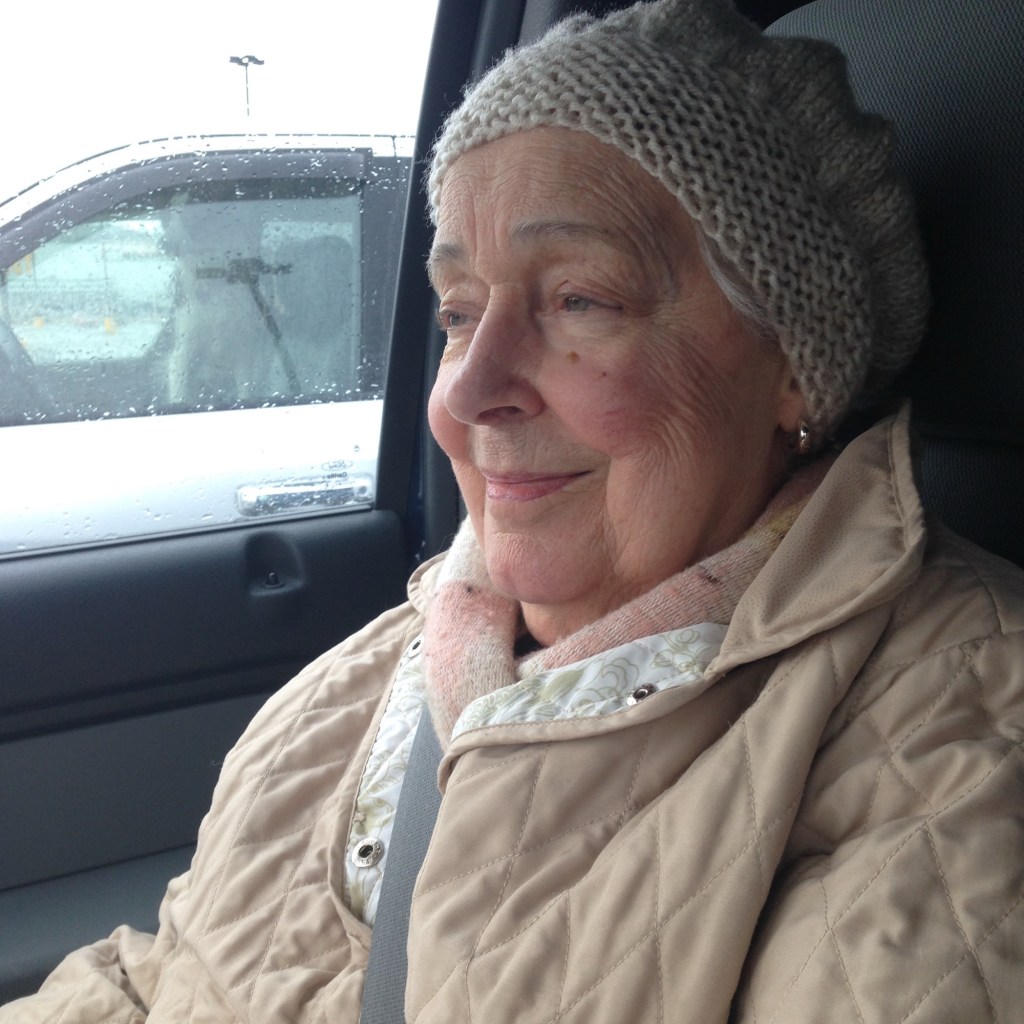
    My mother, Mary Eileen (Bunny) Lewis caught in a moment of everyday happiness

    “I must learn to be content with being happier than I deserve.” – Jane Austen

    “Letting go takes a lot of courage. But once you let go, happiness comes very quickly” – Thich Nhat Hahn

    Happiness is a slippery state of being, an elusive, inconstant companion. Like a feckless lover or an indifferent cat, it’s never near at hand when you need it most. It’s approach is often unheralded, it’s visit, never long enough, it resists all enticements to stay. It cannot be captured…it will not be held…we cannot keep it. It is as impermanent as an ice cream on a hot summer afternoon, as fleeting as a first kiss, or a glass of fine wine, it lingers briefly, and disappears into the realm of memory. The art of happiness sits haplessly in the space between our first world sense of entitlement, and our readiness to cultivate a sense of wonder, that magnifies the trace elements of happiness drawn from everyday dealings. Little things like the dog’s yawn, the carol of the wind in the trees, the smell of freshly brewed coffee, or the uncalled-for-kindness of a stranger can, with practice, conjure a sensation of peace, an ‘invisible cloak’ of contentment, protection against the certain storms of life. There are glimmers everywhere if we learn to spy them, and they can sustain us, even on our darkest days, if we apprentice in the art of happiness.

    First lesson – kill all expectation of happiness. It’s Buddhism 101, the first noble truth, ‘Life is suffering.’ Happiness is not our baseline or our birthright. We don’t deserve it, and we can’t earn it. We are not on some episode of Friends with a laugh track running every 30 seconds. Chandler Bing died of drug use disorder, and Rachel’s husband left her for Angelina Jolie. We’re in the ‘real’ people, and to quote the venerable Monty Python, ‘Life’s a piece of shit…just remember it.’ (It works better if you sing it). My kids would say that that’s a bit dark or defeatist, but I’m with Schopenhauer and the Pessimists, you need a sense of humour to get through the tragicomedy we call life, and ‘the safest way of not being very miserable is not to expect to be very happy.

    Buddha’s second noble truth is that we’re the problem…we are the root of all our suffering…we build our own hell. The art of happiness is to desire less…stop trying to make the world conform to our preferred narrative…that way lies madness. Relax…we control nothing… and anyway, sometimes bad news is good news in disguise, if we wait long enough. It is a mighty thing to slay your expectations and lay yourself open to your share of frustrations, disappointments, and loss. My mother always told me that ‘acceptance is liberation.’ She was a very wise woman, a gift earned from enduring her measured cup of sorrows.

    William James wrote ‘We need to stop deciding how we want things to be and then getting ourselves upset when things don’t turn out that way.” Easier said than done Willie, especially when you discover the last piece of cake gone, or the poop your geriatric dog deposits on the dining room floor every night.  Still, I say give it a try next time you’re provoked by an uncapped toothpaste, a Sunday driver when you’re running late, a rainy day when you wanted it fine.  Start there and when you’re ready you can move on to little old lady sized stuff, like chronic pain, or learning about a friend’s new cancer diagnosis, or loosing someone you loved very deeply…someone you thought you could keep forever…a loss that feels like the sky’s gone out and taken all the stars away. It gets a little harder to wash down then, even with a good red.

    James would say, ‘If you believe feeling bad, or working long enough will change a past or future event, then you are living on a different planet, with a different reality system.’ He’s right of course. we can’t get so mired in the shitty pieces of our story that we miss the good bits…the glimmers.

    We can’t be ‘shiny, happy people’ all the time and I guess we shouldn’t even try. Don’t we need a certain measure of malcontent to get anything done? It’s only unhappiness, disappointment and disenchantment that puts our clay feet on the floor every morning, isn’t it, that fuels our pursuit of wisdom…some magic beans to make the daily grind a bit more palatable? If we were happy all the time, we’d stay at home all day and roll around in it, wouldn’t we, hedonists supping on donuts and Netflix until our brains and our bodies turned to mush.  That’s Hotel California my friends…’and you can never leave.” (Again, much better if you sing it with me)

    If we can’t capture happiness and keep it caged, as we might like best, then we can cultivate habits and practices that invite happiness in, offer her tea and something sweet to encourage a long and robust relationship.  Gratitude is the first and best invitation to happiness that I’ve discovered.  It is that great looking glass that magnifies all the beauty and riches around us, large enough for us to see all that we have been allowed to keep… legs that take us walking, minds that may still read and discuss, running water still clean enough to drink, maybe even a hand to hold.  I’ll add to this the extraordinary occasion for a fine cup o’ tea and in good company.  Vonnegut suggests we recite in such moments of clarity, ‘If this isn’t nice, I don’t know what is.”

    We must fall in love with the beauty that is all around us.  Cast our eye about ourselves each morning and count our blessings.  Oscar Wilde wrote that ‘most of us are living in the gutter, but some of us are looking at the stars.’  We need to look for the glimmers.  They’re everywhere once you start practicing: the dance of late summer leaves, the first line of a new book, or that feeling of being understood…an easy, effortless fellowship that lets us know we’re not alone.

    Friendship is the second essential pillar in my study of happiness.  Friends come in many shapes and sizes.  They can be fictional, or four-legged, they can be blood, and people we grew up with, or choose to grow old with, but more often than not you’ll find them out roving on some adventure.  They arrive unexpectedly, a happy surprise, and their company can feel like coming home after a long time away, or a gift you didn’t know to ask for, but have wanted your whole life. ‘The secret Alice, is to surround yourself with people who make your heart smile, it’s then, only then, that you’ll find wonderland.’

    If you’ve not yet landed in Wonderland, then I suggest you take a break from your own troubles and concerns and look around you for a way to help others with theirs.  Service is chapter 3 in the little old lady book of happiness.  My brother was in love with Emily Dickinson, she was a dear friend of his.  She wrote, “If I can ease one life the aching, or cool one pain, I shall not die in vain.”  I say do harm to no man and never miss an opportunity to do a kindness. Be a light for others.  I love the old Indian proverb, ‘Blessed is he who plants a tree under whose shade he will never sit.’ To my mind there is no better way to cultivate your own happiness than to contribute to the happiness of others, unseen, unacknowledged and with great humility. If we’re all made of the same stuff in the great fabric of being, then watching out for a dropped stitch here and there only makes good sense…keeps us all from unravelling. 

    If we can stay with the knitting analogy for a minute, then I suggest that the fourth practice in this little old lady’s guide to a happiness, is to keep to your knitting every day.  The work we choose to do is key to practicing good happiness hygiene. If you love your work, then every day is a delight and you’ll be a success, no matter the weight of your wallet. That’s not to say you won’t have to find some job to keep you in beer and bread and a roof over your head.  But you must never let those necessary hours detract from your real work, the work you recognize as your own. And if you haven’t yet found this work then, to quote Ms. Dickenson once more, you must be ‘out with lanterns, looking for yourself.’ 

    John Muir the great naturalist counsels that ‘nothing dollerable is safe.’  That’s the way, he implies, to Thoreau’s ‘life of quiet desperation.’ I say be curious, go adventuring, stretch yourself beyond your imagined limits, investigate, take yourself away, let yourself go quiet.  Your work will find you…artist, teacher, carer, baker, candlestick maker…it matters not.  Trust only that which speaks to your soul, that engages you wholly, that causes you to lose time and that you can’t wait to get back to again each day on rising. ‘It’s foolish for people to want to be happy,’ wrote Georgia O’keeffe, ‘our interests are the most important thing in life.’ ‘Happiness,’ she said, ‘is only temporary, but our interests are continuous.’

    Lastly, and maybe most importantly, happiness lives principally in the present moment.  We need to slow down and stay grounded here in the now, and as the Stoics suggest, ‘do every act of our lives as though it was the very last act of our lives.’ All the greats say the same. To quote my favourite Buddhist, Thich Nhat Hahn, we must ‘drink our tea reverently, as if it is the axis on which the world revolves.’ ‘Eternal life’ wrote Wittgenstein, ‘belongs to those who live in the moment.’  But the poets say it best, To see a world in a blade of grass…heaven in a wildflower.’  It’s that moment when the musician understands that he is not only the strings of the instrument he plays on, but also the music that fills the room and touches the heart strings of everyone who hears.  There can be no higher experience of happiness to my mind then being fully present and awake to your surroundings.

    If you asked me the raw ingredients of my own happiness, I would quote Tolstoy, ‘Rest, nature, books, music, such is my idea of happiness.’ I also try to practice what my brother taught me… to live in a state of radical amazement.  E. B. White urged us to ‘always be on the lookout for wonder.’ So, I get up each morning and try to look at the world in a way that takes nothing for granted. The art of happiness lies in extracting it from commonplace things and as a little old lady in waiting, I’ll give the last word to that old sage, Socrates, ‘Let’s enjoy ourselves,’ now, ‘It’s later than we think.’

  • On the Merits of Becoming a Maker

    “Every child is an artist.  The problem is how to remain an artist once he grows up.” – Pablo Picasso

    “When my daughter was about seven years old, she asked me what I did at work.  I told her that I worked at the college – that my job was to teach people how to draw.  She stared back at me, incredulous, and said, ‘You mean they forgot?’”     – Howard Ikemoto

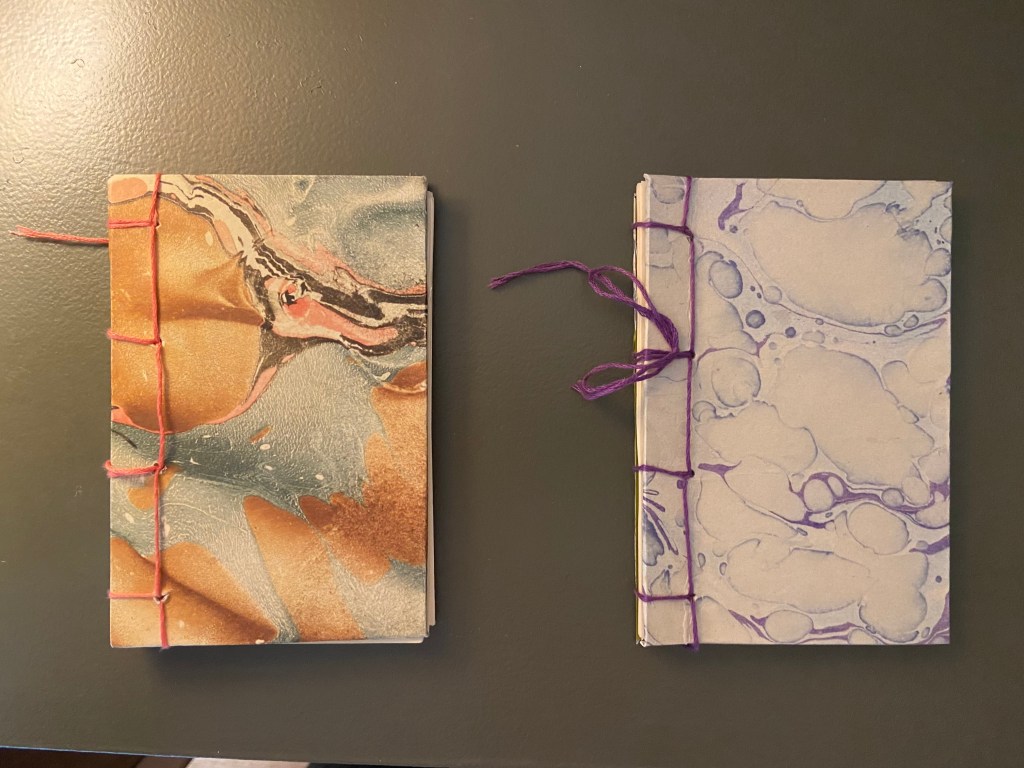
    On the recent occasion of my 59th birthday I signed myself up for a workshop on the ancient art of Japanese book binding. I’m not what you would call ‘crafty’, at least not in that sense of the word… a maker of things. I’ve never successfully knit a whole sock, my Christmas decorations come from Canadian Tire, and my sour dough starter-baby died of neglect…twice. I thought it might be the right time to reawaken my inner maker and so, accompanied by my daughter, an artist with a defined skill set, we entered a beautiful old heritage building, the library of my youth, and found seats on the second floor, which once housed the reference section. (For my Zoomers, I refer here to a time before almost every academic question could be answered with a thumb scroll on your smart phone, from the comfort of your couch.)

    We little old ladies in waiting may not have had to walk 10 miles to school through drifts of snow as tall as we were (Boomer narrative), but we did have to leave our homes to look for the answers. We juggled 50-pound encyclopaedias searching for the illusive truth or some reasonable facsimile.  We took notes in an ancient script called cursive.  It was the dark ages kids, before the information age and the internet, before group work started trending and you could pawn the research part off on the kid who would rather disembowel himself than speak in public. 

    But I digress…awkward segue back to the book binding workshop, the setting for a timely and reflective lesson in humility and a powerful endorsement of the restorative power of making art. We were provided with all the necessary materials including what looked like a small ice pick or a long sharp little doorknob. I believe the proper term is an awl, and we were advised not to use it if we weren’t confidant in handling the tool.  ‘Look for a helper’ the instructor advised, making direct eye contact with me as she did so.  I tried not to take it personally, but it did take a little of the glitter off my crafting confidence. I’m happy to report that I wielded that awl like a card-carrying Cape Breton craft guild member.  No blood was lost, and at the end of the day, my paper was pierced to a standard capable of being assembled in a perfectly adequate journal.

    There were a few challenges of course. The eye of my sewing needle was too small to see, my thread refused to cooperate, I may have been overzealous with the glue, and at one point I fell so far behind in the binding instruction I was forced to go freestyle.  I looked over at my daughter for clarification but, after accurately assessing the situation, she shook her head and whispered “I can’t help you” with a smug little art-savvy smile on her face.  I sensed some residual anger about wasting a high UV summer afternoon in musty smelling rooms. There was definitely a mean-girl twinkle in her eye as she effortlessly wove her journal together, her hands adept to any artistic enterprise.  In the end, the teacher took pity on me and salvaged my journal.  I was… accommodated.  It was my birthday after all, and I wasn’t leaving without a finished product.

    A few hours later, sitting by the sea with my bestie, a very successful artist herself, attempting to salvage a little birthday esprit with a few pre-dinner cocktails (code name beach walk), I began to unpack the experience and consider the merits of engaging in art for its own sake, process over product.  How did it feel to create something ? I hand crafted a beautiful journal, with complete artistic control over design and construction…well, maybe not complete control… but every choice, every small flaw or mistake, was my own. It felt…nourishing, making something from scratch, even with unpracticed, non-nimble hands. Cultivating your inner maker feels a lot like play. It’s like leaving your mind for a time and living only in your hands. You spend a few hours purposefully, intentionally, unplugged and unreachable, and when playtime is over you have this lovely little objet d’art, perfectly imperfect, bespoke, hand crafted, and all by you, a maker in the making. 

    In today’s highly specialized world, unless you work as an artist or maybe an entrepreneur, we have, as individuals, lost touch with what it feels like to conceive, design and produce a finished product completely on our own.  Most of us are cogs in the machinery of industry.  We contort ourselves to fit the spaces defined by the job market.  We make ourselves small to succeed as cogs and move up the ladder to coveted cog spots, perhaps with a corner cog office, but in the end, unless you are designing your own work and workday, whether your uniform is a set of scrubs, a pair of overalls, or a thousand-dollar suit, it still says cog in the small print of your contract.

    In Ancient Greek mythology, Procrustes was a thief who offered travellers a bed for the night and then stretched those too short, or cut off the limbs of those too long, to make them fit the bed’s dimensions.  In many ways I feel like I’ve been sleeping on a Procrustean bed my entire working life, perhaps earlier if we consider the public school system as pre-employment prep, conditioning children to conform to an unnatural or arbitrary standard, “a veal-fattening pen” (Copeland) for the cog culture.

    As a quasi-retired, little old lady in waiting, I’m more than ready to embrace the artisan in me. I’m interested in work of my own choosing, designed, and created entirely by me. While I may never be a master book binder, I’m not ready to abandon the maker mindset quite yet. I think a fiber art class in the Fall might suit, or perhaps a creative writing assignment to chip away the icy cold months of the long, reclusive Canadian winter.  I remember enjoying drawing and painting as a younger woman and I may still have all the tools needed to make a cosy east-cost hooked rug, art to keep out the cold. 

    The experience of engaging in making art is tremendously satisfying, especially if your inner maker has been starved to the point of mummification.   I propose making artist dates with yourself: writing morning pages, evenings of experimental cooking, or maybe even acquiring a knitted sock mentor.  Treat the artist within like an honoured guest who inspires and delights and brings out your highest self.   What I’m suggesting is pursuing a path of gentle exploration to set you inner maker free.  Above all, and this is crucially important, never… ever allow your left-brain critic to cut its razor sharp teeth on your vulnerable right-brain art, with its practiced vivisectional rigor. 

    Making art is a clarifying experience.  It opens us and illuminates everything we are inside. The art we produce as little old ladies in waiting may never pay the electric bill, but becoming a maker is an investment in yourself that pays incalculable returns. For me, good art elicits emotion and deals with questions of meaning.  Likely too high a bar for evaluating one’s own artwork.  I’m pretty sure none of my experiments in becoming a maker will ever garner any critical praise. What I do know is that consummating the creative impulse is an immensely pleasurable and stirring experience and one this maker in the making plans to chase habitually and unreservedly.