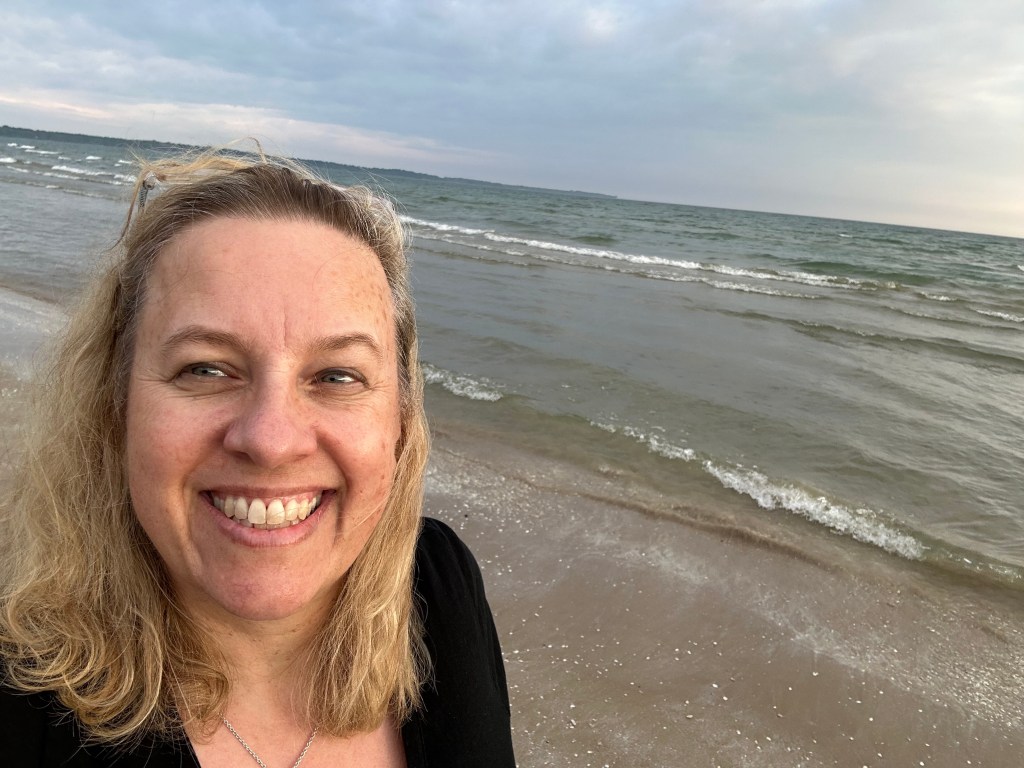
As a little old lady in waiting I try not to think about what’s for dinner anymore. For years it was the first thing I thought of each day, even before my feet hit the ground. I’ve spent a lot of my life thinking about food, too much of it. What’s best to eat, when to eat, what not to eat, what to pack for lunches, the daily miracle of coordinating, mandating and delivering family dinner at the table, the sometimes dubious nutritional value of said dinner, and the fallout of loosing the family dinner battle. What should I eat to maintan a healthy BMI? What does a healthy diet means beyond the parameters of the food pyramid? Which diet is best: vegan, vegetarian, low fat, low carb, high protein, one meal.. three meals…four, ‘one potato, two potato, three potato, four.’
As a woman who stayed home for a dozen years and felt the full weight of the domestic hausfrau experience, food purchase, prep and delivery was a significant part of my work day. Suffice to say, I’ve steamed my way through several rice makers and peeled enough potatoes to feed the whole of Ireland. I’ve menu planned and scrutinized thousands of grocery lists and contemplated how best to infuse two growing humans, with as many fruits and vegetables as possible, a herculean task in an age of ‘lunchables’ and packaged candy in the shapes and flavours of actual fruit…highly processed, heavily marketed frankenfood. I take pride in the fact that my daughter refers to us as an “ingredient family’, where very little comes from a box or is overly processed (notable exceptions – yogurt, cheese and bread…we’re in the 21st Century friends… I draw the line at kneading, churning, aging or vigilent attention to temperature). There is very little that is instantly consumable in my cupboards…all food stuffs require some sort of preparation: rinsing, dicing, slicing, roasting, toasting..or a quick commingling in the Ninja.
For my 50th Birthday I decided to hang up my apron for good. Back to work outside the home for a number of years, I was ready to resign from my second job as menu architect, head chef, prep chef, pastry chef, bus boy, dish diva, and lunch maker. Happy Birthday to me. I explained to my family that I would cook only if the spirit moved me and that dinner was no longer to be expected by any of my spoiled, unskilled, hangry housemates, especially on days when they arrived home before me. Looking back it was the death toll for the family dinner, that and competing schdules. The kids were both in high school at the time. Ten years later, on the road to 60, I can report only mixed success in divesting my culinary role…I blame myself, and my misguided attempts to safeguard my family’s heath, protect my kitchen, and reduce ceiling splatter and any permanent damage to appliances.
“Whats for dinner?” is a kitchen query that still eminates from my hungry adult children in the late afternoon from time to time. Shoulder deep into the fridge or pantry, desperate to make the ingredients on display coalesce into something approaching a satisfactory meal, but too inexperienced or myopic to see the beauty of ‘breakfast for supper’, or the fact that chickpeas are really hummus in disguise. I think it’s important to acknowledge here that my husband is too clever to ever broach the subject of dinner. When the kids do slip up and ask whats for dinner, I smile a happy little boundary smile, and if I’m not hangry myself, I might suggest cereal, or eggs or pb and j’s. At other times I simply repeat, “dinner” with a slightly stupefied, quizical brow, as though they were speaking in some foreign language… a look I learned from my husband, a master at navigating family life with minimal effort on his part.
The subject of supper aside, as a little old lady in waiting…who am I kidding here…at all stages of ladydom, I have given a great deal of thought to my diet, in an attempt to consume nutrient dense, high volume, low caloric-load foods, to look good in my jeans, to avoid suburban square arse syndrome, a hideous plague of middle age, and later, as a nurse, to avoid carcinogenic foods like processed meats and cardiac villains like trans fats, and more recently, to restrict inflammatory culprits in order to reduce pain…that’s right…I’m going after the sugar and simple carbs, to reduce the meno-pot, the 10 or so pounds of fluff floating around my mid section. No, its not there to protect our organs as we age. Closing in on 60 it’s time to quit the cake … not the wine though (maybe ditch the fruity sugary stuff), but wine’s a living whole food ..its not processed… its allowed to age. LOL to LOL no one is taking the wine off the table.
Dessert, however, and the bread basket I believe are a fair trade for decreased joint pain, ease of zipper glide, improved meno head and energy levels, and potentially increased longevity with greater functionality and mobilty in the last quarter of our lives. After a lifetime of exhaustive and ongoing research on the topic of food and diet I can recommend only three books on the subject that form the genesis of my LOL approach to food. The first, Michael Pollan’s In Defence of Food– an Eater’s Manifesto” can be distilled in a simple maxim: “Eat food (real food), not too much, mostly vegetables.” Next, Savour: Mindful Eating – Mindful Life by Thich Knat Hahn which encourages a mindful reverence when eating and a grateful appreciation of all the work and people involved in bringing food to your table. Lastly, French Women Dont get Fat by Mireille Giuliano, which promotes a self awareness of individual food challenges and suggests a highly customized self-taught approach that respects your personal food picadillos and preferences. No foods are off the table for les femmes francais.
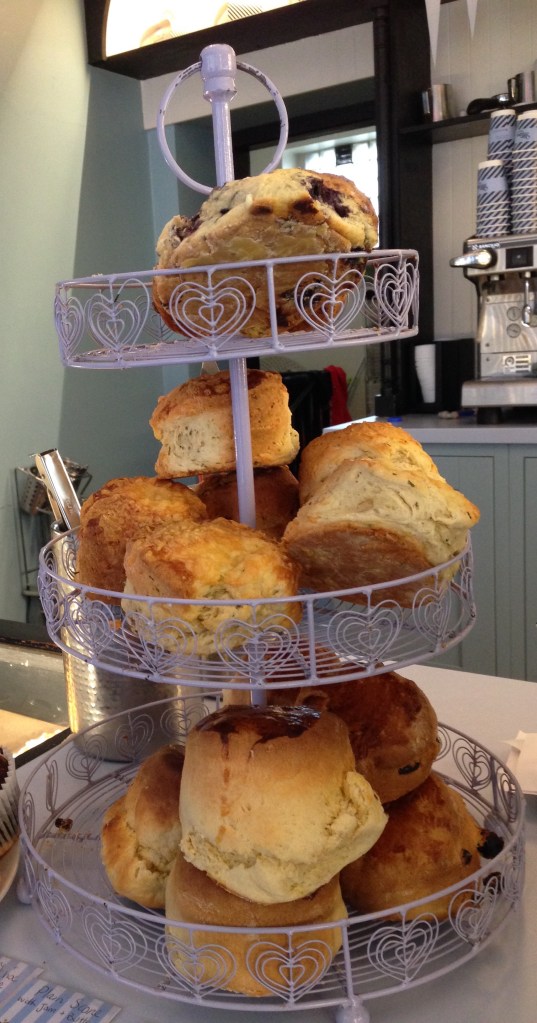
I’ll be honest and say that if I get to choose my last meal, one final opportunity to taste, smell and enjoy food, my pedestrian pallette will no doubt yearn for a tea biscuit made by some proper little old lady…perhaps of Scottish descent. I’d lather each half with a generous mound of clotted cream (the kind from a jar imported from England) and lemon curd (also imported from the British isles…not the lemons mind). I love simple carbs and homemade sweets. I grew up on them. Cheap, easily portable and quickly put together, some of my fondest childhood memories by the Bay of Fundy in the wilds of the Maritimes, star these cheerful oven baked ‘rib stickers.’ My mother taught me that there isn’t much a good tea biscuit or pan of fudge can’t cure…except maybe diabetes. I know sweets are not recommended on anyone’s food pyrimad, even the ones heavily influenced by “Fat/Sugar/Salt” pressure groups …yeah …they’re out there, doing a sweet business with their sugar-coated promise of a 10 second dopamine high that will keep you coming back for more. Hanging onto my fifties by my fingernails, I have grudgingly come to accept that my dear old friend, bread, the plain sister of the sweet family, is nothing but a nutritionally void filler… bread is bad, and I’m finally ready to embrace a life without sugar laden simple carbs.
For this little old lady in waiting, dinner for the foreseeable future is some variation of fruit and veggies, legumes and lean protein, like fish, quinoa, nut butters and beans. I’m allowing for reevaluation at age 80 depending on the efficacy of a clean diet as regards pain management and cognitive capacity. There may come a day when tea and toast and biscuits lathered in cream become a mainstay again but for now this LOLIW is off the edible dopamine drip and opting for foods that promote less fluff, more energy, a clear head and ideally a pain free active lifestyle for many years to come. That’s what’s on the menu.
Shova Dhar is my oldest friend. We met in third grade. She was the smartest kid in my class, and in most rooms she enters I suspect. Becoming her friend changed the trajectory of my life, motivating me to push myself academically in a way I might never have done had we never met. I can still remember our Grade 3 Health project, a beautifully drawn portrait of a boy skeleton, with breakout close-up drawings for the more intricate bones. Shova was the artist, I, the lucky bone labeller. We wrote a play together some years later, titled, ‘How do you like your murder, steamed or boiled?’ earning a solid A for our efforts in advanced English.
Shova describes herself as a ‘gregarious introvert.’ She is, in fact, a peerless, exceptionally gifted human, a scientist and a seer, an artist and a stargazer…there is no one else in all the world like her. She is an ageless, exotic beauty, and ‘my brilliant friend.’ A biologist by trade, an accomplished artist by nature, and an animal lover (all species), Shova exhibits the kind of charisma that only storybook heroines possess. Fiercely loyal, generous in spirit, she is a boundless treasure to anyone lucky enough to call her friend.
Shova earned a BSc in Biology and a Bachelor of Education from UNB. She has published research in marine biology, worked as a lab instructor at UNB, and as a Laboratory manager at the NB Department of Fisheries and Aquaculture. She has studied salmon anemia, virus tested potatoes, and worked in animal health and rabies. She has been responsible for fish, meat and dairy inspection, food recalls and risk assessment. For the last twenty-five years she has worked for the Canadian Food Inspection Agency, and for the last 17 years as a food safety specialist, currently residing in Halifax, N.S.
Of course, I asked her what she eats, and while she wasn’t comfortable discussing her food choices on the record, she did share that listeria is real, and that as we get older, we can’t fight it off as well, or if we’re too young, or don’t have enough stomach acid, or are pregnant. ‘I’ll be eating a lot of mush that’s hot or frozen as I get older,’ she laughs, ‘and I don’t eat out much as I am too leery of food handling practices that I can’t control.’
Tell me your life story in seven sentences or less?
I was born with mixed heritage in the heat of the summer, the younger sister to one older brother but grew up with my Canadian extended family on my maternal side, as my father was killed in a car accident when I was only 8 months old. I grew up outside of Saint John and was formally educated at the University of New Brunswick. I am a biologist, an educator, a Food Safety Specialist, a Reiki Master, and a Theta Healer™, with a love of artistic expression, especially the performing arts. As a strong unionist, I have always focused on championing the rights of others who cannot fight for themselves. I have married my best friend, travelled to many countries, enjoyed the company of many beings (human and other species), and have learned to work in light and energy. That’s my other side…the ‘woo-woo side’ as people would say.
What is the best thing about getting older?
Ahh…perspective. You can see the bigger picture and therefore there’s less drama about every little hiccup that happens. Even though there are times I don’t do that, as we age our edges get rounded off a little and you have a better perspective of what life is … you see the span of your own life, and things you used to think were the end of the world are no longer the end of the world for you. That’s the best thing.
What is the worst thing about getting older?
Coping with loss. That’s the thing that gives me anxiety. Can I do it? Losing the ones you love, the pets you love, your cohorts, your generation. The feeling of gradual obsolescence.
If you could retain or retrieve one quality from your youth, what would it be?
I found this a very difficult question because there are so many things I would want to retrieve and some I wouldn’t want to, however, the sense of endless possibility, and the feeling of immortality, or ignorance of the finality of this temporary corporeal existence that we’re in right now, is something I would love to experience again. As younger women we were more present in our lives, we lived more in the moment, we weren’t worried so much about what’s gonna happen when our time was limitless, we weren’t concerned if we could squeeze it all in… we never even thought about all that, we were just living, and I miss that, that spontaneity, being in the moment, a time when we were less reflective and less conscious.
Now with perspective we’re always weighing one thing against another, whereas younger people are more present in their lives…even if you were full of angst as a young person, you were still anchored in the moment…not worrying about the quality of the experience. People say youth is wasted on the young. It’s not. They’re not wasting it…they’re really in it. They don’t even realize how precious it is. That is the sad part. They don’t yet own their magic…they’re magical but they don’t know it yet. The magic of being fully immersed in living. If we were able to go back in time, we would be super powerful, and we could use that power for good or ill. I would hope we would use all that energy and power of youth for good, but it depends on the trappings of the soul. People are still flawed even armed with perspective. Maybe that’s why we can’t go back. God is pretty smart.
What’s the most important lesson you’ve learned so far?
I don’t know, I haven’t learned too many easy ones. I have so many lessons to learn. For me, so far, forgiveness is the big one …forgiveness and gratitude. Forgiveness of yourself and others. It’s hard to do that. But gratitude is huge as well…to learn how to maintain gratitude…because you cannot be unhappy and feel gratitude at the same time. Those two emotions cannot exist at the same time. That has changed my life knowing that. So, whenever I’m terribly unhappy, I imagine a scenario, even if I have to invent one, a scenario where I feel grateful. I’ll share my go to scenario with you. I imagine I’m carrying a big armful of priceless china in boxes, not very well packaged, and I have to get through a door, and I can’t manage it without maybe dropping a parcel. There is a guy on the other side of a busy street, he sees me struggling…he crosses the busy street, arrives at my side, and opens the door for me and I can enter in and I think ‘Thank you,’ and I feel gratitude washing over me…gratitude for him being so kind, and then I go through the door. And at that moment if I’m unhappy I allow the gratitude from the scenario to wash over me and it helps…small acts of kindness, real or imagined, help a lot. I use it all the time. The shift is immediate when you feel that gratitude wash over you and the sadness may come back but its less when you can feel gratitude. It brings instant perspective.
Other lessons I’m still trying to learn are trust, to trust in God, and to accept the things that I cannot change. Those are hard lessons that I’m still trying to learn. Forgiveness…I’ve worked hard on forgiveness… and I’m getting better at it. I used to be full of resentful thoughts. I’m a very protective person of the people I love. I’m a grudge holder from way back.
Do you have a favourite quote?
I have four quotes on two themes. I couldn’t pick. First, ‘Whatever you can do, or dream you can, begin it; boldness has genius, power and magic in it.’ And I put in brackets…this is not part of the quote, Begin it now,’ because I’m a procrastinator. I had it in my university dorm room, its Goethe, and it has served me for many, many years. A second quote on the same theme is from the Ghost of Christmas Present (Dickens), ‘There is never enough time to do or say all the things that we would wish. The thing is to try to do as much as you can in the time that you have. Remember Scrooge, time is short and suddenly, you’re not here anymore.’ I always think, let’s not procrastinate with the important things.
The second theme is again from Scrooge, the 1970’s soundtrack from Leslie Bricusse on happiness. ‘Happiness is whatever you want it to be.’ I had that at my wedding as one of my songs. And finally, a quote by Kurt Vonnegut, ‘If this isn’t nice, then I don’t know what is.” It’s a quote I learned from my husband, and when I hear his voice in my mind saying it, it calms me down and gives me perspective and makes me feel gratitude.
Do you have a favourite word?
‘Justice’ and ‘perseverance’. I have two, but I love justice, just the sound of it, it’s a sweet sound to my ear. It’s a real part of who I am, and it always has been. I’ve always been a bully fighter in school, a fierce advocate for others…and courage is there because of it. It takes courage to fight for justice. In tarot, the symbol for strength is a lion and, being a Leo, I’ve always felt it was just part of who I am. It takes strength to fight for justice. And ‘perseverance’, it’s a very important word for me as well. You have to persevere…things aren’t instant, and you have to keep fighting for the things that really count. You have to persevere against your own weakest nature. If you want to obtain things you have to work hard and again that comes back to my quote, ‘begin it now.’ When things aren’t easy you have to persevere and if you don’t, you’re giving up on yourself.
Describe your perfect day.
This was harder than I thought it would be, but I experienced the perfect day not that long ago with my family…this summer actually, and I reflected on that day when I formulated my answer. The day starts with me waking up from a restful sleep and with good energy. There are some planned activities but nothing stressful. A nice morning stretch…I move my joints…I have a good breakfast. I spend time with the ones I love, and unexpected events lead to unanticipated fun. There is the sense of surprise, camaraderie and sharing laughter. The unexpected events put you in the present. I don’t always want to be planning and then judging whether or not things went well…it harkens back to the youthful joy of just being alive. And after camaraderie and laughter, then you come back to your place of peace and revisit the day’s events together with your family. You retell the story of the day, sharing your impressions, enjoying it all a second time in the telling…and then you go to bed feeling grateful knowing you’re loved and that you’ve loved others. That’s a perfect day.
If you could have tea with anyone, real or fictional, dead, or alive, who would it be and what would you talk about?
I would want to see my father. I would want to talk to him about his decision to agree to leave this life when he was only 38. He died in a car accident. But I believe that people talk to their creator before beginning a new life, we choose our soul family and choose the lessons that we want to learn. Maybe my lesson this time around was learning to be a woman who grows up without a father. His absence in my life has been so huge and yet I never really got to know him. At some point he decided he would come here and be my father and leave, allowing me the space to learn the lesson I had chosen. I’d like to speak with him about his decision and ask why he left me…because I know he loved me.
Just recently I looked at my father’s passport picture and I feel like I saw him for the first time, and I’ve looked at that picture a thousand times, and I realized that he is in many ways still here with me.
The other person I’d like to have tea with would be Carl Sagan. I’d like to talk to him about intelligent design. I’d like to explore his thoughts on that. I had the hugest crush on him, I was in love with him for so long.
Tell me three things that bring you joy.
Creating things… creating things for others to enjoy, and myself. Anything from food, a good meal, making baklava, or creating a more fair, stable, and safe workplace. I do a lot of Occupational Health and Safety (OSH)…that’s near and dear to me. I also like making music…learning a new piano piece or improving my vocal range while I’m singing in the car. Nobody needs to hear it, but I get great joy when I manage to expand my range and enjoy little successes. Artwork of course, I like creating art, that gives me a lot of joy. I don’t do it a lot anymore, but I will again… soon. I’ve been doing some needle felting and making some 3d figures and those are fun little projects and after making art I always think that was so much fun, why don’t I do this more often. And maybe writing too because this project and thinking about my mother’s story…I think I’d like to delve a little deeper into that. I’d like to work more in watercolour, I have to persevere there, watercolour is unpredictable, and trust is not there, so learning to trust the process and persevering… and then revel in the outcome, whether it’s what you planned or not.
A second source of joy for me is being the presence of or caring for animals, especially baby critters of any sort. To have a kitten in your hand, and care for it is the most joyful thing. Looking after the young of any species I find very joyful. We have an unofficial office cat named Spooky and I enjoy looking after her right now. She is my therapy cat. We do a daily session before I enter the office.
My third joy is stargazing. I look forward every year to watching the Perseids meteor showers that peak on my birthday in August. I usually go out to the cottage and lie on the beach or in a field near Freeman Patterson’s place at Shamper’s Bluff to watch them. I watch as well for lunar and solar eclipses, and, of course, the aurora borealis.
Name a guilty pleasure.
Again, I found this question difficult because I don’t feel guilty about too many things except for maybe online shopping and surfing the internet… scrolling, that’s a guilty pleasure that I’d like to get rid of… it’s a bad habit. It’s wasting your life. It’s instant pleasure, but it’s a distraction from the real work that we’re here to do. I could be in a studio, where I can make messes. That’s real pleasure. ‘Boldness is genius.’ We need to stop procrastinating.
Do you believe in life after death? What does it look like?
Absolutely. The basis of my belief in God and in an afterlife is from my grandmother. She…as a child had blood poisoning and died and went to another place, a beautiful garden with a man who she described as very much like Jesus, lovely white robes, a gentle man…holding her hand, walking along a path and she was so happy, she had never felt such joy and contentment in her whole life. They walked for a long time and then he said, ‘Fern, we’ll soon be near the end of this path and when we get there I’ll have a question for you, and I want you to answer honestly. He said, ‘You can stay in the garden with me or if you want you can go and see your mother.’ At that point she looked down from a height and she could see her lifeless body and her mother bending over her, weeping. And then she said, ‘I think I want to go see my mother,’ and she was returned to her body, and she lived a very long life. Every day, twice a day, she was on her knees on the hard floor kneeling beside her bed, in the morning and the evening, and she would pray to God and say how grateful she was for being allowed to live. She lived a life that showed me that what she experienced as a young girl was the truth. The rest of her life was a testament to her decision to return here. She would feed homeless people. She never knew if that was the man in the garden coming to test her or see if she was still happy to be here. That’s how she lived her life.
My father grew up in the Hindu tradition and although he never shared that with me, I think it worked its way into my understanding that God is there all the time. We drove across the site where he was killed every day, twice a day my whole childhood life, and we could feel him there. My brother, a year older, as a child saw his “Daddy” standing at the accident site there once.
Finally, through Theta Healing …Theta uses the theta brainwave state, a very relaxed state, where you can access your subconscious beliefs. Part of my training to become a Theta healer involved accessing spirit and listening to what they have to say. We worked in teams to access spirits we did not know, rooted in our training partner’s life, not our own. And in your mind’s eye, images reveal themselves with qualities recognizable to the person you’re working with, and you could ask the spirits questions. Spirit is there. Our souls continue and come back in other forms…I think all those things are possible. Obviously, there is continuance of our souls. Theta experiences have helped me know that. Sometimes you might worry, ‘am I making this up,’ but sometimes being open, things come to you that you don’t understand but when you share it with the person asking questions, they understand it. They know what I’m talking about…I don’t…I’m just a vessel, I’m just a process. The other person is the authenticator. So yes, I know there is something more, and I don’t fear death. And when we do die, I don’t think we’ll be very far away.
What does it look like…the afterlife? A hyper reality where we are totally supported all the time…where we know we are taken care of always. We are complete there.
What would you like your eulogy to say?
How I would like to be remembered…I’d hope someone would say that I was kind, and also that I was fierce, a protector, a good friend, and that I knew how to have fun, that I was fun loving… I’m self-described as a perpetual adolescent…that I was confidant, and had lots of personality.
My mother, Mary Eileen (Bunny) Lewis caught in a moment of everyday happiness
“I must learn to be content with being happier than I deserve.” – Jane Austen
“Letting go takes a lot of courage. But once you let go, happiness comes very quickly” – Thich Nhat Hahn
Happiness is a slippery state of being, an elusive, inconstant companion. Like a feckless lover or an indifferent cat, it’s never near at hand when you need it most. It’s approach is often unheralded, it’s visit, never long enough, it resists all enticements to stay. It cannot be captured…it will not be held…we cannot keep it. It is as impermanent as an ice cream on a hot summer afternoon, as fleeting as a first kiss, or a glass of fine wine, it lingers briefly, and disappears into the realm of memory. The art of happiness sits haplessly in the space between our first world sense of entitlement, and our readiness to cultivate a sense of wonder, that magnifies the trace elements of happiness drawn from everyday dealings. Little things like the dog’s yawn, the carol of the wind in the trees, the smell of freshly brewed coffee, or the uncalled-for-kindness of a stranger can, with practice, conjure a sensation of peace, an ‘invisible cloak’ of contentment, protection against the certain storms of life. There are glimmers everywhere if we learn to spy them, and they can sustain us, even on our darkest days, if we apprentice in the art of happiness.
First lesson – kill all expectation of happiness. It’s Buddhism 101, the first noble truth, ‘Life is suffering.’ Happiness is not our baseline or our birthright. We don’t deserve it, and we can’t earn it. We are not on some episode of Friends with a laugh track running every 30 seconds. Chandler Bing died of drug use disorder, and Rachel’s husband left her for Angelina Jolie. We’re in the ‘real’ people, and to quote the venerable Monty Python, ‘Life’s a piece of shit…just remember it.’ (It works better if you sing it). My kids would say that that’s a bit dark or defeatist, but I’m with Schopenhauer and the Pessimists, you need a sense of humour to get through the tragicomedy we call life, and ‘the safest way of not being very miserable is not to expect to be very happy.’
Buddha’s second noble truth is that we’re the problem…we are the root of all our suffering…we build our own hell. The art of happiness is to desire less…stop trying to make the world conform to our preferred narrative…that way lies madness. Relax…we control nothing… and anyway, sometimes bad news is good news in disguise, if we wait long enough. It is a mighty thing to slay your expectations and lay yourself open to your share of frustrations, disappointments, and loss. My mother always told me that ‘acceptance is liberation.’ She was a very wise woman, a gift earned from enduring her measured cup of sorrows.
William James wrote ‘We need to stop deciding how we want things to be and then getting ourselves upset when things don’t turn out that way.” Easier said than done Willie, especially when you discover the last piece of cake gone, or the poop your geriatric dog deposits on the dining room floor every night. Still, I say give it a try next time you’re provoked by an uncapped toothpaste, a Sunday driver when you’re running late, a rainy day when you wanted it fine. Start there and when you’re ready you can move on to little old lady sized stuff, like chronic pain, or learning about a friend’s new cancer diagnosis, or loosing someone you loved very deeply…someone you thought you could keep forever…a loss that feels like the sky’s gone out and taken all the stars away. It gets a little harder to wash down then, even with a good red.
James would say, ‘If you believe feeling bad, or working long enough will change a past or future event, then you are living on a different planet, with a different reality system.’ He’s right of course. we can’t get so mired in the shitty pieces of our story that we miss the good bits…the glimmers.
We can’t be ‘shiny, happy people’ all the time and I guess we shouldn’t even try. Don’t we need a certain measure of malcontent to get anything done? It’s only unhappiness, disappointment and disenchantment that puts our clay feet on the floor every morning, isn’t it, that fuels our pursuit of wisdom…some magic beans to make the daily grind a bit more palatable? If we were happy all the time, we’d stay at home all day and roll around in it, wouldn’t we, hedonists supping on donuts and Netflix until our brains and our bodies turned to mush. That’s Hotel California my friends…’and you can never leave.” (Again, much better if you sing it with me)
If we can’t capture happiness and keep it caged, as we might like best, then we can cultivate habits and practices that invite happiness in, offer her tea and something sweet to encourage a long and robust relationship. Gratitude is the first and best invitation to happiness that I’ve discovered. It is that great looking glass that magnifies all the beauty and riches around us, large enough for us to see all that we have been allowed to keep… legs that take us walking, minds that may still read and discuss, running water still clean enough to drink, maybe even a hand to hold. I’ll add to this the extraordinary occasion for a fine cup o’ tea and in good company. Vonnegut suggests we recite in such moments of clarity, ‘If this isn’t nice, I don’t know what is.”
We must fall in love with the beauty that is all around us. Cast our eye about ourselves each morning and count our blessings. Oscar Wilde wrote that ‘most of us are living in the gutter, but some of us are looking at the stars.’ We need to look for the glimmers. They’re everywhere once you start practicing: the dance of late summer leaves, the first line of a new book, or that feeling of being understood…an easy, effortless fellowship that lets us know we’re not alone.
Friendship is the second essential pillar in my study of happiness. Friends come in many shapes and sizes. They can be fictional, or four-legged, they can be blood, and people we grew up with, or choose to grow old with, but more often than not you’ll find them out roving on some adventure. They arrive unexpectedly, a happy surprise, and their company can feel like coming home after a long time away, or a gift you didn’t know to ask for, but have wanted your whole life. ‘The secret Alice, is to surround yourself with people who make your heart smile, it’s then, only then, that you’ll find wonderland.’
If you’ve not yet landed in Wonderland, then I suggest you take a break from your own troubles and concerns and look around you for a way to help others with theirs. Service is chapter 3 in the little old lady book of happiness. My brother was in love with Emily Dickinson, she was a dear friend of his. She wrote, “If I can ease one life the aching, or cool one pain, I shall not die in vain.” I say do harm to no man and never miss an opportunity to do a kindness. Be a light for others. I love the old Indian proverb, ‘Blessed is he who plants a tree under whose shade he will never sit.’ To my mind there is no better way to cultivate your own happiness than to contribute to the happiness of others, unseen, unacknowledged and with great humility. If we’re all made of the same stuff in the great fabric of being, then watching out for a dropped stitch here and there only makes good sense…keeps us all from unravelling.
If we can stay with the knitting analogy for a minute, then I suggest that the fourth practice in this little old lady’s guide to a happiness, is to keep to your knitting every day. The work we choose to do is key to practicing good happiness hygiene. If you love your work, then every day is a delight and you’ll be a success, no matter the weight of your wallet. That’s not to say you won’t have to find some job to keep you in beer and bread and a roof over your head. But you must never let those necessary hours detract from your real work, the work you recognize as your own. And if you haven’t yet found this work then, to quote Ms. Dickenson once more, you must be ‘out with lanterns, looking for yourself.’
John Muir the great naturalist counsels that ‘nothing dollerable is safe.’ That’s the way, he implies, to Thoreau’s ‘life of quiet desperation.’ I say be curious, go adventuring, stretch yourself beyond your imagined limits, investigate, take yourself away, let yourself go quiet. Your work will find you…artist, teacher, carer, baker, candlestick maker…it matters not. Trust only that which speaks to your soul, that engages you wholly, that causes you to lose time and that you can’t wait to get back to again each day on rising. ‘It’s foolish for people to want to be happy,’ wrote Georgia O’keeffe, ‘our interests are the most important thing in life.’ ‘Happiness,’ she said, ‘is only temporary, but our interests are continuous.’
Lastly, and maybe most importantly, happiness lives principally in the present moment. We need to slow down and stay grounded here in the now, and as the Stoics suggest, ‘do every act of our lives as though it was the very last act of our lives.’ All the greats say the same. To quote my favourite Buddhist, Thich Nhat Hahn, we must ‘drink our tea reverently, as if it is the axis on which the world revolves.’ ‘Eternal life’ wrote Wittgenstein, ‘belongs to those who live in the moment.’ But the poets say it best, To see a world in a blade of grass…heaven in a wildflower.’ It’s that moment when the musician understands that he is not only the strings of the instrument he plays on, but also the music that fills the room and touches the heart strings of everyone who hears. There can be no higher experience of happiness to my mind then being fully present and awake to your surroundings.
If you asked me the raw ingredients of my own happiness, I would quote Tolstoy, ‘Rest, nature, books, music, such is my idea of happiness.’ I also try to practice what my brother taught me… to live in a state of radical amazement. E. B. White urged us to ‘always be on the lookout for wonder.’ So, I get up each morning and try to look at the world in a way that takes nothing for granted. The art of happiness lies in extracting it from commonplace things and as a little old lady in waiting, I’ll give the last word to that old sage, Socrates, ‘Let’s enjoy ourselves,’ now, ‘It’s later than we think.’
At the grand dame age of 65, Margo Beckwith-Byrne self-identifies as a ‘little old lady’ proper, although her trim, athletic figure and sporty lifestyle are characteristic of a much younger woman. An avid tennis and pickleball player, Margo is a spitfire that punches well above her fighting weight in any given scenario. She is confidant and decisive, and a natural born manager of men. On the personality tests that assign an animal archetype I’d guess Margo is more at home in the shark tank than the petting zoo. She is spirited, and salty, and strong…she’s had to be strong. Widowed at 42 when her husband went out for a swim on a family vacation and never came back in, she became a single working mom overnight, her kids were then 2,5 and 7.
Equipped with a B.Ed. in Home Economics, Margo taught for two years in Labrador City before transferring her skills to work more in keeping with her natural aptitudes and temperament. She became a boss. With the mind of an engineer, and an innate understanding of process and efficiency, Margo started her career in business, first at the Saint John General Hospital, where she very quickly assumed a supervisor role, and later in HR, first at Fundy Cable and later at Labatt Breweries, as an HR Manager. Her last job was as Senior Vice President at Wyndham. She was downsized at 54, which today she describes as a gift, one she did not recognize at the time. An astute businesswoman and investor, Margo never worked another day, and is a poster girl for how to retire well.
About a year ago, Margo visited the ER with what she describes as stomach discomfort and was eventually diagnosed with stage 4 colorectal cancer. Since then, she has undergone surgery, and chemotherapy which she says is “the most miserable thing you could ever do.’ Margo tells me she is lucky because the cancer she has, MSI-H, is rare and responsive to her current immunotherapy. Her cancer-versary is July 31st. She shares that the hashtag for colorectal cancer is ‘KFG…Keep fucking going.’
Margo speaks with the clear-cut, resolute voice of a woman who has found her truth, and in the process of documenting her wisdom, I caught myself re-evaluating a little of my own inner engineering. I am grateful for what she shared with me on a sunny afternoon, at her beautiful home that overlooks the sea.
Tell me your life story in seven sentences or less?
I was born a Saint Johner and I grew up wanting to leave. I had children, and then I wanted to come back. I went to school first at St. FX and then finished at UNB Fredericton … I really liked sewing, I liked making clothes, I didn’t like cooking so much, but I ended up with a B.Ed. in Home Economics and after that I knew very quickly that I didn’t want to teach. What was important to me at a young age was financial stability and so I spent the rest of my life trying to achieve that. There were lots of twists and turns but ultimately, I spent my whole life believing that happiness and contentment lay in things outside of me, and now I realize I was wrong. Not everybody is afforded the knowledge that it’s not the external circumstances but rather the internal…because maybe they don’t achieve as many of their material goals, and I was very lucky to acquire mine, only to find out it doesn’t work. Some people still think it’s that car they’re saving for that will bring you happiness… I know it’s not that.
What is the best thing about getting older?
I know it’s cliché, but it’s not giving a fuck about the good opinion of others. Hands down… the best. Fuck you all!
What is the worst thing about getting older?
Your body breaking down. Not being able to physically do the things that you used to be able to do.
If you could retain or retrieve one quality from your youth, what would it be?
Let me flesh it out this way. I wish when I was young, I had had a better sense for how good I really looked. I spent a lot of time in my youth wrecking vacations, get-togethers, events, thinking about my weight. I resent that time now. The focus growing up in my house and with friends was often about, ‘Are you fat or are you skinny.’ And the thing is, when I look back at my life, I was never fat, but it’s all relative. Your appearance was more important than any kind of achievement. I still have high school friends who’ll ask, ‘is she fat or skinny’. I was like 125 poinds and I would be obsessed with my weight. Recently when I had to weigh in for chemo, the nurse said, ‘that’s great you haven’t lost any weight,’ and my natural thought is well fuck, and I’ve been exercising my ass off. I guess I’m answering the question in reverse, but I’d like to go back and tell my younger self that no matter what you weigh or how you look, you’re still beautiful. They say youth is wasted on the young.
But what do I wish I could retain, to answer your original question, my memory… I wish I didn’t have to write everything down to remember it. But I guess the flip side of that is I can be humbled now because fuck…I can’t remember anything. Some days even with the ball in my hand, I can’t remember who’s serving.
What’s the most important lesson you’ve learned so far?
Oh my god… again it’s going to sound so cliché but, happiness is an inside job. It has nothing to do with your external circumstances. I’ll give you an example, someone came to my house and looked out at my view and said, ‘oh my god you must be the happiest person in the world to be able to look at this every day,’ and I looked at them and went, ‘are you out of your fucking mind?’ because ‘wherever you go, there you are.’ I don’t strive for happiness…happiness is relative and the word is overused. I strive for peace and contentment, and I recognize that it’s a moment-to-moment thing, and the minute I move past where I’m at, to the future or to the past, I lose the present, and that does me no service, nor is it of service to the people around me.
The other interesting thing that I’ve learned, and I’m going to try and not come off all Christian when I say this, but so many things in my life I have orchestrated, worked hard towards, and wanted so badly, that achieving the result was all I cared about, with the belief that if I achieved that result I would be happy. Things would be good…I’ll finally have what I wanted. But the things that have brought me the most joy in my life, were unexpected things that I did not orchestrate. So, I’m gonna say it two different ways… now, I don’t try to determine how the day will unfold… I let the Holy Spirit do it, or to be more universal, I let the universe decide because to quote the Desiderata, “No doubt the universe is unfolding as it should.”
Do you have a favourite quote?
“The great way (life) is not difficult for those who have no preferences.” (Seng-ts’an, the 3rd Chinese patriarch of Zen)
Or Michael Singer, who I love, his take on it is “Life is not difficult for those who prefer everything.”
Let things come and let them pass through. It’s resistance, our free will to resist, to hold onto all that stuff, that’s what affects us and causes pain.
Do you have a favourite word?
Oh, you know I have a favourite word, ‘Fuck.’ It’s so versatile, it is the most versatile word on the planet, and I like it even more that it’s harsh and it’s disapproved of.
Describe your perfect day.
You know I thought about this, I thought about this long and hard, and I don’t have one, and I’ll tell you why. My mother said something to me years ago and I never really understood, but I do now. She said, ‘I am only as happy as my unhappiest child’ and I thought about that and thought, oh my god, she’s right, and no matter how I try to separate myself from the lives of my children in a ‘they’re on their own journey…it’s not my journey…they need to experience whatever they experience and the universe is there to teach them,’ it’s a lifelong lesson for me. But if you want to know what I love doing everyday- it’s playing a racquet sport and knitting. I think for me it’s like working a Rubix cube or something…it’s a puzzle. When I’m playing tennis, every game is fresh and different and challenging. When I’m knitting, I can’t knit the same thing over and over again because I’d be bored out of my mind. I like a challenge, and I like to keep my hands busy. Also, I guess I better say this in case my kids read this, I love spending time with my grandchildren…preferably without their parents around.
If you could have tea with anyone, real or fictional, dead, or alive, who would it be and what would you talk about?
That would be Anthony De Mello. I discovered him in 1992, after he died, in 1987. He wrote a book called Awareness. I had been reading Wayne Dyer, but De Mello took me up to a whole different level. He was a Jesuit priest who woke up one day and thought, the Catholics don’t have all the answers so he incorporated Hinduism and Buddhism and every other ‘ism’ that you could possibly imagine and was basically the first person who helped me understand that it’s all the same. All religions, at their core, they’re all the same. And I read his book a million times and gave it to as many people as I could find. When my husband, George died, De Mello was instrumental in getting me through it all. It helped me understand the cosmos on a different level.
We would talk about how he got to where he is, his whole philosophy of life, death, and everything in between. Now that he’s dead, I’d ask ‘How’s it going on the other side?’ The book, Awareness was released posthumously, it’s just snippets from talks that he had, and it gave me a whole new lease on life, a whole new way to experience joy in ways I didn’t understand before and it started me on a journey of self-awareness. I would love to know how he got there. Here is an example of a story that he told. He was a Jesuit and a professor, and he travelled extensively, and he was in a rickshaw somewhere and the guy pulling him had TB and had just pre-sold his soon to be corpse for science, for the sum of 10 dollars American. De Mello wrote that the driver was a happy man, and thought he himself, was miserable, always complaining, and so he asked the man why he was happy, and he said, ‘well, why wouldn’t I be, what’s not to be happy about?’ And for De Mello that was a beginning of understanding.
Tell me three things that bring you joy.
My grandbabies, my sports, and my kids.
Name a guilty pleasure.
Guilty…I don’t feel guilty about stuff… ever, so I can’t really think of one. Maybe lame TV, I mean I’m watching Agatha Raison right now which is really poorly done but set in the Cotswolds… so I don’t care. I like lame tv and lamer murder mysteries and I mean really lame, like Midsomer Murders lame…because I can knit and not pay attention.
Do you believe in life after death? What does it look like?
I certainly do, but not in the way we experience it. Do I think that the avatar Margo goes on? No. Do I think the consciousness that is watching Margo as she goes through life, the consciousness that neither lives nor dies, continues…yes I do. When I wake up from a dream sometimes, I really have a hard time trying to figure out whether it was a dream or reality. Sometimes it feels like real life, starring the Margo avatar, the life that we think of as reality, is actually just another kind of dream. I believe that when we die, we just wake up and go ‘God, that was a rush, what was that about?’
I remember watching some three-year old’s get into a fight and I remember them being upset and thinking…that’s just kids. Well, that’s how a higher consciousness is likely looking at us and thinking oh, that will be over soon, don’t worry about it. I mean how can you possibly believe and take seriously anything happening on this planet when you know that there are billions of other galaxies and multi verses… and you’re gonna take this seriously, I mean, come on. I always thought if Merle Haggard’s mother died when he was 21 and in prison she would have died thinking she was a failure as a Mom. Ultimately, he ended up a rich, country western singer. Why worry about kids…you don’t know what their journey is gonna be.
What does life after death look like…It’s impossible to imagine. When I look up at the stars on a really clear night, I say I’m not even gonna try to figure it out. I have no frame of reference. The Buddhists have a saying, something like ‘when the Sage points to the moon, all the idiot sees is the finger, or something like that.
What would you like your eulogy to say?
I don’t want a eulogy at all. I’m not interested in the traditional experience of death. I am not arrogant enough to think that anything I say or do will matter anymore than it did when my great great great great great grandmother said whatever she said. I mean the framework that humans have established, the goalposts for life… buy a house… go to school… all that stuff is just a concept that we all agreed on. It’s like money, money is only worth something because we’ve agreed that it does, and assigned it a value, but if money means nothing to me now, then you saying it has value is meaningless to me.
I never understood Jesus in the desert, when the devil comes to him and says you can have castles and all the money you want and Jesus goes, ‘yeah, no thanks, I’m good’. I never understood that. Now I get it. Because no matter what you get…a big house…a fancy car…then you’ve gotta work your ass off to keep it and worry that its gonna go away. So instead of it being something to aspire to, it’s a thing that loses its joy.
One of my favourite quotes from when I was in leadership is, “Of a great leader they will say, we did it ourselves.” So, if I shaped anybody, or if I influenced anybody, it wasn’t because that was my intention. If they got something out of anything I ever did, power to them, but that was not my intention. I’m just doing my dance and if other people benefit by my dance, good for them, even if all they’re saying is ‘I hate that dance.” I never ever wanted to be a leader, but I certainly was someone who wanted to control things, and those are two very different things. It’s funny, every now and then my kids will say, ‘you were a good mom,’ but ten years ago when they were teenagers, they were saying something else entirely…it’s all relative, and it’s all irrelevant.
“And though we are not now that strength which in old days moved earth and heaven, that which we are, we are. One equal temper of heroic hearts, made weak by time and fate, but stong in will, to seek, to find, and not to yield.”
Alfred Lord Tennyson
Hello. I am a little old lady in waiting, and I am … addicted to Pickleball. It started innocently enough…it was between the early morning Aquacise and the Active Aging strength training class that I first spied them, the Pickleballers (contemporaries, mostly retired, not exactly sportswear models…maybe for the vintage lines), slamming the hell out of a whiffle ball with what looked like oversized ping pong paddles. I stood there transfixed, my nose to the gym windows, mesmerized by the speed of the play and the unique center court positioning, which I later came to refer to as a ‘kitchen party.’ I could hear what sounded like actual whooping and wailing, ‘ooo’s’ and ‘ahhh’s,’ yelps of triumph and elation, and grunts of exertion and defeat. It was a far cry from the mantras and abiding calm of the yoga studio, or the punishing routines practiced by the contortionists who lift and press and strain in the weight room, teeth clenched. So, when an old friend, I’ll call him ‘Dark Larry’ to protect his identity, invited me to play one day, I ‘screwed my courage to the sticking point’ and grabbed a racquet. I mean how hard could it be…right?
Half an hour later…ok…20 minutes, I was drenched in sweat and red faced from sprinting and, well… shame and mortification. I made my excuses and hobbled out. Full disclosure I’m not exactly ‘sporty spice’ unless you count reading outdoors or strolling with my geriatric dog. I couldn’t even return the ball unless it landed on my paddle by some stroke of luck, my eye-hand coordination was… shall we say, non-existent. It felt like I had a learning disability. My synapses were firing fine but, not fast enough for my body to translate into something approaching athleticism. I sucked. We got pickled…twice, which means we failed to score a single point against our opponents. They say they didn’t know it was my first time, but I’m not sure I believe them. I’ll never forgive those mean girl grannies.
Two years later, including an 8-month hiatus for a back injury and surgical repair, I’m still playing pickleball. My doctor said if I continued to play it was ‘at my peril’, given the number of injuries associated with the game, but when my surgeon, a sports enthusiast, gave me the all clear, I was back at it before the stitches melted away. Today, on a good day, I self-identify as an intermediate level player. I won’t bore you with the metrics, suffice to say, I feel like a badass when playing novices, and cannon fodder when flanked by advanced players, predators of placement, magicians who wave their hand back and forth at the kitchen line, a subtle roll of their paddle and its done; an unreturnable serve to your backhand, a ball that makes no bounce, a paced shot to your dominant shoulder that requires the reflexes of a teenager to return.
Advanced players drill more than they play, they do battle with ball propellers until they perfect each shot, while intermediates, “the middle children” of the pickleball world, mostly play each other, shrieking in satisfaction or allowing ourselves small knowing smiles of quiet delight when we land a 5.0 serve, or execute a perfect kill shot that ends a long dynamic rally. A new favourite partner with the gift of the gab, let’s call him, ‘the Winemaker’‘, always says, “that one’s going on the fridge,‘ in those prized moments of unexpected glory.
While those adrenaline fueled 10 second highs are satisfying in the extreme, I’m not convinced that’s sufficient reward to tempt a recluse like me to expend the energy required for my daily pickleball fix. We’re out there for hours most days. I like people fine, but I find them lovelier from a distance. My social battery is three times too small, a birth defect I believe. I have a decided preference for the “usual suspects” of long acquaintance, and well-trod social settings. I do like the structure of organized play, however, and the fact that very little conversation is required during play.
Pickleball has its own vernacular: we speak of drives, and drops, the dink, the lob and my new favourite reset strategy, the drive-drop. There is the infamous kitchen, or non-volley zone, the seat of power in pickleball, much like the center quad in a game of chess. She who reaches the kitchen first controls the play, it is where all kill shots (overhead slams or smashes that end a rally) are born. There is the postage stamp at each corner of the court where all good serves hope to land. Then there are the basic strategies like serve and stay, the deep return, the third shot drop, or the party pieces like ATP, the Ernie, the Houdini, and of course things to avoid, the double hit, the double bounce the foot faults, the net balls and the lets (rallies that must be replayed for any reason). We won’t even start in on the unique scoring articulation that includes the score and server position, to be announced before each serve. It takes a moment to master, and in the end, no one can remember who is serving anyway, let alone the score. As a friend said only last week, “Sometimes I’m holding the ball and I still don’t know who is serving.” I usually defer to the youngest player on court, rather than waste precious play time arguing with peers in the early stages of cognitive decline…no one wins those debates.
Once you’ve learned the basics, and the lingo, then the task is to learn the players. The lefties who encroach on the center court shots from the right, the lobbers who take advantage of the mobility compromised, the ball hogs, the blind men whose line calls are questionable at best, the players who like to call their opponents’ line calls, your basic complainers, and whiners, the cheaters and liars, those prone to unsolicited advice, those who intentionally misrepresent the score to their advantage a second before serving, the unkind casual remarkers, passive aggressive mind fuckers….and those are just my friends. Just kidding…I adore my squad…truly. There are vexations of course, any pickleball club is a microcosm of society at large, complete with social miscreants, but for the most part the community, at the intermediate rec level at least, is honourable, inviting, observant of established etiquette, and focused on good solid play. You win some, you lose some, and most everyone lands a shining moment, even if it never ‘makes the fridge.‘
While I’ve met some amazing people playing pickleball, artists, musicians, landscape designers, neuro-surgeons, businessmen, accountants, IT types (all mostly retired); and acknowledge that for many the soft, social side of pickleball, ‘a place where everyone knows your name‘ is a big draw, I can honestly say that for an introvert like me (masquerading as an ambivert because it sounds cooler), the sweaty social petri dish of court society is most definitely not the source or even a triggering factor of my pickleball addiction.
So, what is the allure? If it’s not the thrill of blood sport, or the social networking, what exactly is driving my pickleball predilection? Why do I routinely leave the house, against my better judgement most days, to play a sport that I am only arguably competent in, flailing about with quick furtive movements that can’t be considered optimal exercise for my crumbling spine, and osteoarthritic joints, and that often overwhelms my inner agoraphobic (I mean…I could be home, reading)?
Something is driving my need to hit that perforated, neon yellow, plastic chew toy of a ball, and I think it has more to do with my relationship to the ball itself than to any of the dear friends I count myself lucky to have met on the courts. When the ball is in play I am hyper focused, almost as though I was encapsulated in a speed game of Atari pong. My brain likes the readiness position, awaiting the ball’s rapid-fire approach and the subsequent response signal it sends to my unruly body to return the volley. It likes to look for openings for ball placement and opportunities to dink or lob or drive as it draws me to the kitchen as if by a magnetic force. While my brain is engaged and my body, the recalcitrant slave to its unreasonable demands, I experience a heightened sense of relaxation. At play I am immersed in a thought-less slumber, I’m cocooned in an unconscious whiskeyesque oblivion. I go animal. Playing pickleball is a reprieve from the constant flow of thoughts that plague the modern mind. It is a meditation, a place to rest from the narrative that has no end in the curious mind of this little old lady in waiting. This emptying of cerebral space to all but the most basic objective, to hit the fast-moving ball, coupled with the therapeutic endorphin ride that accompanies the exacting physical exertion, and the dopamine high of a well played point, I believe that is the root of my pickleball addiction.
You understand that win or lose, novice, intermediate or advanced, I’m still an introvert sloshing through a sweaty- peopled mosh pit to play pickleball. Why do I do it? I do it for the dopamine. Don’t get me wrong, I love to win, but win or lose, the best games for me are those that are over in a flash, equally matched or playing slightly above your natural abilities, surrounded by the ‘usual suspects’, the squad that invite you out to play each day, the partner that taps your paddle after a missed shot in a show of support, the victories, the defeats, relentless humanity in all its splendour. In the early morning hours, I tentatively open my car door in the crowded car park of the pickleball courts and am assailed by a chorus of laughter and comradery coming from a cohort who have worked hard all their lives, old enough to have earned their place in the playground, and still young enough to understand the importance of play. It is a beautiful sound, uncommon and contagious, and sweet enough to cast a reciprocating smile on the face of even the most determined introvert.
Author’s Note:
This blog post is dedicated to my very first pickleball friend who I’ll call ‘Spreadsheet girl’. We started this crazy game together, and she is currently out with an injury. I hope I’ll see her soon.
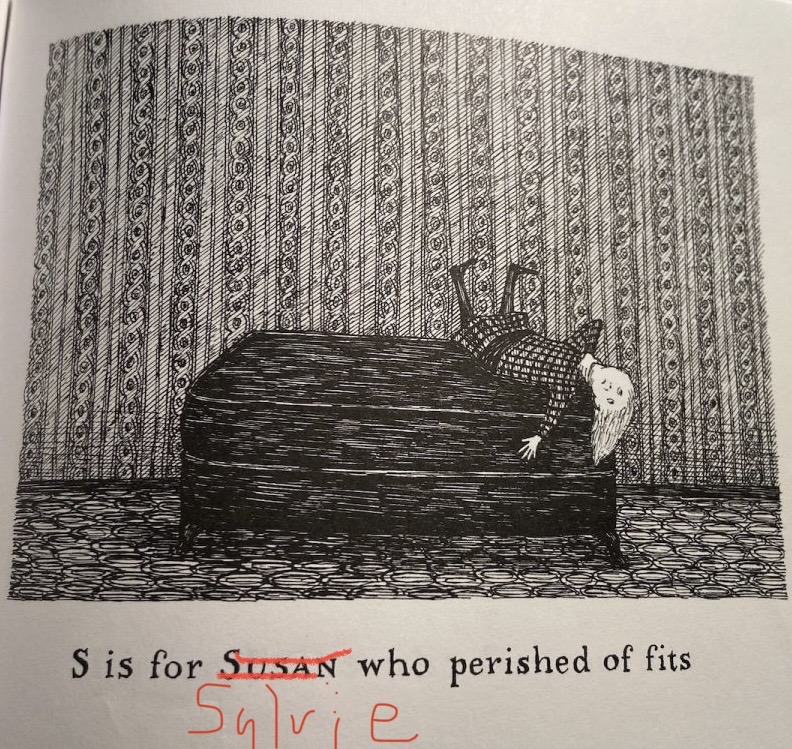
With apologies to Edward Gorey (The Gashlycrumb Tinies: Edward Gorey’s Alphabet of Death)
“Death comes equally to us all, and makes us all equal when it comes” – John Donne
“Memento Mori” (Remember Death)
I’m not saying I think about death a lot, but my best friend’s husband has nicknamed me ‘Terminal’ Sylvie. Perhaps a dozen or so years working as a palliative care nurse has left me marginally more noir than what strict social mores decree, but working adjacent to the dying, holding space for their final insights and experience, and catching glimpses through the eyes of those close to death, is a life-altering awakening. It’s difficult to capture with mere words, but as a little old lady… in waiting, let’s just say I feel a certain readiness to share what I’ve learned from the front row seats, as close as anyone can get without taking to the stage themselves.
Those near death understand a secret thing that we do not. Once you’ve been assigned an expiration date, you come to fully understand that there is nothing that we can truly own, nothing tangible or material that we can keep, there is no permanence, there is only the love we give away, the investment we make in others, and the ripple effect our actions have, for good or ill, is our only real legacy. Between you and me, I’m hoping for a bit more time to invest my ‘goodwill’ stock and watch my portfolio grow, but I know that nothing is promised. I try to stay awake to the end game and challenge myself never to overlook an opportunity for kindness. My record is sketchy at best, I’m a work in progress, of course, but I caution you now, that treating death as a taboo topic and putting our heads in the sand is ill advised, at best. A good death takes a little planning, and that starts with one irrefutable truth – that no matter how healthy or fit, rich, or connected (spiritually or otherwise), clever or credentialled you may be…no one is getting out of here alive.
Let’s start with the easy stuff – a quick review of the logistics. A few years ago, I attended a national palliative conference in Ottawa. There were a lot of very interesting and learned speakers there, but the lecture that got my complete attention was a presentation entitled ‘Getting ready to go.’ The lecturer provided some significant demographic data that suggested that the death trajectory as we currently know it, complete with nursing home beds, hospice care and access to in-hospital palliative care, may not be available to us. That is to say, we don’t currently have the capacity to accommodate the glut of Boomers that will die in a very concentrated time period. There is no more room at the ‘End of Days’ inn. The lecturer advised looking for community resources as we will almost certainly be dying at home. So have a look around you…know any docs or nurses, maybe have your kids practice injecting an orange or two … just thinking out loud here.
The lecture also included a detailed inventory of ‘good death’ questions for review. Do your kids know your passwords? Have you got a will, a DNR, a POA (medical vs financial)? What are your thoughts on MAID? Does you religion dictate that you suffer before death? Do you understand that if you lose cognitive capacity, MAID is no longer an option for you? Perhaps better to consider your position sooner rather than later and more important still, to communicate your ‘last orders’ to your substitute decision maker. You have a substitute decision maker… right? Isn’t it a kinder thing to consider your options now before your children or SDMs have to bear that burden? As a palliative care nurse, I’m reasonably confident that I can keep you comfortable as you lay dying, but my ability to comfort or mediate the pain and sadness of your friends and families sat beside you, holding vigil through the long days or possibly weeks as you lay dying… I know no medicine strong enough for that.
It’s important to have a think about what constitutes a meaningful life and what factors detract too much from that ideal to be tolerable for you, individually. It’s a very personal decision. If you’re asking me, I’m thinking I could possibly tolerate a little incontinence, I’m already acclimating to the indignities of cognitive decline (the forgotten pickleball scores, the word-finding, and could any of us LOLW get home if we didn’t have our key fobs to find our cars…just today I watched a friend open the door to an SUV that wasn’t hers…pretty funny actually, and tolerable I suppose. I’m going to go on record here and say I could, in theory at least, endure a modicum of pain (reserving the option to change my mind at any time on the pain piece…huge fan of pain management…give me the drugs – all of the drugs). However, if I was confined to hospital with no chance of returning home, or if I developed a dementia that meant I no longer recognized the people I love, then maybe a nice little hospital acquired pneumonia isn’t such a poor prognosis. Maybe comfort measures only at a certain point is the most humane treatment option.
Talk to your kids or your appointed decision makers about what you want and, more importantly, what you don’t want. I promise you that if I brought you to work tomorrow, even for an hour or two, you would be on the phone with your loved ones by the end of day. Think about who it is you want standing around your deathbed. Invite them to dinner, open a bottle of wine… maybe three. If possible, wait for the dessert course before you dive in to the deep end…ask about their day, tell them how much they mean to you, and as you cut into the pie, begin the difficult but essential conversation about what a ‘good death’ would look like to you. A mildly uncomfortable dessert course now, will spare your loved ones from having to make unthinkable decisions on your behalf at a time when all they’ll want to do is hold your hand, share a laugh about pie night, and find the strength to say goodbye.
Now, to the really important bit. It’s been my experience that those who make a happy end…those who die well, are those who live well, investing themselves in the people around them, and in whom others depend. The best death scenes I’ve witnessed are alive with love and rife with family folklore, where stories are shared of times well spent, and laughter erupts, and perhaps some tears as loved ones share their memories from over the years. ‘The day I met your dad…the day you were born…remember that big snowstorm…the camping trip from hell…’ or any number of Christmas poemics. I remember a famous local watercolourist whose family met in his hospital room every day at 5…Happy hour they called it. The wine was poured liberally, a hand-picked playlist in the background, the dulcet tones of Vera Lynn, ‘I’ll be seeing you in all the old familiar places…‘, the dying man, the guest of honour, enveloped by his chosen few, every afternoon the same bespoke soundtrack, storytelling and laughter, until the music stopped.
All we accumulate in this life, the acquisitions… the accolades…. they mean nothing in the end. It’s more about kindness brewed on darkest nights, and passions discovered and developed in ourselves and encouraged in those around us. What is most important in the end, are the broken hearts we helped to mend, our fortitude, our dedication, and our prowess as a friend, and all the little beauties we cultivate in whatever sort of garden we decide to tend. What matters most I think, as you take your last breath, is the love you gave away and the joy you helped create, in the time you were here. It’s our only job really … to love and be kind, if we can, and I have found that those who die well, with peace and with grace, find the time to be kind despite the many burdens they face… some even in their last hours and days. I will never forget a gentleman who rang his call bell at change of shift, with no ask or agenda, only to serenade his night nurse with the most beautiful rendering of ‘Fly me to the moon’ that I will ever know. I can still hear his voice a decade later, and I pray I’ll find it in myself to sing a little song in my last hours, to know such grace.
For me death is only a door to an unseen place, a speed bump between this world and what comes next, ‘it is the last unprinted snow‘ (Stoker). I think of it as a final adventure, a quest, a magical mystery tour. I know for many it may seem scary… the travel restrictions are untenable, you travel alone, no company, no carry on. I think the only thing we get to take are the string of moments when we are fully awake… the Fly me to the Moon occasions of human connection, a cache of all the unspeakable beauty we are capable of conjuring … a steadfast heart, a gentle word, an earnest ear, the softest kiss. All the love we give away is the only investment we need ever make, and the only prayer we need ever pray. But if, like me, you’re looking to hedge your bets, to grow a little more in the time you have left, there are three little questions I like to ask now and again: am I honouring my gifts, have I learned to love true, and is the world a slightly better place, even a smidgeon, because there was you? If you can answer these questions with any degree of satisfaction, I can almost promise you a beautiful death, where a parting glass will be raised in your name and those who loved you best will stand together in the “coke machine glow” that was you and mourn the loss of your incandescant light. In the meantime, dig out your rolling pin…it’s time to make pie.
I first met Maria Kubacki when we were still teenagers. She was a friend of my brother’s… think artsy, intellectual, an outsider, by choice or design. Recently arrived home to Saint John from a Toronto private school, she was the iconic, underground campus ‘it’ girl, a ‘Lit chick’- all cat’s eye eyeliner, black tights, and arthouse lipstick. She was clever and cool, straight out of a Sally Rooney novel, this quixotic mix of edge and vulnerability that was foreign and familiar all at once. Her style acumen was just the pretty wing man for her real talent, an unpretentious academic mind, a well-spoken confidence, and a reverence for the written word.
Fast forward 40 years, Maria, a fellow little old lady in waiting (possibly in denial) forwarded her initial remarks with a disclaimer: “I’m a little embarrassed and intimidated by this. I don’t want people to think, ‘who does she think she is?’ I have no particular accomplishments. I’m just answering these questions as a fellow little old lady in waiting who is in the thick of middle age and thinking about how to make the most of the last third of life.” This same little old lady in waiting, earned a Master of Arts degree in English Literature and has worked as a book reviewer and freelance writer as well as an associate editor, and editor. Currently she lives and works in Ottawa as a communications manager for the federal government. She took up writing fiction a few years ago and has published her short stories. She is married to a lovely man named Ken and has two twenty-something children, Jane, and Mike. She sidesteps the 7-sentence limit of the first interview question so adeptly, using a series of semi-colons, dashes, and ellipses, that I had to allow it. Maria Kubacki is still very clever…and cool, maybe even more so as a little old lady…in waiting.
Tell me your life story in seven sentences or less?
I was born in Warsaw, came to Canada when I was 4 ½, lived in Quebec City briefly and grew up in Bathurst in the 70s, where we were one of the few immigrant families, but it was pretty idyllic …double-dutch in the street with my friends, summers at Youghall Beach. I went to high school at a girls’ boarding school in Toronto where I was more focused on smoking, drinking and New Wave music and fashion than on my education, and where I started going by my middle name, Maria, instead of Iwona (my actual first name, pronounced Ee-vohn-ah and mangled by nearly everyone because of the “w”), or Yvonne (what everyone called me in Bathurst because it’s the French version of Iwona) – it was fairly common back then for immigrants to change their names to something easier for Canadians to pronounce, but it was weird and embarrassing to me to have all these names, and sometimes still is, as my parents, Polish family and friends still call me Iwona (or Iwcia, the diminutive, pronounced Eef-cha)…Bathurst friends and some cousins call me Yvonne, and everyone else calls me Maria.
I never knew what I wanted to be when I grew up, but I loved reading – my parents were and still are big readers so we always had lots of books in the house, and also I learned English the summer I turned 9 from a British family from the Isle of Man who had all kinds of children’s classics all over their house, the Narnia series and that sort of thing – so I ended up getting a BA and then MA in English at UNB.
I was quite lost in my twenties and dragged my MA on for many more years than I care to admit, but during that time I started doing freelance writing as a way to earn a bit of money and avoid my thesis – art reviews for a magazine called Arts Atlantic, and book reviews for the Telegraph Journal, which eventually led to a job as associate editor and then editor of the New Brunswick Reader, the Telegraph’s weekend magazine.
I got married and had my two kids in Saint John before moving to Ottawa where we have lived for 22 years and where I wrote for the Ottawa Citizen and worked as a writer/editor at what was then Canwest News service (now Postmedia).
For the last 16 years I have been working as a communications manager for the federal government and recently I started writing and publishing fiction, which I had never even thought about doing until I turned 50.
What is the best thing about getting older?
People always say things like not caring what others think anymore, or not sweating the small stuff. Sadly, I still sweat the small, medium, and large stuff – I sweat all of it. I haven’t yet reached the part of getting older where you’re relaxed and just flowing and enjoying life. I’m still in the thick of it – middle age, work, responsibilities. I think the “best thing about getting older” hasn’t come yet, or maybe I’m just doing it all wrong.
What is the worst thing about getting older?
Becoming set in your ways and more reluctant to try new things, acting and thinking like you are even older than you are. You’re drunk and high a lot more when you’re young, maybe that’s why you’re more open to new experiences then. Children are like that naturally…they’ll be friends with anyone, they’ll try new things, and as we age, we tend to stick to what’s familiar, what we know we will like, people like us etc. Our world can get smaller and smaller.
If you could retain or retrieve one quality from your youth, what would it be?
Being open to life, people, and experiences.
What’s the most important lesson you’ve learned so far?
Children and dogs have it all figured out – be in the moment, and enjoy every little thing, every day. Our beloved golden doodle, Tippy, who we had to put down a few years ago, was still chasing rabbits, making new friends, and wagging her tail the night she died.
Do you have a favourite quote?
Does anyone actually have a favourite quote or do they just Google “famous quotes” when asked? I don’t have one off the top of my head, but whenever I see one from the Stoics, it resonates – like the Marcus Aurelius one at the top of your blog, which I love and need to meditate on every day, because I don’t think I am living my life this way now: “Think of yourself as dead. You have lived your life. Now, take what’s left and live it properly.” I have lived a pretty cautious, small life. My anxiety, a lifelong affliction, has always held me back in life, even when I was younger. I would like to become a more fearless or at least less fearful person. Do more, see more, travel more. One of the reasons that it’s fun to read and write is that we all only have one life to live, and we have to make choices, and for some of us fear holds us back, but through writing and reading we can vicariously live many lives.
Do you have a favourite word?
‘Actually‘ – with index finger held up, because I’m a bit of a know-it-all, as my family and friends will tell you. One anecdote: on a family trip to Florida we took a drive through a ritzy area in St. Petersburg where there were big mansions…so we’re driving around and all having a nice time, and we drive by this house that has these ornate pillars and my sister-in-law says ‘oh look, there are statues of dolphins on them’ and I was trying to fight the reflex and telling myself, ‘don’t do it’ and then it just came out, ‘Actually, I think they’re manatees.’ Everyone just rolled their eyes at me but they actually were manatees! It’s become part of the family narrative.
Describe your perfect day.
Any day when I’m on a beach anywhere, in almost any weather, or just somewhere near the ocean or near water. It could be Venice, or Seven Mile Beach in Grand Cayman, or Bar Harbor, Maine. Or Brackley Beach in PEI, Sandbanks Provincial Park, Saints Rest in Saint John. I think it connects back to happy memories of growing up in the Maritimes, spending a lot of time at Youghall Beach in Bathurst every summer throughout childhood and my teen years, and then living in Saint John for many years going to places like Cape Spencer, the Irving Nature Park, St. Martin’s. I guess to me water also feels very open to possibility. I think I like imagining what’s on the other side of the ocean. I also love the feeling of being on the water, I love kayaking… it’s just very freeing.
If you could have tea with anyone, real or fictional, dead or alive, who would it be and what would you talk about?
I know people often say Jane Austen, Shakespeare, or Churchill but I can read them, no need to have tea with them. I love Jane Austen, but I think she would be really catty and judgmental in real life – I would be afraid of her. Maybe hanging out with Churchill while he sat around in his pink satin undies and robe while drinking and trying to figure out how to defeat Hitler might have been cool. But I think what I would really like is to have tea with both my grandmothers, although separately. I would ask them about their lives in Poland. My mother’s mother had a farm outside Warsaw and raised 5 children during the Second World War. She was not educated but was very smart, wise, funny, kind, and resourceful. She was milking the cows at like 4 am, made all the kids’ clothes by hand…during the war, German soldiers took over their farm and the kids all had scarlet fever as well …and somehow, she managed to keep everyone alive. And found time to make beautiful hand-embroidered tablecloths.
My father’s mother was very ahead of her time. She went to medical school in the 1920s when there was a “numerus clausus” – a quota that only allowed 10 % of the students to be women, and she was smart and tough enough to be one of the 10%. She did a PhD and was a specialist in internal medicine. She also loved to travel and trying new foods and was sporty and adventurous – she would rent scooters for her, my dad and his brother and they would all go adventuring together.
Tell me three things that bring you joy.
My family and friends. Walking/hiking/kayaking. Travelling almost anywhere, whether it’s a day trip near Ottawa, a road trip to New York or New England, or Europe. I’m going to cheat and list way more things because many things bring me joy. Going to museums, big or small, almost anywhere. Cappuccinos and spritzes. Chocolate. Music. Going to movies at the Bytowne, our local rep cinema. Conversations about life with my kids, Jane, and Mike. Family dinners with the kids and my parents. Rewatching favourite movies and TV shows with my husband, Ken – Remains of the Day being the movie we rewatch most often, because it’s perfect in almost every way – from the writing and the acting to the period costumes and interiors and the incredibly sad but beautiful score. Ken and I also like making up our own words to songs and making ourselves laugh. Sometimes we also meow songs – we don’t remember why we started doing that, but I think it was when our kids were little, but anyway it makes us laugh. It’s not possible to list just 3 things.
Name a guilty pleasure.
Taking a day off just for myself to do whatever I want. Or years ago, when my kids were little, Ken and I would sometimes take an afternoon off work to go to a movie just the two of us.
Do you believe in life after death? What does it look like?
I don’t really think about it. It’s probably just oblivion – we probably just get reabsorbed into whatever the universe is made of…ashes to ashes, dust to dust. But if there was some kind of life after death, it would be nice if it were an eternal sleep where we dream forever and get to be with everyone we loved and experience everything we ever wanted to but did not get to experience in life. In this eternal dreamworld I hope I get to fly, and look down over the earth, like Google Street view, but better.
What would you like your eulogy to say?
I guess my kids would be writing my eulogy. I hope they say I was a decent human being who taught them to be decent people. I think they might say that I gave unsolicited advice very freely, but I hope they feel that sometimes it was good advice. I hope they also remember our Amazing Race-style family trips where I made them see and do everything, even if we were exhausted and our feet were sore from walking 20,000 steps a day.
“Every child is an artist. The problem is how to remain an artist once he grows up.” – Pablo Picasso
“When my daughter was about seven years old, she asked me what I did at work. I told her that I worked at the college – that my job was to teach people how to draw. She stared back at me, incredulous, and said, ‘You mean they forgot?’” – Howard Ikemoto
On the recent occasion of my 59th birthday I signed myself up for a workshop on the ancient art of Japanese book binding. I’m not what you would call ‘crafty’, at least not in that sense of the word… a maker of things. I’ve never successfully knit a whole sock, my Christmas decorations come from Canadian Tire, and my sour dough starter-baby died of neglect…twice. I thought it might be the right time to reawaken my inner maker and so, accompanied by my daughter, an artist with a defined skill set, we entered a beautiful old heritage building, the library of my youth, and found seats on the second floor, which once housed the reference section. (For my Zoomers, I refer here to a time before almost every academic question could be answered with a thumb scroll on your smart phone, from the comfort of your couch.)
We little old ladies in waiting may not have had to walk 10 miles to school through drifts of snow as tall as we were (Boomer narrative), but we did have to leave our homes to look for the answers. We juggled 50-pound encyclopaedias searching for the illusive truth or some reasonable facsimile. We took notes in an ancient script called cursive. It was the dark ages kids, before the information age and the internet, before group work started trending and you could pawn the research part off on the kid who would rather disembowel himself than speak in public.
But I digress…awkward segue back to the book binding workshop, the setting for a timely and reflective lesson in humility and a powerful endorsement of the restorative power of making art. We were provided with all the necessary materials including what looked like a small ice pick or a long sharp little doorknob. I believe the proper term is an awl, and we were advised not to use it if we weren’t confidant in handling the tool. ‘Look for a helper’ the instructor advised, making direct eye contact with me as she did so. I tried not to take it personally, but it did take a little of the glitter off my crafting confidence. I’m happy to report that I wielded that awl like a card-carrying Cape Breton craft guild member. No blood was lost, and at the end of the day, my paper was pierced to a standard capable of being assembled in a perfectly adequate journal.
There were a few challenges of course. The eye of my sewing needle was too small to see, my thread refused to cooperate, I may have been overzealous with the glue, and at one point I fell so far behind in the binding instruction I was forced to go freestyle. I looked over at my daughter for clarification but, after accurately assessing the situation, she shook her head and whispered “I can’t help you” with a smug little art-savvy smile on her face. I sensed some residual anger about wasting a high UV summer afternoon in musty smelling rooms. There was definitely a mean-girl twinkle in her eye as she effortlessly wove her journal together, her hands adept to any artistic enterprise. In the end, the teacher took pity on me and salvaged my journal. I was… accommodated. It was my birthday after all, and I wasn’t leaving without a finished product.
A few hours later, sitting by the sea with my bestie, a very successful artist herself, attempting to salvage a little birthday esprit with a few pre-dinner cocktails (code name beach walk), I began to unpack the experience and consider the merits of engaging in art for its own sake, process over product. How did it feel to create something ? I hand crafted a beautiful journal, with complete artistic control over design and construction…well, maybe not complete control… but every choice, every small flaw or mistake, was my own. It felt…nourishing, making something from scratch, even with unpracticed, non-nimble hands. Cultivating your inner maker feels a lot like play. It’s like leaving your mind for a time and living only in your hands. You spend a few hours purposefully, intentionally, unplugged and unreachable, and when playtime is over you have this lovely little objet d’art, perfectly imperfect, bespoke, hand crafted, and all by you, a maker in the making.
In today’s highly specialized world, unless you work as an artist or maybe an entrepreneur, we have, as individuals, lost touch with what it feels like to conceive, design and produce a finished product completely on our own. Most of us are cogs in the machinery of industry. We contort ourselves to fit the spaces defined by the job market. We make ourselves small to succeed as cogs and move up the ladder to coveted cog spots, perhaps with a corner cog office, but in the end, unless you are designing your own work and workday, whether your uniform is a set of scrubs, a pair of overalls, or a thousand-dollar suit, it still says cog in the small print of your contract.
In Ancient Greek mythology, Procrustes was a thief who offered travellers a bed for the night and then stretched those too short, or cut off the limbs of those too long, to make them fit the bed’s dimensions. In many ways I feel like I’ve been sleeping on a Procrustean bed my entire working life, perhaps earlier if we consider the public school system as pre-employment prep, conditioning children to conform to an unnatural or arbitrary standard, “a veal-fattening pen” (Copeland) for the cog culture.
As a quasi-retired, little old lady in waiting, I’m more than ready to embrace the artisan in me. I’m interested in work of my own choosing, designed, and created entirely by me. While I may never be a master book binder, I’m not ready to abandon the maker mindset quite yet. I think a fiber art class in the Fall might suit, or perhaps a creative writing assignment to chip away the icy cold months of the long, reclusive Canadian winter. I remember enjoying drawing and painting as a younger woman and I may still have all the tools needed to make a cosy east-cost hooked rug, art to keep out the cold.
The experience of engaging in making art is tremendously satisfying, especially if your inner maker has been starved to the point of mummification. I propose making artist dates with yourself: writing morning pages, evenings of experimental cooking, or maybe even acquiring a knitted sock mentor. Treat the artist within like an honoured guest who inspires and delights and brings out your highest self. What I’m suggesting is pursuing a path of gentle exploration to set you inner maker free. Above all, and this is crucially important, never… ever allow your left-brain critic to cut its razor sharp teeth on your vulnerable right-brain art, with its practiced vivisectional rigor.
Making art is a clarifying experience. It opens us and illuminates everything we are inside. The art we produce as little old ladies in waiting may never pay the electric bill, but becoming a maker is an investment in yourself that pays incalculable returns. For me, good art elicits emotion and deals with questions of meaning. Likely too high a bar for evaluating one’s own artwork. I’m pretty sure none of my experiments in becoming a maker will ever garner any critical praise. What I do know is that consummating the creative impulse is an immensely pleasurable and stirring experience and one this maker in the making plans to chase habitually and unreservedly.
“If a book is well written I always find it too short.”
Jane Austen
A book review is a highly subjective exercise and so, in the interest of full disclosure, as a Little Old Lady in Waiting, I know you won’t be surprised when I tell you that I like little old lady subjects and settings. I like my people past their prime and living by the sea or someplace equally sublime. I like subtle, nuanced, tender narratives with a philosophical bent and characters who feel like friends I’d like to know. People who have lost important relationships and parts of themselves, and know its possible to keep on existing…people who understand that ghosts are real…people who have paid a price for their place in the story. Layer in fresh, visceral language that routinely makes you stop to reread or recalibrate your breathing and I’ll stay with you untill the very end, and when it’s over, I’ll take a little piece of you with me.
The rating system I assign is roughly as follows:
10/10 – The illusive unicorn. “Your heart understood mine”
9/10 – I loved this book, it changed me in some way
8/10 – Great read. I’m still thinking about it
7/10 – A good read. I’d pass it to a friend
6/10 – Adequate I suppose
5/10 – Flawed in some subtle but no less dissapointing way
4/10 – Major story flaw (cardboard characters, poor pace, sledghammer story-craft)
3/10 – The author has failed the reader, the editor should be escorted from the building
2/10 – No… just no
1/10 – I will never get those hours back
I have long admired the personal and professional life of Agatha Christie. I’m a fan. I’ll read anything about her work and career and so when I discovered The Christie Affair in a used book store it was a little like finding a thrift-store cashmere cardi in a colour that suits. The Christie Affair is Nina de Gramont’s first novel and takes as its subject the eleven days that Christie went missing and the marital discord that immediately proceeds it. In the novel, Chistie’s husband, Archie, is conducting an affair with a younger, Irish woman named Nan O’Dea who reads like Saoirse Ronan from the film Brooklyn , a clever compassionate character that carries the story in many ways, and has a compelling back story of her own. The book becomes a multi layered mystery to be solved, complete with a war weary police detective, a tragic love story, and a satisfying tale of revenge. I loved the characters, the post war UK setting and the glimpse into Christie’s private world. 7/10
There was a lot of buzz about this book on social media and a sequel already in print, so I picked up a copy of this novella for a vacation read. It’s marketed as a transformation story of a young woman who drops out of her life and spends a year reading in the cramped upstairs quarters of a family run second-hand bookstore. A perfect story premise for a bookish woman of any age. Set in Tokyo, the heroine of the book is a love spurned 25 year old named Takako, a non-reader, immersed in a hip deep depression post a humiliating break up, when she accepts the invitation of her eccentric uncle to live and work at the Morisaki bookstore. This is Yagisawa’s debut novel and it did not deliver on any level. The characters are unsympathetic, the story line is non existent, even the theme, ostensibly the joy of reading as a transformative experience is poorly executed. The most generous thing I could write is that any merit or charm Yagisawa may have conjured in his original work is wholly lost in translation. 1/10
Peggy is the fictionalized portrait of Peggy Guggenheim, American heiress, art collector and feminist icon who begins life as a New York debutant and becames embroiled in the bohemian Paris of the 1920s, dallying with the likes of James Joyce, Emma Goldman and Samual Beckett. Peggy, begun by Rebecca Godfrey who passed away in 2022, was finished by the author’s good friend, Leslie Jamison and in some ways the story does feel like two separate books. The heiress is portrayed as a poor little rich girl who suffers the loss of a beloved father who goes down with the Titanic, a dear sister who dies in childbirth, and a son lost via a dissolved marriage with an abusive, parasitic poet. She is snubbed by an anti-semetic society as a Jewess, and ridiculed in the boheniam art world as little more than “a wallet.’ Despite her millions she has the reader’s sympathy as an intelligent, philanthropic outsider with a keen understanding and appreciation of the post war modern art movement. This fictional biography is an interesting look into the elite world of early 20th Century New York aristocracy as well as post WWI Paris and the intellectuals who mingled there and became known as the lost generation. 6/10
Depressed mid 40’s academic, Phoebe Stone, distraught after her husband leaves her for another woman, her career stalling, her geriatric cat found dead at home, decides to treat herself to an expensive evening gown and a posh holdiay at a decadent hotel, all with the intention of killing herself. A dark tale indeed, except Espach’s voice is so intelligent and noir comic that the reader tags along despite the downer of our heroine’s final destination. Enter the wedding people who descend on the hotel as the only other guests and, despite their annoying, narcissistic and waspish ways, they ineveitable disarm, distract, and detour our hero’s journey. The setting, Newport, Rhode Island, is a charming backdrop to Espach’s first novel, but the real winner is her smart heroine whose thoughts, suicidal and otherwise are always authentic and relatable and rife with literary references that appeal to readers who are fans of the Brontes and Virginia Woolff. A great book to pass to a friend with a Litt degree and an appetite for a dark night of the soul. 7/10
Anne Lamott’s book, Help Thanks Wow is a call to prayer as well as a prayer tutorial for the uninitiated and the out of touch. It is a book about gratitude and finding perspective and it is an invitation to cultivate a state of wonderment. Lamott’s simple, comical and self deprecating style could charm even the most determinined non-believer. She keeps it simple, three one word prayers to recite, to hold fast through the tough times, and to stay mindful and intentional through the mundane everyday; to look for the good, and experience all the beauty that lies in wait for us if only we have the eyes to see it. I found Lamott’s style and non-denominational approach inviting and pragmatic. She didnt alienate her readers with old fashioned God talk, “asking an invisible old man to intervene.” She understands there are no words for the ‘broken hearts of people losing people’; there is no fixing the unfixable. But prayer as a spiritual experience, a one word incantation that helps you become more generous, more patient, more kind to yourself and others, there surely can be no harm in such a practice. I loved Lamott’s comical, tender, and real life prayer book, made for misfit souls of all ages. 7/10
Julia Cameron, best known for her book , The Artist’s Way, delivers a comparable artistic toolbox for writers who work with story craft, routinely tackling the often intimidating blank page to create meaning and art. The Sound of Paper is essentially a workbook with a series of exercises and disciplines designed to open the creative narrative approach, so often stymied by a writers own critical voice, that values product over process and atacks fledgling writing projects before they’ve had a chance to mature. Cameron’s writing drills are designed to explore and develop your authentic voice, to place emphasis away from a perfect script, with a series of self care indulgences that cultivate a safe space for creative work, and structured play projects designed to reignite a love of writing. Daily rituals include walking, and morning pages, and being open to the idea of working poorly, breaking free of the ego’s need to be brilliant, and instead contenting ourselves to being functioning wordsmiths, with the freedom to embrace new forms. This is a perfect gift for any writer looking to learn or advance her craft. 8/10
Emilia Hart’s Weyward, chronicles the lives of three Weyward witches, separated by generations but related by blood; the three principle characters include , Altha, on trial for witchcraft in the 16th Century, Violet, at the mercy of an opportunistic father and an unscrupulous suiter in the 1940s, and Kate, the victim of present day domestic violence. Their stories highlight a history of patriarchy and misogeny that targets powerful women and condemns or attempts to harness that power. I’ve always enjoyed a good witch story, ever since I watched Bell Book and Candle with Kim Novak and Jimmy Stewart. The Weyward witches are more like botanists with animal familiars, less broomsticks and incantations. The book is at its best drawing attention to the understated, undocumented power that exists between women, “the most feared…and the most potentially transforming force on the planet.” The story’s pace is a little slow moving in the first half, and the book reads a bit like three separate novellas with tie-ins too carelessly woven, and coming too near the book’s close. I have read better witcherature and while Hart’s story gets a passing grade, it didnt put a spell on me. 6/10
I read this book several years ago but as it is always on my night stand and as I am continuously rereading passages, a review seems in order. I have recommended this book to many, many friends, particularly those who have experienced their first ‘shot across the bow’, a personal health scare, and have come face to face with their own mortality. If I still have the capacity to read and understand this book’s ancient teachings as I lay dying, this will be the last book I hold . I take great comfort in its thesis that what we are has no beginning and no end…what was never born may never truly die. I can hear the critique of my scientific rationalist friends prpeparing their remarks as I write, but the little old lady that waits in me, made peace with Pascal’s wager decades ago.
I Am That was first published in 1973 and is a collection of teachings from the great Hindu spirtitual teacher and seer, Nisargadatta Maharaj. This book takes its title from the Upanishads and delves into who we reallly are, “nothing perceivable, or imaginable,” and is a guidebook to cultivate an awareness of our natural state. Topics include acceptance, the way through pain, a ‘do no harm’ discipline and is a call to “wake up” from the daydream that enchants us. Reading this book is like donning a cloak of grace or a cape that insulates us from fear of death. I cannot recommend it highly enough, particularly for readers who have received a disappointing diagnosis and believe their time is finite. 9/10
I sat down with Margaret Anne Smith at a local coffee house with a reputation for good lattes and a spectrum of social justice projects that support many marginalized members of our community. It seemed a fitting setting for a conversation with a woman who is, among other things, an advocate for the disenfranchised, sitting on the board of a harm reduction enterprise that supports people living with addiction. Margaret Anne Smith holds a PhD in English Literature, specializing in 20th Century poetry, and has taught her entire career in the post-secondary setting. She is an academic, a teacher, a poet, and a fiber artist. She is married, a mother of two, and has the sort of old-world integrity and essential goodness that makes you believe that we are not without hope, no matter what unbelievable chicanery we witness daily on the evening news. As I listened to her speak, I couldn’t help thinking of the power of a single individual to effect great change in the world around her, especially one armed with a sharp analytical mind trained to notice what others do not see, and gifted with a clear, insightful voice to ask the right questions. She is currently at work on a book of poetry that celebrates local coastal beauty and lure. It is a collection I very much look forward to reading someday.
Tell me your life story in seven sentences or less?
I grew up in Saint John and…same sentence… moved back here on purpose, after spending a dozen years away. I love my extended family and friends. I have been married to David for 36 very good years. We have two great kids. I live near the Bay of Fundy. I am a teacher. I am a reader and a writer.
What is the best thing about getting older?
Learning…I was going to say discovering, but it’s not like a momentary discovery, there is no switch that flips, there’s no ‘aha moment’… it’s a gradual process of learning what I care about. And the other side of it, is learning what I don’t give a fuck about, and that list has changed with time.
What is the worst thing about getting older?
Joint pain and not being able to see as well as I want to in my 50s. That’s the part that surprised me, the pain came so much earlier than I anticipated. I’m on the cataract waiting list which depresses me, but I look forward to losing the heavy progressive lenses.
If you could retain or retrieve one quality from your youth, what would it be?
My knees and my feet to be honest. It’s not my optimism…it’s not my hope, it’s not my energy level I’m worried about losing …it’s my joints. I had envisioned at this age, those walking trips in Europe, but there’s no chance. I couldn’t physically do it… it’s my knees. I want to be able to hike for ten kilometers and I just can’t.
What’s the most important lesson you’ve learned so far?
I think it’s probably learning the difference between spending your energy on things you cannot change and spending your energy on things you can. And that exists on several levels So there are things that maybe I cannot change about myself,… my feet hurt, I can’t take a walking trip across Ireland. Ok…goodbye to that idea, and now what can I do instead? Because I think spending your energy on things you can’t change makes you bitter, and we don’t want to be bitter little old ladies in waiting… because it would be easy, wouldn’t it?
So that’s personal, so now let’s take it to the next level to the people in my circle. There are certain things I can’t change, and you can invest in those relationships but there are some things you just absolutely cannot change. I like Glennon Doyle’s Podcast? It’s called “We Can Do Hard Things”. It’s American and its funny as hell, and they interview a lot of interesting people and one of the great episodes is about how to fortify yourself for the holiday season in terms of dealing with your family and expectations. A great piece of advice he gives is ‘Be not surprised’ because you know Uncle Bob is going to go down the same road he took last year, so don’t be outraged and horrified by it, just adopt an attitude of ‘yeah, whatever, I still love you,’ when people behave in ways they have always behaved, ‘be not surprised.’
Jewel has a song I really like from 1998, I’m dating myself here, it’s called Life Uncommon. She says ‘no longer lend your strength to that which you wish to be free from.” It’s about using your voice and that speaks to me now…where do you use your energy… where do you use your voice.
The other part of that question is what you do about the global piece and that is much more difficult right now. I try to be selective and pick the bite-sized things that I can do. I joined the Board of Avenue B that operates on a harm reduction model. I have no lived experience with addiction myself, or in my circle, but I thought I can be on the board. I’m good at policy and procedure…and I try to make choices with some integrity. I don’t live in a tent, I’m not a drug user, but l am devastated by the inhumanity that’s everywhere in our cities and small towns now and how people are being treated so badly and left out. We talked about water fountains at the meeting last night. If you were thirsty and unhoused…where do you go?
Do you have a favourite quote?
Yes, it’s a quote by Vaclav Havel. I like it because he distinguishes between hope and optimism. It’s a quote from his time in prison. His language is beautiful of course, but for me the beauty is that he isn’t saying, it will all be fine…because so often it is not fine. He takes hope from being a big cartoony rainbow thing and makes it real.
“The kind of hope I often think about (especially in situations that are particularly hopeless, such as prison) I understand above all as a state of mind, not a state of the world. Either we have hope within us, or we don’t; it is a dimension of the soul; it’s not essentially dependent on some observation of the world or estimate of the situation. Hope is not prognostication. It is an orientation of the spirit, an orientation of the heart; it transcends the world that is immediately experienced, and is anchored somewhere beyond its horizons.
Hope, in this deep and powerful sense, is not the same as joy that things are going well, or willingness to invest in enterprises that are obviously headed for early success, but, rather, an ability to work for something because it is good, not just because it stands a chance to succeed. The more unpropitious the situation in which we demonstrate hope, the deeper that hope is. Hope is not the same thing as optimism. It is not the conviction that something will turn out well, but the certainty that something makes sense, regardless of how it turns out. In short, I think that the deepest and most important form of hope, the only one that can keep us above water and urge us to good works, and the only true source of the breathtaking dimension of the human spirit and its efforts, is something we get, as it were, from “elsewhere.” It is also this hope, above all, which gives us the strength to live and continually to try new things, even in conditions that seem as hopeless as ours do, here and now.”
Do you have a favourite word?
Sea…as in the ocean. The word sea represents all kinds of things metaphorically but for me it is both a personal, and local place of refuge…it always has been …since I was old enough to ride my bike off the cliff, which I did by the way…I was a free-range kid in West Saint john. I might edit that out for my mother.
There is something timeless about the sea… I love the rhythm, I love the sound. It’s also a metaphor for connection, wrapping around the globe, and it’s a measuring stick for what we are doing to the planet which is a big concern for me. I think because we can see the trees being cut down and we can see the trees on fire on tv, it’s a little harder to ignore, but we could go to Bayshore this morning and think all is well…and it’s not. We need to pay a bit more attention… we need to pay a lot more attention.
Describe your perfect day.
Sunshine. Great coffee. The ocean. My husband and my kids and their partners and nothing planned.
If you could have tea with anyone, real or fictional, dead, or alive, who would it be and what would you talk about?
Given the state of the world, I want to sit down with Greta Thunberg. Three reasons. She is young and we need to listen to the younger voices, about everything. I mean look at where the power is…still in the hands of old rich white guys and that has to change. Secondly, she is willing to make incredible sacrifices for the future. I’m interested in asking her, why, what do you see, what do you envision, what are you giving up and what are you giving it up for? Three would be the climate crisis, it’s going to cook us and were pretending it’s not. I want to talk about that.
Tell me three things that bring you joy.
Real conversations. Real, not honest, because even honest conversations have a few lies in them.
David, Kevin, and Maureen …from the beginning all the way to this morning. So much joy in that little family of mine.
Time outdoors. Some of it goes back to the free-range childhood. Total freedom. It might have been an illusion, or it might have been quite real, that no one was paying any attention to us kids. We were free, and time outdoors reminds me of my freedom. Also, as an artist I appreciate the changing light and the shadows cast by the sun and the changing colours of the season. My shoulders lower when I step out the door.
Name a guilty pleasure.
Ice cream. Too much fat, too much sugar but it hasn’t made me give it up. It’s a favourite treat.
Do you believe in life after death? What does it look like?
I do believe in life after death, but I don’t know what it looks like. And I don’t even have an assumed visual. I think when I was young, I did have an idea that was based on a religious tradition…heavenly gates…clouds. So now I think there is so much beauty and goodness, despite the horrors, and I don’t think those things can just come to an end. There has to be something else. My sense of what that is has changed, because I think there is something else for the right whale as well, and for the pigeon on the roof… that we’re all part of this interconnectedness that we can’t really, fully appreciate now and maybe our great joy in the afterlife is coming to understand what that interconnectedness means.
What would you like your eulogy to say?
I boiled it down to two things. First, I want my children to write it, and I trust them. Second, and how’s this for a mothers’ control, I hope they would say that they saw that I remained engaged until the end of my days. I don’t like the word engaged… maybe passionate, passionate is better, engaged is so psycho-ed, or maybe that I cared, but that’s too Hallmark. Passionate works, and passionate about what doesn’t really matter…maybe when I’m 80 I’ll be passionate about my pansy collection.