
“ I have lived a thousand lives and I have loved a thousand loves. I’ve walked on distant worlds, and seen the end of time. Because I read.” – George R.R. Martin
“A room without books is like a body without a soul.” – Marcus Tullius Cicero
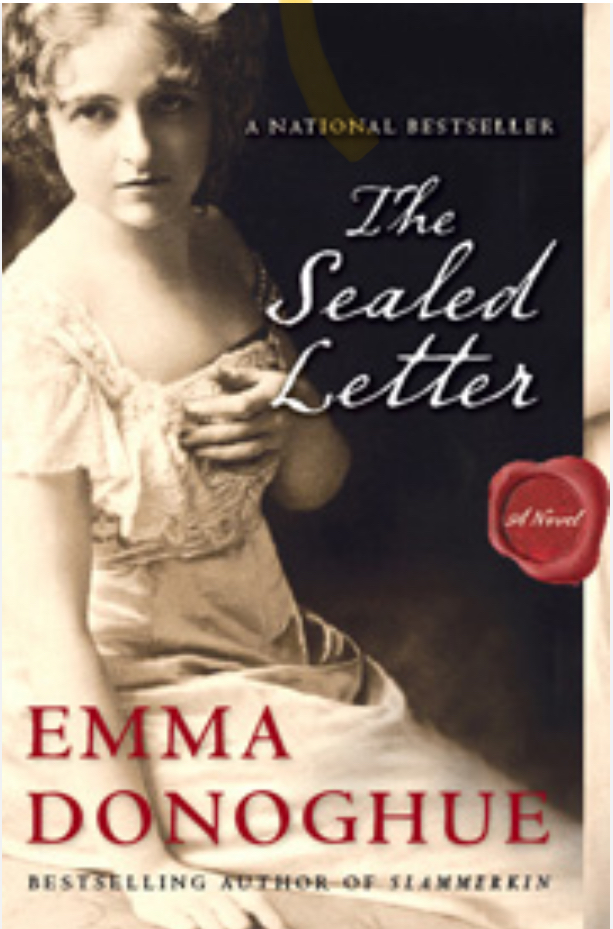
I selected The Sealed Letter by Emma Donoghue from my TBR pile as my bookclub pick this year because my first choice, Intermezzo by Sally Rooney, also reviewed this month, was unavailable in soft cover in Canada. The Sealed Letter has been on my shortlist for bookclub two years running and I was reasonably confident it would be well received as we have read and loved other works by Donoghue and the novel promised much, complete with a scandalous divorce, and a courtroom drama circa 1864, an era showcasing the rise of the women’s movement in England. While the historical drama and detail Donoghue is known for is spot on, the main characters are largely unsympathetic, one character likened to a modern day ‘simp’, by a particularly funny bookclub commentator. The book did raise some interesting dialogue regarding bias or barriers still in play for the modern woman, as well as the value and validity of the marriage contract today. 6/10
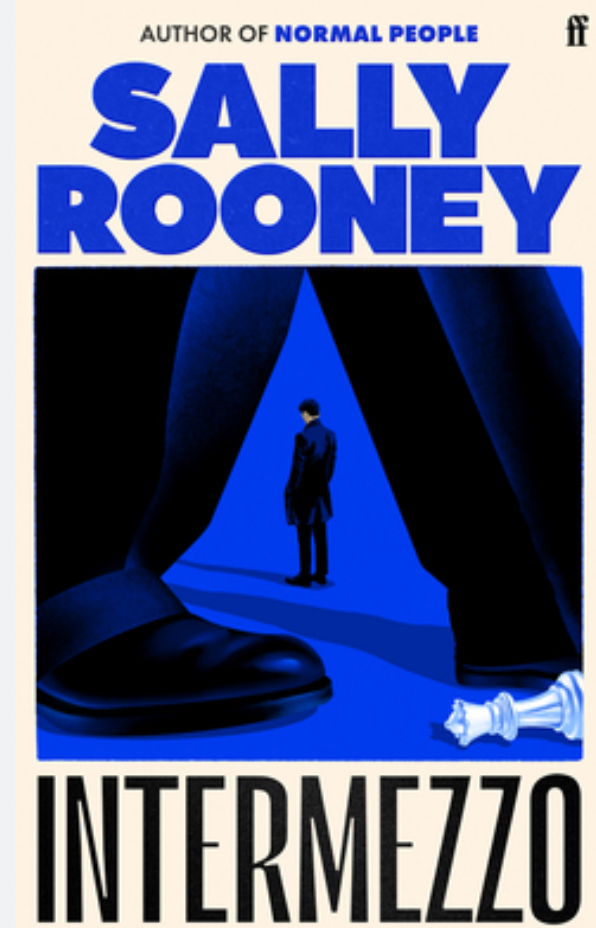
I picked Intermezzo up in Prague last year. Sally Rooney’s latest novel was a highly anticipated event, the Observer critic commenting, ‘Is there a better novelist at work right now?’ Perhaps not, but for me, Intermezzo falls short of her earlier work. Dont get me wrong, Rooney is always a proper bookshop purchase, it’s no-queuing-for-library loan, must-have material, but her latest novel is missing something. The main characters, two brillaint brothers, one a master chess player, the other a successful lawyer, are navigating their barely intertwined lives and managing love interests, after the recent death of their father. The raw visceral emotion and the ruined, tragic character trajectories, trademark Rooney, are alive and well and envelop you on every page. Desire and despair, Rooney’s baseline, are also seemlessly juxtaposed, and drawn taught for readers to stare, like voyeurs, into private rooms to see how much her characters can hold. Clearly I’m a fan, but this book withheld the meta narrative that Rooney usually layers in, a political or philosophical question that expands and enriches the read. I went looking for that bit but was dissapointed this time 7/10

Colleen Hoover’s Verity got passed around so often, at work and the gym that I finally reached out a hand and brought it home. It was spoken of in hushed tones, and described as sexy and suspenseful. I was imagining some variation of 50 Shades of Grey. It was my first sampling of the immensely popular Hoover and very probably my last. While the sex was full on, biting of headboard sort of stuff, it wasn’t all that sexy, and a little repetitive. Although Hoover’s story scores high on the creepy scale, and her storyline fairly unique, I feel like there were too many obvious redflags pointing to the real villain of the piece, so that the ending didn’t surprise and shock as intended. 4/10

The Paper Palace was another bookclub pick this year. It’s the story of a 50 something relatively happy, married woman who begins an illicit and graphic affair with the love of her life, torn apart by tragic circumstances many years earlier. The story occurs during a trip to the childhood summer setting of the two lovers, each vacationing with their spouses and children. During the course of the novel, the heroine must decide to stay with her husband of many years or leave her life behind and grab her last chance to be with her great love, to live the life she was meant to live. It’s a wonderful idea for a book but the principle characters are so underdeveloped, and overshadowed by the circumstances that divide them, that their love affair reads a little like a superficial liasion, heavy on not so clandestine fuckery, and a little light on real romance or enduring love. The book is saved by exquisitely drawn characters like the heroine’s mother, a New York Matron, caustic and razor sharp (come sit by me please) and the cuckolded husband, a chain smoking dry witted intellectual. It’s hard not to sympathise with the husband as the lover is so thinly drawn . If we’re supposed to want the heroine to run away with her one true love, the author has failed entirely to convince me. Still the writing is excellent. 7/10

The Names is a fascinating look at the power of a name and how it informs our idea of ourself and all the lives that interconnect with our own. Knapp’s novel shines a spotlight on the generational damage of domestic abuse and the how the smallest act of rebeliion, the choosing of a name, can alter our course and that of those closest to us, and save us from a fate destined for another. The Names chronicles three separate co-occurring narratives, the first defined by a boy named Stephen, after his abusive father, the second the story of a boy named Julian which means skyfather, an intermediary option selected to placate, and finally the tale of a boy named Bear, a name picked by a loving sister and chosen by an abused mother with everything to lose. The writing is exceptional and the story, which is partially set in Ireland, is so compelling you will not want to put this one down. An excellent choice. 8/10
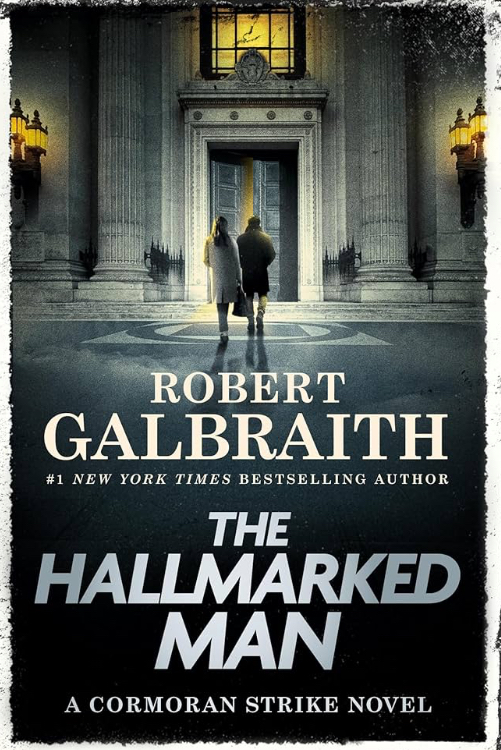
This is Galbraith’s (pseudonym for J. K. Rowling) 8th book in a 9 book series, showcasing the charismatic duo of an ex military, below the knee amputee, Cornish detective, Cormoran Strike, and his bright, curious, intuitive partner Robin. Both characters have complex back stories and alternating romantic interests but throughout Galbraith’s detecive fiction, there is a beautifully drawn and burgeoing love story that has been modestly parcelled out over the course of the series and that remains unconsumated at the end of Book 8. Dedicated fans of the series can only hope their tender romance will be resolved satisfactorily for the reader in the final book due out in 2026. The Hallmarked Man may be my least favourite in the series, save one. The plot involves the unknown identity of a horribly dismembered body found in a London silver shop and connected to the Freemasons. There are five contenders for the body, each with its own convoluted and intricately woven narrative, and so many red herrings and associated bit players that it was difficult to follow the detection, and after a bit I actually gave up. I held fast to the emotional development of the love story which was also a dissapointment compared to previous books in the series. The series itself gets a 9/10, but Book 8 rates only a 7 for me. Still, I will be preordering the final Book 9 next year and sequestering myself to sit uninterrupted to savour the final instalment of my favourite detective series since P. D. James’ Dalgleish. 7/10

Marianne Williamson’s, Everyday Grace is not the spiral staircase to mystical practice that I was expecting. While she starts strong with the Byzantine Rule, that nothing is as it appears to be, that we hunger for a lost dimension, and that we are so much more than we think we are, her work remains largely a call to prayer and a dedication to spirtual ritual, offering little in the way of a promised travelling companion. ‘Be still and know who I am’ is a recurring theme and Williamson draws heavily on her Course in Miracles work, suggesting meditation is the mystic’s entry to the ‘deeper waters of the divine.’ While Everyday Grace is an interesting study of the potential power of a mystical wand available to all who seek it, the work does not reveal how it may be found or instruct us on how to wield it. I was hoping for something more concrete, and less theoretical, more Joan of Arc, less Julian of Norwich. 5/10
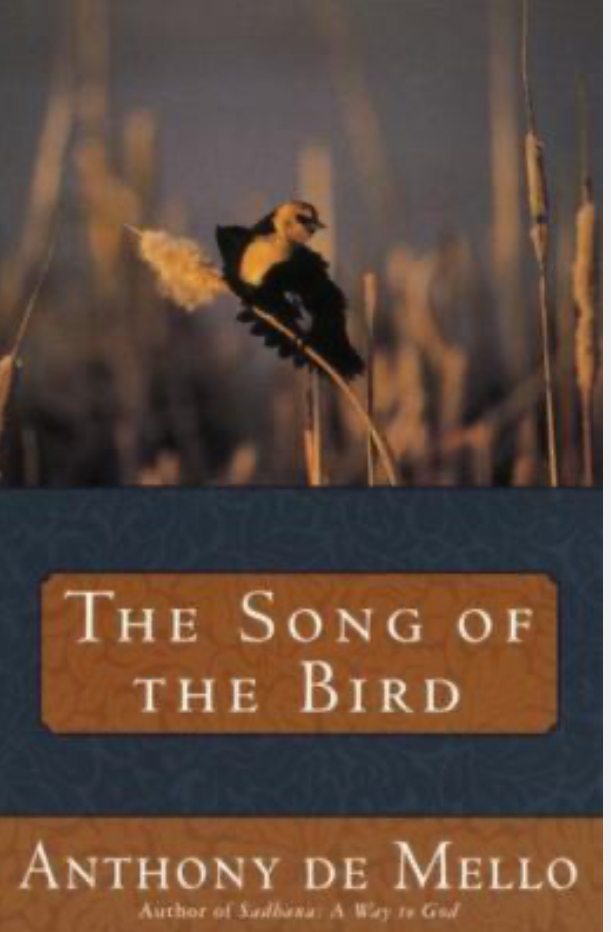
I picked up this book of stories or parables after reading De Mello’s amazing work on coming awake called Awareness a few months ago. The book’s offerings are taken from a varitey of religious traditions, ancient and modern as curated by a Catholic priest wanders unrepentedly into non Christian mysticism mining for spiritual truth. The Song of the Birds is an apt title as the stories carry a beautiful melody that will resonate inside you, as their meaning is interpreted and internalized. As De Mello offers in one of the earliest stories, ‘No one ever became drunk on the word, wine.’ The selections offer a myriad of insights including the truth that compassion has no ideology, that we change the world by changing ourselves, and that holiness lives in the present moment, that we need only look intently at what is all around us. My favourite story is a parable on modern life that underlines the fact that we have all the time in the world if we will only give it to ourselves and another called The Old Woman’s Religion, in which an older woman is asked if she truly believes, as is rumoured, that only she and her house maid will be allowed entry into heaven. The old woman ponders the question and then replies, ‘Well, I’m not so sure of Mary.’ 7/10
 Little Old Lady … in Waiting
Leave a comment